
The Revolution in Automated Pathogen Control
Automated cleaning solutions are revolutionizing hygiene and disinfection in healthcare, commercial, and industrial settings. By combining robotics, artificial intelligence, and advanced disinfection technology, these systems deliver consistent, thorough cleaning that far surpasses manual methods.
Key Types of Automated Cleaning Solutions:
- Robotic Floor Cleaners – Autonomous vacuums and scrubber-dryers for large areas.
- Whole-Room Disinfection Systems – Automated fogging technology for comprehensive pathogen elimination.
- UV-C Disinfection Robots – Light-based systems for sensitive environments.
- Specialized Industrial Tools – Tank cleaners, facade systems, and solar panel maintenance robots.
The global cleaning robot market is exploding, projected to reach $24 billion by 2026 with a 22.9% annual growth rate. This surge is driven by critical needs, especially in healthcare where manual cleaning can leave up to 56% of surfaces improperly cleaned, creating dangerous gaps in infection control.
Imagine a large hospital ward, spotlessly disinfected in just 30 minutes, with 100% surface and air contact guaranteed. This is the reality automated cleaning solutions deliver today, addressing the nationwide shortage of environmental services staff while dramatically improving patient safety.
I’m Debra Vanderhoff, Founder and COO of MicroLumix Bioscience Technology. For the last four years, I’ve focused on developing chemical-free automated disinfection systems. My two decades in biotechnology and operations have convinced me that automated cleaning solutions are essential for changing infection control and saving lives.

The Core Benefits of Automated Cleaning Solutions
Traditional cleaning methods are often inefficient and inconsistent. Automated cleaning solutions represent a strategic investment that transforms how businesses manage hygiene, safety, and resources. The numbers tell a compelling story: imagine a system that reduces labor time by 64%, cuts water and chemical usage, and delivers consistent results every time. That’s the power of automation.
Safety improvements are another major benefit. In industrial settings, sending workers into hazardous environments like large tanks puts lives at risk. Automated cleaning solutions eliminate this risk through no-man entry systems that get the job done safely and efficiently. A single robotic scrubber can clean thousands of square meters per hour with perfect consistency, freeing your team to focus on tasks that require human expertise.
| Metric | Manual Cleaning | Automated Cleaning Solutions |
|---|---|---|
| Speed | Varies, often slow for large areas | High, consistent (e.g., 2,300 sqm/hr for scrubbers) |
| Consistency | Inconsistent, prone to human error | Highly consistent, precise, repeatable |
| Cost | High labor, variable chemical/water use | Lower labor, optimized resource use, long-term ROI |
| Safety | Risk of injury, exposure to hazards | Improved safety, no-man entry for hazardous areas |
| Efficiency | Limited by human stamina/availability | 24/7 operation, optimizes labor allocation |
Boosting Efficiency and Productivity
The biggest advantage of automated cleaning solutions isn’t just that they clean better—it’s that they never get tired. While a human crew needs breaks and works in shifts, robotic cleaners can operate around the clock. This 24/7 operation capability transforms your business model. Instead of scheduling downtime for cleaning, you can run continuous operations while automated systems handle repetitive tasks.
This creates a ripple effect. Robotic vacuums and scrubbers free up your staff to tackle complex problems that need human intelligence. For specialized applications like solar panel cleaning, automated systems can cover vast areas at a scale manual methods can’t match. Faster cleaning cycles mean less production downtime, which translates directly to increased revenue. Your most valuable employees are no longer spending hours on mundane tasks; instead, they’re improving processes and driving business growth.
Enhancing Workplace Safety and Hygiene
The harsh reality is that manual cleaning often falls short. Studies show that up to 56% of surfaces aren’t properly cleaned even after terminal cleaning procedures. In healthcare, this is dangerous, as patients face a 120% increased risk of acquiring infections in rooms previously occupied by infected patients.
Automated cleaning solutions solve this by removing human error. Our GermPass technology at MicroLumix, for example, uses self-sealing UVC chambers to achieve 99.999% pathogen elimination on high-touch surfaces after every contact. This level of precision is impossible with manual wiping.
In industrial environments, no-man entry systems mean workers never have to enter hazardous spaces like chemical tanks. This isn’t just about compliance; it’s about bringing your team home safe. Whole-room disinfection systems demonstrate the power of automation, disinfecting entire rooms in minutes with 100% surface and air contact while killing up to 99.9999% of pathogens. Your facility achieves hospital-grade cleanliness while reducing labor requirements significantly. For detailed research, you can review studies on cleaning efficacy that demonstrate the superior performance of automated systems.
A Guide to Automated Cleaning Technologies

The landscape of automated cleaning solutions has evolved dramatically, offering specialized tools for nearly any cleaning challenge. Whether you need to maintain spotless floors, eliminate pathogens, or tackle unique industrial demands, a robotic solution likely exists for your needs.
A significant advance is the shift from hydraulic to electric robotic cleaning tools. This is a game-changer, as electric systems eliminate the mess and failures associated with hydraulic fluid and complex hoses. The result is less downtime, simpler operations, and a cleaner work environment—especially crucial in hazardous settings.
Robotic Floor Cleaners and Vacuums
When most people think of automated cleaning solutions, they picture tireless robots gliding across floors. These machines are far more advanced than early models.
Scrubber dryers are the heavy-duty champions of floor cleaning. They scrub floors with a cleaning solution and immediately suction up the dirty water, leaving surfaces clean and dry. High-performance models can tackle an impressive 2,300 square meters per hour, making them ideal for large commercial and industrial facilities.
Their autonomous navigation, using technologies like LIDAR and VSLAM, allows them to map environments, plan efficient routes, and steer around obstacles. Modern models boast impressive suction power (up to 18,000 Pa) and lithium-ion battery technology for extended operation.
Robotic vacuums have also evolved. Commercial models can clean over 500 square meters per hour using exchangeable batteries. They work independently, using advanced obstacle detection to identify and avoid people and objects faster than human reflexes, ensuring safe operation in busy spaces. Many now combine vacuuming with mopping for a comprehensive clean.
Automated Disinfection Systems
Proper disinfection is crucial for public health, and manual wiping often falls short. This is where automated disinfection truly shines.
Whole-room fogging systems have revolutionized comprehensive disinfection. They create a fine mist that reaches every surface, including hard-to-reach areas. Some systems can eliminate 99.9999 percent of pathogens in minutes and disinfect entire rooms in under 30 minutes with 100% surface and air contact. Modern systems often use hypochlorous acid (HOCl), which is far more effective than bleach but much safer for regular use.
UV-C light disinfection uses germicidal ultraviolet light to destroy the DNA of pathogens. This technology gained widespread attention for its effectiveness in improving infection control protocols in hospitals.
At MicroLumix, our GermPass technology represents a breakthrough in targeted disinfection. Using self-sealing UVC chambers, it delivers lab-certified 99.999% efficacy against pathogens on high-volume touchpoints immediately after every touch. This precision intervention prevents pathogen transmission at critical points, a feat manual cleaning cannot match.
Specialized Industrial and Niche Tools
Some of the most impressive innovations in automated cleaning solutions are in specialized applications where manual cleaning is dangerous or inefficient.
Tank cleaning robots tackle one of the most hazardous industrial tasks. Electric robotic solutions provide no-man entry alternatives, using high-pressure systems to clean heavy solids without putting workers at risk.
Facade cleaners address the monumental task of maintaining modern buildings. Automated systems can clean massive facades of over 20,000 square meters in just one week. These robots climb and clean using specialized brushes and water systems to tackle stubborn buildup.
Solar panel cleaners solve a critical efficiency problem for renewable energy. Automated systems can clean up to 10,000 square meters per hour, with some models designed for waterless cleaning or navigating challenging angles. These specialized tools address unique challenges with a level of precision and safety that is impossible to achieve manually.
Key Applications Across Diverse Sectors
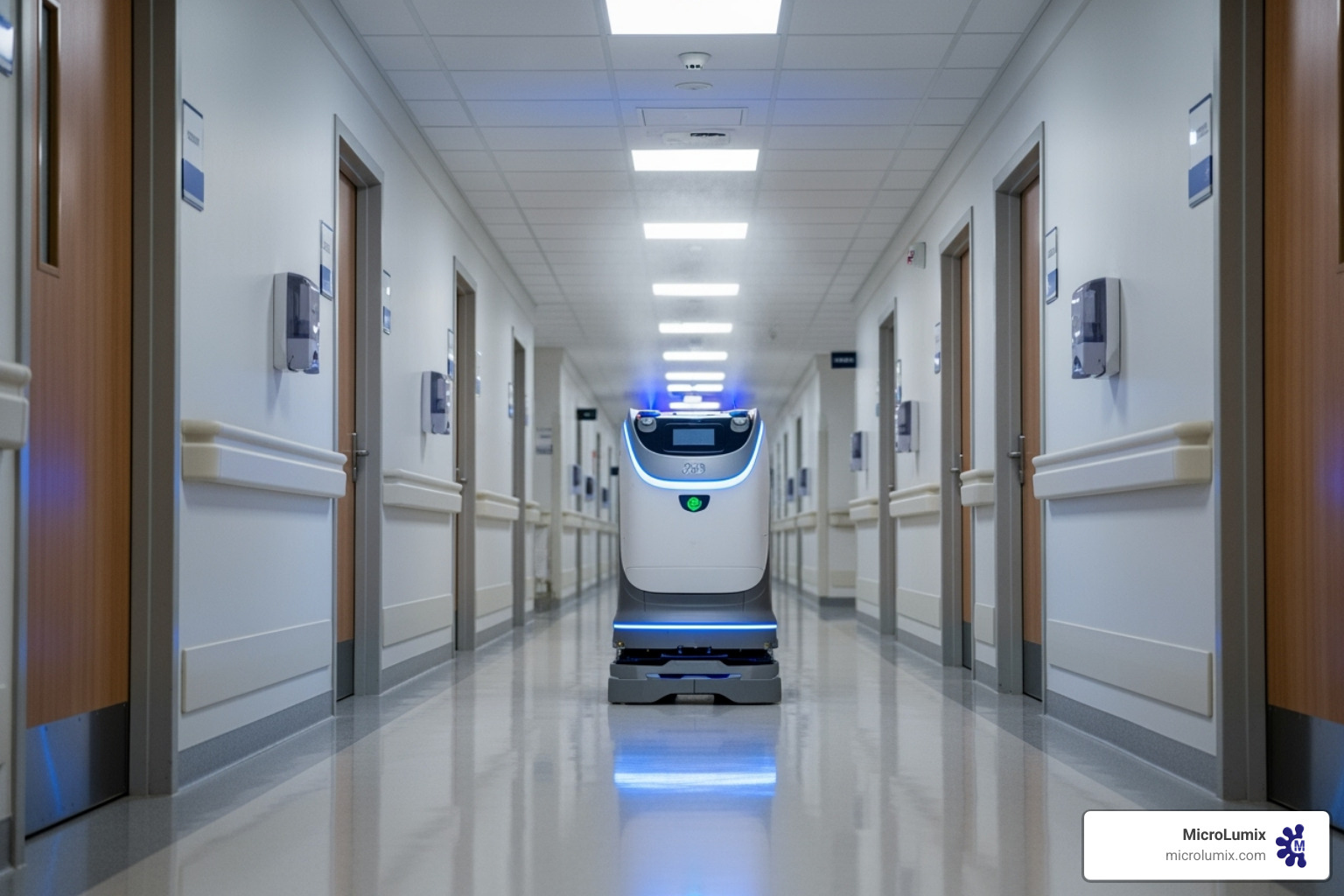
The adaptability of automated cleaning solutions is incredible. From sterile hospital corridors to busy food production lines, these smart systems are revolutionizing cleanliness across every industry.
Each sector has unique challenges. Healthcare demands absolute pathogen elimination, food production requires rapid turnarounds, hospitality needs quiet operation, and public transport requires robust solutions. Automated systems meet each of these demands with remarkable precision.
Revolutionizing Healthcare and Public Health
Nowhere do automated cleaning solutions shine more than in healthcare, where a single missed pathogen can trigger a hospital-acquired infection. The numbers are sobering: manual cleaning can leave up to 56% of surfaces improperly cleaned. This puts the next patient at a 120% increased risk of acquiring a bacterial infection.
The healthcare staffing crisis makes this problem more urgent. Environmental services (EVS) teams are stretched thin. Automation acts as a workforce multiplier, handling repetitive tasks and freeing up staff.
Whole-room disinfection systems, for example, can disinfect a room in 30 minutes, achieving 100% surface and air contact while eliminating up to 99.9999% of HAI-causing pathogens. The labor time reduction is equally impressive—up to 64% less time on terminal cleaning means staff can focus on direct patient care.
Our GermPass technology at MicroLumix addresses high-volume touchpoints like door handles and call buttons. Manual cleaning can’t keep up with constant recontamination. GermPass delivers lab-certified 99.999% pathogen elimination immediately after every touch, creating a continuous protective barrier.
Ensuring Safety in the Food and Beverage Industry
In the food and beverage industry, one bacterium can multiply into millions in hours. Cleaning isn’t just about appearances; it’s about preventing widespread contamination.
Automated cleaning solutions excel by eliminating the inconsistency of manual cleaning. Every surface receives the same thorough treatment, every cycle. This consistency is critical for controlling invisible microbial contamination. Low-pressure automated cleaning systems are designed to be thorough yet gentle, removing bacteria without creating aerosols that can spread contamination. This approach also reduces water and chemical consumption.
Automated systems are programmed to hit every surface, including crevices where bacteria hide. The business impact is substantial: faster cleaning cycles mean more production time, and extended product shelf-life from better microbial control reduces waste.
Innovations in Niche Maintenance Areas
Exciting developments in automated cleaning solutions are happening in specialized areas. These niche applications show how adaptable automation has become.
Solar panel maintenance is a perfect example. Dirty panels can lose 20-30% of their energy output. For large solar farms, manual cleaning is impractical. Automated cleaners can cover up to 10,000 square meters per hour, maximizing renewable energy generation.
Facade cleaning is another challenge for modern buildings. An automated system can clean a 23,000 square meter facade in one week, a task that would take months manually. These systems steer architectural details with a precision that is difficult for human cleaners.
Specialized slat cleaning systems for external blinds are another innovation. These intricate surfaces are dirt traps that affect building aesthetics and energy efficiency. Automated systems clean each slat thoroughly, preserving the building’s appearance and value.
Integrating Automation: Features, Data, and Challenges
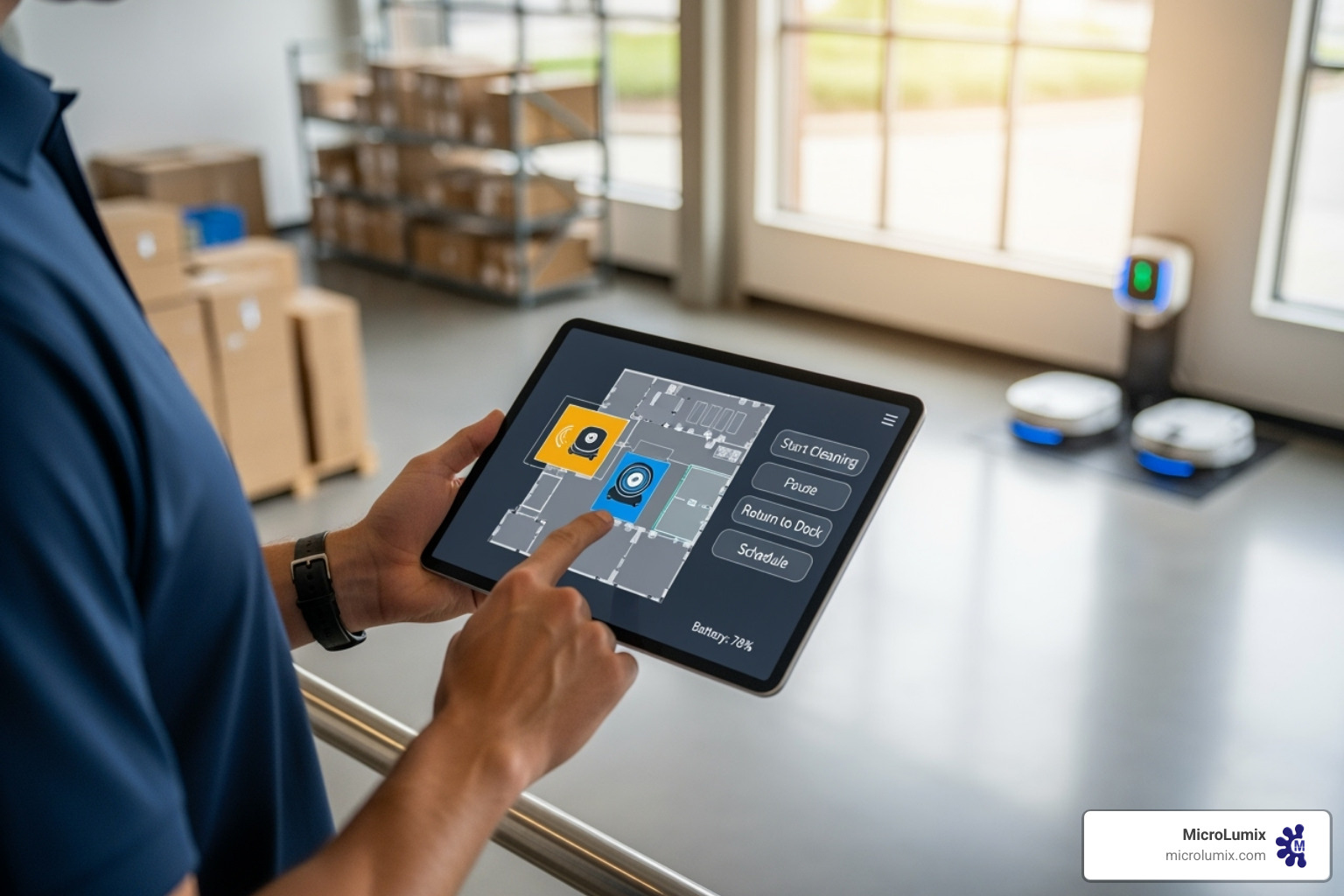
Adopting automated cleaning solutions is about embracing a new mindset where technology, data, and human insight work together. It’s an upgrade that opens up a world of new possibilities for managing hygiene and safety.
Key Features and Technological Advancements
Today’s cleaning robots are packed with serious technology. Smart navigation using LIDAR and VSLAM technology allows them to create detailed maps, plan efficient routes, and avoid obstacles. Long-life lithium-ion batteries enable them to run for hours, with some featuring exchangeable packs for continuous operation.
Suction power can reach up to 18,000 Pa, enough to handle fine dust and small debris. The most significant feature is software integration. These connected devices can coordinate with building systems like doors and elevators. Docking stations complete the picture, allowing robots to autonomously recharge and refill, making them truly independent.
When choosing a commercial cleaning robot, look for advanced navigation, robust battery life, high suction and scrubbing power, intuitive software with IoT connectivity, and durable, low-maintenance designs.
The Role of Data, Connectivity, and IoT
This is where automated cleaning solutions get really smart. Modern systems generate performance reports that provide proof of cleaning, detailing what was cleaned, where, and when. This data transforms facility management, helping you optimize schedules and predict maintenance needs.
Cloud connectivity allows you to monitor cleaning operations from anywhere via secure web portals and mobile apps. For commercial cleaning companies, this data is a powerful business tool, providing clients with detailed reports that prove coverage and hygiene outcomes. Resource management also becomes more strategic, as data helps predict supply and maintenance needs before problems arise.
Key Considerations for Adopting Automated Cleaning Solutions
Integrating automated cleaning solutions comes with challenges that can be managed with smart planning.
The initial investment can seem high, but the long-term ROI from reduced labor costs, optimized resource use, and improved efficiency is substantial. Think of it as an investment, not just a purchase.
Staff training is crucial. The goal is not to replace jobs but to evolve them. Your team will learn to work alongside the robots, monitor their performance, and handle basic troubleshooting. Modern systems are user-friendly, which eases the learning curve.
Maintenance requirements are a reality for any sophisticated equipment. Understand the daily care and scheduled maintenance needed to protect your investment.
Integration with existing workflows requires planning. Decide how the robots will fit into your current schedules to ensure a smooth transition. Finally, choosing the right solution is critical. Assess your specific needs, as a combination of different automated systems, from floor scrubbers to targeted disinfection like our GermPass technology, is often the most effective approach.
Frequently Asked Questions about Automated Cleaning
As automated cleaning solutions become more common, facility managers and business owners often have similar questions. Here are the straight answers you need.
Will robots replace human cleaning staff?
The truth is that automated cleaning solutions are job improvers, not job killers. They give your cleaning team superpowers, not a pink slip. Robots take over the repetitive, strenuous tasks, allowing your human staff to focus on work that requires detail and judgment, such as cleaning restrooms or handling delicate equipment.
In healthcare, this is especially powerful. When automated systems handle pathogen elimination, EVS teams can focus on direct patient support. It’s about smarter allocation of your most valuable resource: your people.
How much do automated cleaning solutions cost?
The cost varies by technology, but focusing only on the sticker price is a mistake. The real story is the long-term return on investment. You’ll see substantial savings on labor costs, reduced water and chemical usage, and significant productivity gains.
For example, whole-room disinfection systems can cut labor time by up to 64% while delivering superior results. Smart businesses look at the total cost of cleaning over time. When you factor in improved productivity and the peace of mind from consistent disinfection, the ROI often exceeds expectations.
Are automated cleaning systems safe to operate around people?
Safety is a core design principle of modern automated cleaning solutions. Today’s robots use sophisticated sensors like LIDAR and advanced cameras to detect people and obstacles, reacting in fractions of a second with evasive maneuvers.
Many commercial robots meet rigorous safety standards like IEC 63327, ensuring they can operate safely in public spaces like airports and hospitals. Our own GermPass technology demonstrates this commitment: it delivers powerful UVC disinfection within self-sealing chambers, ensuring zero exposure risk. These systems are designed to make your environment safer, not to put anyone at risk.
The Future is Automated: A Smarter Approach to Clean
The cleaning industry is in the middle of a revolution led by automated cleaning solutions. This is a fundamental shift toward smarter, safer, and more effective hygiene practices that are changing every sector.
The numbers tell a compelling story. The global cleaning robot market is projected to hit $24 billion by 2026, growing at 22.9% annually. Businesses are investing in automation to achieve remarkable benefits like a 64% reduction in labor time, 99.9999% pathogen elimination, and 24/7 operational capability.
Today’s automated cleaning solutions integrate AI, IoT, and advanced sensors to create systems that don’t just clean—they learn, adapt, and optimize. From robotic scrubbers mapping hospital corridors to whole-room fogging systems disinfecting every surface, hygiene standards are reaching levels that manual cleaning cannot achieve.
This change addresses real human needs. Healthcare workers can focus on patient care, industrial workers are protected from hazardous environments, and facility managers can rely on consistent, verifiable cleaning results.
At MicroLumix, we’re proud to be part of this automated future. Our GermPass technology exemplifies this shift, delivering lab-certified 99.999% pathogen elimination at high-touch points while empowering human staff to perform more meaningful work. It’s not about replacing people; it’s about giving them better tools.
The future of cleaning is intelligent, data-driven, and designed around human needs. For organizations ready to accept this smarter approach, the benefits extend far beyond sparkling surfaces to improved safety, reduced costs, and healthier environments for everyone.