
Why Contamination Control Solutions Are Critical for Modern Facilities
Contamination control solutions are systematic approaches designed to prevent, minimize, and eliminate harmful particles, pathogens, and contaminants that threaten product quality, patient safety, and operational effectiveness. These solutions encompass everything from advanced filtration systems and cleanroom protocols to automated disinfection technologies and specialized monitoring equipment.
Key contamination control solutions include:
- Physical barriers: Cleanrooms, HEPA filtration, air pressure differentials
- Personal protective equipment: Low-linting gloves, sterile gowns, decontamination mats
- Advanced technologies: Static control systems, automated UVC disinfection, real-time monitoring
- Chemical solutions: Hypochlorous acid (HOCl), specialized cleaning agents, antimicrobial treatments
- Environmental controls: Air changes per hour (ACH), negative pressure containment, particle counters
The stakes couldn’t be higher. Research shows that contamination control remains one of the largest challenges as technology advances, with better contamination control potentially improving yield by up to $150 million per year in semiconductor manufacturing alone. In healthcare settings, nearly 100,000 deaths and $28 billion in extra expenses are linked to hospital-acquired infections annually.
Whether you’re managing a pharmaceutical cleanroom where microscopic contaminants can compromise drug safety, or overseeing a hospital where pathogens lurk on every surface, the right contamination control strategy protects both your operations and the people who depend on them.
I’m Debra Vanderhoff, Founder and Chief Operating Officer of MicroLumix Bioscience Technology, with over 20 years of experience developing innovative contamination control solutions for healthcare, education, and high-traffic environments. Through my work creating automated disinfection systems, I’ve seen how the right contamination control solutions can transform facility safety and operational efficiency.

Understanding the Enemy: Contamination Types and At-Risk Industries

Think of contamination as an invisible army trying to breach your defenses. To build effective contamination control solutions, you must know what you’re fighting and where these battles are most critical.
Contamination isn’t just visible “dirt.” It’s a complex mix of threats that can destroy months of work, compromise patient safety, or cost millions in lost productivity. Let’s review the four main enemies lurking in your facility.
Particulate contamination might seem harmless, but these tiny solid or liquid particles pack a punch. We’re talking about dust, fibers, skin flakes, and microscopic debris from equipment wear. In semiconductor manufacturing, particles as small as 0.1 micrometers can damage microchip structures. That’s smaller than most bacteria! Even a single speck can ruin an entire batch worth thousands of dollars.
Microbial contamination brings living threats to your doorstep. Bacteria, viruses, fungi, and spores multiply. People are walking contamination sources, shedding these microorganisms through skin, breath, and clothing. Research shows that dental clinic surfaces can harbor dangerous bacteria like Staphylococcus and Pseudomonas. In healthcare settings, this type of contamination directly threatens patient lives.
Chemical contamination operates like a stealth attack. These airborne molecular contaminants and chemical residues are invisible but incredibly destructive. In semiconductor facilities, moisture and chemicals like hydrogen fluoride can react and cause crystal growth on wafers, destroying their precision. Even cleaning agents can become the enemy if they leave behind reactive residues.
Electrostatic discharge creates a double threat. Static electricity doesn’t just damage sensitive electronics – it acts like a magnet for particles. This electrostatic attraction makes dust cling stubbornly to surfaces, turning a simple cleaning job into a nightmare.
The Primary Contaminants in Critical Environments
Managing critical environments means dealing with specific types of contamination that demand different approaches.
Viable particles are the living threats – microorganisms capable of reproduction. We measure these as Colony Forming Units, and they’re your biggest concern in sterile manufacturing and healthcare. Non-viable particles, while not alive, can still cause physical defects and interfere with sensitive processes.
Airborne Molecular Contamination represents those invisible gaseous threats that can corrode equipment and alter product properties. Bioburden refers to the number of microorganisms present before sterilization – controlling this is fundamental to ensuring product safety.
Cross-contamination happens when contaminants hitchhike from one area to another, often carried by people or equipment. Surface contamination includes everything from trace oils to particulate matter that can compromise surface preparation and quality.
Key Sectors Reliant on Contamination Control
The industries most reliant on contamination control solutions share one thing in common: there’s no room for error.
Semiconductor manufacturing faces the most demanding contamination challenges. As computer chips get smaller and more complex, even microscopic particles spell disaster. A single percentage point improvement in yield can mean $150 million in annual profit – that’s the power of effective contamination control.
Pharmaceutical and biotechnology companies literally deal with life and death. Microbial contamination can render medications unsafe or completely ineffective. There’s simply no compromise when it comes to sterile environments.
Medical device production demands the same stringent controls. A contaminated surgical instrument or implant can cause infections or device failures that endanger patient lives.
Aerospace manufacturing can’t afford contamination-related failures. When components fail at 30,000 feet, lives are at stake. Surface preparation and contamination control become critical safety measures.
Healthcare facilities – hospitals, pharmacies, and dental offices – fight a constant battle against hospital-acquired infections. Nearly 100,000 deaths annually are linked to these preventable infections. Interestingly, regular disinfectant use has been linked to increased COPD and asthma risk in healthcare workers, highlighting the need for safer alternatives like Hypochlorous acid.
Each industry has unique contamination challenges, but they all share the fundamental need for proactive contamination control solutions that protect quality, safety, and profitability. The question isn’t if you need contamination control, but if your current approach is comprehensive enough to win this invisible war.
The Pillars of a Robust Contamination Control Strategy

Think of contamination control solutions like building a fortress. You need strong walls, smart defenses, and the right gear for everyone inside. It’s not about one magic bullet; it’s about creating layers of protection that work together seamlessly.
The most effective contamination control strategies rest on three main pillars: cleanroom design, specialized equipment, and human protocols. When these elements work in harmony, they create an environment where contamination simply can’t take hold.
The Foundational Role of Cleanrooms and Controlled Environments
A cleanroom isn’t just a very clean room; it’s an engineered environment where every detail is controlled. These spaces are classified by ISO 14644 standards, which tell us exactly how many particles of specific sizes are allowed per cubic meter. An ISO Class 1 cleanroom is incredibly clean, while ISO Class 9 is less stringent but still far cleaner than your average office.
The magic happens through HEPA and ULPA filtration systems. HEPA filters capture 99.97% of particles that are 0.3 micrometers or larger – that’s smaller than most bacteria! ULPA filters are even more impressive, catching 99.999% of these tiny invaders.
But filters alone aren’t enough. Airflow principles are crucial too. Most cleanrooms use unidirectional or laminar airflow patterns that gently sweep contaminants away from critical work areas. It’s like having an invisible broom constantly cleaning the air.
Air pressure differentials create another layer of protection. Most cleanrooms maintain positive pressure, so if there’s any leak or opening, clean air flows out instead of dirty air flowing in. However, when dealing with dangerous pathogens or chemicals, we flip this around and use negative pressure containment. This ensures that contaminated air stays trapped inside where it can be safely filtered.
The CDC recommends maintaining at least 12 air changes per hour in many containment scenarios. This means the entire volume of air in the room is replaced twelve times every hour.
Essential Products for Effective Contamination Control Solutions
Even the most sophisticated cleanroom design means nothing if people bring contamination inside. That’s where specialized products become your best friends.
Personal Protective Equipment is your first line of defense. We’re not talking about regular clothing here – cleanroom gowning apparel includes low-linting coveralls, hoods, boot covers, and sterile gloves that are designed specifically not to shed particles. Every piece is carefully selected based on the cleanroom class and the type of work being done.
Specialized cleaning supplies make all the difference too. Regular paper towels would be a disaster in a cleanroom because they shed fibers everywhere. Instead, low-linting wipes made from polyester or microfiber keep surfaces spotless without adding to the contamination problem.
Decontamination mats at cleanroom entrances aren’t all created equal. Traditional sticky mats that you peel off layer by layer only prevent about 27% of contamination – meaning 73% still walks right into your clean space! Advanced mats that can be wiped clean instead of peeled retain up to 99.9% of contamination and can prevent up to 75% of airborne particles from entering.
Specialized cleaning agents go beyond your typical household cleaners. These are formulated to leave minimal residue while being tough on specific contaminants. They won’t damage sensitive equipment or leave behind chemicals that could interfere with your processes.
Finally, every single item that enters a cleanroom – from pens to complex equipment – needs to be part of your validated supplies program. This ensures everything meets strict cleanliness standards and won’t become a contamination source itself.
When these elements work together, they create a comprehensive contamination control solution that protects your critical processes, products, and people.
Advanced Technologies and Innovative Contamination Control Solutions
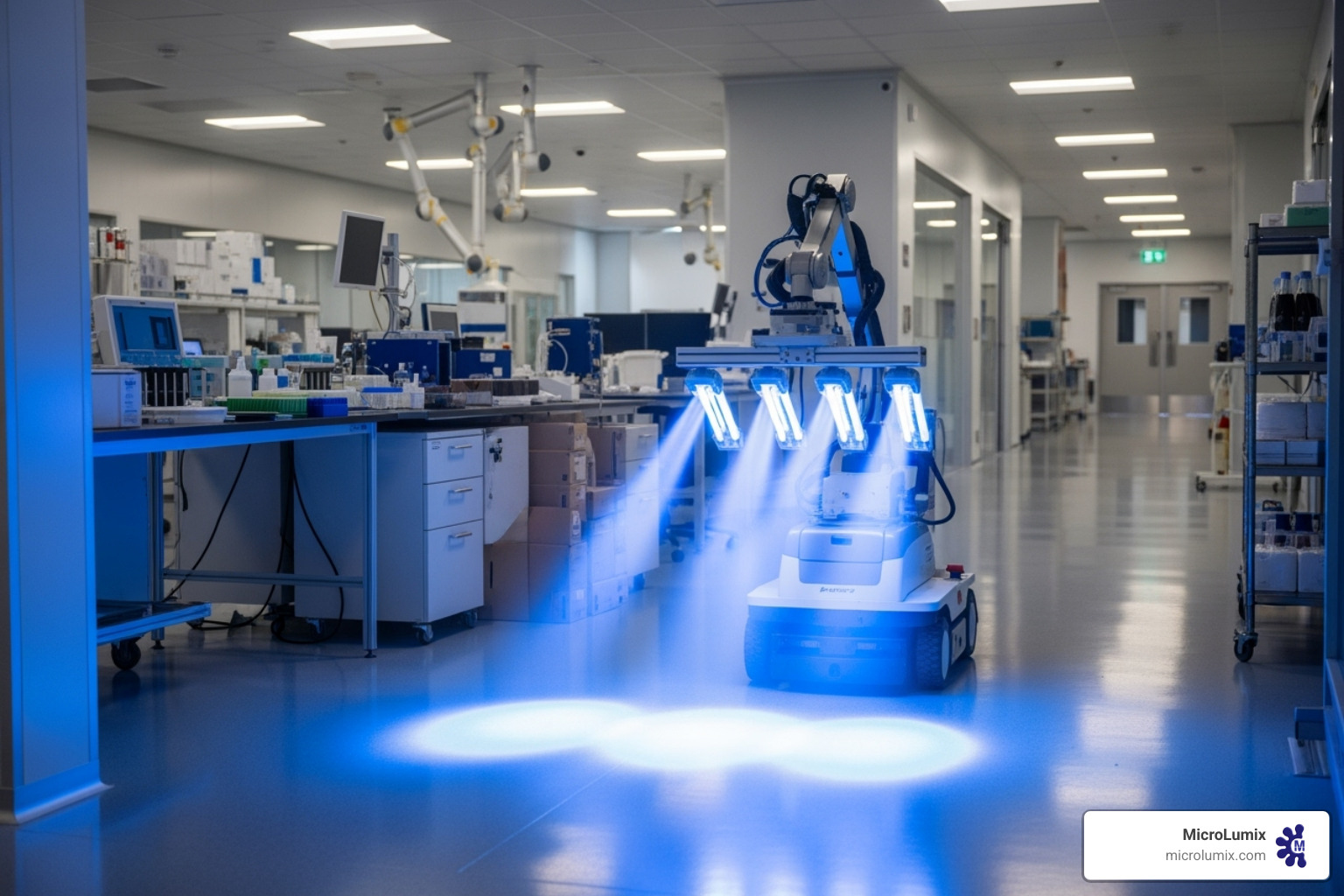
The world of contamination control solutions is experiencing a remarkable change. While traditional cleanrooms and PPE remain essential, cutting-edge technologies are revolutionizing how we detect, prevent, and eliminate contamination. These innovations aren’t just impressive—they’re game-changers that deliver measurable results where it matters most.
The Critical Role of Static Control in Contamination Management
Here’s something that might surprise you: static electricity is one of contamination’s sneakiest accomplices. That innocent little zap you feel when touching a doorknob? In critical environments, it’s causing major headaches.
Electrostatic Attraction (ESA) acts like an invisible magnet, pulling airborne particles directly onto sensitive surfaces. Once these particles stick due to static charge, they become incredibly stubborn—even advanced cleaning methods struggle to remove them. It’s like trying to pull lint off a sweater fresh from the dryer.
The solution lies in sophisticated ionization systems. These clever devices flood the air with balanced positive and negative ions, neutralizing static charges before they can attract contaminants. Ionizing bars and nozzles provide targeted static neutralization for specific equipment or products, while broader ionization systems protect entire work areas.
Beyond ionization, static-dissipative materials for work surfaces and flooring, combined with proper grounding protocols, create an environment where static simply can’t build up. This dual approach of preventing particle adhesion while protecting sensitive electronics has become a cornerstone of modern contamination control solutions.
The Future is Here: Innovations in Contamination Control Solutions
The contamination control industry is embracing automation and precision like never before, delivering solutions that would have seemed like science fiction just a decade ago.
Automated Whole-Room Disinfection has moved far beyond someone with a spray bottle. Advanced systems now use technologies like hydrogen peroxide vapor or Hypochlorous Acid (HOCl) fogging to systematically disinfect entire spaces. The results speak for themselves—studies show automated HOCl fogging achieves an impressive 97.84% average decrease in pathogen CFU reduction beyond what manual cleaning alone can accomplish.
The touchpoint revolution is equally exciting. High-traffic surfaces like elevator buttons, door handles, and touchscreens are notorious germ hotspots. Automated UVC touchpoint disinfection tackles this challenge head-on. Our MicroLumix GermPass represents the pinnacle of this technology—it’s the world’s only lab-certified system that uses self-sealing UVC chambers to sanitize touchpoints immediately after every use, achieving 99.999% efficacy against pathogens.
Real-time particle counters have transformed cleanroom monitoring from periodic checks to continuous vigilance. These systems instantly alert operators when particulate levels exceed standards, enabling immediate corrective action before contamination events can cause costly damage.
For the most demanding applications, laser-based trace detection can identify organic contaminants at the nanogram level from distances up to one meter. This non-contact verification ensures surfaces meet the strictest cleanliness standards without disrupting sensitive processes.
Perhaps most promising is the rise of HOCl-based disinfection solutions. Hypochlorous acid might sound intimidating, but it’s actually nature’s own disinfectant—your immune system produces it to fight infections. This pH-neutral, non-toxic powerhouse is 80-100 times more effective than bleach while breaking down into harmless byproducts. For healthcare workers facing increased risks of COPD and asthma from traditional cleaning chemicals, HOCl offers a safer path forward with FDA, USDA, and EPA approvals across multiple applications.
These innovations aren’t just making environments cleaner—they’re making them smarter, safer, and more sustainable for everyone involved.
Ensuring Compliance and Measuring Success
Having the best contamination control solutions in the world means little if you can’t prove they’re working. You need a solid plan to implement, validate, and continuously monitor your contamination control efforts.
With the right approach, compliance doesn’t have to be overwhelming. It’s about building smart systems that help you stay on top of things before problems arise.
How to Implement and Validate Your Contamination Control Measures
Creating effective contamination control solutions follows a logical path that starts with understanding your unique risks and builds from there.
Identifying contamination sources is your first critical step. You’ll want to conduct a thorough risk assessment that looks at everything – incoming materials, how people move through your facility, equipment wear patterns, and even environmental factors.
Once you know where contamination comes from, setting cleanliness specifications becomes much more targeted. Based on your risk assessment and relevant industry standards (like ISO cleanroom classes or microbial limits), you can define clear, measurable cleanliness goals for air quality, surface contamination, and product purity at each stage of your process.
Process validation is where theory meets reality. This means demonstrating through documented evidence that your contamination control measures consistently achieve the cleanliness levels you’ve set. For example, if you’re using automated disinfection technology, you need to prove it actually eliminates the pathogens you’re targeting. This isn’t just paperwork – it’s your proof that the system works as intended.
Continuous monitoring is where the magic happens. Your monitoring program should track airborne particle levels using real-time counters, assess bioburden through surface swabbing and air sampling, detect chemical contaminants like airborne molecular contamination, and verify surface cleanliness using advanced detection methods.
This is especially crucial in semiconductor manufacturing, where continuous analysis within the process cycle directly impacts quality and yield. Even small improvements can have massive financial benefits.
Data analysis and corrective action closes the loop. Regularly reviewing your monitoring data helps you spot trends, catch problems early, and identify opportunities for improvement. Having clear Standard Operating Procedures (SOPs) for responding to out-of-specification results means your team knows exactly what to do when something goes wrong.
The Importance of Strategic Supplier Partnerships
No single company can be an expert at everything. That’s why building strong partnerships with specialized suppliers isn’t just helpful – it’s essential for successful contamination control solutions.
These aren’t just vendor relationships; they’re true collaborations that strengthen your entire contamination control strategy.
Quality product sourcing becomes much easier when you work with reputable suppliers who understand the stringent requirements of critical environments. They provide validated contamination control products that meet or exceed industry standards, from cleanroom consumables to advanced disinfection systems.
Technical expertise is often the most valuable benefit of these partnerships. Leading suppliers possess deep knowledge in contamination science, regulatory compliance, and industry best practices. They can provide training, troubleshooting support, and valuable insights that help you steer complex challenges.
Supply chain reliability keeps your operations running smoothly. A dependable supplier ensures you always have access to critical contamination control products, especially consumables that need regular replenishment.
Collaboration on custom solutions opens up possibilities for addressing unique contamination challenges. Whether you need a specialized cleaning protocol or an integrated monitoring system, working closely with knowledgeable suppliers can lead to innovative breakthroughs custom to your specific needs.
The best supplier partnerships are built on mutual trust and shared goals. When suppliers truly understand your contamination control challenges, they become valuable extensions of your team, helping you achieve optimal performance and maintain compliance.
Frequently Asked Questions about Contamination Control
Here are answers to common questions about contamination control solutions. These are practical concerns that can make or break your strategy, and these answers have helped countless facilities get their contamination control right.
What is the difference between cleaning, sanitizing, and disinfecting?
This is a common mix-up, as the terms sound similar but describe different processes with distinct purposes.
Cleaning is your foundation—the physical removal of visible dirt, dust, and debris from surfaces using water and detergents. Cleaning doesn’t kill germs; it just removes them along with the dirt they’re hiding in.
Sanitizing reduces bacteria to levels public health officials consider safe, killing at least 99.9% of specified bacteria. Sanitizers are common in food service for reducing harmful bacteria on food-contact surfaces.
Disinfecting kills or inactivates nearly all recognized pathogenic microorganisms—bacteria, viruses, and fungi. Disinfectants are vital in healthcare, labs, and other critical environments where stopping infection spread is a matter of life and death.
Here’s a crucial point: disinfectants work best on clean surfaces. If you disinfect a dirty surface, the disinfectant must fight through grime to reach the germs, which reduces its effectiveness. That’s why the most effective contamination control solutions always start with proper cleaning.
How do I choose the right PPE for my cleanroom class?
Selecting the right Personal Protective Equipment isn’t just about following rules—it’s about understanding why those rules exist and how they protect your specific environment.
Your ISO Cleanroom Class is your starting point. Lower ISO classes (like ISO Class 1-5) demand the highest level of protection because even tiny particles can cause major problems. We’re talking full sterile gowning, hoods, boot covers, and often multiple layers of gloves. Higher ISO classes (ISO Class 6-8) are more forgiving and may allow non-sterile but cleanroom-compatible PPE.
The sterile versus non-sterile decision comes down to your specific processes. If you’re working in aseptic environments—think pharmaceutical compounding or sterile medical device manufacturing—sterile PPE isn’t optional, it’s mandatory. For other cleanroom applications, high-quality non-sterile PPE that’s been processed for cleanroom use will do the job.
Material properties matter more than you might think. Low-linting materials prevent your PPE from becoming a source of contamination. Chemical resistance protects both you and your environment if you’re handling hazardous substances. Comfort is also key, as uncomfortable operators can make mistakes that lead to contamination.
Even the best PPE is worthless without proper gowning procedures. Change gloves frequently—before entering clean zones, after breaks, and immediately if they’re damaged. Follow your facility’s specific protocols religiously, and always refer to relevant industry standards like EU GMP Annex 1 for pharmaceutical applications.
Why is controlling airborne contamination so important?
Air is one of the most effective delivery systems for contamination. It’s a highway for particles and microorganisms that reaches everywhere.
Product quality takes the biggest hit from airborne contamination. In semiconductor manufacturing, microscopic particles floating through the air can settle on delicate components, creating defects that tank your yield. In pharmaceutical and medical device production, airborne microorganisms can land on products and compromise their sterility. One contaminated batch can mean millions in losses.
Health risks are equally serious. Airborne pathogens don’t respect boundaries—they can travel from room to room, person to person, creating infection chains that are difficult to trace and stop. This is why the CDC emphasizes maintaining proper air changes per hour (ACH) to ensure optimal air quality and safety standards.
Process interference happens when airborne chemical contaminants react with your materials or equipment. These airborne molecular contaminants (AMCs) can cause corrosion, alter product properties, or damage sensitive equipment. The financial impact can be staggering.
Effective airborne contamination control solutions can prevent up to 75% of airborne contamination. Advanced filtration systems, proper airflow design, strategic air pressure differentials, and automated air disinfection technologies work together to create environments where your products, processes, and people are truly protected.
Air control isn’t just about comfort—it’s about creating the controlled environment your critical processes need to succeed.
Conclusion
As we reach the end of our journey through contamination control solutions, one thing becomes crystal clear: this isn’t a destination—it’s an ongoing adventure that requires constant attention, fresh thinking, and a comprehensive game plan.
Throughout this guide, we’ve uncovered the sneaky ways contamination can infiltrate our most critical environments. We’ve seen how tiny particles can wreak havoc on semiconductor manufacturing, costing companies millions in lost yields. We’ve explored how invisible pathogens can turn healthcare facilities into danger zones, threatening the very people they’re meant to protect.
But here’s the encouraging news: we’re not defenseless against these microscopic invaders.
The most effective approach to contamination control solutions isn’t about choosing just one magic bullet—it’s about building layers of protection that work together seamlessly. Think of it like a well-orchestrated defense system where cleanrooms provide the foundation, advanced filtration keeps the air pristine, and cutting-edge technologies like automated UVC disinfection stand guard at the most vulnerable points.
What excites me most about this field is how innovation continues to push boundaries. We’re witnessing remarkable breakthroughs like Hypochlorous acid (HOCl) solutions that are both incredibly effective and surprisingly gentle. We’re seeing automated systems that can disinfect entire rooms without human intervention. And technologies like our GermPass system are revolutionizing how we protect high-touch surfaces, delivering 99.999% pathogen elimination right where contamination happens most.
The key insight I’ve gained from two decades in this industry is simple: proactive beats reactive every single time. Organizations that invest in comprehensive contamination control solutions today don’t just meet compliance requirements—they often find unexpected benefits. Better yields, fewer recalls, healthier employees, and ultimately, stronger bottom lines.
You don’t have to steer this complex landscape alone. The most successful contamination control strategies are built on strong partnerships with experts who understand your unique challenges and can provide both the products and knowledge you need to succeed.
Your facility’s contamination control journey starts with understanding your risks and implementing the right solutions for your specific needs. Whether you’re protecting sensitive manufacturing processes or safeguarding patient health, the investment in proper contamination control solutions pays dividends in ways you might not even expect.
Ready to see how automated disinfection can transform your most critical touchpoints? Learn how automated disinfection can protect your critical touchpoints.