
Why High-Touch Areas Are the Hidden Threat in Your Facility
Disinfecting high touch areas is critical for preventing infection spread, as bacteria can contaminate over 50% of facility surfaces in just two hours. High-touch surfaces—areas frequently contacted by multiple people’s hands—serve as primary transmission points for harmful pathogens including viruses, bacteria, and fungi.
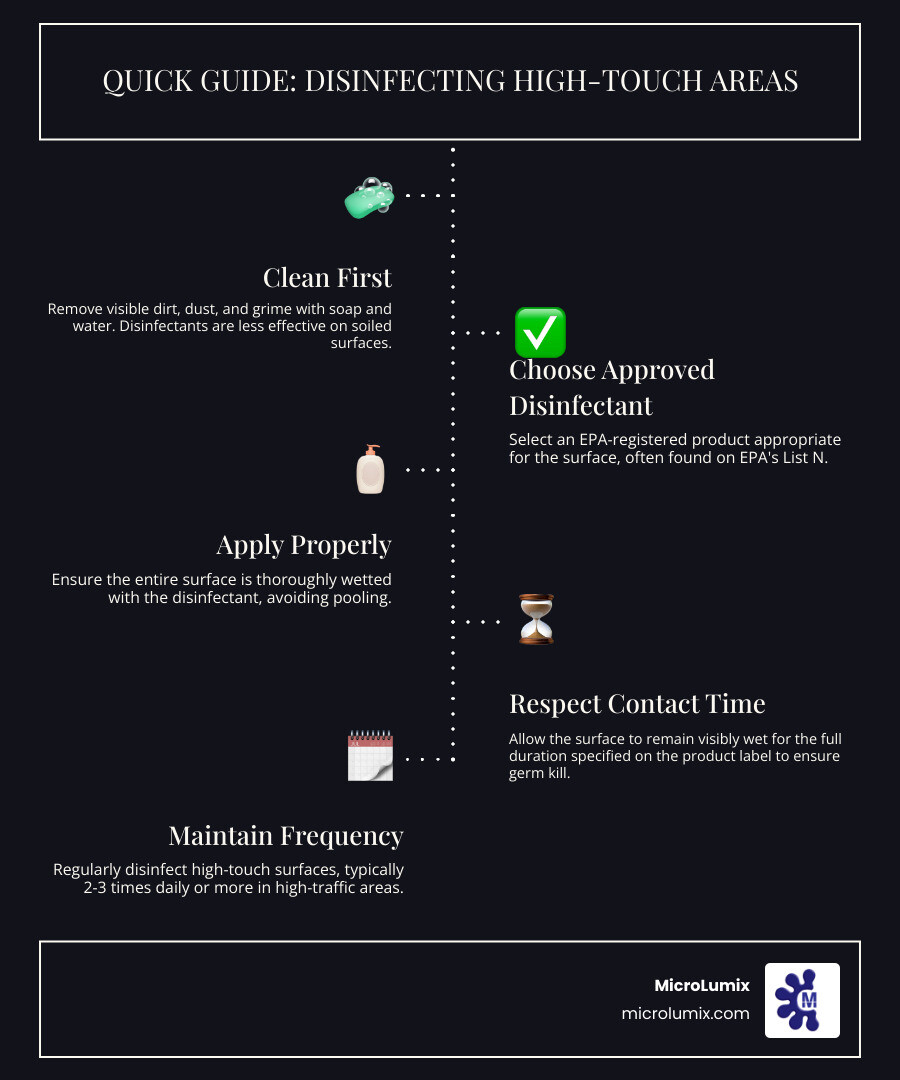
Quick Guide to Disinfecting High-Touch Areas:
- Clean first – Remove visible dirt with soap and water
- Choose EPA-approved disinfectants – Use products on EPA’s List N
- Apply properly – Ensure complete surface coverage
- Respect contact time – Keep surface wet for manufacturer’s specified time
- Maintain frequency – Disinfect high-touch areas 2-3 times daily minimum
The numbers are sobering: healthcare-associated infections affect over 1.7 million US patients annually, causing 99,000 deaths. With many viruses surviving on surfaces for up to two days, proper disinfection is critical to eliminate the germs cleaning leaves behind.
Common high-touch surfaces include doorknobs, light switches, elevator buttons, keyboards, phones, and handrails. In healthcare settings, these extend to bed rails, call buttons, and medical equipment. Each represents a potential pathway for pathogen transmission.
The challenge is that manual cleaning is often less than 50% effective, leaving dangerous gaps in protection. This creates an ongoing risk for Hospital Acquired Infections (HAIs), a major concern for healthcare administrators.
I’m Debra Vanderhoff, Founder and COO of MicroLumix. With over 20 years in biotechnology and infection control, I’ve focused on developing automated disinfection solutions to protect public health where disinfecting high touch areas is mission-critical.
The Ground Rules: Cleaning vs. Sanitizing vs. Disinfecting
Many people use “cleaning” and “disinfecting” interchangeably, but they are not the same. While cleaning is a good first step, it’s not enough to protect against harmful pathogens when disinfecting high touch areas.
Think of it like this: cleaning physically removes germs, sanitizing reduces them to safe levels, and disinfecting kills them. Each has its place, but they are not interchangeable.
Cleaning is the foundational step of physically removing dirt, dust, and germs using soap and water. It can remove up to 97% of germs from surfaces, but it doesn’t kill them—it just washes them away.
Sanitizing reduces the number of germs to a safe level, as defined by public health standards. It’s common for food-contact surfaces and children’s toys and uses weaker chemical solutions than disinfectants.
Disinfecting uses EPA-registered chemicals to kill harmful microorganisms like bacteria, viruses, and fungi. This process is essential for disinfecting high touch areas to eliminate pathogens that cause illness.
The EPA has excellent guidance that breaks down these differences in detail. You can dive deeper here: What’s the difference between products that disinfect, sanitize, and clean surfaces?
Why You Must Clean Before You Disinfect
A common mistake is skipping straight to the disinfectant. However, disinfectants need a clean surface to work properly.
Dirt and organic matter create a barrier that prevents disinfectants from reaching the germs underneath. It’s like trying to paint over rust; you’re just covering up the problem, not solving it.
Cleaning first with soap and water removes this barrier and washes away up to 97% of germs. This allows the disinfectant to effectively reach and kill the remaining pathogens.
This two-step process is absolutely critical for effective pathogen removal. Even with a product labeled as a “one-step cleaner/disinfectant,” if a surface is visibly dirty, you’ll get much better results by cleaning first. The disinfectant can only kill what it can touch.
At a Glance: Comparing the Three
To help you choose the right approach for different situations, here’s how these three methods stack up:
| Feature | Cleaning | Sanitizing | Disinfecting |
|---|---|---|---|
| Purpose | Remove dirt, debris, and most germs | Reduce germs to safe levels | Kill most germs and pathogens |
| Germ Removal | Physical removal (up to 97%) | Significant reduction (to safe levels) | Kills (inactivates) nearly all harmful germs |
| Typical Use | Everyday tidying, preparing for next step | Food contact surfaces, children’s toys | High-touch areas, sick rooms, healthcare |
| Primary Agent | Soap/detergent and water | Weaker bleach solutions, sanitizing sprays | EPA-registered disinfectants, stronger bleach |
| Prerequisite | None | Cleaning must precede | Cleaning must precede |
The key takeaway? For most high-touch areas where disease transmission is a real concern, you’ll want to clean first, then disinfect. It’s the one-two punch that gives you the best protection against harmful pathogens.
Your Step-by-Step Guide to Disinfecting High Touch Areas
Now for the practical “how-to” of disinfecting high touch areas. Following this precise process can dramatically reduce the risk of spreading illness.
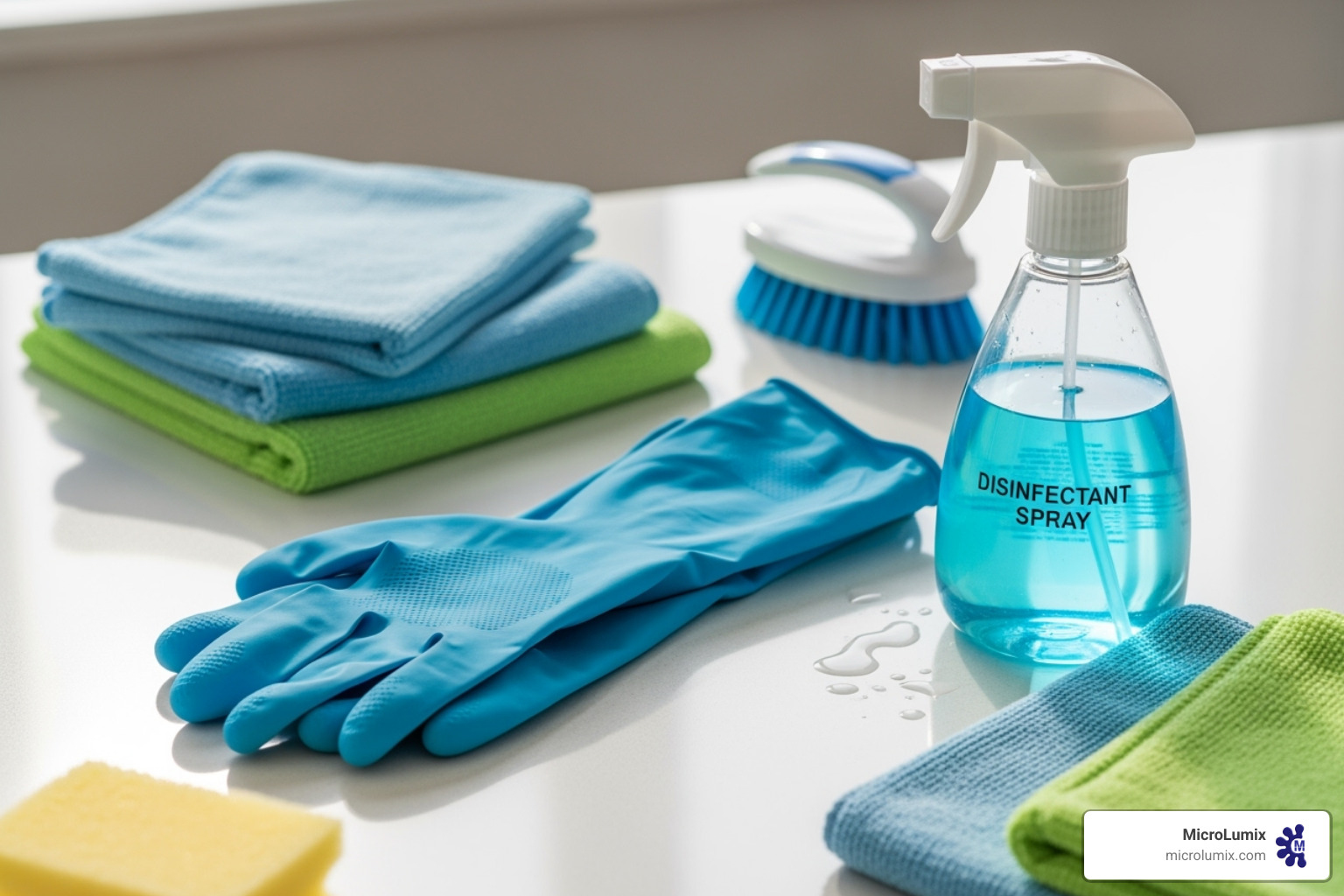
We’ll walk through a 5-step process that covers identifying what needs attention, choosing the right products, applying them correctly, handling delicate electronics, and keeping everything on schedule.
The key to success? Following manufacturer instructions religiously. Those labels aren’t suggestions—they’re your blueprint for both effectiveness and safety.
Step 1: Identify and Prepare Your High-Touch Surfaces
Before you can tackle germs, you need to know where they’re hiding. High-touch surfaces are the most common places for pathogens to accumulate and spread.
In your home, focus on doorknobs, handles (doors, cabinets, fridge), light switches, remote controls, faucet handles, and personal electronics like phones and tablets.
In offices, target keyboards, mice, shared equipment (printers, copiers), elevator buttons, and conference room tables, especially after meetings.
In public spaces, focus on high-traffic items like shopping cart handles, ATM keypads, and handrails.
Once you’ve identified your target surfaces, clear away any clutter. If something looks visibly dirty, remember our golden rule: clean it with soap and water first. You can’t disinfect effectively through a layer of grime.
Step 2: Choose the Right EPA-Approved Disinfectant
Not all products kill all pathogens, which is why using EPA-registered disinfectants is critical. These have been tested and proven effective.
The EPA maintains specific lists for different situations. During health crises like COVID-19, they publish List N, which identifies products effective against specific viruses. You can find the most current version at the EPA’s List N: Disinfectants for Coronavirus (COVID-19).
When commercial disinfectants aren’t available, DIY bleach solutions can be effective. Mix one teaspoon of household bleach (5%) into one cup of water. Fresh bleach solutions work against bacteria, viruses, and fungi.
For electronics, alcohol-based products with at least 70% alcohol are often your best bet, as they evaporate quickly.
Reading product labels is essential. Labels tell you what germs the product kills, its required contact time, necessary safety precautions, and which surfaces it’s safe for.
Step 3: The Proper Procedure for Disinfecting High-Touch Areas
Properly disinfecting high touch areas requires patience and attention to detail. Rushing this process compromises its effectiveness.
Start by cleaning with soap and water if the surface is dirty. This removes grime and lets your disinfectant reach the germs. Rinse and let the surface dry completely.
Next, apply your chosen disinfectant. You can spray it directly onto the surface or onto a clean cloth first. The cloth method prevents overspray and gives you better control.
Complete surface coverage is crucial. Make sure every inch is thoroughly wetted with disinfectant.
The most common mistake is ignoring contact time. The disinfectant must remain wet on the surface for the time specified on the label (from 30 seconds to 10 minutes) to be effective. Don’t wipe it off early, or you’ll undo your work.
Finally, let it air dry or wipe with a clean, dry cloth if the label instructs you to do so.
Step 4: Safely Disinfecting Electronics
Electronics are high-touch surfaces that require special care, as they can be damaged by liquids. When disinfecting high touch areas like phones, proceed with caution.
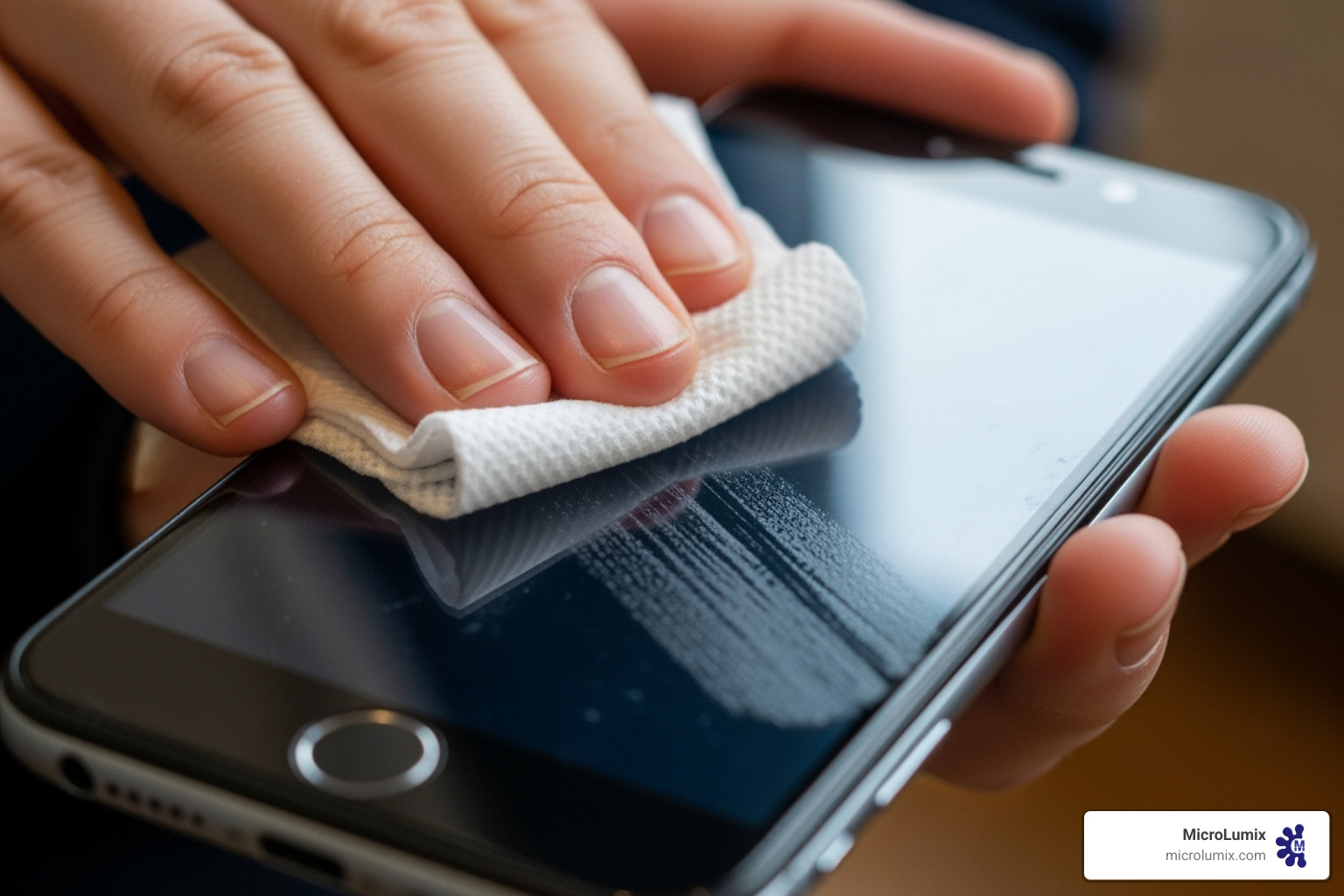
Always check manufacturer instructions first. Phone makers often provide specific cleaning guidelines that can save you from damaging your device or voiding its warranty.
Alcohol wipes with 70% alcohol work well for most devices. If you don’t have wipes, lightly dampen a microfiber cloth with a 70% alcohol solution. Never spray disinfectant directly onto your device.
Be mindful of flammability risks with alcohol-based products. After cleaning, lay used wipes or cloths flat to dry completely before tossing them in the trash.
Avoid anything abrasive or harsh chemicals like bleach, which can damage screens and protective coatings.
Creating a Consistent Disinfection Schedule
Consistency is essential when disinfecting high touch areas. Germs don’t take a break, so your disinfection routine shouldn’t either.
Science shows why this is critical: many viruses survive on surfaces for up to two days, and bacteria can contaminate over 50% of a facility’s surfaces in just two hours.
This is why establishing a regular disinfection schedule is your frontline defense against pathogen spread. The key is finding a rhythm that works for your specific environment and sticking to it.
How Often Should You Be Disinfecting High-Touch Areas?
The ideal frequency for disinfecting high touch areas depends on traffic, the type of environment, and current health conditions.
For most homes and offices, disinfecting high-touch surfaces 2-3 times daily is a good baseline. This ensures that doorknobs, light switches, and other common surfaces get regular attention.
After visitors leave, give those high-touch surfaces an extra cleaning. This helps reset your space.
When someone in your space is sick, increase your disinfection frequency significantly, focusing on surfaces the sick person has touched, as well as shared spaces like kitchens and bathrooms.
And remember, visibly soiled surfaces should be cleaned and disinfected immediately, regardless of your schedule.
Tailoring Frequency for Different Facilities
Not all spaces are created equal when it comes to disinfection needs.
Office settings should follow the 2-3 times daily rule, with extra attention to conference tables after meetings and shared vehicle controls after each use. Providing wipes in communal areas encourages employee participation.
Public spaces and retail environments require continuous disinfection of high-traffic items like cart handles, payment terminals, and restroom fixtures to keep customers and staff safe. Public health authorities offer detailed guidance for these settings: Guidance for cleaning and disinfecting public spaces.
Healthcare environments require the most rigorous protocols. Patient rooms (bed rails, call buttons), shared medical equipment, and waiting areas need frequent disinfection each shift. This frequency increases during outbreaks. Even floors are now recognized as significant pathogen reservoirs.
The bottom line? Regularly assess how your space is used and adjust your schedule accordingly. Your disinfection routine should work as hard as the people in your facility do.
Safety First: PPE and Chemical Precautions
Disinfecting high touch areas involves powerful chemicals that require careful handling and proper safety gear, just like any power tool.
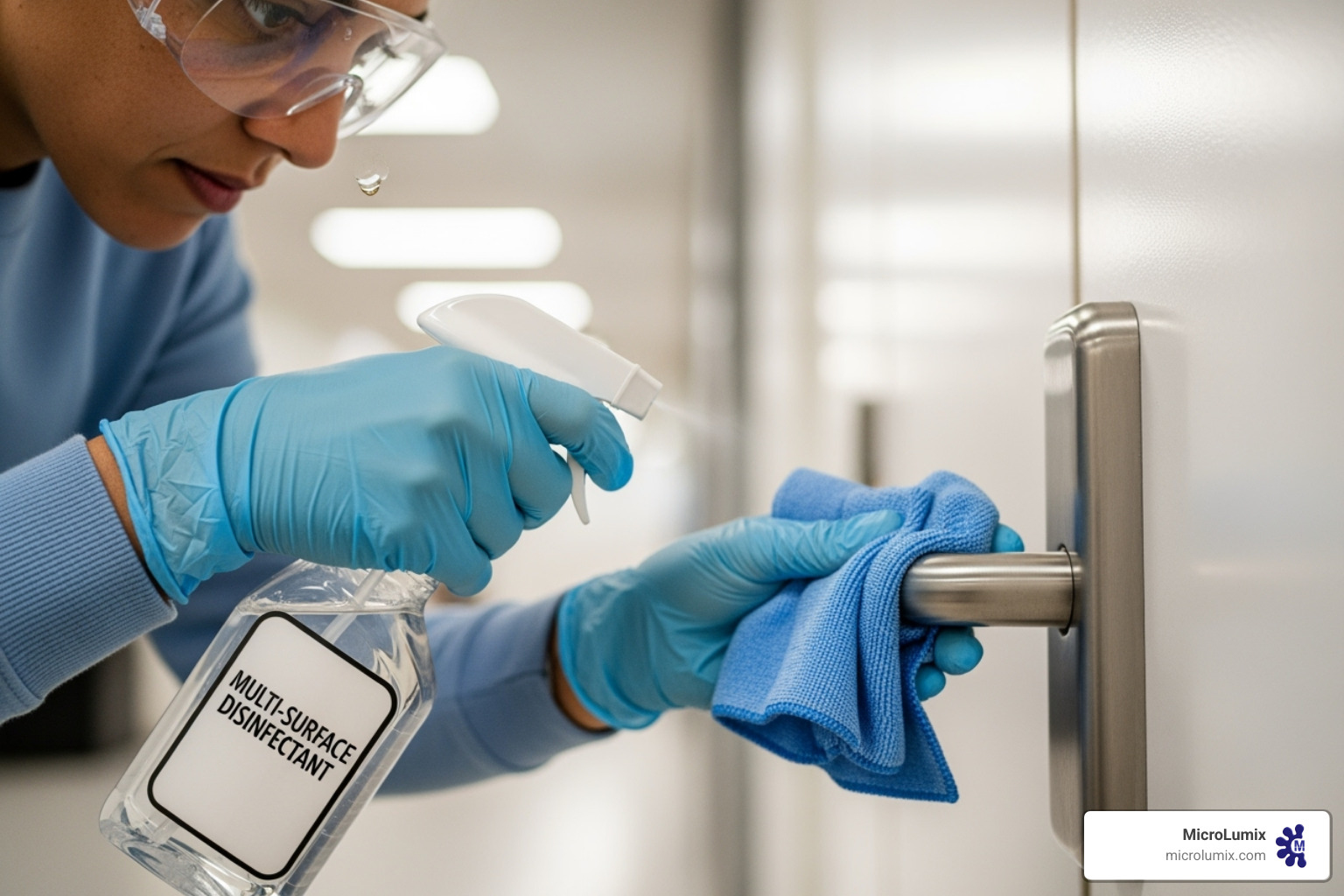
Protecting yourself ensures you can continue to protect others. An injury from cleaning chemicals sidelines you from this important work.
Essential Personal Protective Equipment (PPE)
Personal Protective Equipment (PPE) is your safety toolkit. Always check the product’s label and Safety Data Sheet (SDS) for specific PPE requirements before you begin.
Disposable gloves (nitrile or latex) are your first line of defense against skin irritation and chemical absorption. Always wash your hands for at least 20 seconds after removing gloves.
Eye protection (safety glasses or goggles) is crucial to guard against accidental splashes, especially when diluting concentrates or spraying.
Masks or respirators may be necessary depending on the product and ventilation. If the label recommends respiratory protection or you’re in a poorly ventilated area, do not skip this step to avoid respiratory irritation.
Understanding what you’re working with makes all the difference. Safety Data Sheets provide detailed information about chemical properties, hazards, and safe handling procedures. OSHA has an excellent guide to help you understand them: Understanding Safety Data Sheets.
Critical Chemical Safety Rules
Following these basic chemical safety rules is non-negotiable for everyone’s safety.
Proper ventilation is key. Always use disinfectants in well-ventilated areas by opening windows or using fans to circulate air. This helps disperse fumes and reduces inhalation risks.
Never mix chemicals. This rule exists because the consequences can be deadly. Mixing different cleaning agents can create toxic gases.
The dangers of mixing bleach and ammonia are severe; this combination creates toxic chloramine gas that can be fatal. It is never worth the risk.
Secure storage protects everyone. Keep all cleaning agents in their original, labeled containers, stored safely away from children and pets. Check expiration dates, as some disinfectants lose effectiveness over time.
These products are for surfaces, not people or pets. Never eat, drink, or apply them to skin.
For disposal, place used cleaning items in a lined waste container. A key safety tip: alcohol-wetted paper towels are flammable. Lay them flat to air dry completely before throwing them away to prevent fire hazards.
Frequently Asked Questions about Disinfecting Surfaces
Here are answers to common questions about disinfecting high touch areas based on my years in infection control.
What is the most important step when disinfecting?
You must clean the surface with soap and water first. This is the most crucial step. Dirt and organic matter create a barrier that shields germs from the disinfectant. Cleaning removes this barrier and up to 97% of germs through physical action, allowing the disinfectant to work effectively on the remaining pathogens. Without pre-cleaning, even the best disinfectant will be less effective.
How long does a disinfectant need to stay on a surface to work?
This is called “contact time” or “dwell time,” and it’s the most overlooked aspect of disinfection. Every disinfectant needs a specific amount of time it must stay wet on a surface to work. You’ll find this on the product label, and it can range from 30 seconds to 10 minutes. The surface must remain visibly wet for the entire contact time. If it dries early, you must reapply. Setting a timer helps ensure you meet the required time.
Can I use household cleaning wipes to disinfect my phone?
The short answer is maybe, but be careful. Start by checking your phone manufacturer’s cleaning guidelines first. If approved, use alcohol-based wipes with at least 70% alcohol, which kills germs and evaporates quickly. Never spray disinfectant directly onto your phone; apply it to a cloth first. Avoid abrasive materials that could scratch the screen. Alcohol wipes are flammable, so let them air dry completely before disposal.
Some manufacturers void warranties if liquid damage occurs from improper cleaning, so when in doubt, check those guidelines first.
Conclusion: The Future of Clean is Touchless
The fundamentals of disinfecting high touch areas are simple but crucial: clean first, use EPA-approved products, respect contact time, and prioritize safety. These practices form the backbone of effective infection control in any facility.
However, even the best manual protocols have limitations. For healthcare administrators, the reality is that manual cleaning reaches less than 50% of surfaces effectively, leaving dangerous gaps in pathogen defense.
In a busy hospital, high-touch surfaces like bed rails and door handles are touched hundreds of times per day. Even the most dedicated staff can’t be everywhere at once, meaning some areas are inevitably missed or inadequately treated.
This is where the future of disinfecting high touch areas is heading—toward automated, touchless solutions that eliminate human error. At MicroLumix, we developed GermPass technology to address this challenge. It’s the world’s only lab-certified, automatic touchpoint germ-killing system that sanitizes high-volume touchpoints immediately after every touch, achieving 99.999% efficacy against pathogens.
Unlike periodic manual disinfection, automated systems work continuously, providing immediate and consistent protection. In critical environments like healthcare, this is becoming a necessity for patient safety.
The future of clean isn’t about replacing good manual hygiene; it’s about enhancing it with technology that fills the gaps we can’t address through human effort alone. The most effective infection control strategies will combine the best of both worlds.
Ready to explore how automated disinfection can transform your facility’s approach to disinfecting high touch areas? Explore automated disinfection solutions for high-touch surfaces and find what’s possible when technology meets infection control.