
What Are Healthcare-Associated Infections and Why Should You Care?
Healthcare associated infections (HAIs), also known as nosocomial infections, are infections patients acquire while receiving medical treatment. These infections were not present upon admission and typically develop 48 hours or more after entering a healthcare facility.
Quick Facts About Healthcare Associated Infections:
- 1 in 31 hospital patients will contract an HAI during their stay
- $28.4 to $45 billion spent annually in the US treating HAIs
- 99,000 deaths occur each year in American hospitals due to HAIs
- 220,000+ cases reported annually in Canadian hospitals alone
- 25,000 deaths attributed to HAIs each year in Europe
HAIs are a serious threat to patient safety, occurring in settings from hospitals to long-term care homes. The human cost is staggering, with many infections being preventable. These infections strain healthcare systems, increase costs, and create liability risks. Every healthcare administrator and infection control specialist faces the challenge of preventing these devastating outcomes.
I’m Debra Vanderhoff, Founder and COO of MicroLumix Bioscience Technology. With over two decades of executive leadership in biotechnology and healthcare, I’ve focused on developing automated disinfection systems to combat Healthcare associated infections in high-traffic environments, giving me unique insights into the challenges facilities face.
The Most Common Types of HAIs and Their Sources
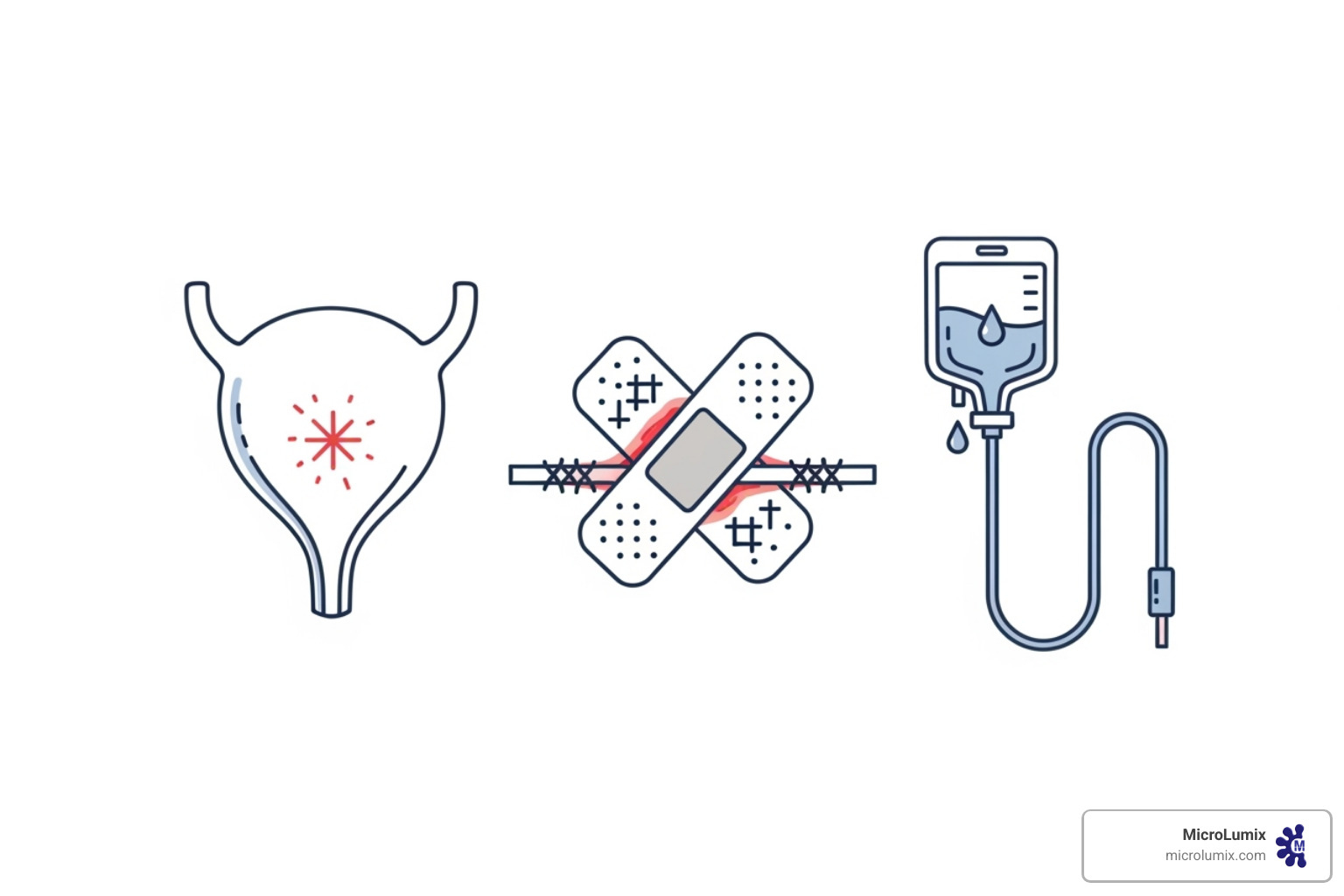
The most common Healthcare associated infections repeatedly appear in healthcare facilities, often linked to medical devices and procedures.
Catheter-associated Urinary Tract Infections (CAUTI) are the most frequent, making up about 32% of all HAIs in the US. When a catheter remains in place, bacteria can travel up the tube and cause an infection.
Surgical Site Infections (SSI) account for roughly 22% of HAIs. These infections develop at the incision site and can range from surface-level to deep tissue or organ infections, highlighting the importance of sterile techniques.
Central Line-associated Bloodstream Infections (CLABSI) represent about 14% of HAIs. They are particularly serious as they provide germs direct access to the bloodstream through large IV lines.
Ventilator-associated Pneumonia (VAP) affects about 15% of HAI cases. Bacteria can travel down the breathing tube into the lungs of vulnerable, mechanically ventilated patients.
Clostridioides difficile (C. diff) is known for its stubborn spores that can survive on surfaces for months, making environmental cleaning crucial.
Methicillin-resistant Staphylococcus aureus (MRSA) is challenging due to its resistance to many common antibiotics.
The pathogens behind these infections are diverse, primarily bacteria but also fungi and viruses. Key culprits include Escherichia coli, Staphylococcus aureus (including MRSA), Pseudomonas aeruginosa, Klebsiella pneumoniae, Candida albicans, Acinetobacter baumannii, Clostridioides difficile, and Vancomycin-resistant Enterococcus (VRE). These adaptable pathogens thrive in healthcare settings, often developing resistance to treatments, which necessitates a multi-layered defense strategy.
How Do HAIs Spread? Causes and Key Risk Factors
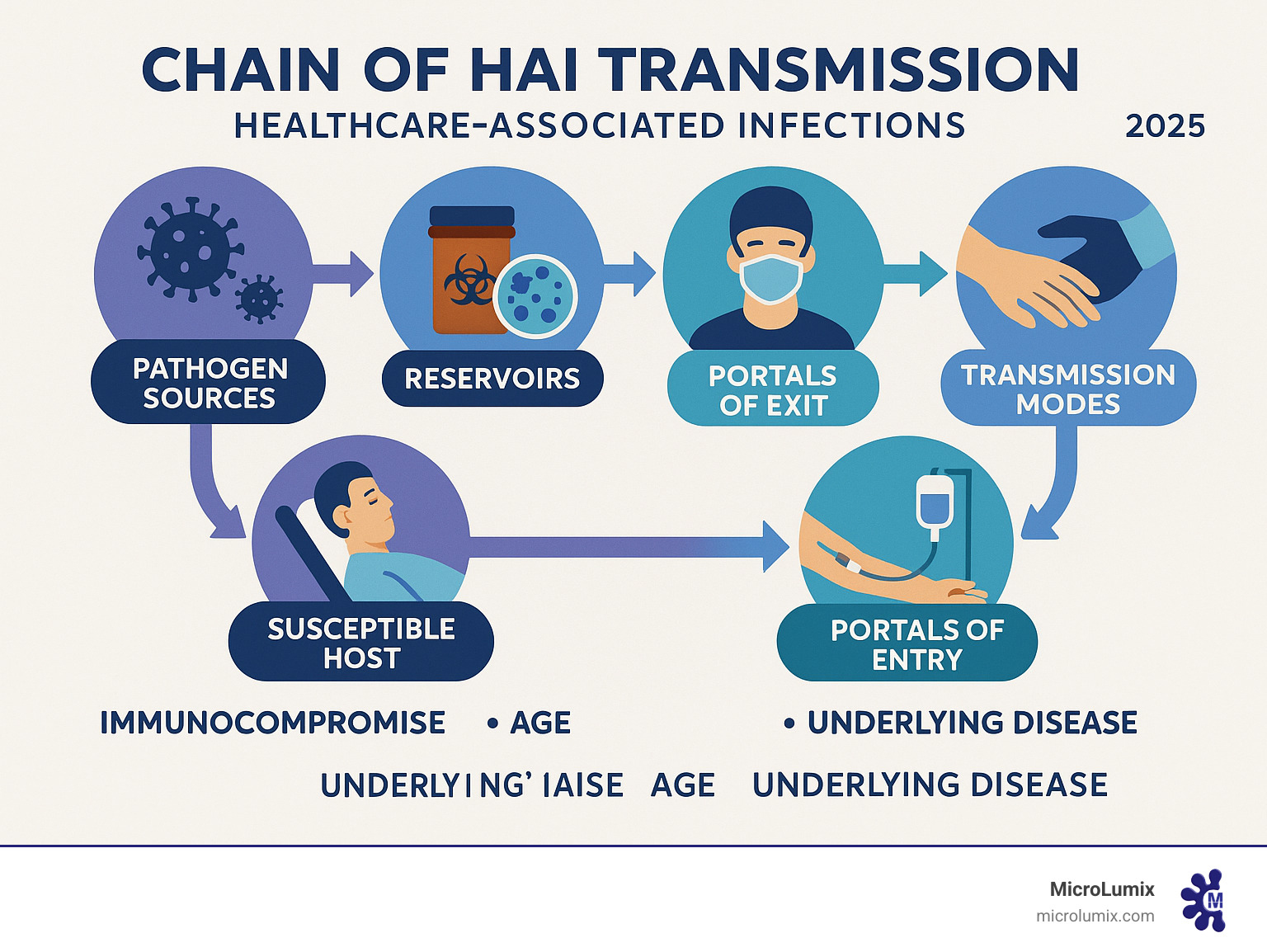
Healthcare associated infections spread through three main routes. Contact transmission is the most common, occurring either through direct contact (e.g., contaminated hands) or indirect contact with objects like bed rails and medical equipment. Droplet transmission happens when infected patients cough or sneeze, spreading droplets to those in close proximity. Airborne transmission involves tiny infectious particles that can remain in the air for extended periods.
Contaminated surfaces and equipment act as silent reservoirs for pathogens like MRSA and VRE, which can survive for days or weeks. Improper disinfection between patients creates a direct link in the infection chain.
Invasive procedures and medical devices breach the body’s natural defenses, creating entry points for microorganisms. Biofilms—sticky microbial communities—can form on these devices, making infections difficult to treat.
Environmental factors like overcrowded or understaffed facilities can compromise infection control protocols. Rushed healthcare workers may find it difficult to adhere to every safety step.
Certain patients face higher risks, including those of advanced age, individuals with compromised immune systems (e.g., from cancer or HIV), patients with chronic illnesses, and anyone with indwelling devices like catheters or ventilators. Furthermore, antibiotic overuse fuels the problem by promoting the development of resistant bacteria, making HAIs more common and deadly.
Understanding the Causes of Healthcare associated infections
Pathogen sources can be endogenous, originating from the patient’s own body (like skin or gut bacteria) that cause infection when natural barriers are breached. Exogenous sources are external invaders from other patients, contaminated equipment, or the healthcare environment.
Healthcare workers’ hands are a primary vehicle for transmitting microorganisms between patients and surfaces, making consistent hand hygiene critical. Biofilms are another major concern; these slimy bacterial communities form protective layers on medical devices, making them highly resistant to antibiotics and disinfectants.
Environmental contamination is a powerful threat. As scientific research on hospital epidemiology shows, environmental cleaning is fundamental to prevention, as pathogens can linger on surfaces for months. Inadequate disinfection turns patient rooms, operating rooms, and common areas into stepping stones for infection. Similarly, poor ventilation systems can circulate airborne pathogens, posing a risk in sensitive areas like operating rooms and isolation units. Proper air exchange and filtration are essential safety measures.
Recognizing the Signs and Managing the Consequences

Early detection of a Healthcare associated infection is key to preventing serious complications. Symptoms can be subtle, especially in already ill patients.
Common warning signs include fever and chills, increased pain or tenderness at a surgical or device site, redness, swelling, or warmth at a wound, and pus or drainage. General fatigue or malaise is also common. In elderly patients, changes in mental state like confusion can be an early indicator.
Specific HAIs have distinct symptoms:
- CAUTI: Painful urination, urinary frequency, or lower abdominal pain.
- SSI: Redness, warmth, pain, swelling, or pus at the incision site.
- Pneumonia (including VAP): Shortness of breath, persistent cough, and chest pain.
- C. diff: Severe diarrhea, abdominal pain, and fever.
When an HAI is suspected, diagnostic tests are performed. These include blood tests to check for infection markers, urine cultures for CAUTIs, wound cultures for SSIs, and sputum cultures or imaging (X-rays, CT scans) for pneumonia. Stool tests are used to detect C. diff toxins.
Treatment is custom to the infection and pathogen. It typically involves targeted antibiotics, antivirals, or antifungals based on lab results. For device-related infections, removing the infected device (e.g., catheter) may be necessary. Severe SSIs might require surgical drainage or removal of infected tissue.
The consequences of Healthcare associated infections can be severe. Sepsis, a life-threatening response to infection, can lead to organ failure. HAIs significantly extend hospital stays, adding an average of 12 extra days. Some patients face long-term disability, and tragically, HAIs contribute to tens of thousands of deaths annually in the US. The rise of multidrug-resistant organisms complicates treatment, limiting effective options. This underscores why prevention is far better than treatment.
A United Front: The Most Effective Methods for Preventing Healthcare associated infections

Most Healthcare associated infections are preventable. A multi-layered approach combining proven methods is highly effective.
Hand hygiene is the single most powerful weapon against HAIs. The World Health Organization’s “Five Moments for Hand Hygiene” provides a clear guide for healthcare workers. Whether using soap and water or alcohol-based rubs, this simple action saves lives.
Environmental cleaning and disinfection is the second line of defense. Pathogens can survive on surfaces for weeks, so regular, thorough cleaning with EPA-registered disinfectants is critical to break the chain of infection. Innovative solutions like ultraviolet light and hydrogen peroxide vapor systems supplement traditional cleaning, especially for terminal room cleaning between patients.
Proper sterilization of medical instruments ensures every tool is free of microorganisms, using methods like steam autoclaves for most instruments and chemical sterilization for heat-sensitive equipment.
Antimicrobial stewardship programs combat antibiotic resistance by ensuring antibiotics are prescribed appropriately—the right drug, dose, and duration, only when necessary.
Isolation precautions create protective barriers for patients with contagious infections, using gowns, gloves, masks, or special negative-pressure rooms as needed to protect everyone in the facility.
The Role of Everyone in Preventing Healthcare associated infections
Fighting HAIs is a team effort.
Healthcare professionals have the greatest responsibility. This includes perfect hand hygiene, correct use of personal protective equipment (PPE), maintaining aseptic technique during procedures, and proper care of medical devices.
Patients can empower themselves by asking providers if they’ve washed their hands, keeping their own hands clean, following medication instructions, and reporting any unusual symptoms early. Simple personal hygiene also reduces risk.
Visitors play a supporting role by washing their hands when entering and leaving rooms and staying home when sick. Following staff instructions regarding isolation precautions is also vital.
As CDC data and statistics on HAIs show, comprehensive prevention programs lead to significant reductions in infection rates. Everyone has a part to play in creating safer healthcare environments.
The Future of HAI Control: Trends and Challenges
The landscape of Healthcare associated infections is evolving, presenting both significant challenges and hopeful innovations.
Antimicrobial Resistance (AMR) is a top concern, creating multidrug-resistant organisms (MDROs) that turn common infections into medical emergencies. In Europe, highly resistant gram-negative infections account for about two-thirds of the 25,000 annual deaths from HAIs, highlighting the scale of this crisis.
The COVID-19 pandemic highlighted system fragilities, causing shifts in HAI patterns. Some facilities saw increases due to overwhelmed staff and sicker patients, while others saw decreases due to heightened infection control awareness.
Fortunately, game-changing innovations are emerging. UV-C light technology offers touchless surface disinfection, while new self-disinfecting surfaces embedded with antimicrobial agents work continuously to fight germs.
The most promising developments are in Automated Disinfection Technology, which helps break the chain of transmission. Our GermPass system is a prime example. It uses self-sealing UVC chambers to automatically disinfect high-touch surfaces immediately after contact, achieving 99.999% efficacy against pathogens. This approach is powerful because it eliminates the human error factor, ensuring disinfection happens automatically, every time.
Advanced surveillance and data analytics also allow facilities to spot infection patterns in real-time and intervene proactively. Additionally, financial incentives, like the Hospital-Acquired Condition (HAC) program, link HAI prevention to Medicare payments, penalizing high rates and rewarding good performance.
The future of HAI control lies in integrating technology, policy, and clinical practice. By combining smart systems, data-driven decisions, and financial structures that reward prevention, we are on the verge of making Healthcare associated infections a much smaller threat.
Frequently Asked Questions about HAIs
Patients and families often have questions about Healthcare associated infections. Here are straightforward answers to the most common ones.
How long after leaving the hospital can an HAI appear?
An HAI can appear at different times. Symptoms often emerge within 48 hours of admission but can also develop up to three days after discharge. For surgical site infections, the window extends up to 30 days after a procedure. It is crucial to remain vigilant for signs of infection, such as fever or increased pain at a surgical site, even after returning home.
Are all HAIs preventable?
While not all Healthcare associated infections are preventable, a significant portion are. Research suggests that with strict adherence to infection control protocols, approximately 65-70% of central line and catheter-related urinary tract infections are preventable. For ventilator-associated pneumonia and surgical site infections, about 55% may be preventable. These figures represent real opportunities to protect patients through consistent best practices and innovative technologies like automated disinfection.
Who is most at risk for developing an HAI?
Certain groups face a higher risk of developing a Healthcare associated infection. These include:
- The elderly, due to age-related weakening of the immune system.
- Young children and infants, whose immune systems are still developing.
- Individuals with compromised immune systems, such as those with HIV/AIDS or cancer, or patients on immunosuppressive drugs.
- Patients with invasive medical devices, like central lines, urinary catheters, or ventilators. These devices bypass the body’s natural defenses, creating direct pathways for germs.
Knowing these risk factors allows healthcare teams to implement extra precautions and monitoring for high-risk patients.
Conclusion: A Safer Future in Healthcare
Healthcare associated infections are a pressing challenge in modern healthcare, causing preventable deaths and costing billions. The statistics are sobering, but we are not powerless against HAIs.
The path forward combines foundational practices with new technology. Hand hygiene and environmental cleaning remain the cornerstones of infection prevention. However, human error is inevitable in high-pressure healthcare environments.
This is where technology becomes a crucial ally. Automated disinfection technologies fill critical gaps by providing continuous protection. When high-touch surfaces sanitize themselves after every contact, we add a layer of safety that works around the clock. Our GermPass system, for example, delivers this constant 99.999% efficacy at key touchpoints where infections spread.
The fight against Healthcare associated infections requires a united effort from healthcare professionals, engaged patients, and administrators who invest in both proven protocols and innovative solutions.
We are building a safer healthcare future. By breaking the chain of infection at every point, we can create environments where patients heal without fear of acquiring a preventable infection.
Find how automated touchpoint disinfection can protect patients and staff