
Why Healthcare Safety Solutions Matter More Than Ever
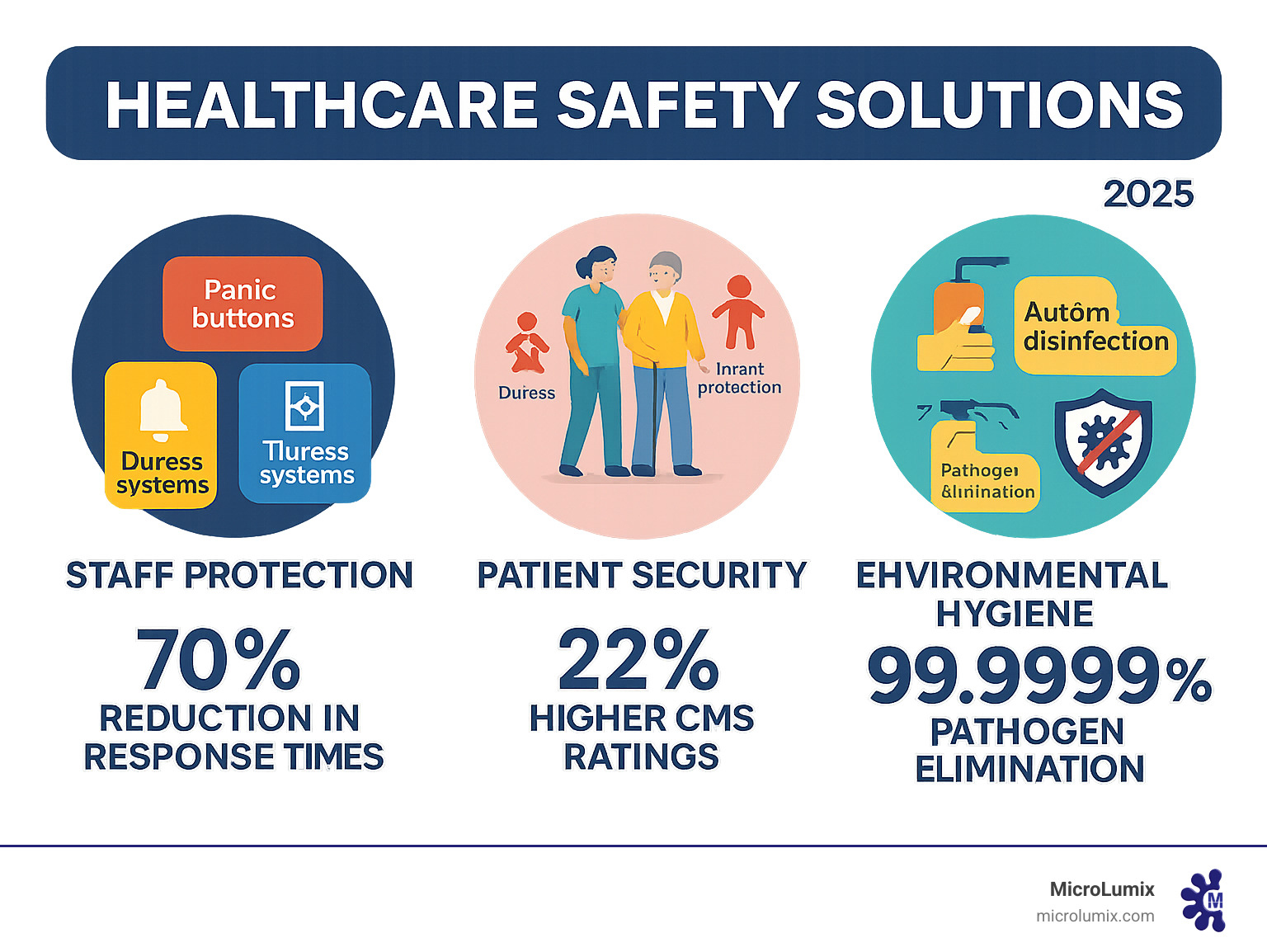
Healthcare safety solutions encompass a comprehensive range of technologies, protocols, and systems designed to protect patients, staff, and visitors in medical facilities. These solutions address critical challenges including workplace violence, healthcare-associated infections (HAIs), patient wandering, infant security, and environmental contamination through integrated approaches combining real-time monitoring, automated disinfection, emergency response systems, and safety protocols.
Key Healthcare Safety Solutions Categories:
- Staff Protection Systems: Panic buttons, RTLS tracking, duress alerts
- Patient Security: Wander management, infant protection, elopement prevention
- Environmental Safety: Advanced disinfection, air quality monitoring, hazmat management
- Emergency Response: Real-time alerts, location tracking, rapid response protocols
- Infection Control: Automated disinfection systems, touchpoint sanitization, pathogen elimination
The stakes have never been higher. Nurses are physically assaulted every 30 minutes, and 70% of workplace violence incidents go unreported. Meanwhile, hospitals produce more than 5 million tons of medical waste annually, creating massive infection control challenges that traditional cleaning methods simply can’t address.
The financial impact is staggering. Healthcare violence costs an average of $3,139 per incident, while facilities spend $4-8 million annually replacing nursing staff who leave due to safety concerns. Organizations that improve staff perceptions of safety see 22% higher CMS star ratings, proving that safety investments directly impact both human welfare and business outcomes.
Modern healthcare facilities need integrated solutions that work together – from wearable panic buttons that reduce security response times by over 70% to automated disinfection systems that eliminate 99.9999% of pathogens in minutes. The most effective approaches combine cutting-edge technology with strong organizational culture and human factors engineering.
I’m Debra Vanderhoff, Founder and COO of MicroLumix Bioscience Technology, with over 20 years of executive leadership experience developing automated disinfection systems and healthcare safety solutions for hospitals and high-traffic environments. My background spans biotechnology, operations, and strategic planning, giving me unique insight into creating comprehensive safety strategies that protect both people and facilities.
The Modern Healthcare Battlefield: Identifying Key Safety Challenges
In the complex and demanding environment of healthcare, our professionals and facilities face a unique set of safety challenges. These aren’t just minor inconveniences; they are critical issues that impact everything from patient outcomes to staff well-being and even the financial stability of our organizations. We must understand these challenges deeply to implement effective healthcare safety solutions.
The Alarming Rise of Workplace Violence
One of the most pressing concerns is the escalating problem of workplace violence, where dedicated healthcare staff who care for others are increasingly becoming targets. The statistics paint a grim picture: nurses are physically assaulted every 30 minutes. This isn’t just a physical threat; it’s an emotional and psychological one. A staggering 70% of workplace violence incidents in healthcare go unreported, creating a silent epidemic that undermines morale and safety.
The impact on our healthcare heroes is profound. Those exposed to workplace violence are 2-4 times more likely to report high levels of PTSD, anxiety, depression, and burnout Source: PubMed on workplace violence and mental health. This toll can lead to staff turnover, exacerbating existing labor shortages.
Beyond the human cost, there’s a significant financial burden. Violence in healthcare is costly, with an average of 58.8 annual incidents per 10,000 workers. The average medical costs per injury related to healthcare violence is $2,631, and the average total cost per incident is $3,139. These figures don’t even begin to capture the indirect costs associated with legal fees, security upgrades, and the immense expense of replacing staff who leave due to safety concerns.
The Persistent Danger of Healthcare-Associated Infections (HAIs)
While violence captures headlines, an invisible threat constantly looms: Healthcare-Associated Infections (HAIs). These infections, acquired by patients during their stay in a healthcare facility, undermine the very purpose of healthcare. They lead to extended hospital stays, increased medical costs, and, tragically, preventable deaths.
The challenge of pathogen transmission is multifaceted. Hospitals produce more than 5 million tons of medical waste annually Source: Practice Green Health on medical waste, much of which can harbor dangerous pathogens. Traditional cleaning methods, often reliant on manual wiping and harsh chemicals, have limitations. They can be inconsistent, miss critical touchpoints, and contribute to environmental issues. As one study notes, “Many of these chemicals may, especially if not properly used, possess hazards for human health and be toxic to the environment.” Moreover, the widespread use of disinfectants during the COVID-19 pandemic led to large amounts of residual disinfectants entering sewage treatment plants and drinking water sources, and even accelerating antibiotic resistance. This means our disinfection challenges aren’t just about killing germs; they’re about doing so safely and sustainably.
The goal is always to improve patient outcomes by rigorously controlling these infections, but it requires continuous innovation and vigilance in our disinfection strategies.
Protecting Vulnerable Populations
Our commitment to safety extends especially to our most vulnerable patients. This includes individuals who may be at risk of wandering or elopement, as well as our tiniest patients.
Wander management is crucial for patients with cognitive impairments, such as those with dementia or certain psychiatric conditions, who may unknowingly leave safe areas. The risks of elopement can range from exposure to dangerous environments to severe injury. Effective healthcare safety solutions in this area involve monitoring systems that provide real-time alerts without excessively restricting patient freedom or dignity.
Infant security is another paramount concern. We must diligently guard against abductions and ensure correct mother-baby matching. Personal protection solutions for infants often involve tamper-proof bands and secure tracking systems that alert staff to any unauthorized movement or attempted removal, providing peace of mind for both parents and our care teams.
A Multi-Layered Defense: Exploring Technology-Driven Healthcare Safety Solutions
The safety challenges we’ve explored require something more sophisticated than traditional approaches. Think of it like building a fortress – you need multiple layers of protection working together seamlessly. Today’s healthcare safety solutions combine cutting-edge technology with smart protocols, allowing us to shift from simply reacting to problems to actually preventing them before they happen.
This integrated approach doesn’t just improve emergency response capabilities; it transforms how we think about operational efficiency across our entire facility.
Staff Duress and Real-Time Location Systems (RTLS)
When a healthcare worker faces a threatening situation, every second counts. Wearable panic buttons have become game-changers in staff protection, offering something invaluable: immediate help at the press of a button.
These compact devices are designed to be discreet – staff can wear them as badges, pendants, or even integrated into their existing ID cards. When trouble starts, a simple push sends a silent distress signal without escalating the situation. It’s like having a direct line to security and colleagues, even when you can’t speak.
The real magic happens when these panic buttons connect with Real-Time Location Systems (RTLS). This technology pinpoints exactly where someone is – not just “somewhere on the third floor,” but “Room 312A, Bed 2.” When a panic button activates, security teams know precisely where to go, even if the person is moving.
The results speak for themselves. One major healthcare system saw their security response times drop by over 70% after implementing a comprehensive panic button system. That’s the difference between a dangerous situation and a prevented tragedy.
RTLS technology also enables smart alerting – sending notifications via text, app, or existing communication systems to the right people instantly. For staff working alone in high-risk areas like the ER or behavioral health units, knowing that help is literally one button push away provides tremendous peace of mind and empowerment.
Infant Protection and Wander Management Systems
Protecting our most vulnerable patients requires a delicate balance between safety and freedom. Modern technology helps us achieve both.
For newborns, tamper-proof bands serve as the first line of defense against abduction. These specialized bands work with monitoring systems to trigger immediate alerts if someone tries to remove them or if an infant moves toward an unauthorized area. The system also ensures correct mother-baby matching, providing an extra layer of security that gives families confidence in their baby’s safety.
Exit monitoring creates invisible boundaries that alert staff the moment someone approaches restricted areas. But this isn’t about creating a prison-like environment. Instead, these systems preserve patient independence while providing crucial protection.
For patients at risk of wandering – whether due to dementia, psychiatric conditions, or medication effects – wander management systems offer freedom within defined safe zones. Patients can move around and maintain their dignity while staff receive real-time alerts if someone approaches an exit or leaves their designated area.
The technology provides live map views and instant location updates, enabling rapid intervention when needed. It’s about giving patients the independence they deserve while ensuring their safety – something that wouldn’t be possible without these advanced monitoring capabilities.
Advanced Environmental Disinfection
The battle against healthcare-associated infections demands more than traditional cleaning methods. While manual cleaning remains important, human error and the limitations of conventional disinfectants create gaps that pathogens can exploit.
Let’s look at how different disinfection methods stack up:
| Feature | Manual Wiping | Automated UV-C | Automated HOCl-based Disinfection |
|---|---|---|---|
| Efficacy | Variable; often misses surfaces | High for room disinfection | 99.9999% pathogen elimination |
| Speed | Slow and labor-intensive | Moderate; requires room clearing | Fast; works continuously |
| Safety | Chemical exposure risks | UV exposure concerns | Non-toxic, safe for everyone |
| Labor | High staff dependency | Moderate setup required | Low; works automatically |
Hypochlorous acid (HOCl) represents a breakthrough in safe, effective disinfection. Your body actually produces this powerful disinfectant naturally – your white blood cells make it to fight infections. This natural origin makes HOCl incredibly safe, yet research shows it disinfects 200 to 300 times better than bleach.
The beauty of HOCl lies in its dual nature: it’s gentle enough that there’s no evidence of toxicity when ingested or inhaled, yet powerful enough to eliminate 99.9999% of pathogens in minutes. When it breaks down, it simply becomes salt and water – completely biodegradable and environmentally friendly.
Automated touchpoint disinfection takes this technology to the next level. High-touch surfaces like door handles, elevator buttons, and nurse call systems are constantly contaminated throughout the day. Traditional cleaning happens once or twice daily, leaving hours when these surfaces can harbor dangerous pathogens.
Our MicroLumix GermPass system addresses this gap by providing continuous protection. It’s the world’s only lab-certified, automatic touchpoint germ-killing system, using self-sealing UVC chambers to sanitize surfaces immediately after every touch. This reduces human error while ensuring consistent, thorough disinfection exactly when and where it’s needed most.
The CDC emphasizes that ideal disinfectants should be non-toxic, environmentally friendly, and easy to use. Automated HOCl-based systems check all these boxes while providing the reliability and consistency that manual methods simply can’t match.
By combining powerful, safe disinfectants with intelligent automation, we’re not just cleaning surfaces – we’re breaking the chain of transmission and creating truly safer environments for everyone.
Beyond Technology: The Human Element in Healthcare Safety
While advanced technology forms a critical backbone for healthcare safety solutions, it’s only one piece of the puzzle. The human element—our organizational culture, the way we foster communication, and our commitment to continuous learning—is equally vital. Technology provides the tools, but people drive the change.
Think of it this way: you can have the most sophisticated panic button system in the world, but if staff don’t feel comfortable using it, it won’t protect anyone. You can install state-of-the-art disinfection equipment, but if your team doesn’t understand why it matters, they might work around it instead of with it.
The most successful healthcare facilities understand that safety isn’t just about buying the right equipment. It’s about creating an environment where everyone feels empowered to speak up, learn from mistakes, and work together toward a common goal.
Fostering a ‘Just Culture’ for Proactive Improvement
At the heart of truly safe healthcare is something called a ‘just culture’. This isn’t just a buzzword—it’s a fundamental shift in how we think about mistakes and accountability.
In traditional environments, the first question is often “Who messed up?” In a just culture, we ask “What went wrong, and how can we prevent it?”
This doesn’t mean we ignore personal responsibility. Instead, we recognize that most healthcare errors happen because good people are working in flawed systems. When a nurse forgets to activate a panic button during an incident, the real question isn’t whether they’re a bad nurse. It’s whether the button was easy to reach, whether they were properly trained, and whether they felt psychologically safe reporting what happened.
The CMS Patient Safety Structural Measure emphasizes just culture because it works. When staff feel safe reporting errors and near-misses without fear of punishment, we get the information we need to fix problems before they hurt someone. Organizations like Just Culture Certification Courses help healthcare leaders build this kind of environment.
Creating psychological safety takes time and consistent effort. It means investigating incidents to understand system failures, not to find blame. It means showing through actions that learning from mistakes is more valuable than hiding them.
The Importance of Human Factors Engineering
Human factors engineering sounds complicated, but the concept is simple: design systems that work with human nature, not against it.
We all have limitations. We get tired, distracted, and overwhelmed. We make assumptions and take shortcuts. Instead of pretending these human traits don’t exist, smart system design accounts for them.
Consider a panic button system. A human factors engineer would ask: Can staff reach it quickly when they’re scared? Is it obvious which button to press? Will it work reliably when someone’s hands are shaking? These aren’t just nice-to-have features—they’re the difference between a system that saves lives and one that sits unused.
The same principle applies to disinfection protocols. We can develop the most effective cleaning technology in the world, but if it requires fifteen steps and perfect timing, busy healthcare workers won’t use it consistently. Better to create automated systems that work seamlessly in the background, like touchpoint disinfection that activates after every use without requiring staff to remember anything.
ECRI on Total Systems Safety champions this approach, showing how organizations can integrate human factors thinking into everything from equipment design to workflow planning. When we design with real human behavior in mind, we create systems that improve reliability instead of fighting it.
The goal isn’t to eliminate human involvement—it’s to set people up for success. This means creating intuitive interfaces, building in safeguards for common mistakes, and ensuring that doing the right thing is also the easy thing. When technology and human factors work together, that’s when healthcare safety solutions truly transform patient care.
The Business Case for Safety: ROI, Retention, and Reputation
When we talk about investing in comprehensive healthcare safety solutions, we’re not just discussing the right thing to do—we’re talking about smart business. The numbers don’t lie: facilities that prioritize safety see dramatic improvements in their bottom line, staff satisfaction, and overall reputation. Let’s explore why safety investments pay dividends that extend far beyond preventing incidents.

Calculating the ROI of Investing in Safety
The financial impact of safety failures hits healthcare facilities hard. Every violent incident costs an average of $3,139, but that’s just the tip of the iceberg. Hidden beneath are the costs of workers’ compensation claims, legal fees, increased security measures, and the devastating expense of replacing injured or traumatized staff.
Healthcare-associated infections create another massive financial drain. Patients with HAIs stay longer, require more intensive treatment, and generate additional costs that facilities often absorb. When we implement advanced disinfection technologies and staff protection systems, we’re essentially buying insurance against these costly incidents.
The AHA report on violence costs reveals just how expensive workplace violence has become for healthcare organizations. But here’s the encouraging part: facilities that invest in proactive safety measures see reduced incident costs almost immediately. Staff duress systems prevent minor conflicts from escalating into major injuries. Advanced environmental disinfection cuts HAI rates dramatically.
Perhaps most significantly, addressing safety concerns directly impacts staff turnover. The average facility spends $4-8 million annually replacing nursing staff who leave due to safety concerns. When we create safer work environments, we’re not just protecting our people—we’re protecting our investment in them.
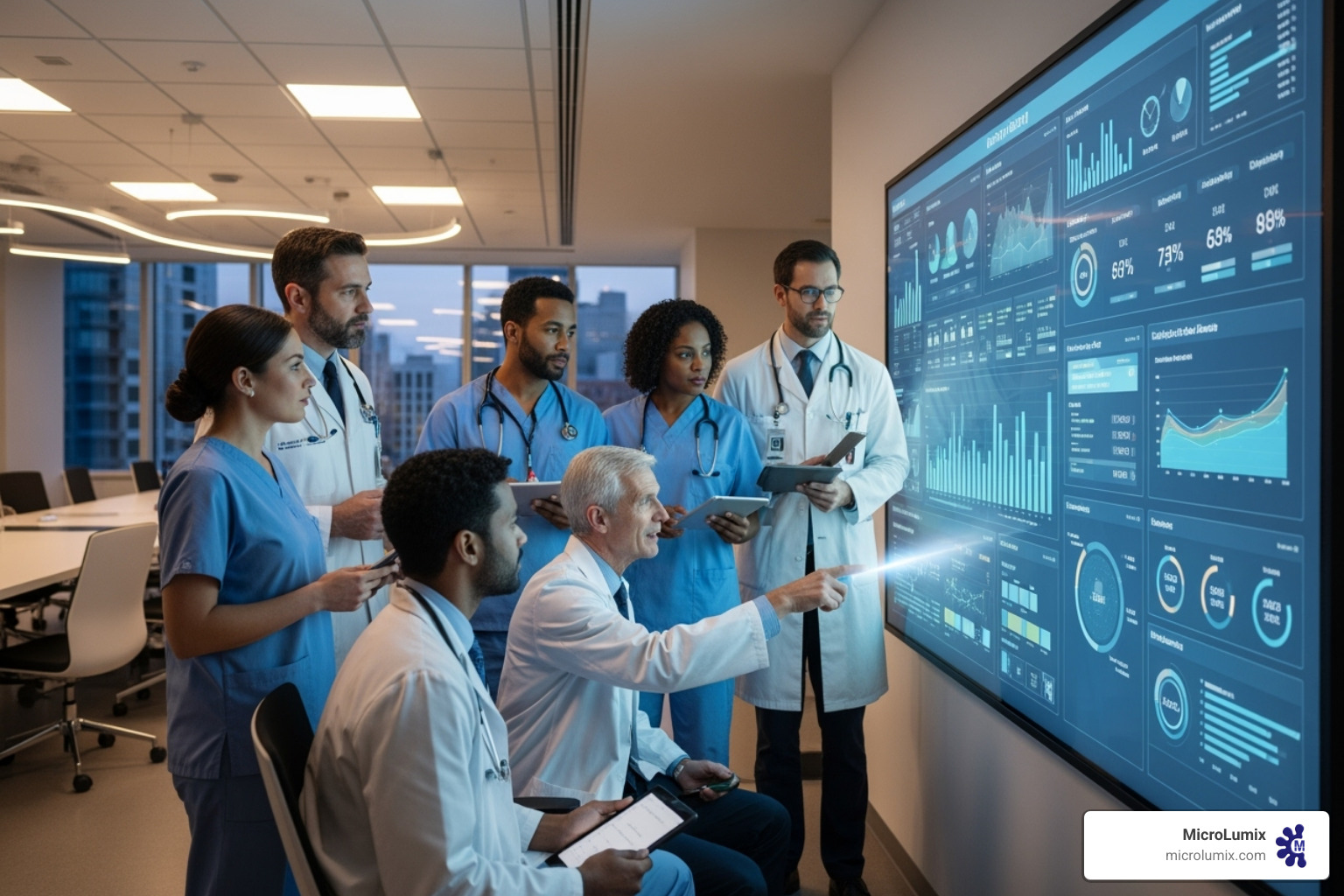
Data analytics from modern safety systems provide the insights we need to make smart decisions. We can track incident patterns, identify high-risk areas, and measure the direct impact of our safety investments. This data-driven approach to improvement creates a continuous cycle of better outcomes and better returns.
How Safety Impacts Staff Recruitment, Retention, and Well-being
Here’s something that might surprise you: safety is the number one factor nurses consider when deciding whether to stay in their role McKinsey & Company on nurse retention factors. Not salary, not benefits, not schedule flexibility—safety comes first.
This makes perfect sense when you think about it. Healthcare workers chose their careers to help people, not to fear for their own well-being. When we create genuinely safe environments, we’re giving our staff the foundation they need to do their best work.
The ripple effects are remarkable. Facilities with strong safety cultures attract top talent because word spreads quickly in healthcare communities. Nurses talk to each other, and they know which hospitals truly prioritize staff safety versus those that just pay lip service to it.
But the benefits go deeper than recruitment. When staff feel safe and supported, their stress levels drop, burnout decreases, and job satisfaction soars. This translates directly into better patient care, fewer errors, and improved outcomes across the board.
The proof is in the ratings: facilities that improve staff perceptions of safety see 22% higher CMS star ratings. These ratings aren’t just badges of honor—they directly impact patient choice, insurance reimbursements, and overall organizational reputation.
Creating a safe workplace sends a powerful message to current and potential employees: we value you, we protect you, and we’re committed to your well-being. In today’s competitive healthcare landscape, that message is worth its weight in gold.
Frequently Asked Questions about Healthcare Safety Solutions
What are the most critical components of modern healthcare safety solutions?
The most effective healthcare safety solutions are integrated, with every component working in harmony. Think of it as building complementary layers of protection.
At the foundation, you need integrated technology that actually talks to itself. This means Real-Time Location Systems (RTLS) for staff duress and patient tracking working seamlessly with your existing infrastructure. But technology alone isn’t enough – it needs to be paired with advanced environmental controls like automated disinfection systems that eliminate pathogens without adding to your staff’s workload.
The human element is equally crucial. A strong safety culture that encourages open communication and accepts a ‘just culture’ approach transforms how your team responds to challenges. When staff feel safe reporting concerns without fear of blame, you catch problems before they become crises.
Comprehensive staff training ensures everyone knows how to use these tools effectively. There’s no point in having the best safety technology if your team doesn’t feel confident using it. Finally, data-driven decision making using analytics from your safety systems helps you continuously identify risks and refine your approach. It’s about protecting both your physical spaces and the well-being of everyone who walks through your doors.
How do I choose the right healthcare safety solutions for my facility?
Choosing the right healthcare safety solutions starts with a comprehensive risk assessment of your facility. What keeps you up at night? Is it staff safety in certain units? Infection control challenges? Patient elopement risks?
Once you’ve identified your specific vulnerabilities, consider how any solution will grow with you. Scalability matters because your needs will evolve. Ask yourself: will this solution still serve us well in five years?
Integration capabilities are absolutely critical. The last thing you want is another system that sits in isolation. Look for solutions that play nicely with your electronic health records, security systems, and communication platforms. Your staff already have enough to juggle.
Speaking of staff, prioritize ease of use above all else. The most sophisticated system in the world won’t help if your team finds it frustrating or complicated. Finally, think beyond the initial price tag when analyzing long-term ROI. Consider potential savings from reduced incidents, improved staff retention, and improved reputation. The goal is finding solutions that are effective, sustainable, and align with your mission of providing exceptional care.
How does improving staff safety translate to better patient care?
When you take care of your caregivers, they can take better care of their patients. It’s that simple.
When your healthcare professionals feel secure and supported, something wonderful happens. Their stress levels drop, burnout decreases, and suddenly they have more mental and emotional energy to focus on what they do best – caring for patients. Reduced staff stress and burnout means fewer medical errors and more attentive, compassionate care.
A safer work environment naturally leads to higher staff morale, which patients notice immediately. Happy, confident staff create a more positive healing environment. They’re more likely to go the extra mile, spend those crucial few additional minutes with patients, and catch potential issues before they become problems.
The numbers back this up beautifully. Organizations that improve their staff’s perceptions of safety see 22% higher CMS star ratings. That’s not just a nice statistic – it represents real improvements in patient outcomes, satisfaction scores, and overall quality of care.
It’s truly a virtuous cycle. When you invest in protecting your caregivers, they’re better equipped to protect and heal their patients. Everyone wins, and that’s exactly how healthcare should work.
Conclusion
Creating truly safe healthcare environments isn’t just about checking boxes—it’s about changing how we think about protecting the people who dedicate their lives to caring for others. The challenges we face today, from workplace violence to persistent infections, demand more than traditional approaches. They require a fundamental shift toward comprehensive healthcare safety solutions that work together seamlessly.
The evidence is clear. When we invest in both advanced technology and strong safety culture, remarkable things happen. Staff feel empowered and protected. Patients receive better care. Organizations see improved CMS star ratings and reduced turnover costs. It’s a win-win-win situation that creates ripple effects throughout the entire healthcare ecosystem.
Think about it this way: every panic button that prevents an assault, every automated disinfection cycle that stops an infection, every alert system that keeps a vulnerable patient safe—these aren’t just technological achievements. They’re moments when someone gets to go home safely to their family. They’re opportunities for healing instead of harm.
The most successful facilities understand that safety isn’t a destination—it’s an ongoing journey. It requires continuous investment in cutting-edge tools like real-time location systems and automated touchpoint disinfection, combined with the human elements of just culture and open communication. When these pieces work together, they create something powerful: an environment where everyone can focus on what matters most—providing exceptional patient care.
Moving forward means embracing this holistic approach. It means recognizing that protecting our healthcare heroes and vulnerable patients isn’t just the right thing to do—it’s also smart business. The ROI is undeniable, the moral imperative is clear, and the technology is ready.
Learn how automated disinfection completes your safety strategy.