
The Silent Threat in Healthcare Facilities
Hospital acquired infection prevention is a critical priority affecting millions of patients worldwide. Healthcare-associated infections (HAIs) are infections patients acquire while receiving care in hospitals, long-term care facilities, or other healthcare settings.
Key Hospital Acquired Infection Prevention Strategies:
- Hand Hygiene – The most effective single prevention measure (reduces infections by 40-70%)
- Environmental Cleaning – Regular disinfection of high-touch surfaces and medical equipment
- Antibiotic Stewardship – Proper use of antibiotics to prevent resistance
- Patient Screening – Identifying and isolating high-risk patients
- Surveillance Systems – Monitoring infection rates and outbreak detection
- Staff Training – Ensuring healthcare workers follow safety protocols
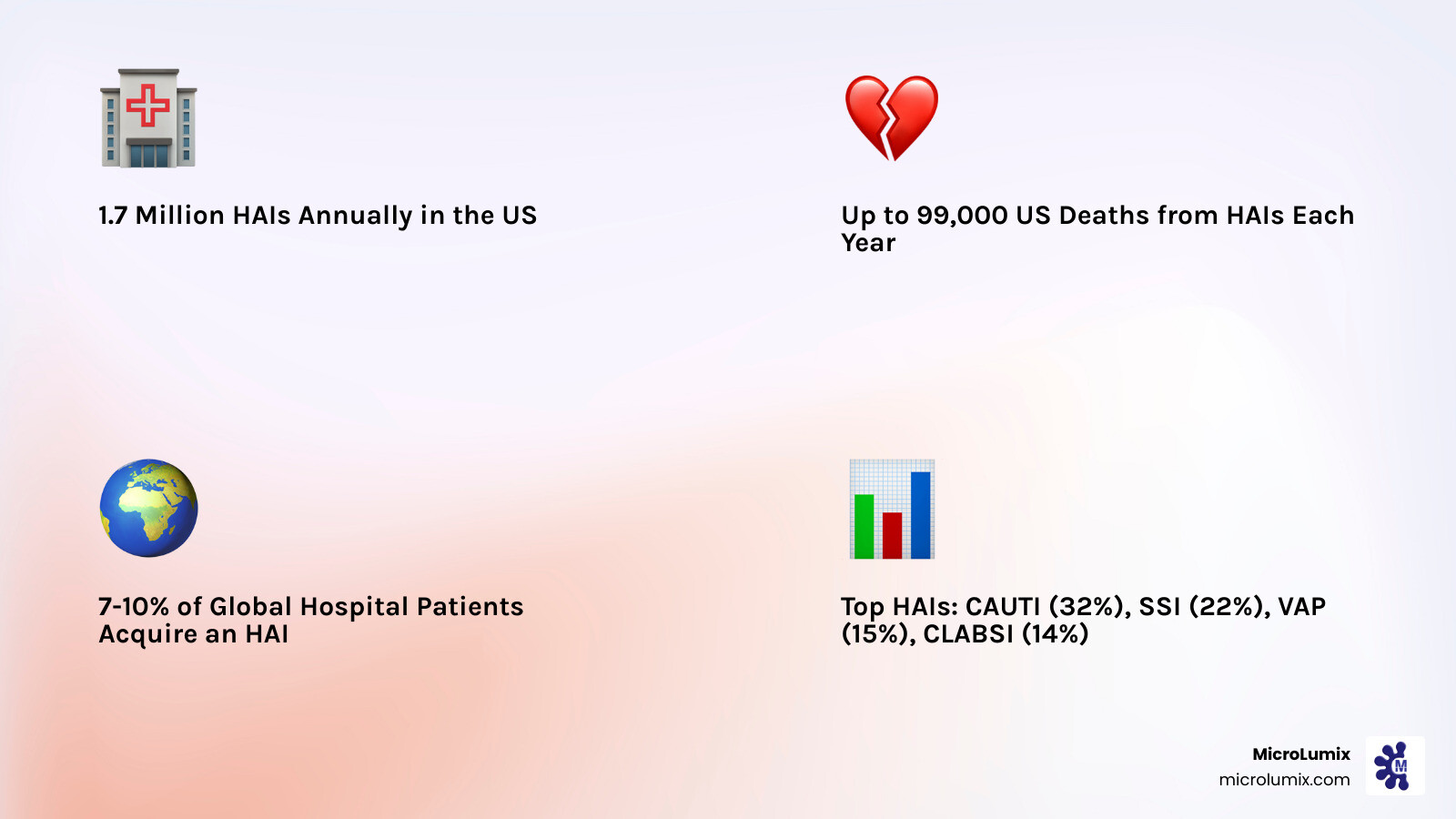
In the U.S. alone, HAIs affect approximately 1.7 million patients annually, causing 90,000 to 99,000 deaths. Globally, for every 100 patients admitted, 7 in high-income countries and 10 in low-income countries will acquire at least one HAI.
These infections threaten patient safety and create enormous economic burdens through extended hospital stays and additional treatments. The most common HAIs include catheter-associated urinary tract infections (32%), surgical site infections (22%), ventilator-associated pneumonia (15%), and central line-associated bloodstream infections (14%).
Despite these statistics, many HAIs are preventable through proper infection control and emerging technologies.
As Debra Vanderhoff, Founder and COO of MicroLumix Bioscience Technology, I’ve dedicated my career to developing innovative solutions for hospital acquired infection prevention, including automated disinfection systems. My 20+ years in biotechnology and healthcare focus on technologies that protect patients and healthcare workers from preventable infections.
The Cornerstone of Hospital Acquired Infection Prevention: Core Strategies
Effective hospital acquired infection prevention requires a multi-layered defense. A comprehensive approach is needed to cover every possible pathway for germs to spread, rather than relying on a single strategy.
At the foundation are Standard Precautions—basic infection control practices applied to every patient. On top of these, we add Transmission-Based Precautions for patients with known infections that require special handling.
This approach only works with full team participation. From surgeons to cleaning staff, every team member plays a crucial role in preventing infections. A break in this chain can have serious consequences.
Research on HAI prevention strategies consistently shows that these foundational practices are essential for reducing infection risks. When healthcare teams commit to these core strategies, the results speak for themselves.
The Historical and Current Importance of Hand Hygiene
If hospital acquired infection prevention had a hall of fame, hand hygiene would be its first inductee. It’s simple, inexpensive, and incredibly powerful.
In the 1840s, Dr. Ignaz Semmelweis finded that having doctors wash their hands after autopsies and before delivering babies dramatically cut mortality rates from childbed fever. Though his life-saving findings were initially rejected by offended colleagues, his work laid the groundwork for modern infection control.
Decades later, Florence Nightingale transformed military hospitals during the Crimean War by emphasizing cleanliness and hygiene, which became the foundation of modern nursing and infection prevention.
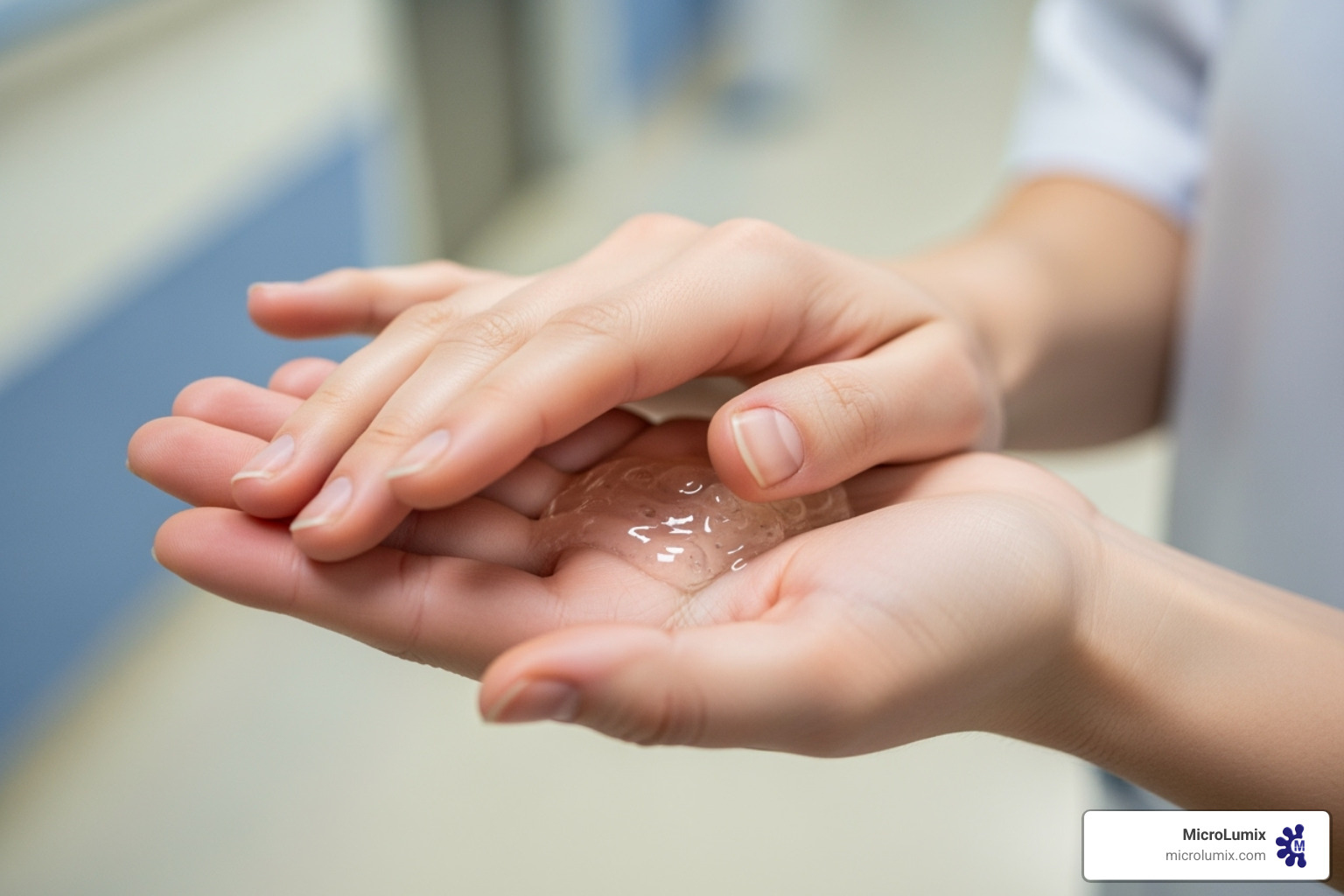
Our hands carry two types of germs: transient flora, picked up from surfaces and easily washed off, and resident flora, which live on our skin. Transient flora are the primary culprits in spreading infections between patients.
The World Health Organization’s “5 Moments for Hand Hygiene” clarifies when healthcare workers must clean their hands: before touching a patient, before a clean procedure, after body fluid exposure, after touching a patient, and after touching a patient’s surroundings.
Both soap and water and alcohol-based hand rubs are effective. However, alcohol-based rubs are often preferred for routine cleaning as they work quickly, provided hands are not visibly soiled.
Despite the evidence, hand hygiene compliance among healthcare workers often remains below 40% globally. This is a critical gap, as proper hand hygiene can reduce hospital infections by 40% to 70%. Achieving consistent compliance requires ongoing education and monitoring.
Environmental Hygiene: Creating a Safe Patient Zone
The healthcare environment itself is a reservoir for germs, spreading infections through contact transmission on surfaces.
High-touch surfaces like bed rails, doorknobs, and call buttons are the biggest culprits, creating pathways for germs to move between people.
Effective environmental hygiene involves both cleaning (removing visible dirt) and disinfecting (killing microorganisms) with EPA-approved disinfectants. Both steps are essential to break the chain of infection.
Terminal cleaning is a thorough cleaning and disinfection process performed after a patient is discharged, ensuring the room is safe for the next occupant.
This is where technology can support human efforts. Automated Disinfection Technology (ADT) improves environmental hygiene. Our MicroLumix GermPass system is a breakthrough in this field—the world’s only lab-certified, automatic touchpoint germ-killing system.
The GermPass uses self-sealing UVC chambers to sanitize high-touch surfaces immediately after each use, achieving 99.999% efficacy against pathogens. This technology provides continuous, high-level disinfection, acting as a tireless 24/7 infection control specialist.
Advanced Prevention and Control Measures
Beyond the basics, advanced strategies are essential for tackling complex challenges like antibiotic-resistant organisms. These sophisticated systems are critical components of modern hospital acquired infection prevention programs.
As infections become more complex, our control programs must adapt with equal sophistication to protect patients.

The Role of Antibiotic Stewardship in Combating HAIs
Antimicrobial resistance (AMR) occurs when bacteria evolve to survive antibiotics, creating “superbugs” like MRSA (Methicillin-resistant Staphylococcus aureus) and VRE (Vancomycin-resistant Enterococci). These organisms are difficult to treat and spread rapidly in healthcare settings.
Antibiotic Stewardship Programs (ASPs) are our strategic response. These programs focus on optimizing antibiotic use—ensuring the right drug, dose, and duration for each patient.
ASPs help preserve the effectiveness of current antibiotics, reduce unnecessary costs, and improve patient outcomes by preventing complications from inappropriate antibiotic use.
Successful ASPs, as outlined by the CDC, rely on leadership commitment, drug expertise, careful tracking, and ongoing education. When implemented properly, these programs significantly reduce antimicrobial overuse.
Patient Screening and Cohorting Strategies
Patient screening helps identify individuals carrying infectious agents, especially multidrug-resistant organisms. For example, we might screen newly admitted patients for MRSA if they have risk factors like previous hospitalizations.
Once identified, at-risk patients are placed under isolation precautions. This may involve private rooms or cohorting—grouping patients with the same infection in a designated area with dedicated staff. Cohorting is an effective way to contain spread, especially during outbreaks.
However, implementation requires balancing the logistics of testing and room assignments with the potential psychological impact on patients. The key is targeted screening based on local infection patterns and patient risk factors.
Leveraging Public Health Surveillance to Monitor and Control HAIs
Public health surveillance acts as an early warning system for hospital acquired infection prevention. This systematic approach involves collecting and analyzing data on infection rates to identify trends and generate actionable insights.
In the U.S., the National Healthcare Safety Network (NHSN) serves as a central database, tracking HAIs like CAUTIs, CLABSIs, and SSIs. The power of surveillance lies in its ability to detect outbreaks early, allowing for rapid, targeted interventions.
This data actively informs policy and practice at facility and national levels, helping administrators allocate resources and measure program success.
Public reporting of infection rates adds accountability, creating healthy competition among facilities to improve their prevention efforts. Modern surveillance allows us to be proactive rather than reactive, helping us stay one step ahead of infections.
Understanding the Enemy: Common Types of Hospital-Acquired Infections
Patients in healthcare settings are uniquely vulnerable to infections due to compromised immune systems and invasive medical procedures. These life-saving interventions can become pathways for pathogens if hospital acquired infection prevention is not strictly maintained.
The most frequent culprits behind HAIs include bacteria like Staphylococcus aureus (including MRSA), Escherichia coli, Pseudomonas aeruginosa, Klebsiella pneumoniae, Enterococcus species (including VRE), and Clostridioides difficile, along with various fungi and viruses.
The Most Prevalent HAIs: Causes and Symptoms
Four types of HAIs consistently dominate the statistics. Understanding their causes and symptoms is vital for providers and patients.
Catheter-associated Urinary Tract Infections (CAUTIs) account for 32% of all HAIs. They occur when bacteria enter the urinary tract via a catheter, often due to improper insertion or maintenance, prolonged use, or poor hand hygiene. Symptoms include fever, chills, burning during urination, and lower abdominal pain.
Surgical Site Infections (SSIs) make up 22% of all HAIs. These occur at the surgical incision site. Causes include contamination during surgery, poor skin prep, or inadequate wound care post-operation. Telltale signs are redness, pain, swelling, and pus draining from the wound, often with a fever.
Ventilator-associated Pneumonia (VAP) represents 15% of all HAIs. This lung infection affects patients on mechanical ventilators when bacteria enter through the breathing tube, often due to poor oral hygiene or ventilator management. Symptoms include fever, new or worsening cough, shortness of breath, and increased respiratory secretions.
Central Line-associated Bloodstream Infections (CLABSIs) are 14% of all HAIs. These serious infections occur when germs enter a central line, typically due to contamination during insertion or maintenance or poor site care. Symptoms include fever, chills, and redness or pus at the catheter site. They can quickly become life-threatening.
Complications and Outlook for Patients with HAIs
HAIs can trigger a cascade of severe complications that alter a patient’s recovery and long-term health.
Sepsis is a life-threatening complication where the body’s overwhelming response to infection damages its own tissues, leading to organ failure. This and other complications result in prolonged hospital stays and dramatically increased healthcare costs.
Some patients face long-term disability from lasting damage to organ function or mobility. Most seriously, HAIs carry an increased mortality risk, contributing to tens of thousands of deaths annually in the U.S. alone.
The outlook for patients depends on the type of infection, the pathogen, the patient’s underlying health, and the speed of treatment. Early detection and aggressive treatment are our most powerful tools for improving outcomes and preventing the worst consequences of these infections.
Upholding Patient Safety: Guidelines for Healthcare Professionals
For healthcare professionals, hospital acquired infection prevention is the foundation of quality care. It requires a culture where patient safety is second nature, protecting those who trust us with their health.

Aseptic technique is fundamental: keeping clean items clean and sterile items sterile during procedures like catheter insertion or wound care to protect patients from harmful microorganisms.
Personal Protective Equipment (PPE) protects both staff and patients, but proper use—knowing when and how to wear and remove it—is as crucial as wearing it at all.
Safe injection practices are critical for preventing the spread of bloodborne pathogens. This includes using a fresh, sterile needle and syringe for every injection and proper sharps disposal.
For patients with invasive devices like catheters or ventilators, vigilance is paramount. Daily assessment of need, meticulous site cleaning, and proper maintenance help prevent infections like CLABSIs and CAUTIs.
Patient and family education empowers people to be partners in their care. When patients understand hand hygiene and recognize early signs of infection, they become active participants in their own safety.
Specific Measures for Preventing COVID-19 Transmission in Healthcare
The COVID-19 pandemic reinforced the need for adaptable infection prevention strategies.
Airborne precautions, including negative pressure rooms and proper ventilation, became essential to prevent the spread of aerosolized particles.
N95 respirators offered superior filtration, providing healthcare workers better protection when caring for patients with suspected or confirmed COVID-19.
Improved environmental cleaning focused on high-touch surfaces. Technologies like our GermPass system proved invaluable by providing continuous disinfection between manual cleanings.
Strategic patient placement and improved ventilation helped minimize airborne transmission within facilities.
Healthcare worker vaccination became a priority to protect staff and reduce the risk of transmission to vulnerable patients.
Comprehensive screening and testing protocols allowed for rapid identification and isolation of infected individuals, helping to prevent larger outbreaks.
These adaptations demonstrate that effective hospital acquired infection prevention requires flexibility and continuous learning to maintain the highest standards of patient safety.
Frequently Asked Questions about Hospital Infection Prevention
Here are answers to some of the most common questions about hospital acquired infection prevention.
What is the single most effective way to prevent HAIs?
Without a doubt, it’s hand hygiene. Our hands are the primary vehicles for spreading germs between patients and surfaces. As proven since the 1840s, proper hand cleaning is the most powerful tool we have.
Research shows proper hand hygiene can prevent 40% to 70% of hospital infections. Whether using soap and water or an alcohol-based hand rub, you are breaking the chain of transmission.
Despite this, global compliance rates are often below 40%, highlighting a critical area for improvement. It’s a simple, low-cost action with an extraordinary impact.
How can patients and visitors help prevent the spread of infections?
Patients and visitors are vital partners in prevention. You can help keep everyone safe by taking a few key actions:
- Clean your hands frequently, especially when entering and leaving patient rooms. Don’t hesitate to ask for hand sanitizer.
- Pay attention to isolation signs outside patient rooms. These are specific instructions to protect everyone. Staff can show you how to use any required gear like gowns or masks.
- Stay current with your vaccinations, such as those for the flu and pneumonia, to protect vulnerable patients.
- Please speak up if you see a healthcare worker forget to clean their hands. A gentle reminder like, “Could you please clean your hands before examining me?” is usually appreciated.
Are hospitals getting better at preventing infections?
Yes, significant progress has been made over the past decade. Hospital acquired infection prevention has improved through dedicated efforts and innovation.
Public reporting of infection rates has created accountability and motivated improvement. Targeted prevention “bundles”—coordinated practices for specific infections like CLABSIs—have been very successful.
New technologies are also making a real difference. At MicroLumix, our GermPass system provides continuous disinfection for high-touch surfaces, complementing traditional cleaning methods by sanitizing touchpoints immediately after every use with 99.999% pathogen elimination.
However, the work is not done. Antibiotic-resistant organisms continue to emerge, and new pathogens can appear unexpectedly. The key is for the healthcare community to remain adaptable and committed to continuous improvement.
Conclusion: A Coordinated Effort for Safer Healthcare
Hospital acquired infection prevention is a coordinated effort, combining simple practices, advanced technology, and human dedication. It’s not one silver bullet, but an orchestration of strategies working together to keep patients safe.
The foundation is hand hygiene, a simple practice that can prevent up to 70% of infections. This is supported by robust environmental cleaning, antibiotic stewardship programs, and surveillance systems that help us stay ahead of threats.
Technology is revolutionizing infection control. At MicroLumix, our GermPass system exemplifies this by automatically sanitizing high-touch surfaces after every contact with 99.999% efficacy. It provides a constant layer of protection that never forgets or gets distracted.
However, technology works best when paired with a culture of safety. Prevention succeeds when healthcare providers, patients, and administrators are all committed to continuous learning and innovation. The COVID-19 pandemic proved we can adapt quickly, and that same spirit will help us tackle future challenges like antibiotic resistance.
I’m optimistic about the future of infection control. HAI rates are declining in many areas, and there’s a growing culture of safety worldwide. Every person who prioritizes safety contributes to this positive change.
The journey toward safer healthcare requires all of us. By combining time-tested practices with cutting-edge innovations and making safety everyone’s responsibility, we create environments where healing can happen without fear.
For more information about how automated disinfection technology is changing infection prevention, I invite you to explore the innovative solutions we’re developing to make healthcare safer for everyone.