
Why Hospital Bed Rails Are Essential for Patient Safety and Care
Hospital bed rails are critical safety devices that protect patients by preventing falls and providing support for mobility. These barriers come in several forms:
- Half-Length Rails: Best for mobility support.
- Full-Length Rails: Maximum fall prevention for high-risk patients.
- Assist Rails: Help with independent movement.
While essential, bed rails also present risks like patient entrapment and can become restraints if used improperly. A key safety factor is ensuring a proper mattress fit to prevent dangerous gaps.
Furthermore, bed rails are high-touch surfaces that contribute to the spread of Healthcare-Associated Infections (HAIs). Manual cleaning is often insufficient, highlighting the need for better disinfection protocols. Understanding these benefits and risks is crucial for making decisions that prioritize patient safety.
I’m Debra Vanderhoff, Founder and COO of MicroLumix Bioscience Technology. My background in healthcare operations has shown me how proper equipment selection and maintenance, including automated disinfection for surfaces like hospital bed rails, directly impacts patient outcomes.

Understanding the Different Types of Hospital Bed Rails
Choosing the right hospital bed rails requires understanding each patient’s unique mobility, safety concerns, and support needs. A patient recovering from surgery has different requirements than one with dementia-related confusion, so the right choice is critical.
Here’s how the main types of hospital bed rails compare:
| Feature | Half-Length Bed Rails | Full-Length Bed Rails | Assist Rails (Bed Canes/Handles) |
|---|---|---|---|
| Primary Use | Support for sitting/standing | Prevent falls from bed | Support for transfers/repositioning |
| Mobility Impact | Allows easier entry/exit | Can restrict movement | Improves independent movement |
| Fall Prevention Level | Moderate | High | Low to Moderate |
| Entrapment Risk | Lower | Higher | Very Low |
Half-Length Bed Rails for Mobility and Support
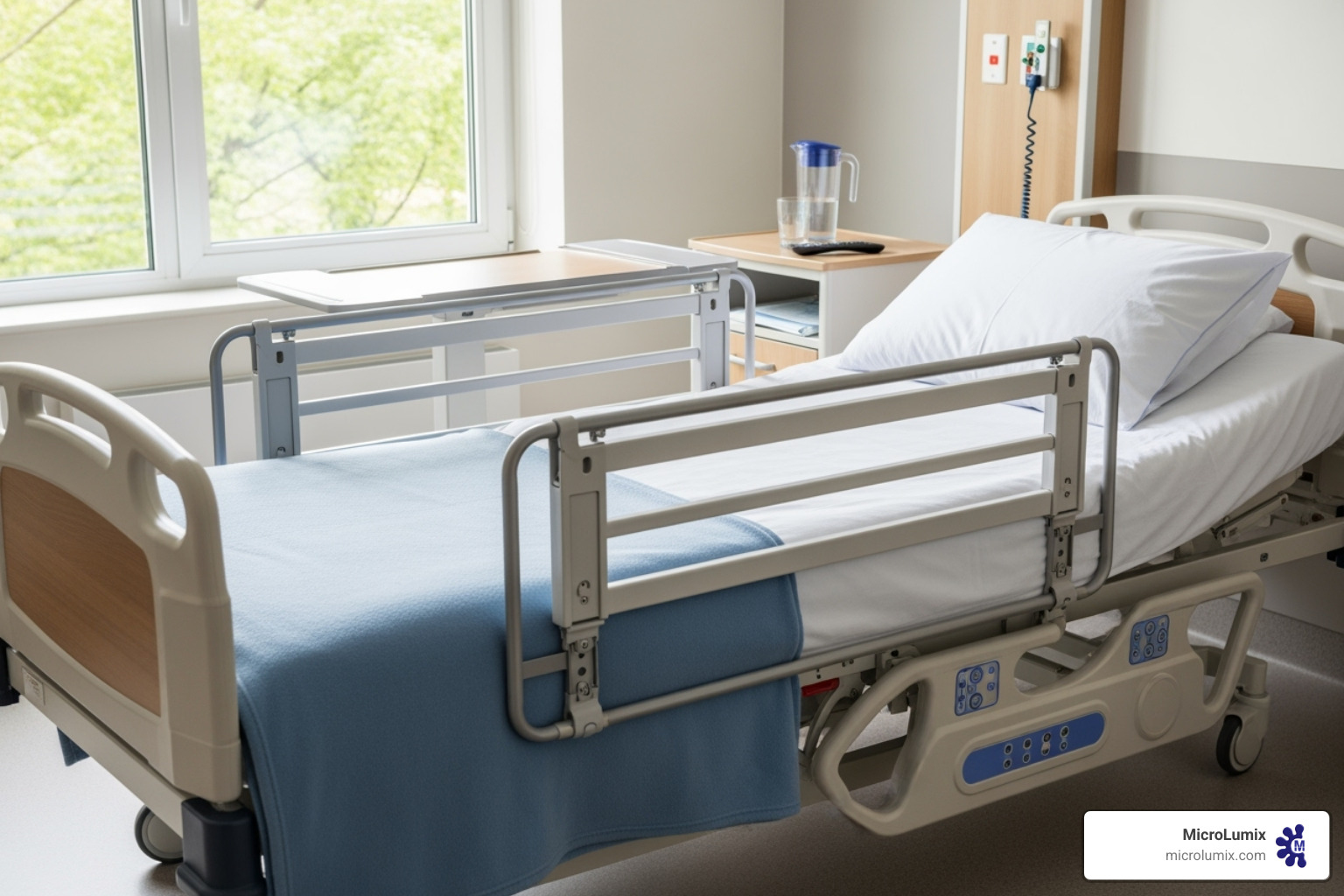
Half-length rails provide sturdy support for patients sitting up, getting out of bed, or repositioning. They offer assistance without making patients feel confined, which is especially helpful for those recovering from surgery or managing conditions affecting strength and balance. Because they only cover part of the bed, half-length hospital bed rails significantly reduce entrapment risks compared to full-length options, preserving patient dignity and independence.
Full-Length Bed Rails for Maximum Fall Prevention
Full-length hospital bed rails offer maximum protection for patients with serious fall risks, such as those with cognitive decline, medication side effects, or restless movement during sleep. These rails create a complete barrier, which can be a lifesaver for patients with dementia or delirium. However, full-length rails can become a restraint if not used thoughtfully. It’s essential to ensure they are medically necessary and not just for convenience, preserving as much patient freedom as possible.
Assist Rails and Other Supports
Assist rails, or bed canes, are designed to help patients move more independently. They provide leverage for pulling up or pivoting safely, acting like grab bars for the bed. For patients rebuilding strength, these rails can be the key to transitioning from dependence to independence.
The FDA oversees rails marketed for medical purposes, while the Consumer Product Safety Commission handles consumer products. For current safety guidelines, healthcare facilities should reference the FDA’s guide to bed safety. Understanding these options helps balance safety and independence.
The Critical Importance of Bed Rail Safety and Risk Mitigation
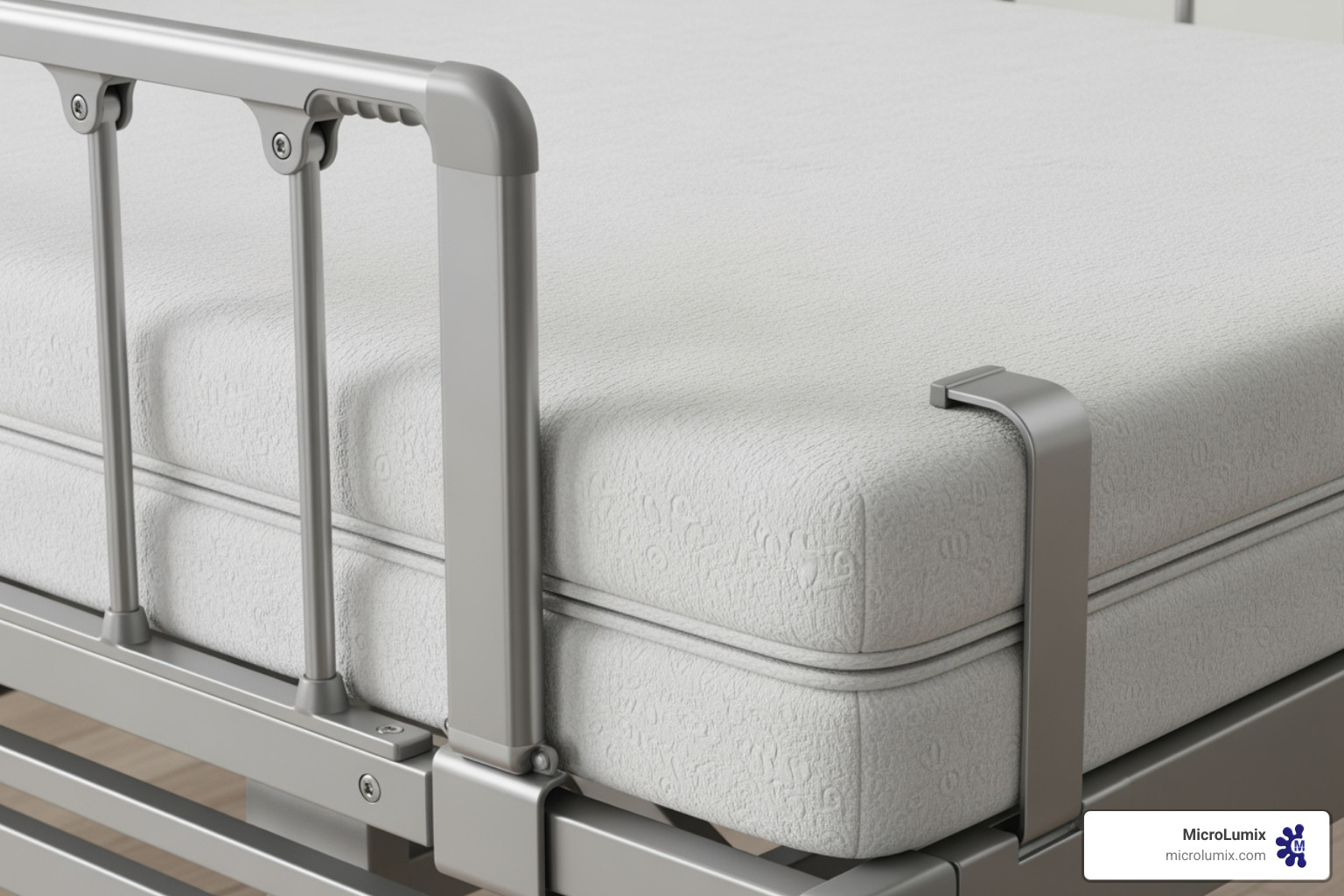
Hospital bed rails are both protective devices and potential hazards. While beneficial, they carry real risks, especially for vulnerable patients. Proper installation is critical; ensuring the mattress fits snugly against the rail prevents dangerous gaps where a patient could be trapped.
Understanding Entrapment Risks and Other Hazards
The most serious risk is entrapment, where a patient gets caught in spaces around the rails, mattress, or bed frame, leading to strangulation, suffocation, or severe injury. Data from Health Canada shows that between 1980 and 2014, over 100 entrapment incidents were reported, resulting in dozens of fatalities. You can find more details in Health Canada’s comprehensive fact sheet.
Other hazards include falls from a greater height when patients try to climb over rails and skin injuries from contact with the rails. Patients most at risk are the elderly, those with cognitive impairment, and frail individuals. To prevent these incidents, experts identified seven potential entrapment zones:
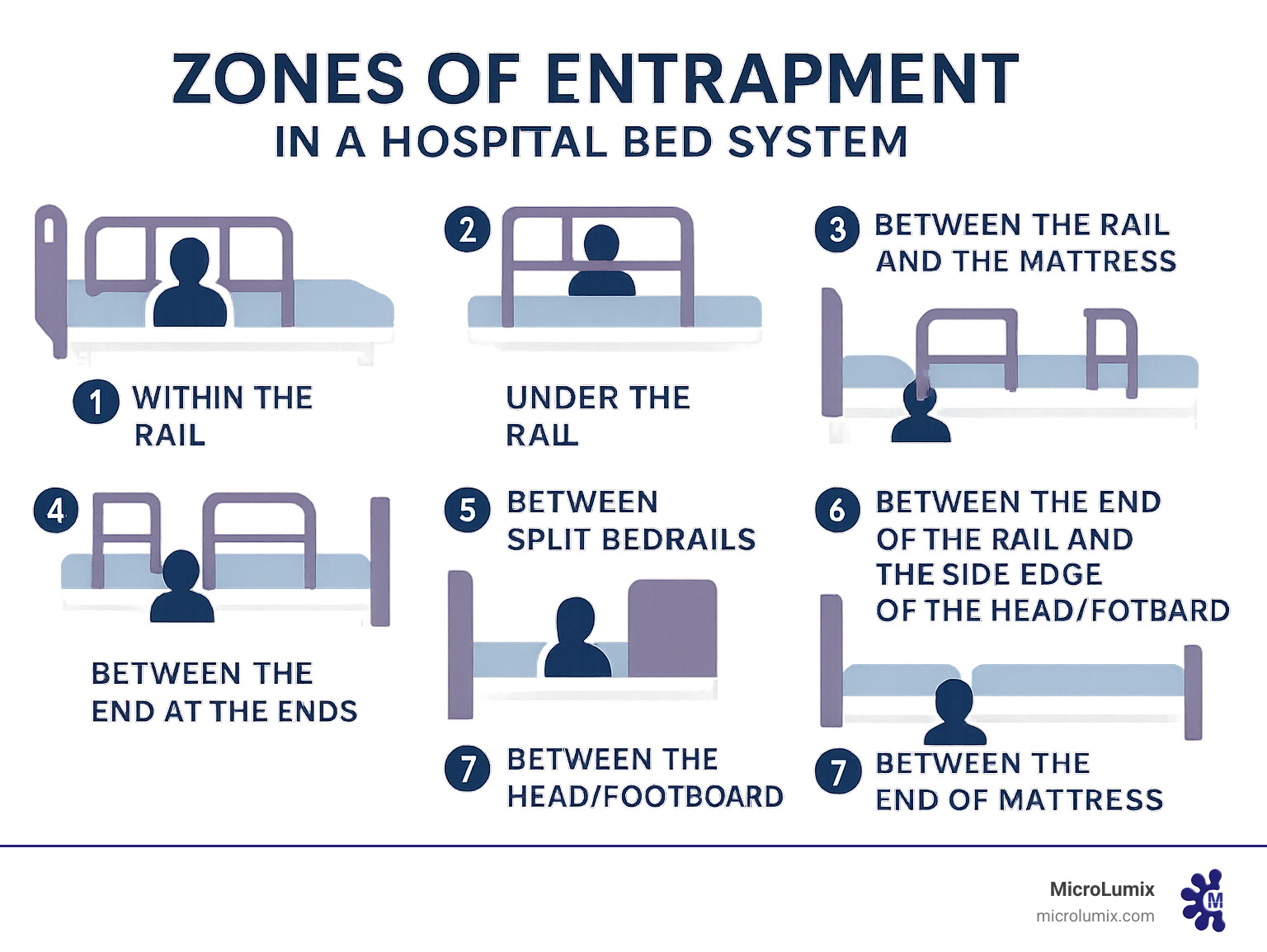
- Zone 1: Within the rail
- Zone 2: Under the rail
- Zone 3: Between the rail and mattress
- Zone 4: Under the rail at the ends
- Zone 5: Between split bed rails
- Zone 6: Between the rail end and head/footboard
- Zone 7: Between the head/footboard and mattress
Each zone requires careful inspection to ensure patient safety.
Regulatory Oversight and Safety Standards
Regulatory agencies take these risks seriously. In Canada, Health Canada provides guidance documents like the one on Adult Hospital Beds: Patient Entrapment Hazards. In the U.S., the FDA regulates hospital bed rails as medical devices, while the CPSC oversees consumer products.
Ethically, a bed rail becomes a restraint if it prevents a patient from moving freely without medical necessity, raising concerns about patient autonomy. Facilities must have clear policies to avoid violations. Reporting adverse events to agencies like the FDA’s MedWatch program is crucial for improving safety standards for everyone.
Best Practices for Using Hospital Bed Rails Safely
True patient safety with hospital bed rails requires a comprehensive approach combining proactive measures, caregiver responsibility, and ongoing patient assessment. Individualized care is essential, as a one-size-fits-all approach can create serious risks.
Patient Assessment and Choosing the Right Solution
The foundation of safe bed rail use is a thorough patient assessment by an interdisciplinary team, including the patient and their family. Key areas of focus include:
- Physical and mental status: Is the patient alert? Do they have cognitive challenges like dementia or delirium?
- Mobility level: Can the patient move independently, or do they require assistance?
- Medical conditions: Do conditions like seizure disorders, chronic pain, or medications that cause confusion affect bed safety?
This collaborative approach, which avoids automatic bed rail use as emphasized by the Clinical Guidance for the Assessment and Implementation of Bed Rails, ensures the chosen solution serves the patient’s best interests while minimizing risks and maintaining dignity.
Proper Installation, Maintenance, and Use of Hospital Bed Rails
Even with a perfect assessment, safety depends on correct installation, maintenance, and use. Attention to detail in these areas is critical.
- Correct mattress size: An ill-fitting mattress creates dangerous entrapment gaps. Ensure the mattress is the right size and type for the bed frame.
- Eliminating gaps: Diligently inspect for all potential entrapment zones and implement solutions like specialized pads if gaps are found.
- Latching system reliability: Routinely check that latches are secure and won’t accidentally disengage, following guidance like Health Canada’s on bedrail latching system reliability.
- Regular maintenance: Follow manufacturer specifications for maintenance checks, addressing wear and tear promptly.
- Appropriate use: Lower rails when a patient is transferring or not at immediate risk of falling to promote independence. Always double-check that latches are secure before leaving a patient.
These practices ensure hospital bed rails fulfill their protective purpose safely and effectively.
Beyond the Rails: Hygiene and Environmental Considerations
Patient safety extends beyond the physical rails to the entire patient environment, with a special focus on hygiene and infection control. Preventing falls is important, but so is preventing the spread of dangerous pathogens.
Enhancing Safety Through Environmental and Procedural Modifications
Thoughtful environmental changes can often reduce the need for restrictive bed rails while improving overall safety. Key strategies include:
- Lowering beds close to the floor to reduce the severity of potential fall injuries.
- Using non-slip floor mats for extra cushioning.
- Providing transfer aids like bed canes or trapeze bars to support independent movement.
- Training staff to anticipate patient needs (e.g., for bathroom trips or pain medication) to prevent unsafe exits from bed.
- Optimizing room layout to ensure clear pathways and keep essential items within reach.
These approaches align with guidance from organizations like the CDC on older adult fall prevention, which shows that comprehensive modifications are highly effective.
Infection Control for High-Touch Hospital Bed Rails
Hospital bed rails are among the most contaminated surfaces in a patient’s room, touched constantly by patients, families, and staff. This makes them prime vectors for Healthcare-Associated Infections (HAIs).
Manual cleaning, the traditional first line of defense, has significant limitations. Studies show that it achieves only about 69% pathogen reduction on high-touch surfaces, and even less on bed rails. This means that after cleaning, nearly 40% of dangerous microbes like MRSA and C. difficile can remain, posing a serious threat to vulnerable patients.
This is why we must look beyond traditional methods. Hospital bed rails require consistent, highly effective disinfection. The future of patient safety lies in automated systems that can eliminate pathogens immediately after contact, ensuring these critical surfaces are truly safe.
Innovations like MicroLumix’s GermPass system, which automatically disinfects high-touch surfaces, are paving the way for a safer healthcare environment. Learn more about creating a safer patient environment with advanced disinfection solutions.
Frequently Asked Questions about Hospital Bed Rails
Families and caregivers often have questions about balancing safety, mobility, and patient dignity when using hospital bed rails. Here are insights into the most common concerns.
Are hospital bed rails considered a restraint?
This depends on the situation. Hospital bed rails become a restraint when they prevent a patient from voluntarily leaving their bed and are not medically necessary to treat a specific symptom. If a rail is used for staff convenience rather than for a documented medical reason, it is considered a restraint. The decision should always be based on an individual patient assessment, a clear medical justification, and exploration of less restrictive alternatives first.
How do I know if a bed rail is safe to use?
Ensuring a bed rail is safe requires a three-part check: the patient, the equipment, and the environment.
- Patient Suitability: Assess if the patient is at high risk for entrapment or likely to attempt climbing over the rails.
- Equipment Check: The mattress must fit snugly against the frame and rails to eliminate dangerous gaps. The latching mechanism must be tested to ensure it is secure and reliable.
- Environment and Use: The rails must be installed and maintained according to manufacturer guidelines. They should only be raised when medically necessary.
If you have any doubts, ask a healthcare professional to explain their safety assessment.
Who is most at risk for bed rail entrapment?
Certain patient populations are particularly vulnerable to entrapment and require careful monitoring. The highest-risk groups include:
- Frail and elderly patients who may lack the strength to free themselves.
- Patients with cognitive impairment (dementia, delirium) who may not understand the risks or may become disoriented.
- Patients with uncontrolled body movements from conditions like seizures or agitation.
- Patients with impaired judgment due to medications or underlying conditions.
For these individuals, continuous monitoring and alternatives to traditional bed rails, such as lowered beds or floor mats, should be strongly considered.
Conclusion
Working with hospital bed rails requires making thoughtful choices. These vital safety devices prevent falls and support mobility, but they also carry real risks of entrapment and injury that demand careful attention. Sobering statistics on bed rail incidents remind us why we can never be complacent about safety.
Fortunately, the industry continues to evolve with better patient assessments and a greater focus on alternatives and environmental modifications. Patient-centered care is becoming the foundation for these critical decisions.
What’s truly exciting is the intersection of traditional safety with innovative technology. While we perfect our protocols, we must also tackle the invisible threat of pathogens on high-touch surfaces. When manual cleaning leaves behind up to 40% of dangerous microbes on bed rails, we leave patients vulnerable. This is where breakthrough innovations like MicroLumix’s GermPass system are changing the game.
This automated disinfection technology doesn’t just supplement manual cleaning—it eliminates 99.999% of pathogens from hospital bed rails immediately after every touch. This creates a continuous shield of protection that was previously impossible.
We are entering a new era where the physical protection of properly used bed rails combines with advanced infection control. When patients are safe from both falls and HAIs, we know we are succeeding.
Learn more about creating a safer patient environment with advanced disinfection solutions and find how automated technology can transform your approach to hospital bed rails safety and infection control.