
Why Hospital Disinfection Methods Are Critical to Patient Safety
Hospital disinfection methods are the backbone of infection prevention in healthcare. With millions of surgical and invasive procedures performed annually in the U.S., these systematic approaches are essential for preventing healthcare-associated infections (HAIs), a significant patient safety concern.
Quick Overview: Hospital Disinfection Methods by Risk Level
-
Critical Items (contact sterile tissue) – Require sterilization
- Surgical instruments, implants, cardiac catheters
- Methods: Steam sterilization, hydrogen peroxide gas plasma
-
Semicritical Items (contact mucous membranes) – Require high-level disinfection
- Endoscopes, laryngoscope blades, respiratory equipment
- Methods: Glutaraldehyde, hydrogen peroxide, peracetic acid
-
Noncritical Items (contact intact skin) – Require low-level disinfection
- Bed rails, blood pressure cuffs, environmental surfaces
- Methods: EPA-registered hospital disinfectants
The stakes are high. Research shows environmental contamination plays a key role in transmitting pathogens like MRSA, VRE, and Clostridium difficile. Contact with contaminated hospital environments is just as likely to soil healthcare workers’ hands as direct patient contact.
Furthermore, admission to a room where the previous patient was colonized or infected with multidrug-resistant organisms is a known risk factor for the new patient. This makes proper disinfection protocols not just important—they’re lifesaving.
As Debra Vanderhoff, Founder and COO of MicroLumix, I’ve spent over 20 years developing solutions for critical gaps in hospital disinfection methods, especially for high-touch surfaces missed by manual cleaning. My experience with automated disinfection systems shows how technology can transform infection control in healthcare.

The Foundation: Understanding Levels of Decontamination
Hospital disinfection methods follow a three-tier system, matching the disinfection level to the risk an item poses. It’s not about using the strongest chemical on everything, but the right level for each situation.
This risk-based approach is the Spaulding Classification, the gold standard for nearly 50 years. It categorizes patient care items based on their use on the body, matching the disinfection level to the infection risk. The higher the risk, the more intensive the process.
Critical Items: The Need for Sterilization
When medical devices enter sterile tissue or the bloodstream, they bypass the body’s natural defenses, creating a high infection risk. Even a single microbe can cause life-threatening complications. Surgical instruments (scalpels, forceps) and implants (pacemakers, joint replacements) fall into this category. They require complete microbial destruction, eliminating all bacteria, viruses, fungi, and even tough bacterial spores.
This is achieved through sterilization methods. Steam sterilization (autoclaving) is common for heat-tolerant items. For heat-sensitive devices, alternatives like hydrogen peroxide gas plasma provide the same level of sterility.
Semicritical Items: High-Level Disinfection (HLD)
Semicritical items contact mucous membranes or non-intact skin but don’t enter sterile body areas. While these areas have some natural defenses, they are still vulnerable entry points for infection. Examples include endoscopes, laryngoscope blades, and respiratory equipment.
These items require high-level disinfection (HLD), a process that kills all microorganisms except high numbers of bacterial spores. HLD reduces spores to a level that won’t cause infection in healthy tissue. With millions of procedures using these devices annually, effective reprocessing is critical for patient safety. Scientific research on endoscope reprocessing continues to refine our understanding of disinfecting these challenging devices.
Noncritical Items: Low-Level Disinfection
Noncritical items contact intact skin, which is an excellent barrier against infection, making the risk much lower. This category includes bed rails, blood pressure cuffs, stethoscopes, and furniture. They require low-level disinfection, which kills most vegetative bacteria and some viruses and fungi. Complete microbial elimination isn’t necessary because intact skin provides protection.
However, these items are crucial to environmental cleanliness. A contaminated bed rail can transfer germs to a healthcare worker’s hands, which can then spread to other patients or surfaces. This highlights the importance of a comprehensive infection control strategy that is both protective and practical for daily implementation.
A Deep Dive into Hospital Disinfection Methods and Agents
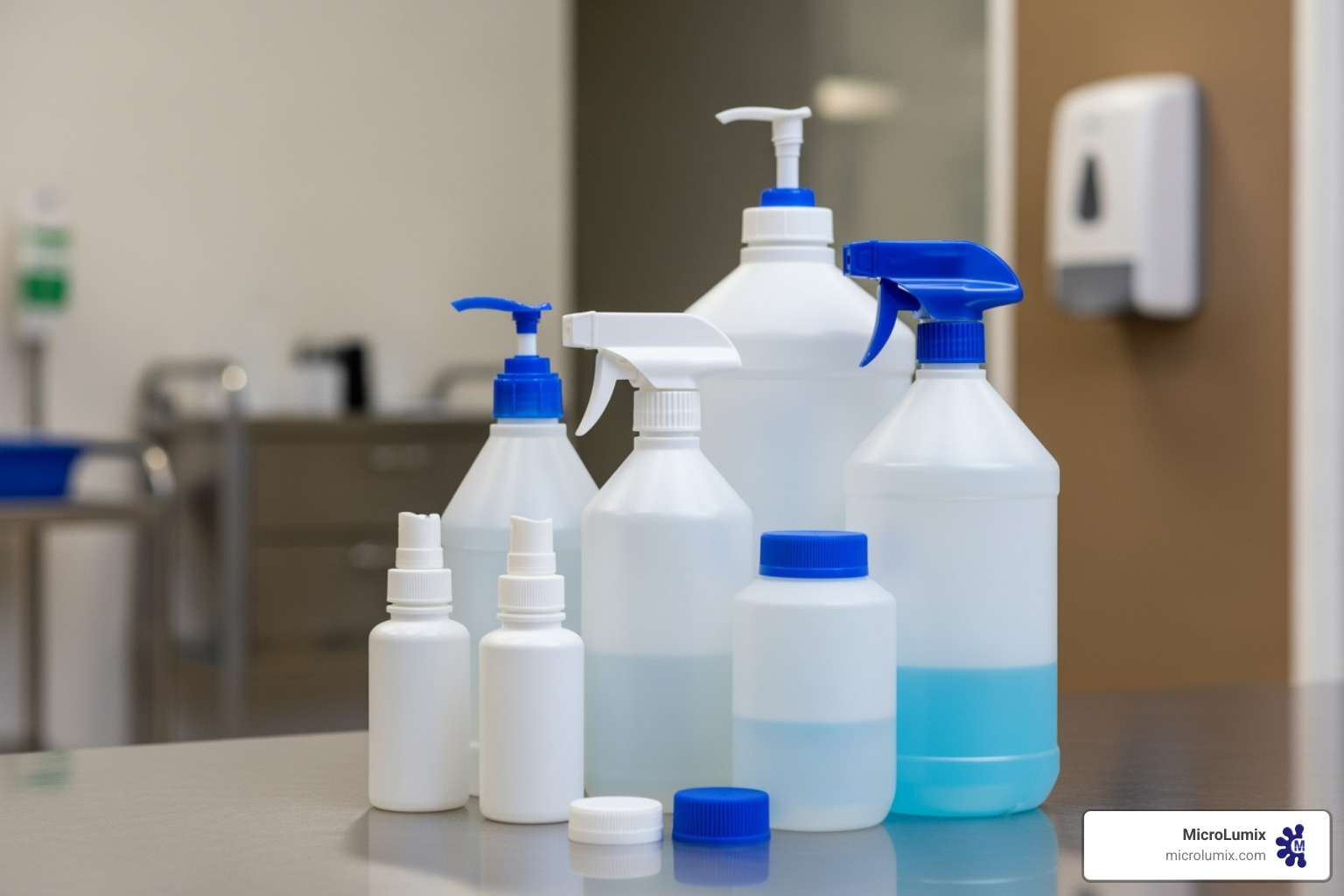
Healthcare facilities fight an invisible battle against pathogens using a chosen arsenal of hospital disinfection methods and agents. Understanding these tools is essential for safety. Disinfection methods are either chemical agents or physical methods. Success depends on key factors: agent concentration, contact time, the presence of organic matter (like blood), and the pathogen type and load.
The golden rule is: cleaning comes first. Removing visible dirt is the essential first step before disinfection.
Hospital-Approved Disinfectants: The Workhorses of Infection Control
Not just any cleaning product will do in healthcare settings. Commercial disinfectant formulations must earn their place through rigorous testing—they need EPA registration or FDA clearance for their intended use. This regulatory oversight ensures that every product meets specific standards for both effectiveness and safety.
Let’s look at the main classes of hospital-approved disinfectants and what makes each one special:
| Disinfectant Class | Spectrum of Activity | Advantages | Disadvantages |
|---|---|---|---|
| Quaternary Ammonium Compounds (Quats) | Effective against vegetative bacteria, enveloped viruses, and some fungi | Non-corrosive, odorless, stable, good cleaning properties | Limited activity against non-enveloped viruses and bacterial spores, can be inactivated by organic matter |
| Chlorine-Based Agents | Broad spectrum including bacteria, viruses, fungi, and bacterial spores | Rapid action, inexpensive, effective against most pathogens including C. difficile spores | Corrosive to metals, unstable, strong odor, inactivated by organic matter |
| Alcohols | Excellent against bacteria and most viruses | Fast-acting, evaporates quickly, doesn’t leave residue | Flammable, can damage some materials, limited sporicidal activity |
| Hydrogen Peroxide-Based Solutions | Broad spectrum including bacterial spores | Environmentally friendly (breaks down to water and oxygen), effective against resistant organisms | Can be corrosive to some metals, may bleach fabrics, requires proper storage |
The beauty of having different classes is that each has its sweet spot. Quaternary ammonium compounds are gentle workhorses perfect for daily environmental cleaning, while chlorine-based agents bring out the big guns against tough pathogens like C. difficile spores. Alcohols work lightning-fast for hand sanitizing and quick surface disinfection, and hydrogen peroxide-based solutions offer powerful, environmentally conscious cleaning.
For more detailed guidance on selecting the right disinfectant for specific situations, the CDC Guideline for Disinfection and Sterilization provides comprehensive recommendations based on decades of research and real-world experience.
Sterilization Techniques: Achieving Complete Microbial Inactivation
When it comes to critical items, we need to pull out all the stops. Sterilization goes beyond disinfection—it’s about achieving complete elimination of all microbial life, including those incredibly resilient bacterial spores that can survive almost anything.
Steam sterilization, commonly known as autoclaving, remains our gold standard for heat-tolerant medical and surgical instruments. This method uses steam under pressure to reach high temperatures that effectively destroy all microorganisms. It’s reliable, cost-effective, and works beautifully for most surgical instruments, making it the backbone of hospital sterilization programs.
But what about those delicate instruments that can’t handle the heat and moisture of steam sterilization? That’s where hydrogen peroxide-based sterilization becomes invaluable. Methods like hydrogen peroxide gas plasma or vaporized hydrogen peroxide use reactive forms of hydrogen peroxide to sterilize heat-sensitive items while being gentle on materials. These low-temperature alternatives also include ethylene oxide (EtO) and peracetic acid immersion systems—all crucial for delicate equipment like flexible endoscopes that would be damaged by traditional steam sterilization.
The key is matching the right sterilization method to each instrument’s specific needs, ensuring both complete microbial elimination and equipment longevity.
Modern Challenges and Solutions in Hospital Disinfection
Even with established protocols, hospital disinfection methods face evolving challenges: complex medical devices, demanding schedules, and smarter pathogens. Let’s explore these modern problems and the innovative solutions helping us stay ahead.
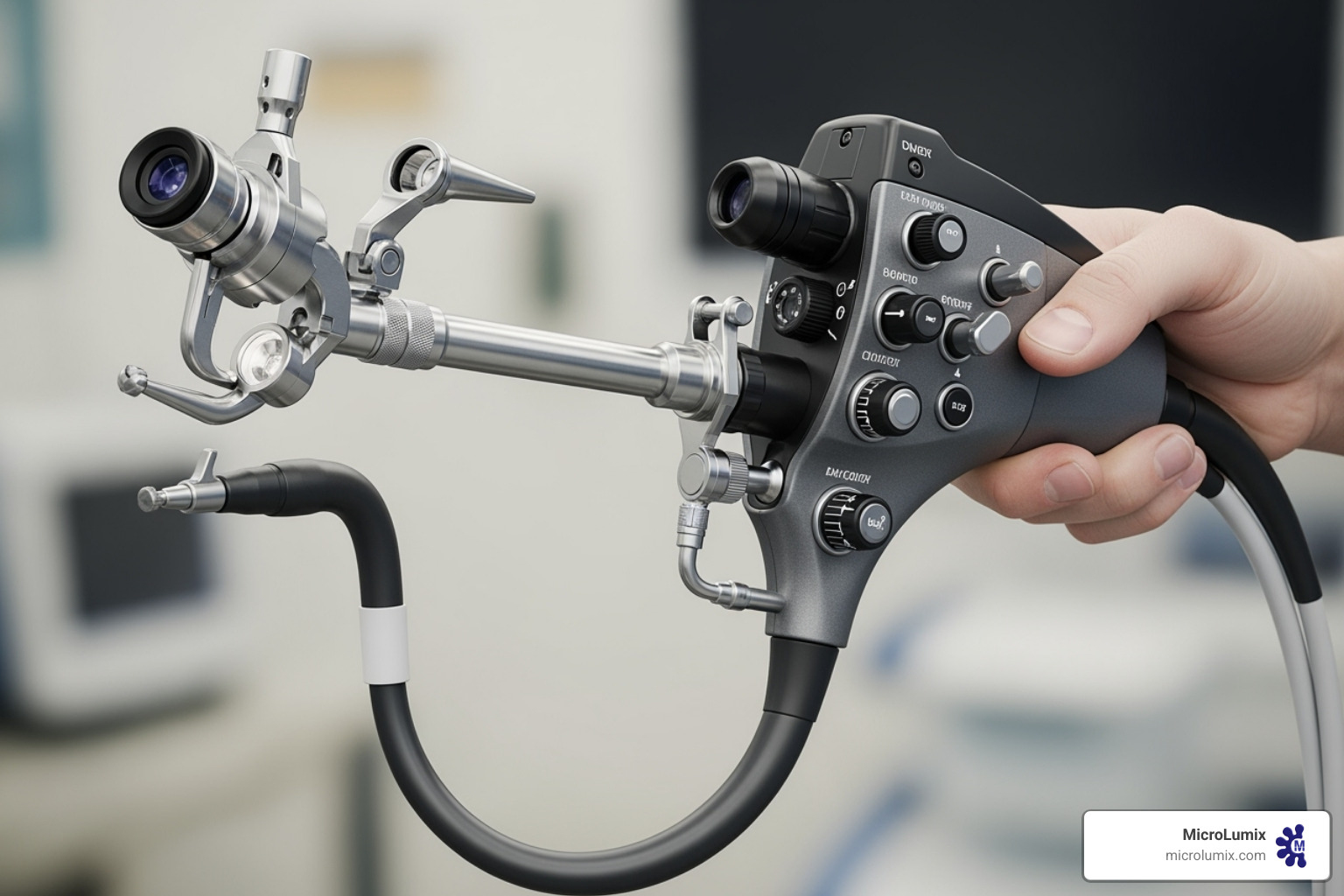
Compliance issues are a persistent challenge due to time pressures and complex protocols. Meanwhile, biofilm formation creates microbe communities resistant to standard disinfection, and resistant pathogens continue to evolve.
The Endoscope Enigma: A Focus on Reprocessing
If there’s one medical device that keeps infection control specialists awake at night, it’s the endoscope. These remarkable diagnostic tools have revolutionized medicine, but they’ve also created some of our most persistent disinfection challenges.
The device complexity is truly mind-boggling. Modern endoscopes contain multiple narrow channels, intricate valves, and delicate components that create the perfect hiding spots for organic matter and microorganisms. It’s like trying to clean a microscopic maze while blindfolded.
Biofilm risk makes everything worse. These sticky communities of microbes create their own protective shields within endoscope channels, making them incredibly resistant to even the most aggressive disinfection protocols. Once biofilms establish themselves, they become nearly impossible to eliminate completely.
The manual cleaning importance cannot be overstated. This critical first step, performed immediately after each procedure, removes the initial bioburden before high-level disinfection begins. Think of it as the foundation – without proper manual cleaning, even the most sophisticated disinfection systems will fail.
Automated cleaning and disinfection systems have become essential tools in the fight against endoscope contamination. Automated endoscope reprocessors (AERs) help standardize the process and reduce human error, but they’re not magic bullets. Success still depends on meticulous attention to protocol details and proper maintenance.
The consequences of failure are serious. Outbreaks linked to improper reprocessing have made headlines worldwide, with endoscopes causing more documented outbreaks than any other reusable medical device. The study on CRE outbreaks from duodenoscopes provides sobering evidence of what can happen when reprocessing falls short, even when guidelines appear to be followed.
The Invisible Threat: Environmental Contamination and MDROs
While we focus on medical devices, the hospital environment itself harbors invisible threats that can undermine all our other infection control efforts.
High-touch surfaces are the silent villains in this story. Bed rails, call buttons, doorknobs, over-bed tables, and countless other surfaces get touched hundreds of times daily by patients, visitors, and healthcare workers. Each touch is a potential opportunity for pathogen transfer.
Pathogen survival on these surfaces is remarkably persistent. MRSA, VRE, Acinetobacter, norovirus, and C. difficile can survive on dry surfaces for weeks or even months, patiently waiting for their next victim. It’s like having unwelcome houseguests who refuse to leave.
The transmission from prior room occupants creates a particularly concerning scenario. Research clearly shows that patients admitted to rooms previously occupied by someone with multidrug-resistant organisms face significantly higher risks of acquiring these same infections. This makes terminal room cleaning and disinfection absolutely critical.
The hand hygiene link reveals why environmental contamination matters so much. Studies demonstrate that touching contaminated surfaces is just as likely to contaminate healthcare workers’ hands as direct patient contact. This creates a vicious cycle where poor environmental cleaning undermines hand hygiene efforts. The research on the role of hospital surfaces in transmission provides comprehensive insights into these transmission pathways.
Tackling Tough Pathogens: Specific Hospital Disinfection Methods
Some pathogens require special attention because they’ve developed particularly clever survival strategies that resist standard disinfection approaches.
C. difficile spores represent one of our toughest challenges. These bacterial spores are like microscopic tanks – incredibly resistant to most common disinfectants. Sporicidal agents such as bleach (sodium hypochlorite) or hydrogen peroxide-based disinfectants are essential, along with ensuring adequate contact time. The EPA maintains a specific list (LIST K) of registered products proven effective against C. difficile spores.
Multidrug-resistant organisms like MRSA and VRE sound terrifying, but here’s some good news: most standard hospital disinfectants work well against them. The real challenge isn’t finding the right chemical – it’s ensuring strict adherence to protocols, proper contact times, and complete surface coverage.
Human papillomavirus (HPV) has emerged as a newer concern, particularly for semicritical ultrasound probes. This hardy, non-enveloped virus shows resistance to some commonly used high-level disinfectants. Selecting appropriate disinfectants known to be effective against non-enveloped viruses becomes crucial. The research on HPV susceptibility to disinfectants continues to inform our understanding and guide protocol development.
The key to success lies in matching the right disinfection method to each specific pathogen while maintaining consistent, thorough application of proven protocols.
The Future is Now: Advanced Infection Control Technology
Traditional hospital disinfection methods are challenged by human error and inconsistent coverage. Manual cleaning can miss spots and can’t keep up with constant recontamination in busy healthcare settings. This has sparked innovations in infection control technology. These advanced systems don’t replace cleaning teams but work alongside them, providing an extra layer of protection.
Automated Terminal Room Disinfection
Think of these as the “finishing touch” after a patient room has been manually cleaned. These no-touch systems deploy after discharge to ensure we’ve truly eliminated every last pathogen hiding in corners or shadows that manual cleaning might have missed.

UV-C light systems have become increasingly popular, and for good reason. These mobile units emit germicidal ultraviolet radiation that literally damages the DNA and RNA of microorganisms, making it impossible for them to reproduce. The results are impressive – most vegetative bacteria like MRSA and VRE are eliminated within 5 to 25 minutes, while even stubborn C. difficile spores succumb within 10 to 60 minutes.
But UV-C has one limitation that reminds me of trying to get a suntan while hiding under an umbrella – it only works on surfaces it can “see.” Any area in shadow remains untreated, which means staff often need to move the unit to multiple positions around the room.
Advanced hydrogen peroxide-based systems take a different approach. Instead of light, they fill the room with vaporized hydrogen peroxide or dry mist, reaching into every nook and cranny. These systems are remarkably effective against bacteria, viruses, and spores. The trade-off? They take longer – typically 2 to 5 hours to complete a room cycle compared to UV-C’s quicker treatment times.
Research continues to validate these approaches. A systematic review of airborne hydrogen peroxide demonstrates its significant efficacy in healthcare disinfection, showing real promise in reducing environmental contamination and healthcare-associated infections.
Automated and Continuous Disinfection for High-Touch Points
Here’s where things get really interesting – and where the biggest opportunity lies. While terminal room disinfection handles the big picture, there’s a constant battle happening throughout the day on high-touch surfaces.
Picture this: A nurse enters a patient room, touches the door handle, checks the bed rails, adjusts the call button, and uses the light switch. Within minutes, these surfaces are potentially recontaminated. An hour later, another healthcare worker touches the same surfaces, and the cycle continues. Traditional cleaning schedules simply can’t keep up with this constant recontamination.
Door handles, bed rails, call buttons, light switches, and equipment controls become persistent reservoirs for pathogens, undermining even our best terminal disinfection efforts. It’s like trying to keep a kitchen counter clean while actively cooking – the moment you finish wiping it down, it’s getting dirty again.
The solution? Automated systems that provide continuous microbial reduction right where it’s needed most. Imagine technology that automatically sanitizes a surface immediately after every single touch. This isn’t science fiction – it’s the next logical step in infection control.
This targeted approach focuses on interrupting the chain of infection in real-time, right at the point where transmission is most likely to occur. By ensuring these critical touchpoints remain consistently clean throughout the day, we can protect both patients and healthcare workers in ways that traditional cleaning schedules simply cannot match.
The future of hospital disinfection methods isn’t just about better chemicals or more frequent cleaning – it’s about smart, automated systems that work around the clock to keep our healthcare environments safe.
Ensuring Success: Monitoring, Compliance, and Best Practices
Advanced hospital disinfection methods require proper monitoring and a culture of patient safety to be effective. Creating this culture means understanding that everyone, from environmental services to surgeons, plays a role. This involves comprehensive staff training, regular auditing with feedback, and maintaining regulatory oversight.
How to Monitor Disinfection Effectiveness
Here’s the reality – a surface can look spotless but still be crawling with dangerous pathogens. That’s why we can’t rely on appearances alone. We need scientific methods to verify that our disinfection efforts are actually working.
Visual inspection gives us a starting point, but it’s like judging a book by its cover. You might catch the obvious problems, but the real threats are often invisible to the naked eye.
Fluorescent markers work like a clever detective trick. We apply an invisible marker to surfaces before cleaning, then use UV light afterward to see what areas were missed. It’s incredibly effective for training because it shows cleaning staff exactly where they need to improve their technique.
Adenosine triphosphate (ATP) bioluminescence assays sound fancy, but they’re actually quite simple. ATP is the energy molecule found in all living cells, including bacteria. An ATP meter can detect leftover organic matter on surfaces, giving us readings in Relative Light Units (RLU). While some facilities accept readings under 500 RLU, many healthcare settings prefer the stricter standard of less than 250 RLU. The best part? You get results immediately, so you can address problems right away.
Microbiological sampling is our gold standard – taking actual swabs or cultures to directly measure microorganisms. Yes, it takes more time and costs more, but it gives us definitive proof that our disinfection methods are working.
The key is combining these approaches to get the full picture. You can explore detailed insights about these techniques in research on methods for assessing cleaning adequacy.
Best Practices for Storage and Handling
Imagine spending all that effort perfectly disinfecting an instrument, only to have it get contaminated while sitting in storage. It happens more often than you’d think, which is why proper storage and handling are just as critical as the disinfection process itself.
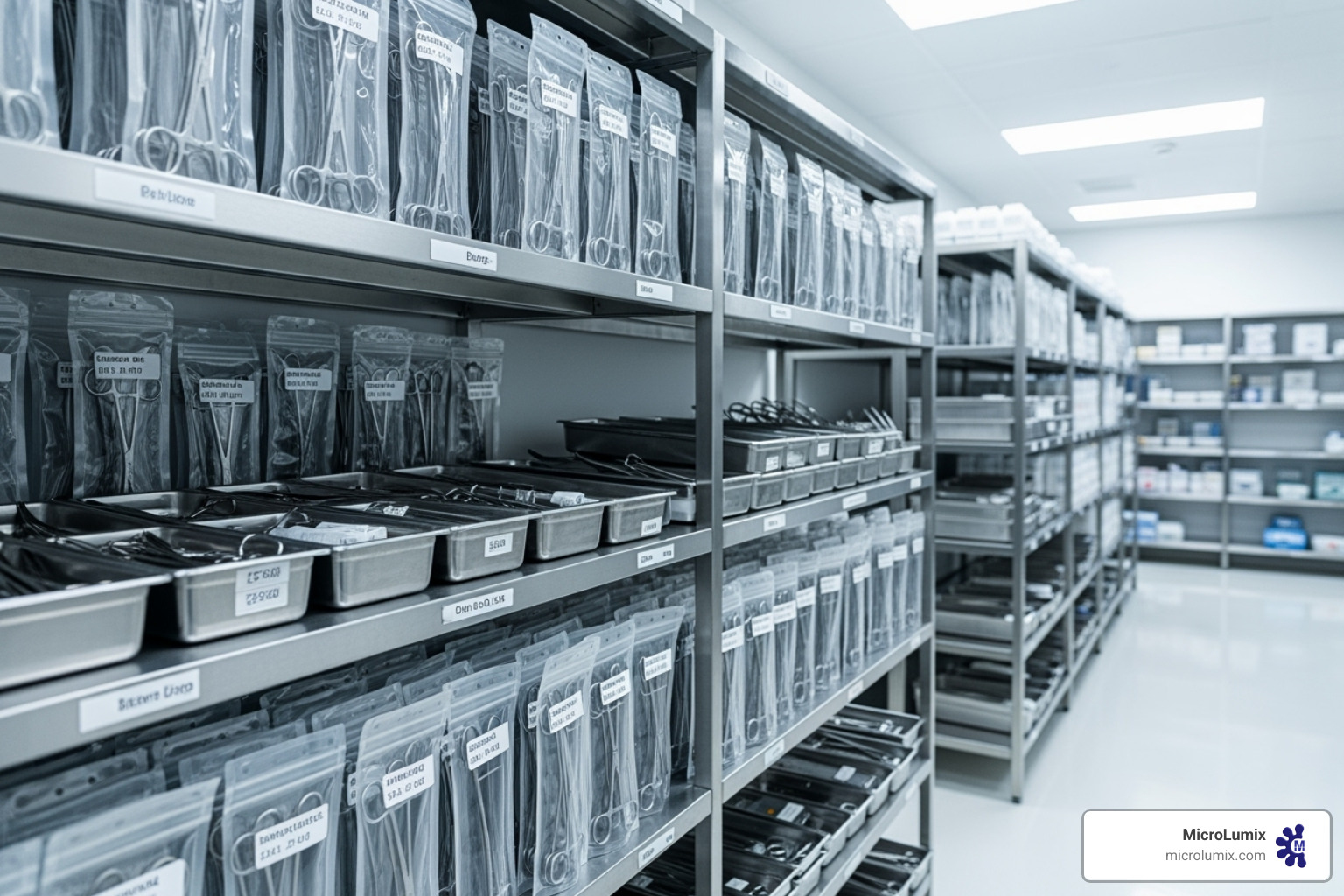
Preventing recontamination of semicritical items means protecting them from environmental nasties after they’ve been through high-level disinfection. This typically involves wrapping them in clean, dry protective covers or storing them in designated containers.
Proper drying procedures are absolutely essential because moisture is like a welcome mat for bacteria. Take endoscopes, for example – they need to be purged with forced air and hung vertically so every drop of moisture can escape. Any remaining water can become a breeding ground for microorganisms.
Designated clean areas should be exactly that – clean and separate from soiled items and busy traffic areas. Think of it as creating a safe haven where your perfectly disinfected instruments can stay that way until they’re needed.
Hang time refers to how long flexible endoscopes can be stored before they need reprocessing again. It’s like an expiration date for cleanliness. Sterile items are different – if you’re using event-related storage, they stay sterile indefinitely unless something damages the packaging.
The Regulatory and Response Framework
The world of hospital disinfection isn’t the Wild West – we have regulatory sheriffs keeping watch to ensure products are safe and effective, and clear protocols for when things go wrong.
The FDA’s role is crucial in clearing sterilants and high-level disinfectants for medical device use. They also treat hospitals that reprocess single-use devices as manufacturers, which means serious oversight. When choosing products, we rely on their comprehensive FDA list of cleared sterilants and HLDs to make informed decisions.
The EPA’s role focuses on environmental surface disinfectants. Their registration process ensures these products actually do what they claim against various pathogens. No empty promises allowed.
Following manufacturer’s Instructions for Use (IFU) isn’t just a suggestion – it’s absolutely non-negotiable. Every disinfectant and medical device comes with specific instructions for cleaning, dilution, contact time, and storage. Cutting corners or improvising can compromise both efficacy and patient safety.
Protocols for disinfection failures acknowledge that despite our best efforts, sometimes things go wrong. When they do, we need clear action plans that include quarantining potentially contaminated items, investigating what went wrong, assessing patient risk, and being transparent with patients about potential exposure if necessary. It’s not fun, but this kind of rapid, honest response is what maintains trust and keeps everyone safe.
Conclusion
The world of hospital disinfection methods is constantly evolving with new pathogens and complex devices. The Spaulding Classification remains our guiding, risk-based framework for treating items, from sterilizing surgical instruments to disinfecting environmental surfaces. We have an impressive arsenal of chemical and physical agents, from steam sterilization to hydrogen peroxide systems.
But let’s be honest – some battles are tougher than others. The endoscope enigma continues to challenge us with those tricky internal channels where biofilms love to hide. Environmental contamination from multidrug-resistant organisms keeps us on our toes, reminding us that surfaces we can’t even see might be harboring dangerous pathogens.
These persistent challenges have sparked incredible innovation. Automated terminal room disinfection using UV-C light and hydrogen peroxide systems now work alongside our dedicated cleaning teams. These technologies don’t replace the human touch – they improve it, reaching into shadows and covering areas that might otherwise be missed.
The future of infection prevention is beautifully multi-layered. It combines the careful attention of manual cleaning with smart automated solutions that tackle one of our biggest headaches – those high-touch surfaces that get recontaminated faster than we can clean them.
Imagine a world where every door handle, bed rail, and call button automatically disinfects itself after each touch. That’s not science fiction anymore – it’s happening right now.
At MicroLumix, we’re excited to be part of this change with GermPass, our Automated Disinfection Technology. It’s the world’s only lab-certified system that automatically kills germs on high-volume touchpoints immediately after every single touch. Using self-sealing UVC chambers, it achieves an impressive 99.999% efficacy against pathogens.
Our mission is simple but powerful: make healthcare environments safer for everyone who walks through those doors – patients, visitors, and the incredible healthcare workers who dedicate their lives to healing others.
Ready to see how Automated Disinfection Technology is changing healthcare environments?