
Why Hospital Safety Technology is Critical for Patient Care
Hospital safety technology represents the digital tools, automated systems, and data-driven platforms that help prevent medical errors and protect patients from harm. These technologies range from electronic health records that reduce medication mistakes to automated disinfection systems that eliminate dangerous pathogens.
Key Hospital Safety Technologies:
- Electronic Health Records (EHR) – Reduce medication errors by 53% in emergency departments
- Clinical Decision Support Systems – Cut medication errors by 11.7% through automated alerts
- Automated Disinfection Technology – Eliminates 99.999% of pathogens from high-touch surfaces
- Real-Time Location Systems (RTLS) – Track patients and equipment to prevent falls and infections
- Computerized Provider Order Entry (CPOE) – Reduces prescribing errors through digital order systems
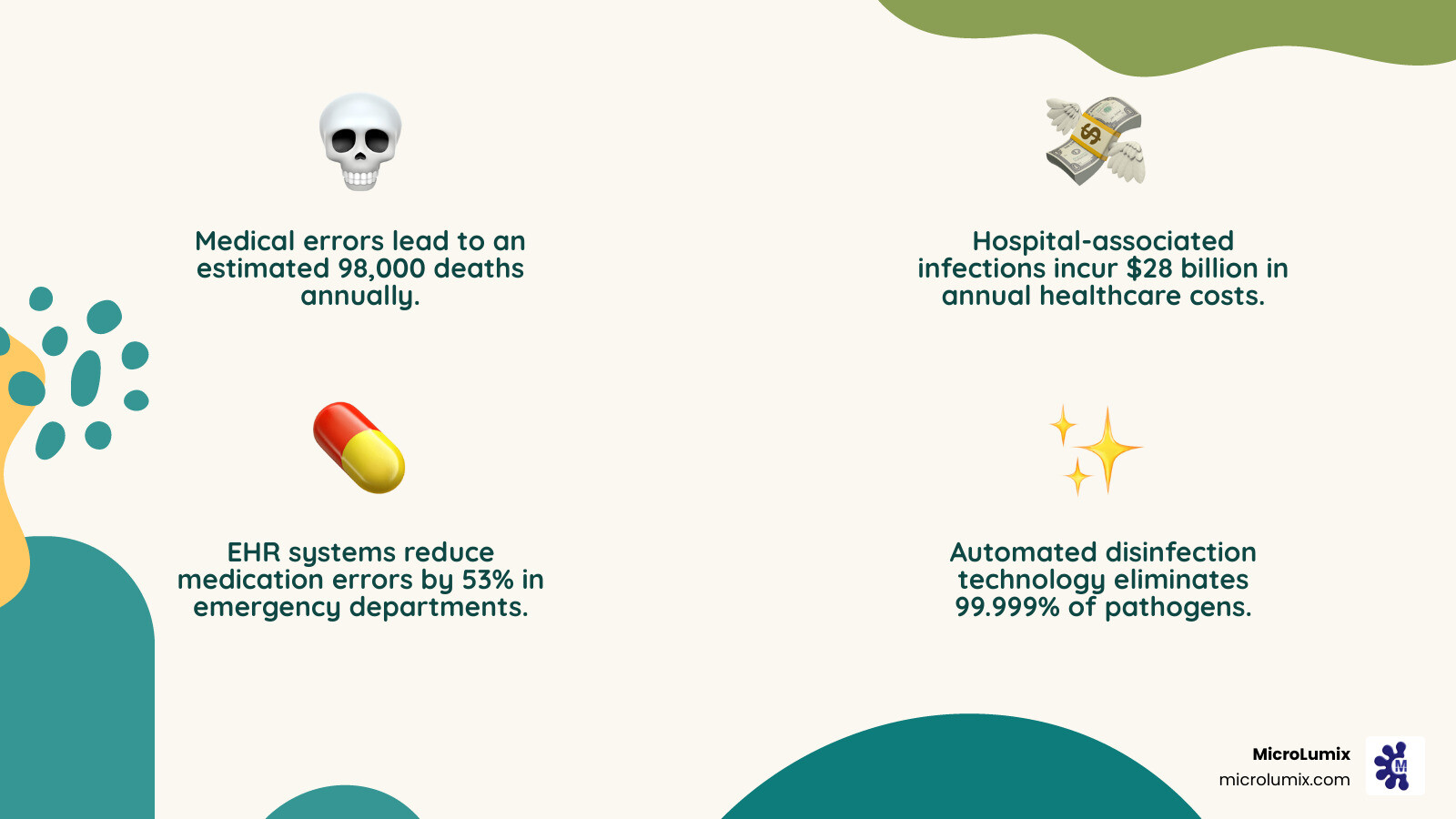
The numbers are sobering. The Institute of Medicine found that 98,000 people die in hospitals each year from medical errors, while 1 in 31 patients develops a hospital-associated infection, costing the healthcare system $28 billion annually. However, research shows that improved patient safety could save almost 1,000 extra lives and £100 million in care costs each year in the UK alone. The key is moving from reactive approaches to proactive, technology-driven solutions.
Having spent over 20 years developing hospital safety technology, including founding MicroLumix to create automated disinfection systems, I’ve seen how the right technology transforms patient outcomes. Effective safety technology must address both human factors and environmental risks to create truly safer hospitals.
The Expanding Role of Hospital Safety Technology
The 1999 Institute of Medicine report “To Err Is Human” sparked the patient safety movement, shifting the focus from catching individual mistakes to building smarter systems that prevent errors. Today’s hospital safety technology is part of a larger digital health ecosystem that enables a “learning health system”—one that uses data from every patient interaction to improve care.
This marks a critical shift from reactive fixes to proactive strategies that use technology to spot problems before they cause harm. Science, informatics, and healthcare culture are converging to turn every patient encounter into a learning opportunity. However, poorly designed systems can create new errors, so we must be strategic in how we build and implement these tools.
For healthcare leaders looking to understand how technology can transform patient outcomes, there’s valuable insight in exploring Technology as a Tool for Improving Patient Safety.
Foundational Digital Safety Tools
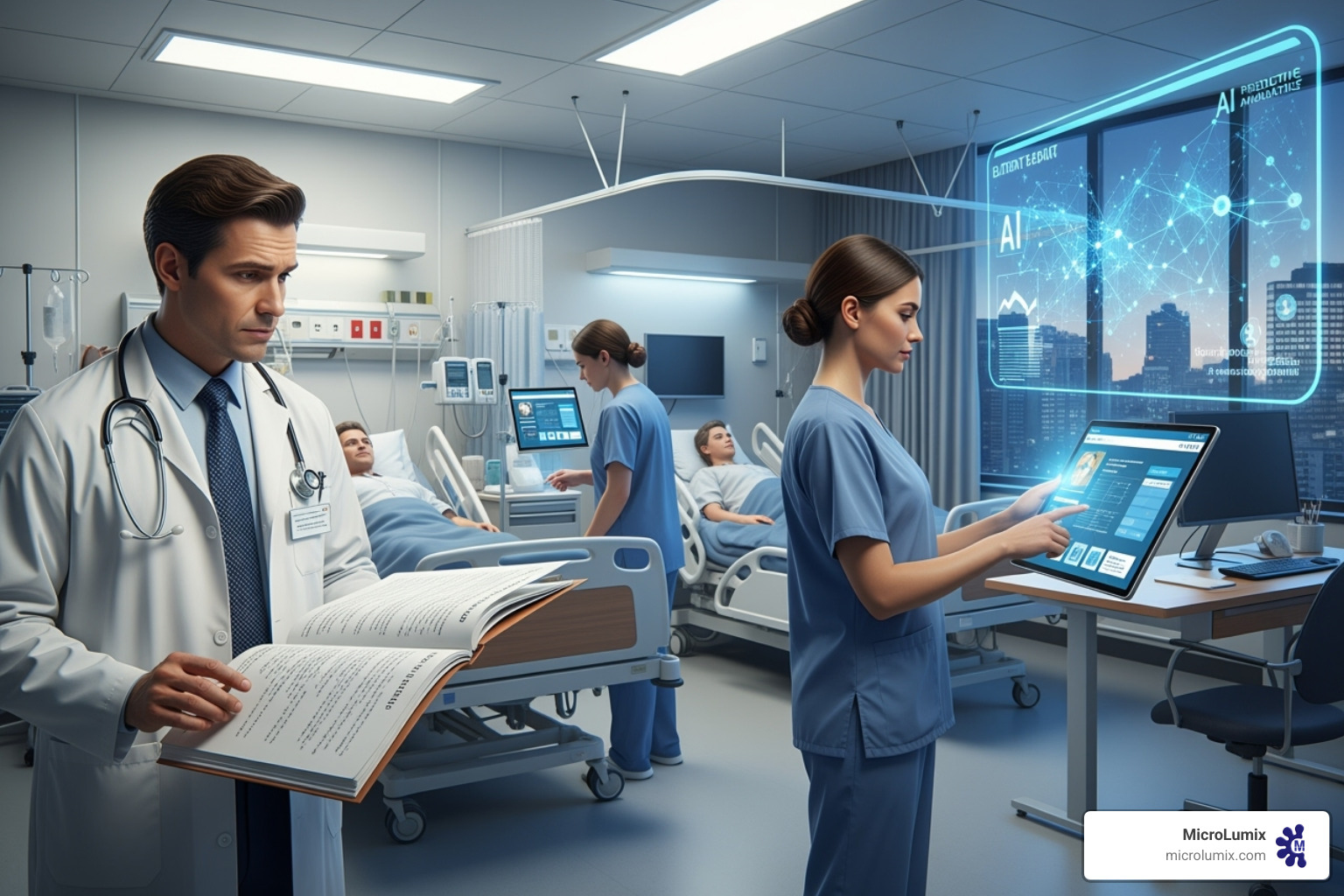
These foundational tools are the workhorses of modern hospital safety:
-
Electronic Health Records (EHR) have largely eliminated errors from illegible handwriting and provide clinicians with a complete patient picture, reducing medication errors by 53% in emergency departments.
-
Computerized Provider Order Entry (CPOE) systems allow for direct, clear order entry, preventing misinterpretation. One study found a 78% increase in necessary medication adjustments after CPOE implementation, showing its effectiveness in catching potential errors.
-
Barcode Medication Administration (BCMA) is a simple but highly effective tool. By scanning a patient’s wristband and the medication, nurses ensure the right patient receives the right drug at the right time.
-
Clinical Decision Support (CDS) systems act as a digital assistant, flagging drug interactions, suggesting doses, and providing guideline reminders. Well-designed CDS systems can reduce medication errors by 11.7%.
The adoption of these tools is widespread, with over 90% of GP practices using electronic prescribing and 77% of hospitals in England having EHR systems. They are the new standard of care.
Data-Driven Platforms for Clinical Transparency
Modern data-driven platforms function like an airplane’s black box for healthcare, enabling learning from both successes and near-misses. The Black Box Platform™ concept uses multimodal data capture—audio, video, vital signs, and environmental conditions—to record procedures. This data is de-identified to protect patient privacy while providing a rich source for analysis.
Artificial intelligence then sifts through this data to spot patterns that humans might miss, such as communication breakdowns or skipped protocols. This brings objective transparency to performance review, shifting the focus from blame to process improvement. Instead of relying on subjective memory, teams can analyze what actually happened and identify areas for improvement.
These platforms turn data into actionable insights, an approach backed by over 90 peer-reviewed publications and partnerships with leading medical universities.

Proactive Environmental Safety Technologies
Hospital-Associated Infections (HAIs) are a significant risk, with 1 in 31 patients developing one. This contributes to nearly 100,000 deaths and costs U.S. hospitals over $28 billion annually. The COVID-19 pandemic exacerbated this, with HAIs increasing by up to 60%.
Traditional cleaning is often inconsistent, with studies showing only 40% of near-patient surfaces are cleaned properly. Manual methods and even technologies like UV-C light disinfection have limitations, such as being unable to reach shadowed areas where germs survive.
Automated Disinfection Technology (ADT) provides a solution by handling touchpoint sanitation automatically for consistent pathogen reduction. Our MicroLumix GermPass system is a next-generation ADT. As the world’s only lab-certified, automatic touchpoint germ-killing system, it uses self-sealing UVC chambers to sanitize surfaces immediately after every touch. It achieves 99.999% efficacy against pathogens, with independent tests showing it killed 99.99998% of S. aureus bacteria.
ADT eliminates human error, freeing staff to focus on patient care. Common high-touch surfaces like door handles, call buttons, bed rails, and elevator buttons are ideal candidates for this technology. By automating this critical function, we create a safer environment where patients can heal without fear of infection.
Key Applications of Safety Tech Across the Hospital
Hospital safety technology transforms patient care differently in each part of the hospital. What works brilliantly in a quiet patient room might not suit the emergency department. Each setting has its own rhythm, its own risks, and its own safety needs.
Think about it: the controlled precision of an operating room is worlds apart from the unpredictable chaos of a trauma bay. Yet both environments desperately need technology to prevent errors and save lives. The key is matching the right tools to the right challenges.
Enhancing Surgical and Procedural Safety
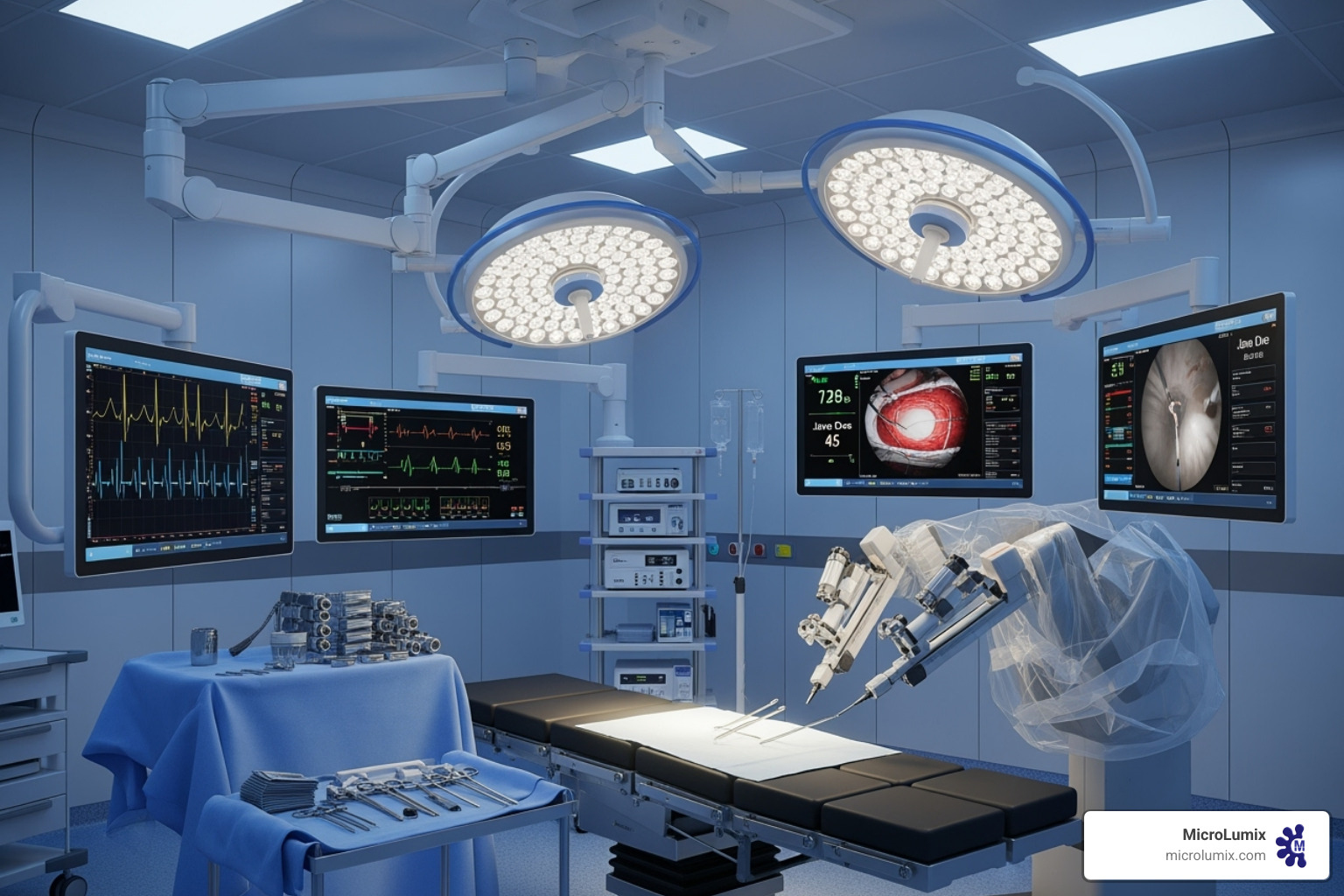
In the high-pressure operating room, technology is crucial for improving surgical quality. The OR Black Box, a breakthrough in hospital safety technology, acts like a flight recorder for surgery. It captures audio, video, and equipment data to provide a complete record of an operation.
This data enables objective team performance analysis, turning reviews into constructive learning opportunities rather than exercises in blame. The real-time feedback loops help teams refine communication, spot patterns, and identify early warning signs. This leads to significant efficiency improvements, such as streamlined setups and reduced turnover times.
This technology fosters transparency in practice, shifting the OR culture toward a shared commitment to safety and excellence.
Improving Outcomes in Critical Care Settings
In trauma resuscitation, where every second counts, the Trauma Black Box provides critical insights. This technology captures data on emergency response times, interventions, and team coordination under pressure.
This real-time visibility allows teams to analyze performance, identify communication gaps, and find ways to reduce time-to-intervention—a critical factor in life-or-death situations. For example, analysis might reveal delays in blood transfusions or intubation that can be fixed through protocol or layout changes.
Objective data analysis for debriefing transforms post-emergency discussions. Instead of relying on stressed memories, teams can review facts, fostering a learning culture where every case helps improve future outcomes.
Reducing Hospital-Associated Infections (HAIs)
Environmental hygiene is the foundation of infection prevention, as environmental contamination directly contributes to HAIs. However, traditional cleaning is often insufficient, with studies showing only 40% of near-patient surfaces are properly cleaned.
Automated disinfection technology, like our GermPass system, addresses this by eliminating 99.999% of pathogens from high-touch surfaces continuously and without human error. This is complemented by other technologies:
- Sepsis prediction models use AI to analyze patient data and provide early warnings for this life-threatening condition, though they require local validation to be effective.
- Central line infection prevention tools, such as specialized dressings and antiseptic hub cleaners, target one of the most dangerous sources of infection.
A comprehensive approach combining automated environmental disinfection, predictive analytics, and clinical support is essential for effective infection control, a lesson reinforced by the COVID-19 pandemic.
For deeper insights into how health information technology impacts patient safety across all these applications, explore the impact of health information technology on patient safety.
Creating a Culture of Continuous Improvement
Implementing hospital safety technology is only half the battle; true change occurs when technology is integrated into the hospital’s culture. This requires creating an environment where technology and people work together seamlessly.
Success depends on understanding human factors—how people interact with systems in high-pressure situations—and designing solutions that fit clinical workflows. When clinicians view technology as a partner rather than a burden, it drives adoption and improves safety. This requires a commitment to usability, comprehensive staff training, and empowering clinicians to be part of the solution.
The Importance of Evidence-Based Validation
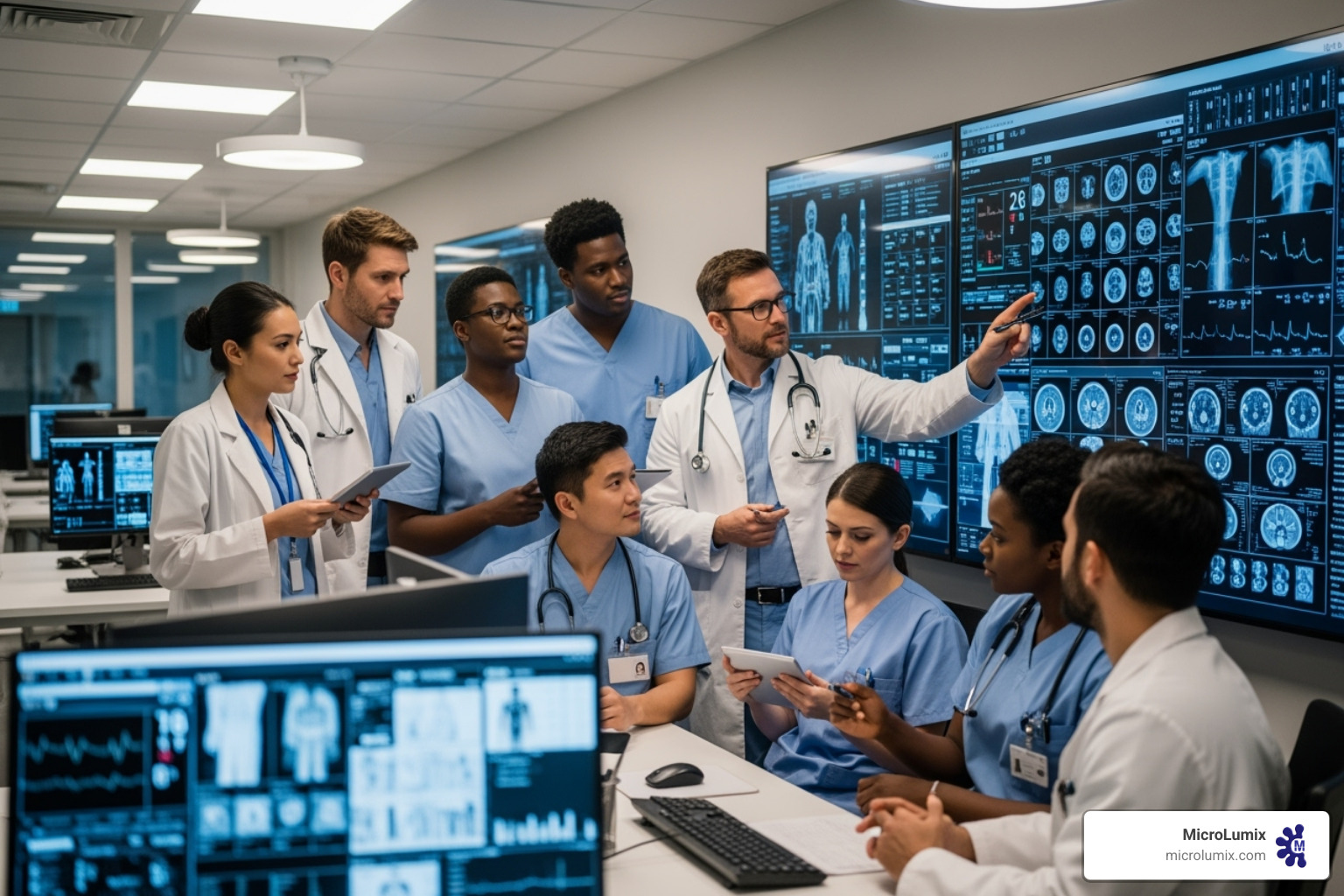
Evidence-based validation is critical to ensure new technologies are effective. This means moving beyond marketing claims to rely on peer-reviewed research. For instance, the Black Box Platform’s outcomes are supported by over 90 peer-reviewed publications, which provides confidence in its efficacy. University partnerships also bring essential academic rigor and clinical expertise to development, ensuring innovations meet real-world needs. The validation process must confirm clinical viability—proving a technology works in a real hospital, not just a lab. Investing in technologies backed by solid research ensures we are buying proven solutions, not just gadgets.
Addressing Technology-Induced Errors
Ironically, hospital safety technology can sometimes introduce new errors. Alert fatigue is a primary example; when systems generate too many warnings, clinicians may begin to ignore them, potentially missing critical alerts. The effectiveness of alerts often depends heavily on local context and workflow.
System complexity can lead to workarounds, where stressed clinicians bypass safety features to save time. Similarly, automation can lead to over-reliance, leaving users unprepared for rare system failures.
The solution is a cognitive-socio-technical approach: designing technology that aligns with how humans think and work in high-pressure environments. Key principles include:
- User-centered design: Involving clinicians throughout the design and testing process to ensure usability.
- Intelligent alerting: Using AI to filter and prioritize warnings, making them more meaningful.
- Robust training and support: Helping staff understand not just how to use a system, but why it’s designed a certain way.
Integrating Technology to Foster a Learning Health System
The ultimate goal of hospital safety technology is to create a learning health system—a system that continuously improves over time. This is achieved through data feedback loops, where information from every patient interaction is used to improve future care.
Technology platforms collect data on processes and outcomes, which analytics and AI turn into actionable insights. This powers continuous quality improvement (CQI): a cycle of collecting data, analyzing it, implementing changes, and measuring the results. A supportive organizational culture is essential for this to work, requiring transparency and a commitment to moving from data to action.
Empowering clinicians is the key. When providers see technology as a tool that makes their jobs easier and patients safer, they become active participants in the improvement cycle. This creates a positive feedback loop: better data leads to better insights, processes, and outcomes, making the entire system stronger and smarter with every patient served.
The Future of Hospital Safety
The future of hospital safety technology is unfolding before our eyes, and it’s more exciting than any science fiction movie. We’re moving toward a world where preventing patient harm isn’t just something we hope for—it’s built right into the fabric of healthcare itself.
Think about it: we’re developing systems that can predict problems before they happen, eliminate infections at the source, and give healthcare teams superhuman abilities to keep patients safe. It’s like giving every hospital a crystal ball and a safety net rolled into one.

Emerging Trends in hospital safety technology
The next wave of innovations includes:
-
Computer vision for fall detection: AI-powered cameras can monitor at-risk patients and instantly alert nurses to prevent falls, operating 24/7 without fatigue.
-
AI for predicting patient deterioration: Advanced systems analyze diverse data points—from vital signs to clinical notes—to predict cardiac arrest or respiratory failure hours in advance. While challenges like algorithm bias remain, the life-saving potential is immense.
-
Wearable sensors: These devices enable comfortable, continuous monitoring of vital signs and activity. Over 30 million U.S. patients are expected to use remote patient monitoring tools by 2024, extending safety beyond the hospital.
-
Robotic process automation: Digital assistants handle repetitive administrative tasks, reducing human error in paperwork and freeing up clinical staff to focus on patient care.
Global Adoption and the Push for Digital Safety Standards
Hospital safety technology is a global movement, with facilities worldwide adopting digital solutions. The World Health Organization (WHO)‘s Global Patient Safety Action Plan 2021-2030 champions technology to prevent harm, and countries are developing “digital safety playbooks” for effective implementation. A key challenge is the digital divide; as technology advances, we must ensure it is accessible to all. Through international collaboration and the development of global standards, we can create a future where technology makes healthcare safer for everyone, everywhere.
Conclusion
Hospital safety technology has evolved from simple digitalization to sophisticated ecosystems that actively protect patients. Tools ranging from EHRs to automated disinfection systems that eliminate 99.999% of dangerous pathogens are now the invisible guardians of modern medicine.
These technologies bring crucial transparency to clinical processes, enabling a fundamental shift from reactive to predictive safety. By using AI and data analytics, we can now anticipate and prevent problems before they cause harm. The potential is enormous: improved patient safety could save almost 1,000 extra lives and £100 million in care costs annually in the UK alone.
However, technology is only effective when it empowers healthcare providers. Success requires user-centered systems that fit clinical workflows and help teams learn and improve. Our ultimate goal is zero preventable harm. While challenges like alert fatigue exist, a commitment to evidence-based, human-centered design keeps us on the right path.
The future is bright, with predictive AI and automated systems creating safer healing environments. Every error prevented and infection stopped is a victory for patients. Together, we are building a healthcare system worthy of the trust placed in it.
Find how automated disinfection can create a safer patient environment