
The Critical Need for Advanced Infection Control in Healthcare
Infection control solutions are essential systems, products, and protocols designed to prevent the spread of pathogens in healthcare environments. Here’s what healthcare facilities need to know:
Key Components of Effective Infection Control:
- Hand hygiene systems – Automated dispensers and monitoring technology
- Environmental disinfection – Surface cleaners, UV-C systems, and automated fogging
- Personal protective equipment – Gloves, gowns, masks, and barrier films
- Advanced technologies – Real-time tracking, automated disinfection, and data analytics
- Staff training programs – Education on protocols and compliance monitoring
Every day, healthcare facilities face a sobering reality: 1 in 31 patients will contract a Healthcare-Associated Infection (HAI) during their stay. With more than a million HAIs reported annually across the U.S. healthcare system, these preventable infections result in 99,000 patient deaths and direct medical costs exceeding $28 billion each year.
The financial burden is staggering, but the human cost is immeasurable. Traditional cleaning methods are failing – studies show that only 40% of near-patient surfaces are cleaned according to hospital policies. Manual disinfection simply cannot keep pace with the speed and persistence of modern pathogens.
This reality has sparked a revolution in how we approach infection prevention. Healthcare administrators and infection control specialists are moving beyond reactive cleaning toward proactive, technology-driven solutions that work continuously to break the chain of infection.
I’m Debra Vanderhoff, Founder and COO of MicroLumix Bioscience Technology, where I’ve spent over four years developing automated infection control solutions that eliminate pathogens from high-touch surfaces without human intervention. My two decades of executive leadership experience across biotechnology and healthcare operations has shown me that the future of infection prevention lies in combining foundational practices with innovative automation.

The Core Challenges in Modern Infection Control
Healthcare facilities today face an uphill battle that would make even the most seasoned infection control professional break out in a cold sweat. The mission is crystal clear: protect patients, healthcare workers, and communities from infectious diseases while creating the safest possible environment for healing. But here’s the reality check – achieving these goals has become exponentially more complex.
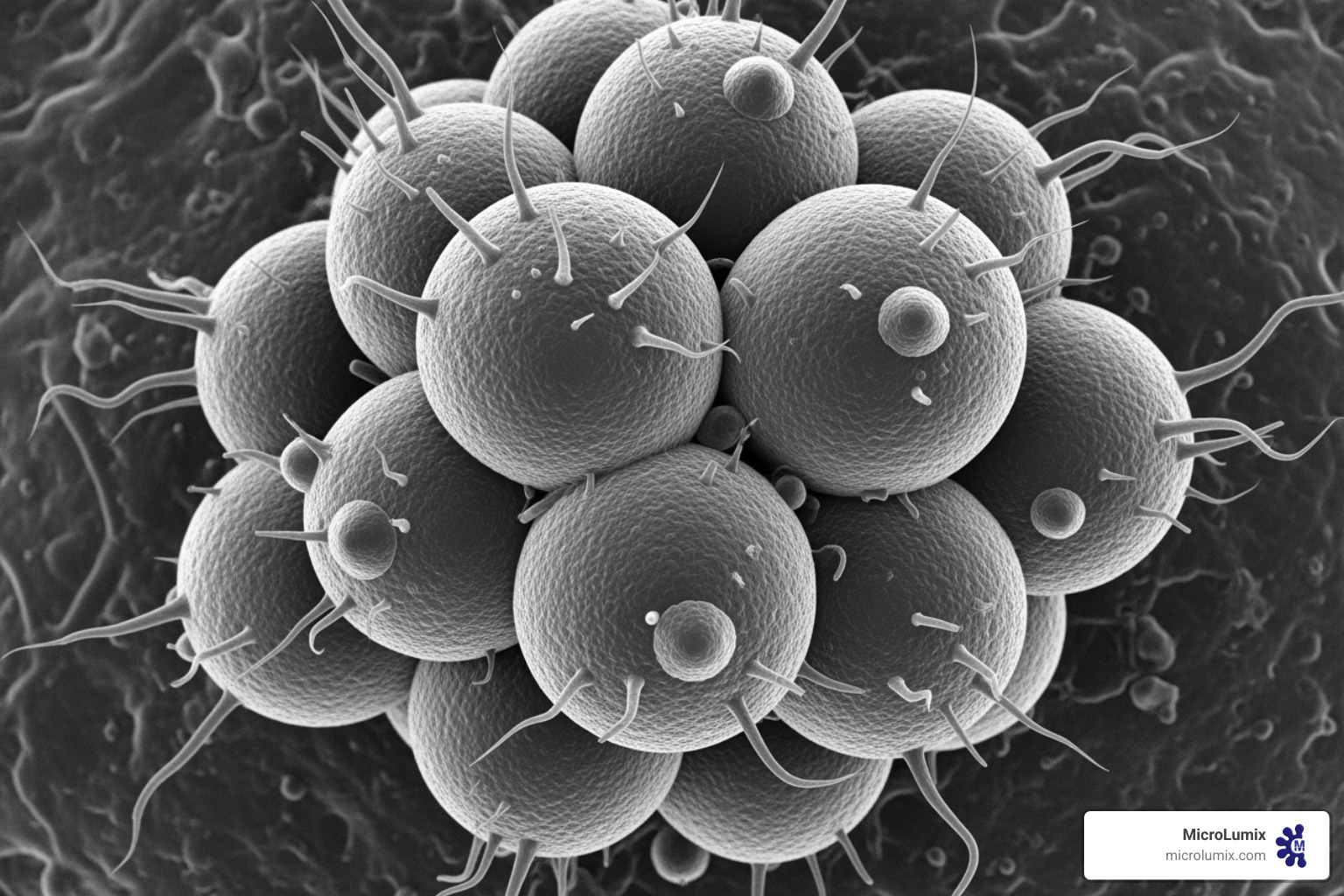
The numbers tell a sobering story. Only 40% of near-patient surfaces are cleaned according to hospital policies. That means more than half of the surfaces patients touch every day aren’t getting the attention they need to prevent infection transmission. Door handles, bed rails, call buttons – these critical touchpoints become silent carriers of pathogens.
Staffing shortages have turned this challenge into a crisis. Environmental services teams are stretched thin, working faster than ever while trying to maintain thorough disinfection protocols. When you’re racing against time with fewer hands on deck, something’s got to give – and unfortunately, it’s often those hard-to-reach corners and high-touch surfaces that get missed.
The pressure isn’t just coming from within healthcare facilities. The Leapfrog Group and other regulatory bodies are turning up the heat, demanding stricter standards and greater accountability in surface disinfection. While this external scrutiny drives necessary improvements, it also adds another layer of complexity to an already challenging situation.
But perhaps the most alarming challenge comes from the pathogens themselves. Multidrug-Resistant Organisms (MDROs) – the notorious “superbugs” – are becoming increasingly common and increasingly deadly. The CDC has labeled several of these organisms as “urgent threat” pathogens, and for good reason. Traditional infection control solutions are struggling to keep pace with these resilient invaders.
The Rise of Superbugs and Antimicrobial Resistance
Meet Candida auris – a pathogen so concerning that infectious disease specialists lose sleep over it. First finded in Japan in 2009, this superbug has been on a terrifying world tour, causing cluster outbreaks in hospitals since 2015.
The statistics are genuinely frightening. Between 2019 and 2021, C. auris appeared for the first time in 17 U.S. states. Its resistance to echinocandins – a key antifungal treatment – tripled in 2021 compared to previous years. This isn’t just affecting immunocompromised patients anymore; healthy individuals and children are now at risk.
When C. auris invades the blood, heart, or brain, one-third of patients don’t survive. These drug-resistant organisms laugh in the face of our traditional antibiotics and antifungals, making them incredibly challenging for existing cleaning protocols to eliminate. The pathogen resilience we’re seeing today represents a global health threat that demands innovative approaches to infection prevention.
The financial and human costs of HAI mortality continue to climb as our antibiotic arsenal becomes less effective against these superbugs. We’re essentially in an arms race with pathogens that adapt faster than we can develop new treatments.
Gaps in Manual Cleaning and Disinfection Protocols
Let’s be honest about manual cleaning – human error is inevitable. Even the most dedicated environmental services staff can’t achieve perfect consistency across every surface, every shift, every day. It’s not a matter of training or effort; it’s simple human nature.
Picture a busy hospital room during shift change. There’s the bed rail, door handle, light switch, call button, IV pole, bedside table, bathroom door handle, and dozens of other high-touch surfaces. Under time constraints with competing priorities, some of these critical touchpoints inevitably get missed or receive inconsistent disinfection.
Cross-contamination becomes a real risk when cleaning cloths or equipment move from room to room. A single oversight can turn cleaning staff into unwitting carriers of pathogens between patient areas.
The biggest challenge? Verifying cleanliness. How do you confirm that a surface is truly disinfected when most pathogens are invisible to the naked eye? Visual checks provide false confidence while leaving facilities vulnerable to outbreaks. Traditional manual methods simply can’t provide the real-time verification that modern infection control demands.
These gaps in manual protocols highlight why healthcare facilities are increasingly turning to automated infection control solutions that work continuously, without human intervention, to break the chain of infection at its most critical points.
A Spectrum of Modern Infection Control Solutions
This section will explore the multi-layered approach required for effective infection control, from foundational practices to advanced technologies that are reshaping how healthcare facilities combat pathogens.
Fighting healthcare-associated infections isn’t a one-size-fits-all battle. It requires a comprehensive strategy that builds from rock-solid fundamentals all the way up to cutting-edge technology. Think of it like building a fortress – you need strong walls, vigilant guards, and the latest defensive systems working together.
The most effective infection control solutions combine time-tested practices with innovative technologies that can work around the clock. Let’s walk through this spectrum of protection, from the basics that every facility must master to the advanced systems that are changing the game entirely.
Foundational Practices: Hand Hygiene and Environmental Cleaning
Let’s start with the absolute cornerstone of infection prevention: hand hygiene. It might seem simple, but this basic practice prevents more infections than any other single intervention. The numbers don’t lie – alcohol-based hand sanitizers are the most effective products for reducing germs and fungi on hands, which is why the CDC recommends them as the gold standard for healthcare settings.
Of course, when hands are visibly dirty or after using the restroom, good old-fashioned soap and water is still the way to go. But for routine patient care, those alcohol-based sanitizers are your best friend.
The World Health Organization has made this even easier to remember with their 5 Moments for Hand Hygiene:
- Before touching a patient – Protect them from germs you might be carrying
- Before clean/aseptic procedures – Keep harmful germs out of their body
- After body fluid exposure risk – Protect yourself and the environment
- After touching a patient – Again, protect yourself and others
- After touching patient surroundings – Those surfaces can harbor germs too
Environmental cleaning protocols are equally critical in the infection control puzzle. We know that contaminated surfaces play a major role in spreading HAIs, making thorough environmental disinfection a fundamental intervention. The challenge isn’t knowing what to clean – it’s ensuring that cleaning happens consistently and effectively every single time.
Manual wiping remains the standard approach, but optimizing these protocols requires attention to detail, the right EPA-approved disinfectants, and systematic approaches to support your facility’s environmental cleaning efforts.
Essential Supplies and Protective Equipment
Beyond hand hygiene, a well-stocked arsenal of supplies and personal protective equipment forms your facility’s frontline defense against infections.
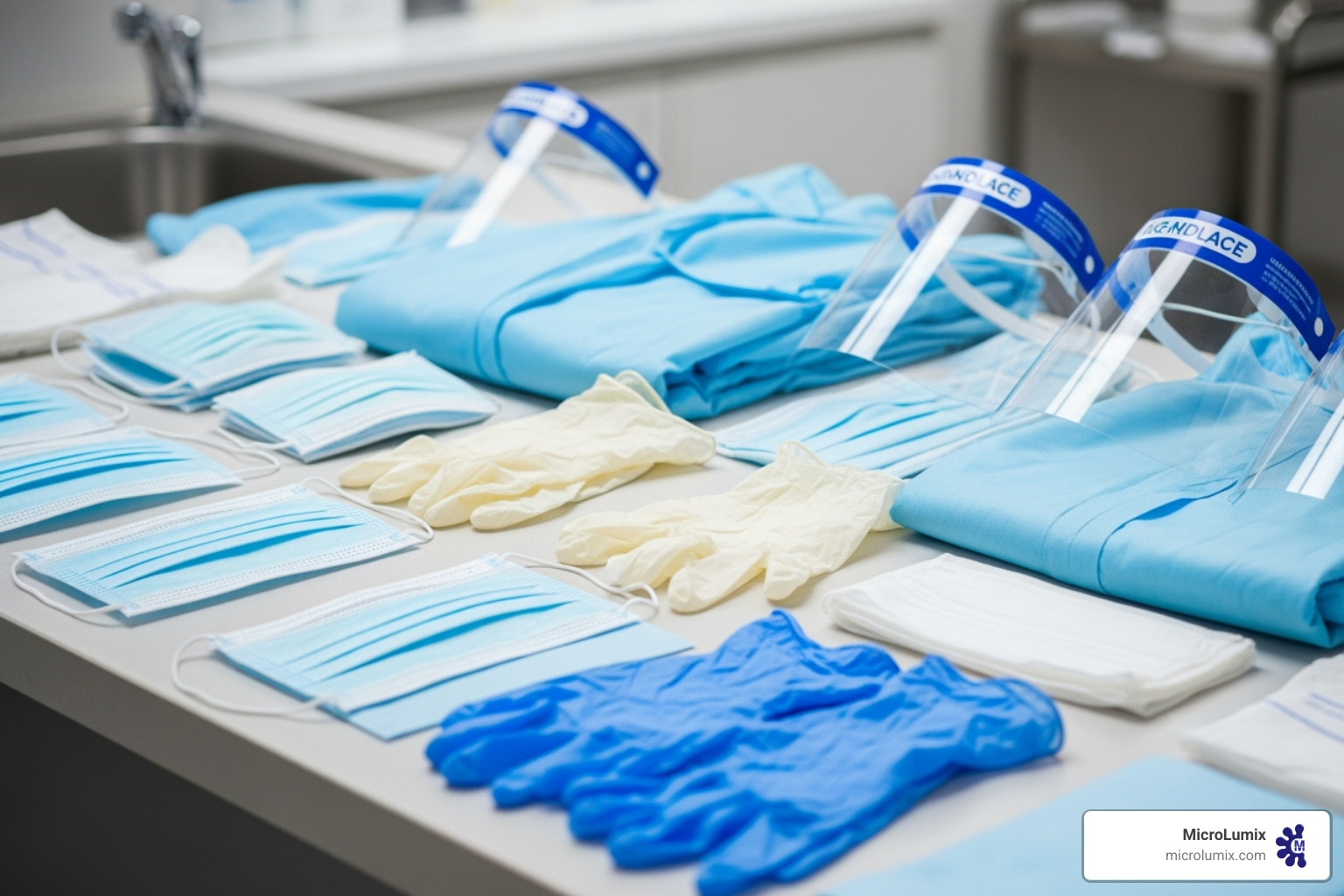
Head-to-toe protective apparel like gowns, masks, and eye protection creates a barrier between healthcare workers and potential pathogens. But the devil is in the details – even something as simple as exam gloves can make a huge difference when designed thoughtfully. For instance, dispensing systems that use a “cuff first” approach can reduce cross-contamination by 96% and cut waste by 50%.
Disinfectants and sanitizers are your chemical warriors in this fight. EPA-registered hospital-grade disinfectants have proven effectiveness against a wide range of pathogens, including tough customers like C. auris. These aren’t just cleaning products – they’re precision weapons against specific threats.
Barrier films offer another approach to surface protection. These adhesive films can be applied to high-touch surfaces and electronic devices to create a physical barrier against contamination. This is particularly valuable for items like tablets and PDAs, where constant cleaning with harsh chemicals could damage sensitive electronics.
Even the smallest details matter in infection control. Something as simple as a shared pen can become a vector for germs, which is why solutions that address these often-overlooked transmission points are gaining popularity.
Proper waste management is also a key component, ensuring that contaminated materials are disposed of safely to prevent them from becoming sources of recontamination.
Advanced Technologies Changing Infection Prevention
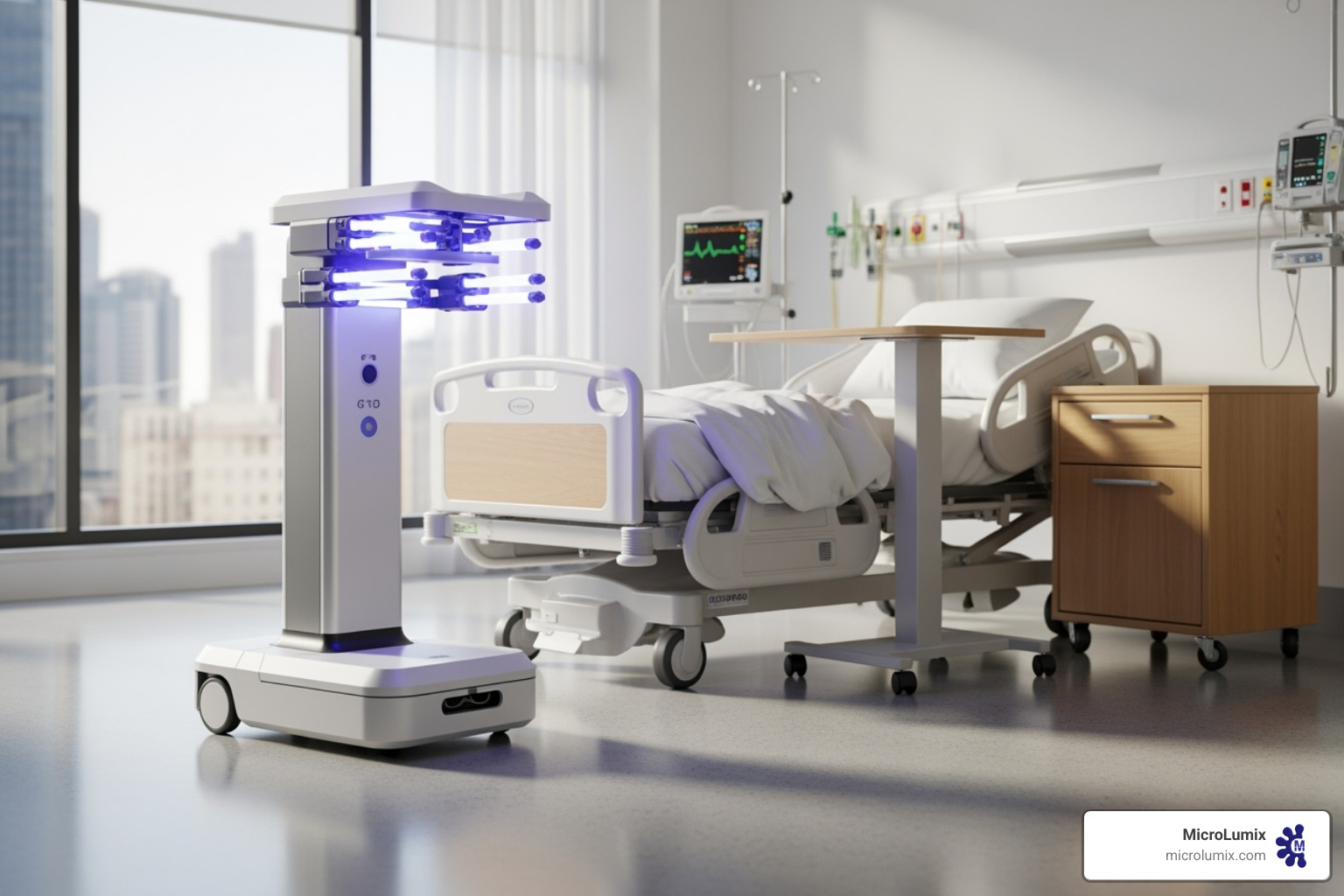
Automated Disinfection Technology represents a quantum leap forward in infection prevention. Systems like our GermPass technology provide continuous touchpoint disinfection, creating what we like to call a “germ force field” around high-volume touchpoints. Imagine elevator buttons, call buttons, and door handles being sanitized immediately after every single touch, 24/7, with 99.999% efficacy against pathogens.
This isn’t just about convenience – it’s about eliminating the gaps that manual cleaning inevitably leaves. Our self-sealing UVC chambers work automatically, removing human error from the equation and providing constant protection against even the most resilient pathogens.
UVC disinfection systems harness the germicidal power of ultraviolet light to inactivate harmful pathogens. These systems consistently outperform manual cleaning, with some eliminating 97.7% of pathogens in operating rooms. Advanced UVC solutions can achieve 99.9999% disinfection in less time with less labor, using multi-emitter systems for comprehensive room coverage.
Fogging technologies take a whole-room approach to disinfection. These systems atomize disinfectants into a fine mist that can settle on hard-to-reach surfaces and fill an entire space. This method is often used for terminal cleaning to supplement routine manual disinfection.
Real-Time Location Systems (RTLS) are revolutionizing how we monitor and improve infection control practices. By tracking staff, patients, and equipment movement, RTLS provides objective data on hand hygiene compliance, replacing subjective observation methods with real-time insights. Some facilities have seen hand hygiene adherence rates improve by 75% using electronic monitoring systems.
RTLS also automates contact tracing, quickly generating interaction and location reports that are critical during outbreak investigations. This technology transforms infection control from a reactive to a proactive process.
These advanced technologies aren’t just nice-to-have additions – they’re becoming essential infection control solutions that address the fundamental limitations of human-dependent systems and provide continuous, data-driven protection against infectious threats.
Building a Comprehensive and Data-Driven Program
A truly effective strategy goes beyond just products; it involves integrating technology, education, and data to create a resilient defense against infections.
The Total Solutions Approach to Infection Control Solutions
Think of infection control solutions as building blocks – they work best when they’re designed to fit together perfectly. You can’t just buy a bunch of products and hope for the best. Instead, you need an integrated strategy that treats infection prevention like a carefully orchestrated system.
The magic happens when you combine the right products with ongoing education and expert support. It’s like having a well-trained orchestra where every instrument plays its part. Staff training isn’t a one-time event – it’s an ongoing conversation about best practices, new threats, and better ways to protect patients.
Continuous education keeps your team sharp and confident. When healthcare workers understand not just what to do but why they’re doing it, compliance naturally improves. Resources like interactive, scenario-based courses help staff think through real-world situations before they encounter them. View a new course on IPAC for Health Care Workers.
Partnership benefits become clear when you work with experts who understand your unique challenges. The best partnerships don’t just sell you products – they help you succeed. This means ongoing consultation, protocol development, and support when things don’t go as planned. Expert support transforms good intentions into measurable results.
Leveraging Data to Measure and Improve a Program
Here’s where things get exciting. Data analytics turns guesswork into science, giving you the power to see what’s actually happening in your facility rather than what you think is happening.
Real-Time Location Systems (RTLS) are game-changers for hand hygiene monitoring. Instead of having someone with a clipboard trying to catch staff in the act, RTLS technology quietly tracks every hand hygiene event. It’s like having an invisible observer who never gets tired, never plays favorites, and captures 100% of events.
The difference is dramatic. Denver Health saw their hand hygiene adherence rates improve by 75% after implementing electronic monitoring. That’s not just a number – that’s thousands of prevented infections and safer patient care.
| Feature | Manual Observation | Electronic Monitoring (RTLS) |
|---|---|---|
| Data Collection | Subjective, prone to observer bias, limited sample size | Objective, unbiased, comprehensive, 100% event capture |
| Real-time Feedback | Delayed, reactive | Immediate, actionable insights |
| Compliance Rates | Often inflated due to Hawthorne effect | Accurate, reflecting true behavior |
| Labor Intensity | High, requires dedicated personnel | Low, automated |
| Cost | Hidden costs of inefficiency and missed infections | Upfront investment, significant long-term savings |
| Contact Tracing | Laborious, often incomplete, relies on memory | Automated, quick, precise interaction reports |
Measuring effectiveness goes beyond just tracking compliance. When you have real data, you can spot patterns, identify training opportunities, and allocate resources where they’ll make the biggest impact. Continuous improvement becomes possible because you know exactly where you stand and where you need to go.
Contact tracing automation is another powerful benefit. During outbreaks, RTLS can instantly provide detailed interaction reports, showing exactly who was where and when. This transforms a days-long manual process into something that happens in minutes.
Tailoring Solutions for Specific HAIs and Regulatory Compliance
Not all infections are created equal, and your prevention strategies shouldn’t be either. Targeted strategies recognize that CAUTI prevention requires different approaches than CLABSI bundles or Surgical Site Infection (SSI) prevention.
CAUTI prevention focuses on proper catheter insertion techniques, daily necessity assessments, and meticulous maintenance protocols. CLABSI bundles emphasize sterile insertion techniques, optimal site selection, and vigilant line care. SSI prevention requires attention to preoperative preparation, maintaining sterile fields, and optimizing the surgical environment.
The three-zone prevention strategy combines vascular access management, urology protocols, and environmental disinfection to create multiple barriers against pathogen spread. It’s like having multiple locks on your door – if one fails, the others are still protecting you.
Regulatory guidelines from the CDC and other authorities aren’t just suggestions – they’re your roadmap to success. EPA-registered disinfectants proven effective against specific pathogens form the foundation of any compliant program.
CDC recommendations evolve as we learn more about emerging threats, so staying current isn’t optional. When your infection control solutions meet or exceed these standards, you’re not just protecting patients – you’re protecting your facility from penalties and maintaining the accreditation that keeps your doors open.
Frequently Asked Questions about Infection Control Solutions
Healthcare administrators and infection control professionals often have pressing questions about implementing effective infection control solutions. Let’s address the most common concerns we hear from facilities working to protect their patients and staff.
How can facilities prepare for emerging threats?
The key to staying ahead of emerging pathogens is building a defense system that doesn’t rely on guesswork. Think of it like preparing for a storm – you want multiple layers of protection already in place.
Strict hand hygiene remains your first line of defense, but it needs to be paired with EPA-registered disinfectants that have proven effectiveness against novel pathogens. When C. auris first started spreading rapidly through healthcare facilities, many finded their existing products weren’t up to the task.
Contact precautions and laboratory surveillance help you detect and contain threats early, before they become outbreaks. But here’s where many facilities struggle – manual processes can’t keep up with the speed these superbugs spread.
That’s why investing in advanced disinfection technologies has become essential rather than optional. The CDC specifically recommends six primary measures to prevent C. auris transmission, including rigorous protocols and proven disinfectants. But automated systems provide that crucial extra layer of protection.
Whether it’s continuous UVC disinfection on high-touch surfaces or automated touchpoint sanitization, these technologies work around the clock to eliminate resilient organisms that manual cleaning might miss. They’re particularly valuable against rapidly spreading, drug-resistant pathogens that can survive on surfaces for weeks.
What is the difference between cleaning, sanitizing, and disinfecting?
This is one of those questions that seems simple but makes a huge difference in practice. Think of these three approaches as different levels of protection – like the difference between a light jacket, a warm coat, and full winter gear.
Cleaning removes germs and dirt from surfaces but doesn’t necessarily kill them. It’s like sweeping up the dust bunnies – you’re getting rid of visible contamination and some pathogens, but plenty can still be lurking around.
Sanitizing takes it a step further by lowering the number of germs to a safe level, as judged by public health standards. It’s like vacuuming – you’re getting most of them, but not necessarily all of them.
Disinfecting is your heavy artillery. It uses chemicals specifically designed to kill germs on surfaces, which is absolutely essential in healthcare settings to prevent infection spread. This approach aims to eliminate the vast majority of pathogens, including those tough, drug-resistant ones.
For surfaces that patients and staff touch frequently – think door handles, bed rails, call buttons, or elevator controls – disinfecting becomes crucial. These high-touch areas can become transmission highways if they’re only cleaned or sanitized rather than properly disinfected.
How can technology improve hand hygiene compliance?
Hand hygiene compliance has been a challenge for decades, mainly because traditional monitoring methods just don’t capture reality. The old “secret shopper” approach – having someone secretly observe and record hand hygiene events – creates what we call the Hawthorne effect. People behave differently when they think they might be watched.
Real-Time Location Systems (RTLS) completely change this dynamic by automating the monitoring process. Instead of relying on human observers who can only capture a tiny fraction of actual events, sensors on dispensers and staff badges gather unbiased, real-time data on every single hand hygiene opportunity.
This technology provides actionable insights that drive targeted training and dramatically improve compliance rates. Take Denver Health, for example – they used RTLS to improve hand hygiene adherence by 75%. That’s not just a number on a report; it translates directly to better patient safety outcomes.
The beauty of this approach is that it empowers staff with accurate feedback rather than making them feel like they’re being policed. When healthcare workers can see objective data about their own compliance patterns, they’re much more motivated to improve their practices.
Beyond compliance monitoring, RTLS technology also revolutionizes contact tracing. During outbreaks, facilities can quickly generate precise interaction and location reports instead of relying on memory and manual processes that are often incomplete or inaccurate.
Conclusion: The Future is Automated and Proactive
Healthcare is at a turning point. The days of relying solely on manual cleaning and hoping for the best are behind us. We’re witnessing a fundamental shift from reactive cleaning to proactive prevention – and it’s happening just in time.
The numbers don’t lie. With 1 in 31 patients developing HAIs and costs reaching $28 billion annually, traditional methods simply aren’t cutting it anymore. When studies show that only 40% of surfaces get properly cleaned, we know we need a better way forward.
The future belongs to automated, continuous protection. Think about it – pathogens don’t take breaks. They don’t wait for the cleaning crew to make their rounds. So why should our defenses?
This is where automated infection control solutions are changing everything. Technologies like our GermPass system work around the clock, sanitizing high-touch surfaces immediately after every contact. No human error. No missed spots. No waiting for the next cleaning cycle.
But automation isn’t about replacing good practices – it’s about amplifying them. Hand hygiene remains crucial. Environmental cleaning protocols are still essential. The difference is that now we have technology working alongside these foundational practices, creating multiple layers of protection.
The most exciting part? We’re seeing real results. Facilities using comprehensive, data-driven approaches are dramatically improving their infection rates. When Denver Health implemented automated monitoring, their hand hygiene compliance jumped by 75%. That’s not just a statistic – that’s lives saved and infections prevented.
Healthcare facilities that accept this evolution aren’t just keeping up with the times. They’re creating truly safe environments where patients can heal without fear of acquiring new infections. They’re protecting their staff from dangerous exposures. And they’re building sustainable programs that work even when human resources are stretched thin.
The choice is clear: continue struggling with outdated methods, or step into a future where technology and human expertise work together to break the chain of infection at every critical point. Learn more about advanced disinfection technology
Your patients deserve nothing less than the most advanced protection available. The future of infection control solutions is here – automated, proactive, and incredibly effective.