
Why Infection Prevention Strategies Are Essential for Healthcare Excellence
Infection prevention strategies are evidence-based practices designed to stop harmful germs from spreading among patients, healthcare workers, and visitors. Core strategies include:
- Hand Hygiene: Washing hands or using sanitizer before and after patient contact.
- Standard & Transmission-Based Precautions: Using PPE and applying specific protocols for all patients and known infections.
- Environmental Cleaning: Regularly disinfecting high-touch surfaces and equipment.
- Antimicrobial Stewardship: Using antibiotics appropriately to prevent resistance.
- Surveillance & Education: Monitoring infection rates and providing continuous staff training.
The stakes are high. Healthcare-associated infections (HAIs) affect 2 million patients yearly and cause over 100,000 deaths in the US alone. These preventable infections increase hospital stays by 7 to 11 days and cost the healthcare system over $40 billion annually. Research shows that approximately 55% of surgical site infections could be avoided if healthcare personnel consistently followed evidence-based prevention strategies.
Effective infection prevention is achievable with comprehensive, multi-layered approaches. As one CDC expert noted: “Infection control prevents or stops the spread of infections in healthcare settings”—but only when applied consistently.
The chain of infection requires a source of germs, a pathway for transmission, and a susceptible person. Breaking any link in this chain stops the infection. This principle guides every successful program.
I’m Debra Vanderhoff, Founder and COO of MicroLumix. With two decades in healthcare innovation, I’ve spent over four years developing automated disinfection technology to strengthen infection prevention strategies in facilities worldwide, giving me deep insight into the operational challenges of maintaining consistent infection control.
The Foundation: Understanding Germ Transmission and Precautions
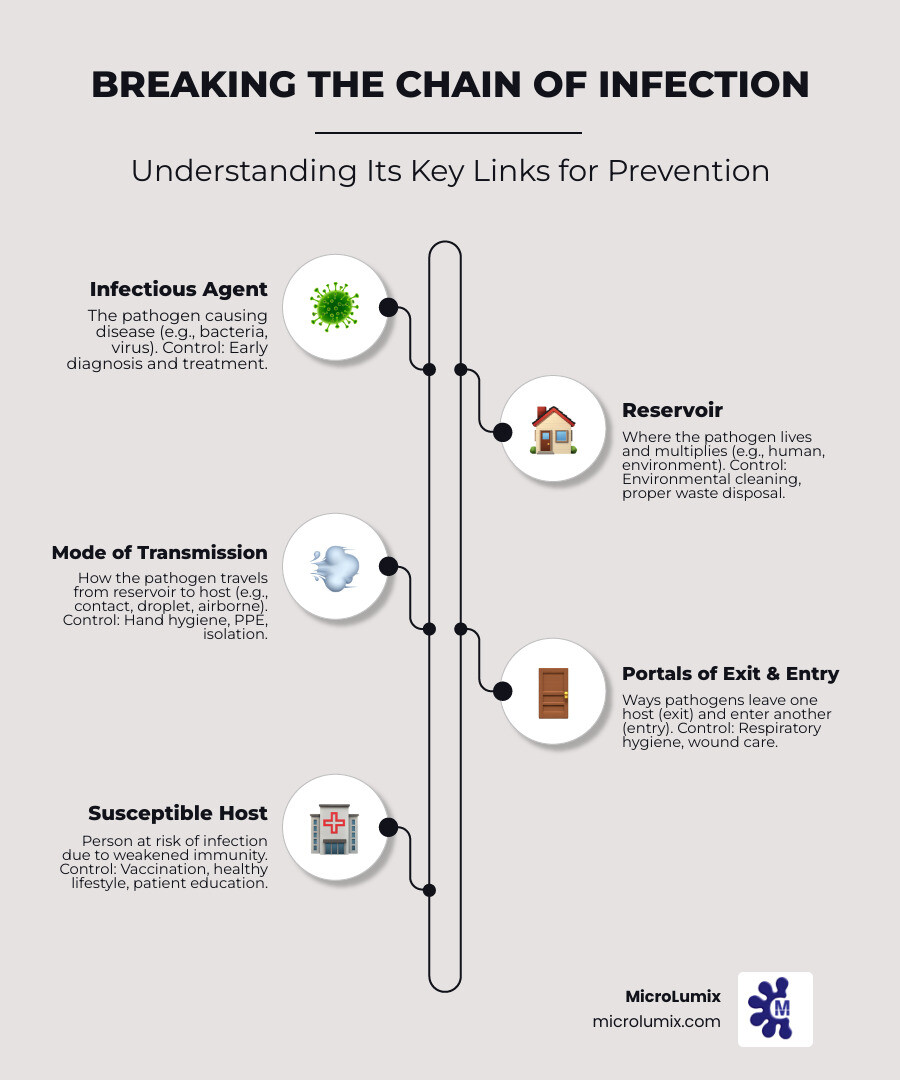
To effectively implement infection prevention strategies, we must first understand how germs spread. The chain of infection provides a simple model: break one link, and the infection is stopped.
The Chain of Infection Explained
Every infection requires six elements. The CDC’s Infection Control Basics details this concept. Here’s a brief overview:
- Infectious Agent: The germ—bacteria, virus, or fungus—that causes illness.
- Reservoir: Where germs live, such as in people, on surfaces, or on medical equipment. A person can be colonized with germs and show no symptoms but still be contagious.
- Portal of Exit: How germs leave the reservoir, like through a cough, a wound, or blood.
- Mode of Transmission: How germs travel. This includes direct contact, contaminated surfaces (over 80% of common infections spread via hands), respiratory droplets, or tiny airborne particles.
- Portal of Entry: How germs enter a new host, often through the same routes they exited the last one (e.g., inhalation, broken skin).
- Susceptible Host: A person whose immune system is vulnerable due to illness, medical devices, or other factors.
Understanding this chain allows us to break it at multiple points, creating several layers of defense.
Fundamental infection prevention strategies: Standard Precautions
Standard Precautions are the basic safety rules applied to every patient, every time, because we can’t know who might be carrying germs. It’s a simple rule that keeps everyone safe.
Key components include:
- Hand Hygiene: Our most powerful defense. Clean hands before and after patient contact and after touching potentially contaminated items.
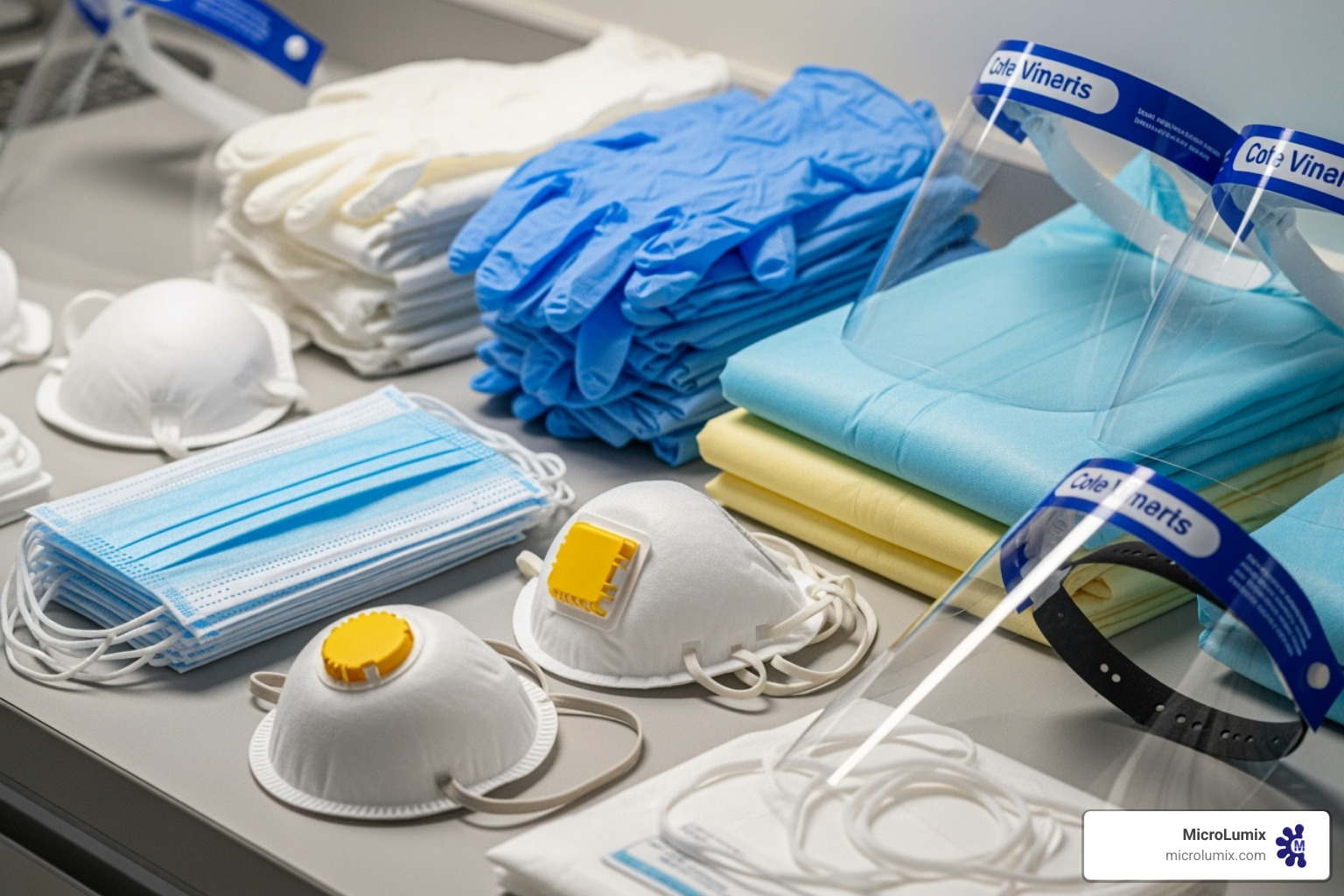
- Personal Protective Equipment (PPE): Using gloves, gowns, masks, and eye protection as a barrier against expected contact with blood or body fluids.
- Respiratory Hygiene/Cough Etiquette: Covering coughs and sneezes to reduce the spread of respiratory germs.
- Safe Injection Practices: Using sterile, single-use needles and syringes and disposing of sharps immediately in puncture-resistant containers.
- Patient Placement: Strategically placing patients to minimize transmission risk when single rooms are unavailable.
- Equipment and Environmental Cleaning: Properly cleaning and disinfecting or sterilizing reusable medical equipment between patients.
- Laundry Handling: Treating contaminated linens carefully to avoid dispersing germs during transport and cleaning.
These are not just guidelines; they are our daily commitment to safety.
Advanced infection prevention strategies: Transmission-Based Precautions
When Standard Precautions aren’t enough, we add Transmission-Based Precautions for patients with known or suspected infections that spread in specific ways.
- Contact Precautions: Used for germs spread by touch (e.g., C. diff, MRSA). This requires wearing a gown and gloves for all interactions and using dedicated patient-care equipment.
- Droplet Precautions: For infections spread by large respiratory droplets (e.g., influenza, whooping cough). Staff must wear a surgical mask when entering the patient’s room.
- Airborne Precautions: Our highest level of protection for germs that spread via tiny airborne particles (e.g., tuberculosis, measles). This requires a special negative-pressure room and fit-tested N95 respirators for anyone entering.
| Precaution Type | Common Examples | Room Requirements | Staff Protection |
|---|---|---|---|
| Contact | C. diff, MRSA, VRE, RSV | Private preferred; same infection can share | Gown and gloves |
| Droplet | Influenza, whooping cough, meningitis | Private preferred; same infection can share | Surgical mask |
| Airborne | Tuberculosis, measles, chickenpox | Special negative pressure room required | N95 respirator (fit-tested) |
This layered approach—combining universal Standard Precautions with targeted Transmission-Based Precautions—creates multiple, robust barriers that stop germs from spreading.
Core Infection Prevention Strategies for Every Healthcare Setting
Beyond foundational precautions, certain practices are critical to effective infection prevention strategies in any healthcare environment.
The Critical Role of Hand Hygiene
Hand hygiene is the single most effective and cost-efficient method for preventing the spread of infection. Our hands are the primary vehicles for germ transmission, with over 80% of common infections spread by them.
The World Health Organization’s “My 5 Moments for Hand Hygiene” provides a clear guide for healthcare workers:
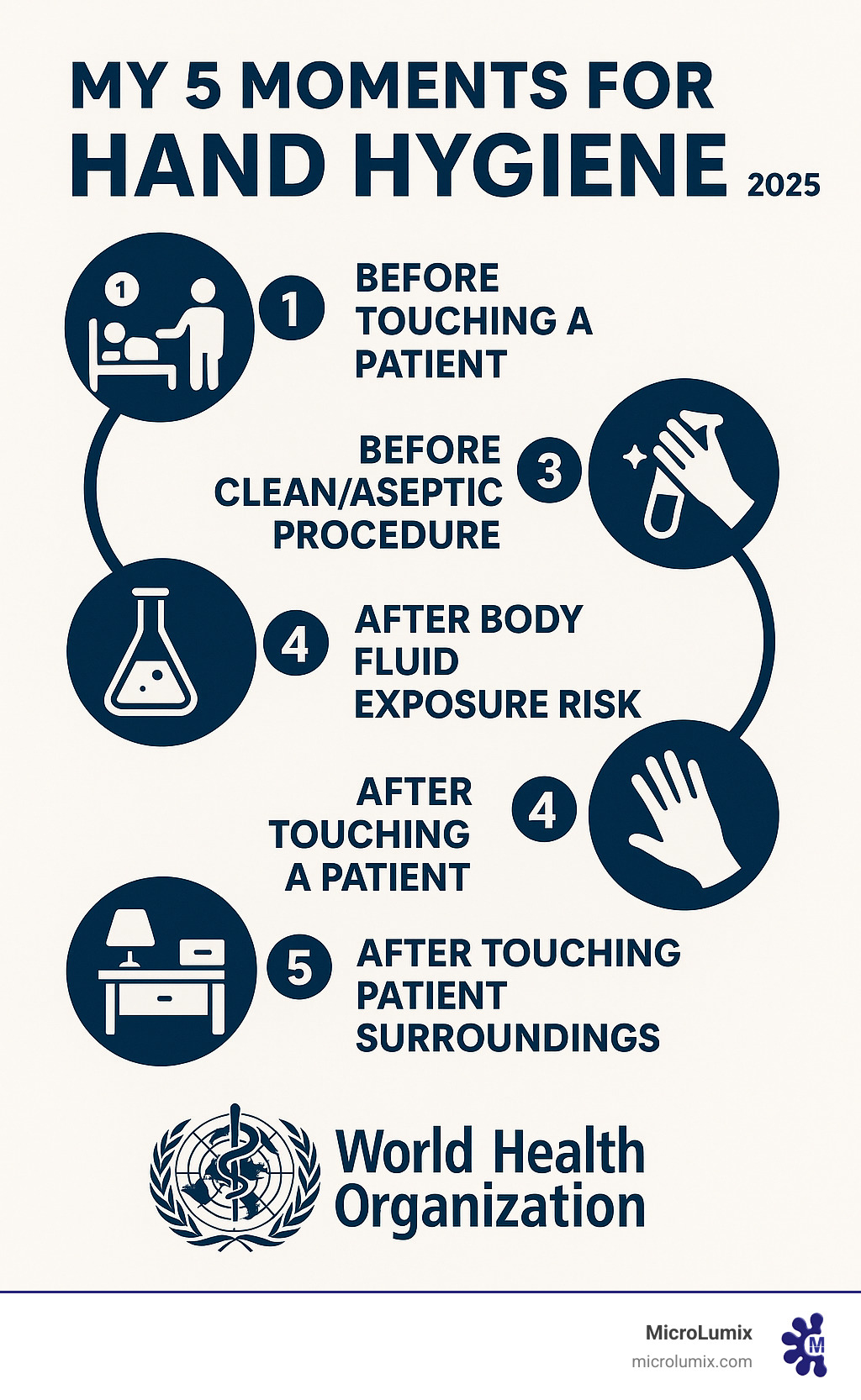
- Before touching a patient
- Before a clean/aseptic procedure
- After body fluid exposure risk
- After touching a patient
- After touching patient surroundings
There are two primary methods for hand hygiene:
- Soap and Water: This is essential when hands are visibly soiled or after contact with germs like C. diff. Wet hands, apply soap, and rub vigorously for at least 15-30 seconds, covering all surfaces. Rinse and dry with a paper towel, using it to turn off the tap.
- Alcohol-Based Hand Sanitizer: Preferred in most clinical situations if hands are not visibly dirty. Use a sanitizer with at least 60% alcohol. Apply enough product to cover all hand surfaces and rub until completely dry.
Patients and caregivers also play a vital role. We encourage them to clean their hands often and empower them to remind staff to do the same. This collaboration is a powerful infection prevention strategy. For a detailed visual guide, refer to the World Health Organization’s My 5 Moments for Hand Hygiene poster.
Environmental Hygiene and Disinfection
The healthcare environment is a significant reservoir for germs, making robust cleaning and disinfection essential infection prevention strategies.
- Cleaning vs. Disinfecting: Cleaning physically removes dirt and some germs, while disinfecting uses chemicals to kill germs. Both are crucial.
- High-Touch Surfaces: Focus on frequently touched items like bed rails, call buttons, doorknobs, and medical equipment.
- Equipment Reprocessing: Reusable equipment (e.g., stethoscopes, blood pressure cuffs) must be cleaned and disinfected between patients. Items entering sterile tissue require sterilization.
- Laundry Management: Handle contaminated textiles with minimal agitation and bag them at the point of use to prevent spreading microorganisms.
- Facility Infrastructure: Well-designed ventilation systems, easily cleanable surfaces, and accessible handwashing stations are critical. Manual cleaning alone is often insufficient; one study found that with “just 29 percent of high touch OR surfaces properly cleaned,” there is an urgent need for more effective solutions. For detailed guidelines, refer to the CDC Guidelines for Environmental Infection Control.
Safe Practices and Personal Protective Equipment (PPE)
Correctly using PPE and adhering to safe practices are foundational to our infection prevention strategies.
- Safe Injection Practices: Always use a new, sterile needle and syringe for each injection. Never recap needles by hand and dispose of used sharps immediately in puncture-resistant containers.
- Sharps Safety: Proper handling and disposal of all sharp medical instruments are critical to prevent injuries that can transmit bloodborne pathogens.
- Proper Donning and Doffing of PPE: Staff must be proficient in putting on (donning) and taking off (doffing) PPE in the correct sequence to prevent self-contamination.
- Respiratory Hygiene Principles: Educate everyone to cover coughs and sneezes with a tissue or their elbow, and to clean their hands immediately afterward.
Essential resources to support these practices include readily accessible hand hygiene stations, an adequate supply of PPE, sharps disposal containers, EPA-registered disinfectants, sterilization equipment, and well-maintained ventilation systems, including automated disinfection systems.
Building a Robust and Resilient Infection Control Program
Effective infection prevention strategies require thoughtful planning, dedicated people, and a commitment to continuous improvement.
Key Roles and Program Management
Successful infection control relies on a collaborative team of dedicated professionals.

- Infection Preventionists (IPs) are the heart of the program. These specialists design and implement strategies, investigate potential outbreaks, and educate staff.
- Hospital Epidemiologists, typically physicians with infectious disease expertise, provide clinical guidance for complex decisions.
- Infection Control Committees bring together nurses, doctors, administrators, and staff from various departments (e.g., environmental services, pharmacy) to set policies, allocate resources, and ensure facility-wide alignment.
Outbreak management is a key function, involving surveillance to monitor infection rates, identification of the cause, investigation to trace the source, intervention with targeted strategies, and evaluation to measure effectiveness. This work is supported by ongoing, competency-based education and training to keep all staff sharp and up-to-date.
The Importance of Antimicrobial Stewardship
One of our most powerful infection prevention strategies is the careful management of antibiotics. Antimicrobial stewardship ensures we use these vital resources only when necessary and in the right way to combat the growing threat of antibiotic resistance.
When antibiotics are overused, bacteria can learn to survive them, rendering the drugs ineffective. Good stewardship involves confirming a bacterial diagnosis before prescribing, choosing the most targeted antibiotic, and using the correct dose for the proper duration. It means avoiding antibiotics for viral infections, where they offer no benefit.
Infection control and stewardship are synergistic. Preventing infections reduces the need for antibiotics, while wise antibiotic use preserves their efficacy for future patients. This collaboration creates a positive cycle of better outcomes and lower costs. The CDC’s Core Elements of Hospital Antibiotic Stewardship Programs offers excellent guidance for facilities.
Implementing and Improving Control Measures
Putting infection prevention strategies into action requires adapting to different healthcare settings.
- Long-term care facilities must focus on hand hygiene and environmental cleaning for vulnerable residents, who often have weakened immune systems.
- Community care settings, like home health and outpatient clinics, require flexible protocols and strong patient education due to varied environments and limited resources.
Successful implementation depends on leadership and team member engagement. Performance improvement tools like Plan-Do-Study-Act (PDSA) cycles and Root Cause Analysis help teams test changes and learn from errors. Regular audits and constructive feedback on practices like hand hygiene compliance are essential for continuous improvement.
Technology is an increasingly important tool. Manual cleaning has limitations, and studies show it can leave behind dangerous pathogens. Innovative solutions like automated disinfection systems provide consistent, high-efficacy disinfection that complements traditional methods. For more information about how advanced technology can support these efforts, visit our technology page.
Frequently Asked Questions about Infection Prevention
Here are answers to some of the most common questions about infection prevention, reflecting a shared commitment to patient safety.
What is the single most effective way to prevent the spread of infection?
While all infection prevention strategies are important, hand hygiene is the single most effective and cost-efficient method. Our hands are the primary vehicle for germ transmission, responsible for spreading over 80% of common infections.
By consistently cleaning hands with soap and water or an alcohol-based sanitizer before and after every patient interaction, healthcare providers break the chain of infection at its most common and vulnerable point. It is a simple action with an outsized impact on patient safety.
What is the difference between Standard and Transmission-Based Precautions?
This distinction is key to a layered defense strategy.
Standard Precautions are the foundational, universal safety measures applied to every patient in every healthcare setting. This approach assumes that all blood, body fluids, and non-intact skin are potentially infectious. It includes practices like hand hygiene, appropriate PPE use, and safe injection techniques.
Transmission-Based Precautions are additional layers of protection used alongside Standard Precautions. They are implemented when a patient is known or suspected to have a specific infection that spreads in a particular way. There are three types:
- Contact Precautions (for germs spread by touch, like MRSA)
- Droplet Precautions (for germs in large respiratory droplets, like influenza)
- Airborne Precautions (for germs in tiny airborne particles, like tuberculosis)
Think of Standard Precautions as your everyday armor and Transmission-Based Precautions as specialized gear for specific threats.
How can patients help prevent infections during their healthcare stay?
Patient involvement is one of our most valuable infection prevention strategies. Patients can be active partners in their safety in several ways:
- Practice Hand Hygiene: Patients should clean their hands often, especially after using the restroom and before eating.
- Speak Up: It is always appropriate for patients to politely ask their care team, “Have you cleaned your hands?” before being touched or having medical devices handled.
- Cover Coughs and Sneezes: Using a tissue or the bend of the arm prevents the spread of respiratory germs.
- Ask Questions: Understanding their condition, medications, and any medical devices helps patients participate in their care.
- Get Vaccinated: Staying up-to-date on recommended vaccinations, like the annual flu shot, adds another layer of protection.
When patients and providers work together, safety and outcomes improve for everyone.
Conclusion: A Multi-Layered Approach to Patient Safety
Effective infection prevention strategies are not built on a single practice but are woven together in layers, each strengthening the others. This fortress of patient safety is built with Standard and Transmission-Based Precautions, robust environmental cleaning, and diligent hand hygiene.
A strong safety culture is essential, requiring commitment from leadership and active participation from every staff member and patient. The collaboration between antimicrobial stewardship and infection control is one of our most powerful weapons against resistant pathogens, creating a virtuous cycle of preventing infections and preserving antibiotic efficacy.
The benefits are clear: reduced infection rates, shorter hospital stays, better patient outcomes, and significant cost savings. This creates an environment of trust and safety for patients, families, and staff.
Innovative technology plays an increasingly important role in these multi-layered approaches. Traditional cleaning methods, while essential, can fall short on high-touch surfaces where dangerous pathogens can linger. This is where automated solutions like MicroLumix’s GermPass technology strengthen existing protocols.
GermPass represents the next evolution in infection prevention strategies—an automated system that sanitizes high-volume touchpoints immediately after every touch, achieving 99.999% efficacy against pathogens. It works seamlessly alongside your current protocols, adding an extra layer of protection exactly where it’s needed most.
The future of infection prevention lies in the thoughtful integration of proven practices with cutting-edge technology. When hand hygiene, environmental cleaning, proper precautions, and automated disinfection work together, they create an environment where healing happens safely.
Ready to strengthen your facility’s infection prevention strategies with automated touchpoint disinfection? Learn how GermPass improves infection prevention and find how this innovative technology can complement your existing safety protocols.