
Why Operating Room Hygiene Matters for Patient Safety
Operating room hygiene is the foundation of surgical safety, protecting patients from life-threatening infections and healthcare workers from exposure to dangerous pathogens. When surgical procedures breach the body’s natural defenses, meticulous environmental cleaning becomes the critical barrier between patients and potentially deadly microorganisms.
Key Operating Room Hygiene Requirements:
- Beginning-of-day cleaning: Establish sterile baseline conditions
- Between-patient turnover: Eliminate biological hazards and cross-contamination
- End-of-day terminal cleaning: Comprehensive disinfection of all surfaces
- High-touch surface focus: Prioritize frequent cleaning of equipment controls and patient contact areas
- Risk-based approach: Adjust cleaning intensity based on contamination probability
The stakes couldn’t be higher. Healthcare-associated infections (HAIs) affect 1 in 31 patients in hospital facilities, resulting in more than 99,000 annual deaths and over $28 billion in direct medical costs across the U.S. healthcare system. Surgical site infections alone constitute 20% of all hospital-acquired infections, making operating room environmental control a critical patient safety priority.
Studies consistently show that mean overall thoroughness of cleaning reaches just 25% of surfaces evaluated, while traditional disinfecting methods are only effective on 40% of near-patient surfaces. This gap between current practices and required standards demands both rigorous protocols and innovative solutions.
As Debra Vanderhoff, Founder and COO of MicroLumix, I’ve dedicated over 20 years to developing automated disinfection systems that address the critical gaps in operating room hygiene where manual cleaning falls short. My experience building solutions for healthcare environments has shown me how proper environmental controls can dramatically improve patient outcomes and staff safety.
The Three Critical OR Cleaning Cycles
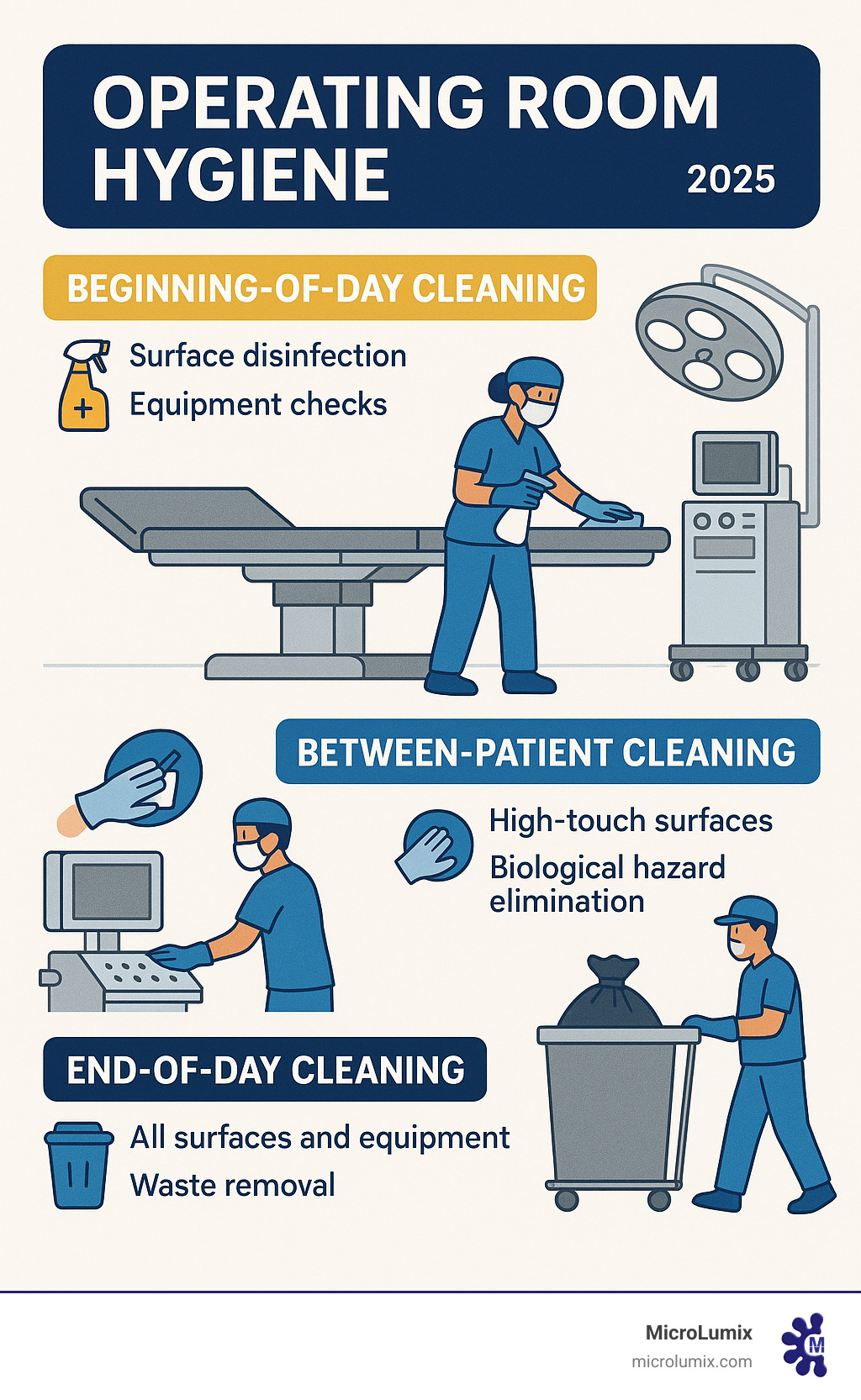
Think of operating room hygiene like a three-act play that repeats every single day. Each act has its own purpose, timing, and cast of characters—but they all work together to create one seamless story of patient safety.
The three critical cleaning cycles form the backbone of infection prevention: beginning-of-day preparation, between-patient turnover, and end-of-day terminal cleaning. Each cycle builds on the last, creating layers of protection that keep harmful pathogens at bay.
Beginning-of-Day Cleaning Routine
Every morning in the OR starts with a fresh slate—literally. The beginning-of-day routine is like setting up a theater stage before the curtain rises. Everything needs to be perfect because there’s no room for error once the performance begins.
Damp dusting kicks off the morning ritual. Healthcare teams methodically wipe down all horizontal surfaces using EPA-registered disinfectants, moving from top to bottom to prevent recontamination. Surgical lights get special attention since they’ll be positioned directly over sterile fields. The operating table receives a thorough cleaning, as it will soon become the most critical surface in the room.
High-touch areas demand extra care during this morning preparation. Door handles, computer keyboards, control panels, and light switches get wiped down thoroughly, with staff ensuring the disinfectant stays on surfaces for the required dwell time—usually 30 seconds to several minutes, depending on the product.
Mopping floors comes next, using hospital-grade disinfectants that capture overnight dust, skin cells, and any particles that may have settled. The supply check ensures all necessary materials are stocked and surgical instruments have been properly sterilized overnight.
A quick ventilation systems check confirms proper airflow—something that’s absolutely vital for maintaining clean air and minimizing airborne contaminants throughout the day.
This morning routine establishes a clean baseline that sets every surgical procedure up for success. It’s like tuning an orchestra before a concert—every detail matters.
Cleaning Between Patients (Turnover Cleaning)
The clock is ticking. Between patients, every minute counts as OR teams perform what might be the most critical cleaning cycle of all—turnover cleaning. This is where speed meets precision, and there’s no room for shortcuts.
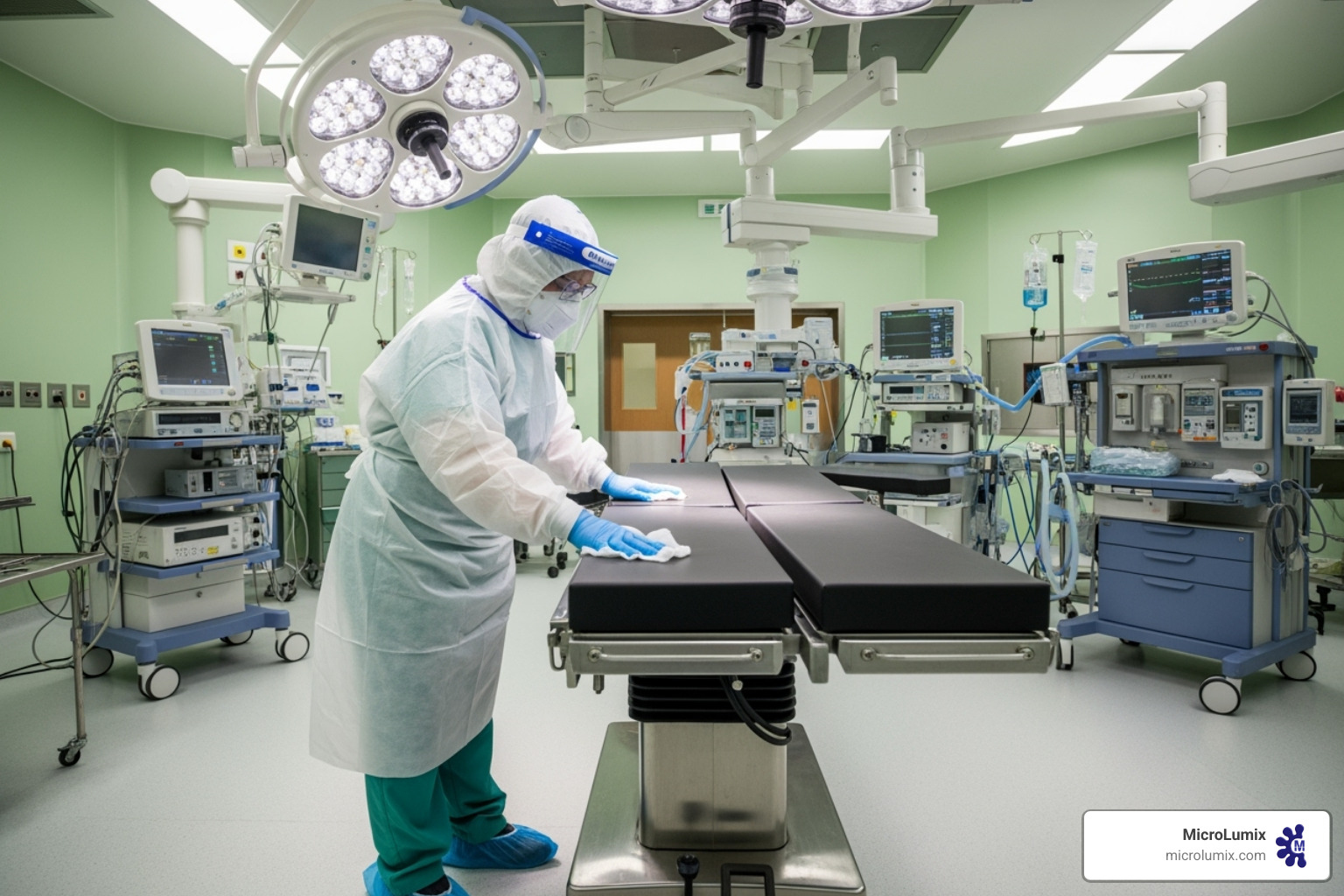
Rapid disinfection begins the moment a procedure ends. Staff members, properly suited in Personal Protective Equipment (PPE), focus on surfaces and equipment that came into contact with the patient or were within the immediate surgical field. The goal is eliminating biological hazards before they can spread to the next patient.
High-touch surfaces get priority treatment during turnover. The operating table, anesthesia carts, patient monitors, and equipment stands receive careful cleaning and disinfection. Any visible fluids or debris disappear immediately—there’s zero tolerance for contamination.
Removing used linens happens swiftly but carefully. All gowns, towels, drapes, and cloths inside the OR get replaced with fresh materials. This simple step prevents microorganisms from hitchhiking to the next patient.
Floor cleaning during turnover focuses on the area most likely to be contaminated—typically up to a 1.5-meter radius around the operating table. While not a full room clean, this targeted approach addresses the highest-risk zone.
Waste disposal ensures all surgical waste gets properly segregated and removed, with special handling for biohazardous materials that could pose infection risks.
This entire process, though rapid, creates a protective barrier between patients. For healthcare professionals seeking more comprehensive protocols, detailed guidance on cleaning the operating theatre provides additional insights into these critical procedures.
End-of-Day (Terminal) Cleaning Procedure
When the last surgery wraps up, it’s time for the most thorough cleaning cycle of all—terminal cleaning. Think of this as the deep clean that resets the entire OR for tomorrow’s challenges.
Comprehensive disinfection means exactly that—comprehensive. Every surface within the operating room gets attention, from ceiling tiles down to floor corners. Walls, light fixtures, equipment housings, and even air vents receive thorough cleaning. This isn’t just about what’s visible; it’s about creating a truly clean environment.
All surfaces get the terminal treatment, including walls, ceilings, and floors that might have been missed during quicker turnover cleans. Mobile equipment like instrument trolleys, IV stands, and rolling stools get moved, cleaned, and disinfected—including their wheels and hard-to-reach crevices.
Surgical instruments that were used during the day get collected, cleaned, and sent through proper sterilization protocols. This critical step breaks any potential chain of infection before it can start.
Waste management during terminal cleaning is comprehensive. All materials and waste products get properly disposed of, with careful attention to biohazardous waste handling procedures.
Even unused ORs receive end-of-day attention. Staff movement alone can introduce contaminants throughout the day, so maintaining clean baselines across all operating rooms is essential for tomorrow’s success.
The room gets left in perfect readiness—surfaces clean, equipment properly positioned, and everything prepared for the next day. This thorough preparation makes the following morning’s routine more efficient and ensures every new day starts with the highest standards of operating room hygiene.
These three cleaning cycles work together like a well-choreographed dance, each building on the last to create multiple layers of protection for patients and healthcare workers alike.
Advanced Principles of Operating Room Hygiene
When it comes to operating room hygiene, thinking beyond basic daily routines can make the difference between good and exceptional patient outcomes. After two decades in healthcare disinfection, I’ve learned that the most effective cleaning programs follow strategic principles that maximize impact while using resources wisely.
The Risk-Based Approach to Cleaning
Not every surface in an operating room poses the same infection risk. Smart operating room hygiene programs focus their energy where it matters most by asking three critical questions about each area:
How likely is contamination? Some surfaces, like surgical instrument tables, face constant exposure to biological materials. Others, like ceiling-mounted equipment, rarely encounter pathogens directly.
How vulnerable are patients? Surgical patients have compromised immune systems and open wounds. Areas closest to the surgical field demand the highest attention because any contamination could lead directly to infection.
What’s the exposure potential? High-touch surfaces like door handles and control panels get contacted dozens of times per day by different people. Low-touch surfaces like upper walls might go weeks without human contact.
This intelligent approach allows cleaning teams to allocate their time and supplies where they’ll prevent the most infections. The CDC guidelines on environmental cleaning procedures provide detailed frameworks for implementing risk-based cleaning strategies that have proven effective across thousands of healthcare facilities.
Best Practices for High-Touch Surface Operating Room Hygiene
High-touch surfaces are the highways for pathogen transmission in operating rooms. These innocent-looking spots – doorknobs, light switches, monitors, keyboards, and anesthesia controls – get touched constantly throughout the day, picking up and spreading microorganisms with each contact.
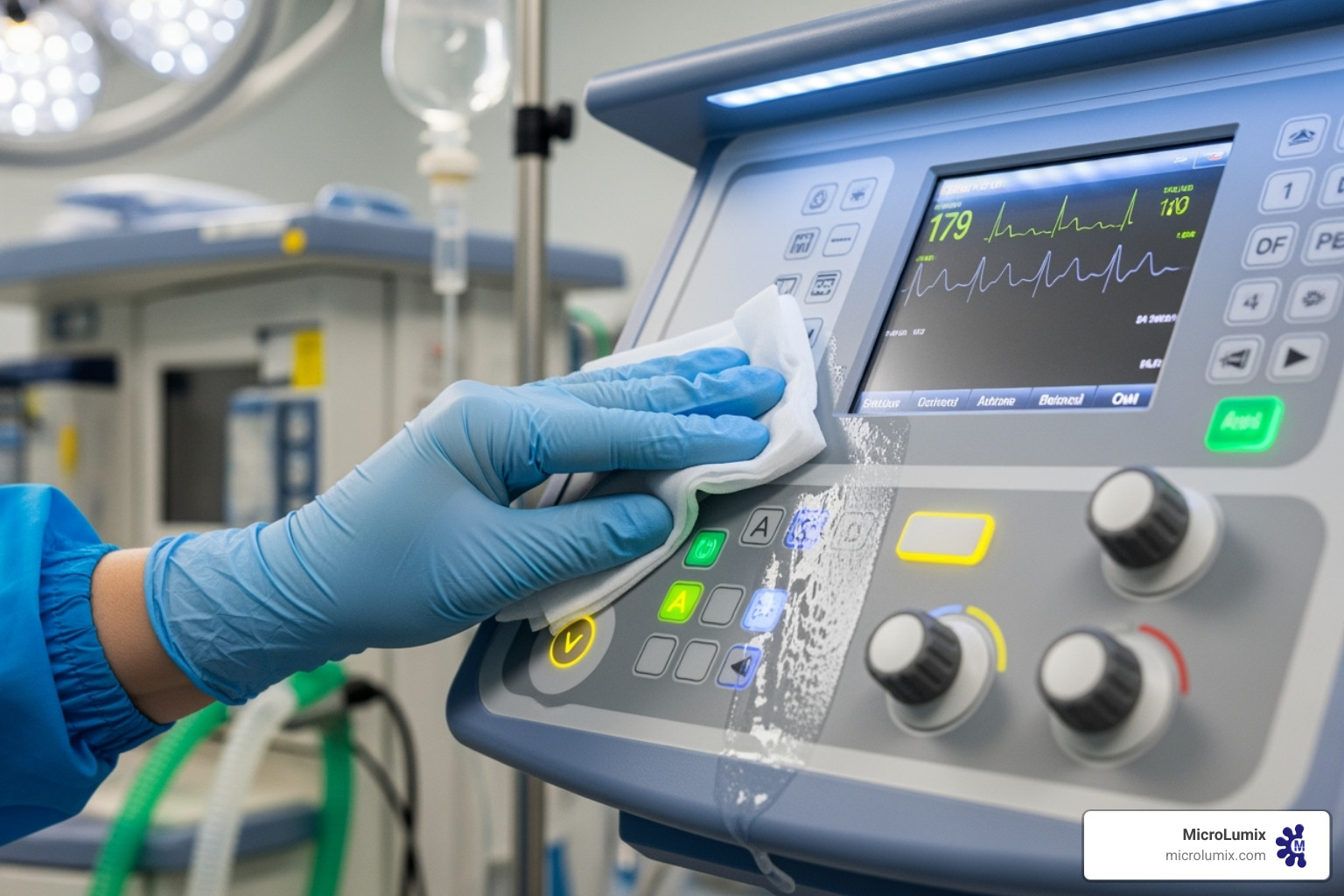
The clean-to-dirty principle guides our approach here. We always start with the cleanest areas and work toward the most contaminated ones. This prevents accidentally spreading pathogens from heavily soiled surfaces to cleaner areas that patients or sterile equipment might contact.
Top-to-bottom cleaning works with gravity instead of against it. When we clean high surfaces first, any dislodged particles fall onto lower areas that we’ll clean next. This systematic approach ensures nothing gets missed and nothing gets re-contaminated.
Using checklists keeps everyone consistent, especially during busy periods when it’s easy to skip steps. These simple tools act as both training aids for new staff and quality assurance for supervisors. When cleaning protocols become routine through consistent use of checklists, the risk of human error drops dramatically.
Essential Equipment and Supplies
Effective operating room hygiene requires the right tools for each job. EPA-registered disinfectants form the foundation of any cleaning program, providing broad-spectrum protection against bacteria, viruses, and fungi that cause healthcare-associated infections.
Microfiber cloths capture dirt and microorganisms far better than traditional cleaning materials. Fresh cloths for each room prevent cross-contamination, and changing them frequently ensures they stay effective throughout the cleaning process.
The three-bucket system for floor cleaning might seem old-fashioned, but it works brilliantly. The first bucket contains detergent to remove visible dirt, the second holds clean rinse water, and the third contains disinfectant for final sanitization. This method ensures disinfectants can work properly instead of being neutralized by soap residue or dirt.
Personal Protective Equipment (PPE) protects cleaning staff from both chemical exposure and biological hazards. Proper gloves, gowns, and eye protection aren’t just safety requirements – they’re essential tools that allow staff to clean thoroughly without fear of contamination.
Waste receptacles with clear color-coding and labeling ensure proper disposal of different waste types. ‘Wet Floor’ signs prevent accidents during cleaning operations. Most importantly, dedicated cleaning equipment stays separate from tools used in other hospital areas, preventing cross-contamination between the sterile operating environment and general patient areas.
Special Considerations for Maintaining Operating Room Hygiene
Some situations demand immediate attention and specialized protocols to maintain safe operating room hygiene standards.
Blood and body fluid spills require swift, methodical response. The two-step process involves immediate containment and cleanup with absorbent materials, followed by thorough disinfection with intermediate-level disinfectants. Proper contact time for disinfectants is crucial – rushing this step can leave dangerous pathogens viable.
Pest control coordination with facility maintenance ensures any treatments happen when operating rooms aren’t in use. Even the most effective pest control chemicals can pose risks to patients and staff if residues remain during surgical procedures.
Air conditioning maintenance affects every surface in the operating room through air quality and circulation patterns. Operating rooms need 15 air changes per hour with positive pressure relative to hallways. Regular filter changes and system cleaning prevent fungal growth that could lead to serious patient infections.
Staff roles and training create accountability and consistency across all shifts and personnel. When everyone understands their specific responsibilities and receives ongoing education about proper techniques, the entire cleaning program becomes more reliable.
Avoiding aerosol sprays prevents both fire hazards and airborne particle contamination that could compromise the sterile surgical environment. This simple restriction eliminates multiple safety risks with one clear policy.
Ensuring and Monitoring Cleaning Efficacy
You know what they say – trust, but verify. When it comes to operating room hygiene, simply going through the motions isn’t enough. We need to know for certain that our cleaning efforts are actually working. After all, invisible pathogens don’t care how hard we scrubbed if we missed the mark.
Methods for Assessing Cleanliness
Think of cleanliness assessment as detective work. We’re looking for clues that tell us whether our cleaning protocols are hitting the target or falling short. The good news is that we have several reliable methods to crack the case.
Visual inspection is our first and most immediate tool. Trained supervisors conduct thorough visual checks after cleaning, looking for any visible dirt, dust, or those telltale missed spots that can reveal gaps in our process. It’s amazing what a fresh pair of eyes can catch.
Checklists and logs serve double duty in our monitoring arsenal. The same detailed checklists our teams use during cleaning become powerful tracking tools afterward. When completed checklists are logged systematically, they create a clear record of when and how each area was cleaned. This paper trail helps us spot patterns, track adherence to protocols, and quickly identify any deviations from our standards.
Supervisory audits and quality checks keep everyone on their toes – in the best possible way. Regular, unannounced audits by supervising staff ensure that cleaning standards remain consistently high. These audits might involve watching cleaning practices unfold in real-time or carefully reviewing completed logs for accuracy and thoroughness.
Staff accountability creates a culture where every team member understands their critical role in infection prevention. We believe in the power of feedback and continuous learning. When we identify areas for improvement, we provide targeted retraining to ensure everyone stays sharp and confident in their skills.
For those who love hard data, advanced assessment tools provide objective measurements that go beyond what the eye can see. ATP bioluminescence testing detects organic material on surfaces – a reliable indicator of microbial contamination. This method gives us numeric scores, allowing us to quickly assess cleanliness levels and pinpoint areas that need extra attention.
Environmental cultures, while less common for day-to-day monitoring, offer the most definitive picture of microbial contamination on surfaces. These tests directly measure the actual microbial load, providing concrete evidence of our disinfection success.
The Future of OR Disinfection: Technology and Innovation
Here’s the reality: even the most dedicated cleaning teams are human, and humans occasionally miss spots or rush through procedures. That’s not a criticism – it’s simply the nature of manual processes. This is exactly where technology steps in to bridge the gap and lift operating room hygiene to new heights.
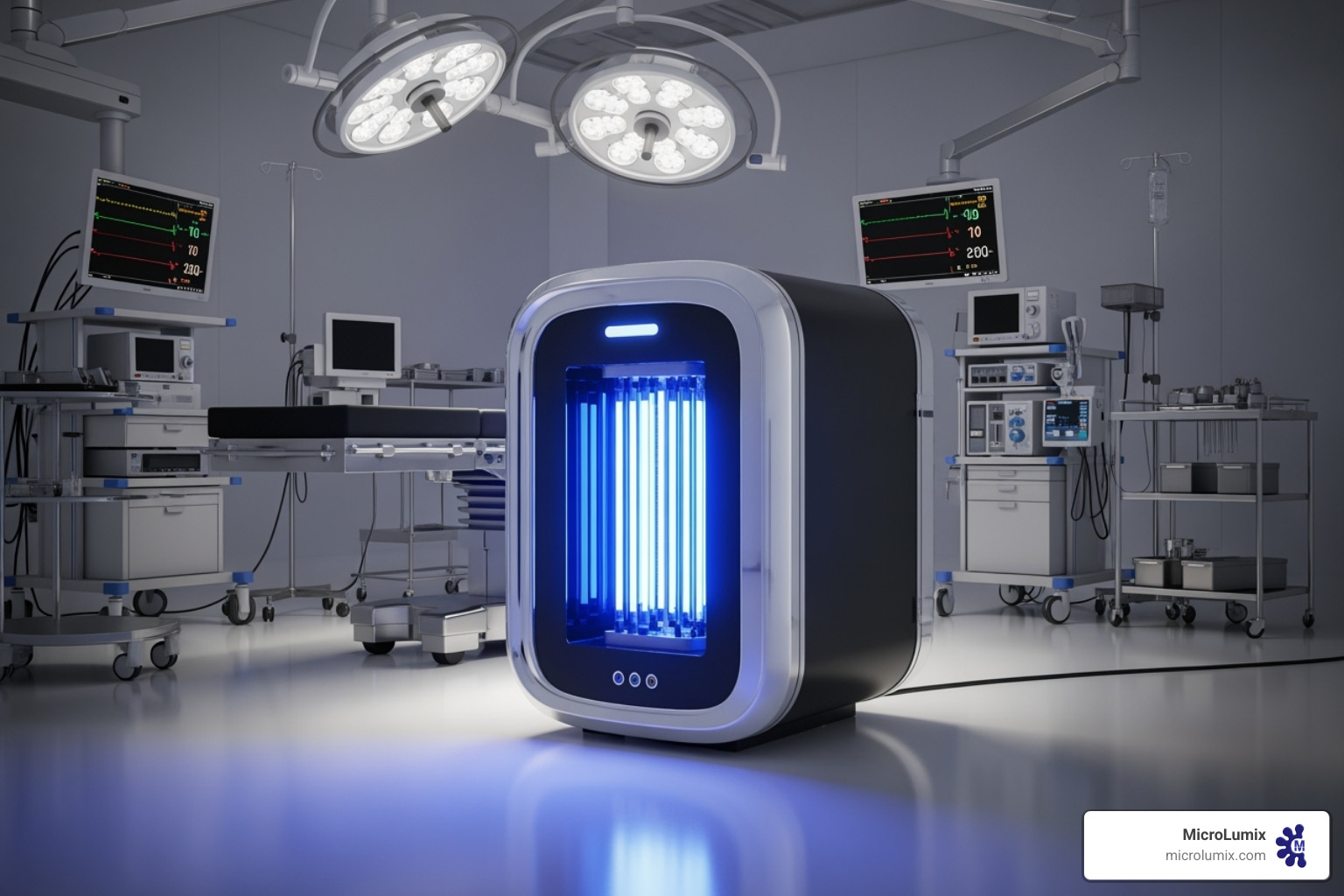
UV-C light disinfection harnesses the natural germicidal properties of ultraviolet light to inactivate harmful pathogens. This technology doesn’t rely on chemical contact time or human technique – it simply works, eliminating a significant percentage of pathogens wherever the light reaches.
Automated touchpoint disinfection represents the next frontier in infection prevention. Rather than waiting for scheduled cleaning cycles, these systems work continuously, addressing contamination the moment it occurs. This approach is particularly powerful for high-touch surfaces that can become contaminated dozens of times between manual cleaning sessions.
Touchless technologies reduce the variability that comes with human-dependent processes. They work the same way every single time, ensuring consistent disinfection standards regardless of staffing levels, time pressures, or other variables that can affect manual cleaning quality.
At MicroLumix, our GermPass automated touchpoint disinfection system exemplifies this technological evolution. As the world’s only lab-certified, automatic touchpoint germ-killing system, GermPass uses self-sealing UVC chambers to sanitize high-volume touchpoints immediately after every touch. The results speak for themselves: 99.999% efficacy against pathogens.
This level of consistent, automated disinfection transforms how we think about surface contamination. Instead of accepting that high-touch surfaces will remain contaminated between cleaning cycles, we can ensure they’re continuously sanitized exactly when and where transmission risk is highest.
By integrating these advanced solutions, we’re not replacing our dedicated cleaning teams – we’re empowering them. When automated systems handle the repetitive, high-frequency disinfection tasks, our staff can focus their expertise on comprehensive cleaning procedures that require human judgment and skill. This creates a more effective, sustainable approach to operating room hygiene that benefits everyone involved.
Frequently Asked Questions about Operating Room Cleaning
Let’s tackle some of the most common questions we hear about operating room hygiene. These answers will help clarify the essential practices that keep surgical environments safe for everyone.
What is the difference between terminal cleaning and turnover cleaning?
Think of these two cleaning types as having completely different goals and timelines. Turnover cleaning happens in the moments between surgical cases. Picture this: one patient has just been wheeled out, and another is scheduled to arrive soon. Our cleaning team springs into action with a focused, targeted approach.
During turnover cleaning, we zero in on the surfaces and equipment that were actually used or touched during the previous procedure. We’re talking about the operating table, anesthesia carts, monitors, and those critical high-touch areas within the immediate surgical field. It’s like doing a quick but thorough reset of the most important areas.
Terminal cleaning is an entirely different beast. This comprehensive deep clean happens after the last surgery of the day, when we have the luxury of time to be absolutely thorough. We’re not just hitting the high-touch spots – we’re cleaning every single surface in that operating room.
This means walls, ceilings, floors, mobile equipment, fixed equipment, and every nook and cranny you can imagine. Terminal cleaning is our way of completely resetting the environment to pristine condition, ensuring the next day starts with the highest possible standard of operating room hygiene.
Why is it important to clean from top to bottom?
Gravity is both our friend and our enemy in cleaning! When you think about it logically, cleaning from top to bottom just makes perfect sense. As you wipe down higher surfaces like surgical lights, monitors, or ceiling-mounted equipment, tiny particles of dust, dirt, and microorganisms are going to fall downward – that’s just physics.
If we were to clean the floors first and then move to higher surfaces, all that debris would simply fall onto our freshly cleaned floors. We’d essentially be undoing our own hard work! It’s like washing your car from the bottom up – you’d just be making more work for yourself.
By starting at the top and working our way down systematically, we ensure that any dislodged contaminants fall onto areas that haven’t been cleaned yet. This way, when we finally get to mopping those floors, we’re capturing everything that has settled during the cleaning process. It’s a simple principle that makes our operating room hygiene protocols much more effective and efficient.
How often should air filters in an operating room be changed?
Air filter maintenance isn’t a one-size-fits-all situation, and the answer depends on several important factors. The type of filter system, how much air it processes daily, and your facility’s specific guidelines all play a role in determining the right schedule.
Most healthcare facilities follow a periodic inspection schedule – typically checking filters quarterly or twice a year for newer systems. Older systems might need more frequent attention. The key is actually looking at the filters during these inspections rather than just following a rigid calendar schedule.
We always recommend following the manufacturer’s specific recommendations for your particular system. Some filters might need changing every three months, while others could last six months or longer depending on usage and environmental conditions.
Here’s what’s really important: your air handling system needs to maintain those critical air changes per hour and proper filtration efficiency that keep your operating room hygiene at optimal levels. Any time you notice changes in air quality, unusual odors, or if there are modifications to your HVAC system, it’s time to check those filters immediately.
The bottom line? Regular inspection and maintenance of your air filtration system is just as crucial as cleaning surfaces – after all, clean air is a fundamental part of a safe surgical environment.
Conclusion: Upholding the Highest Standard of Care
When we talk about operating room hygiene, we’re really talking about something much bigger than cleaning protocols and disinfection procedures. We’re talking about the sacred trust between healthcare providers and their patients—a promise that every possible precaution has been taken to protect those who are most vulnerable.
Throughout this guide, we’ve walked through the three essential cleaning cycles that form the backbone of surgical safety: the thorough beginning-of-day preparations that set a pristine baseline, the rapid yet meticulous between-patient turnovers that prevent cross-contamination, and the comprehensive end-of-day terminal cleaning that resets the environment for tomorrow’s procedures.
We’ve also explored how risk-based cleaning approaches help us work smarter, not just harder. By focusing our most intensive efforts on high-touch surfaces and areas with the greatest potential for pathogen transmission, we can maximize our impact on patient safety while using our resources efficiently.
But here’s what excites me most: the future of operating room hygiene isn’t just about doing things better—it’s about doing things differently. The integration of automated disinfection technologies represents a fundamental shift from hoping human processes are perfect to ensuring they are. When we combine the dedication of skilled healthcare teams with the consistency of advanced automation, we create an environment where excellence becomes the standard, not the exception.
The statistics we discussed earlier—those sobering numbers about healthcare-associated infections affecting 1 in 31 patients—remind us that there’s still work to be done. But with continuous improvement in our protocols, ongoing staff training, and the adoption of innovative solutions, we’re moving toward a future where preventable infections become truly rare.
Every surface we clean, every protocol we follow, and every new technology we accept serves a single, powerful purpose: ensuring that patients can focus on healing while we focus on keeping them safe. That’s the highest standard of care, and it’s a standard worth upholding every single day.
Learn how GermPass can automate touchpoint disinfection in your facility and Explore our advanced disinfection solutions to see how we are shaping the future of operating room hygiene.