
Why Patient Care Safety Matters More Than Ever
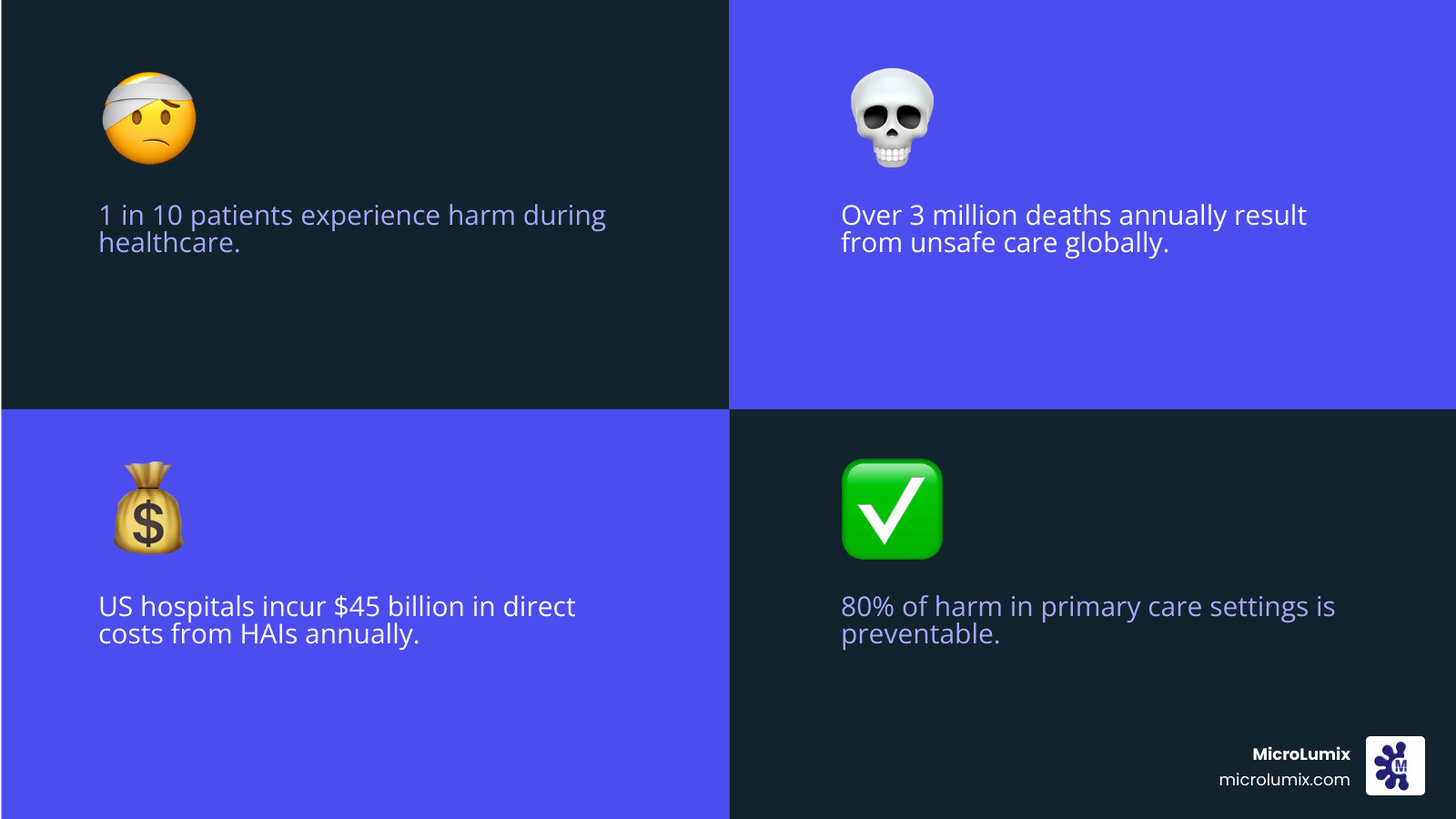
Patient care safety is the prevention of avoidable errors and the harm they cause to patients—it’s the foundation of good healthcare. But the reality is sobering: around 1 in every 10 patients is harmed during healthcare, and more than 3 million deaths occur annually due to unsafe care worldwide.
Key Facts About Patient Care Safety:
- 1 in 10 patients experience harm during healthcare
- 3+ million deaths occur annually from unsafe care globally
- $45 billion in direct hospital costs from healthcare-associated infections in the US alone
- 80% of harm in primary care settings can be prevented
- Patient engagement can reduce harm by up to 15% when done well
The economic impact is staggering too. Patient harm reduces global economic growth by 0.7% annually, with indirect costs reaching trillions of dollars each year. In low-to-middle income countries, the situation is even worse—as many as 4 in 100 people die from unsafe care.
The good news? Most of this harm is preventable through better systems, improved communication, and advanced technologies that bridge gaps in traditional cleaning and disinfection methods.
I’m Debra Vanderhoff, Founder and COO of MicroLumix Bioscience Technology. With over 20 years in biotechnology, I’ve focused on creating solutions to protect patients from preventable harm. At MicroLumix, we develop automated disinfection systems that directly address patient care safety challenges, particularly healthcare-associated infections.
Understanding the Risks: Common Types of Patient Harm
When you or a loved one visit a hospital, the last thing on your mind is being harmed by the very system designed to help. Yet this happens to millions of patients every year. These are not minor inconveniences but serious adverse events that can lead to prolonged hospital stays, permanent disability, or even death.
The AHRQ Patient Safety Network defines patient care safety as preventing harm through systems that stop errors, learn from mistakes, and foster a culture of safety. It’s a comprehensive approach that looks beyond individual blame to understand how entire systems can fail.
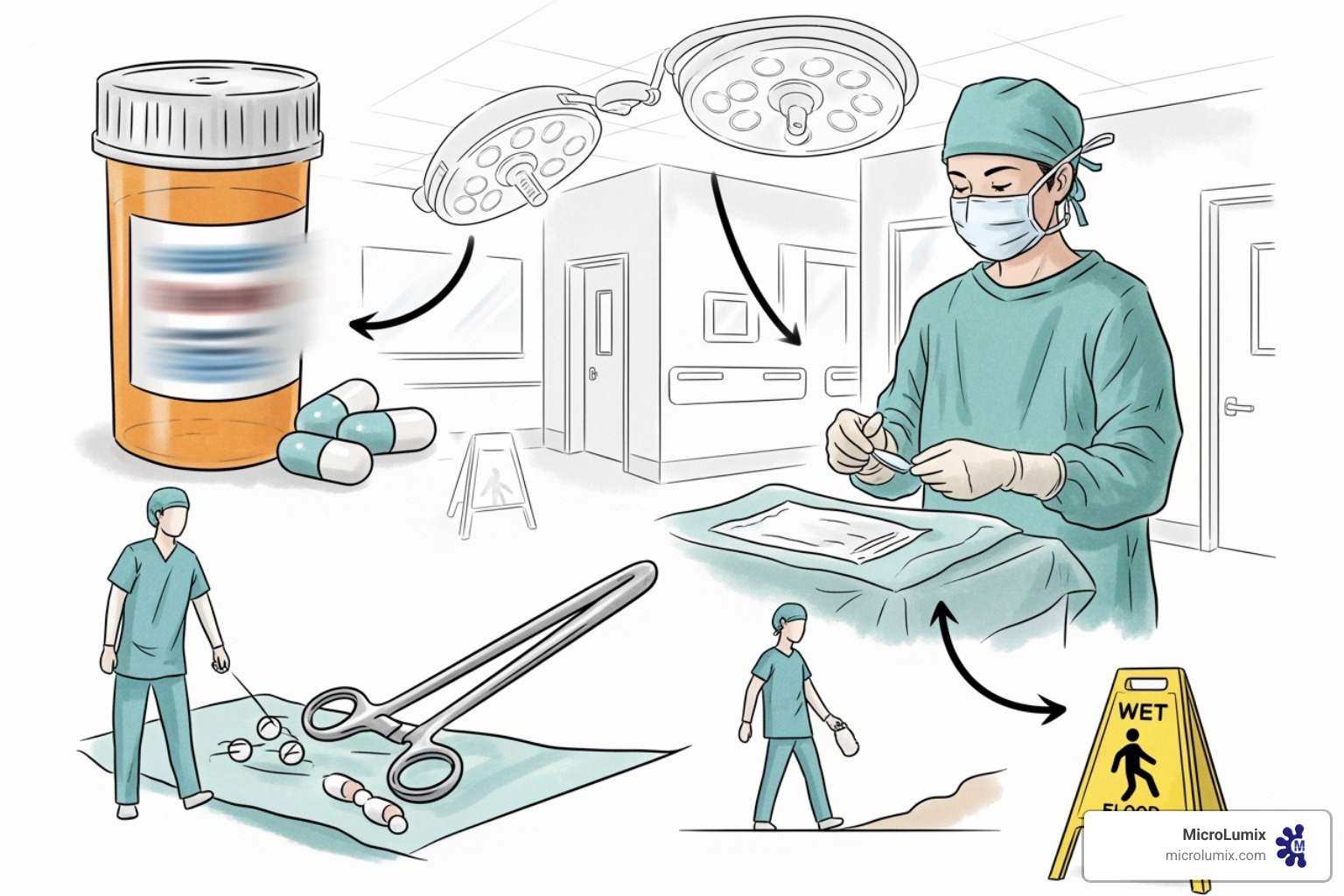
The most common types of harm paint a sobering picture:
Medication errors affect 1 in 30 patients, with over a quarter of this harm being severe or life-threatening. Half of all preventable harm in healthcare is linked to medication issues, from wrong doses to dangerous interactions.
Surgical errors are a significant risk, with 10% of preventable harm occurring in surgical settings. Most issues arise not during the operation itself, but from inadequate preparation or post-operative care.
Healthcare-associated infections (HAIs) are a critical and often preventable issue. They affect vulnerable patients, extending hospital stays, increasing antibiotic resistance, and creating huge financial burdens. Sepsis, a severe HAI, has a devastatingly high mortality rate. This is where our work at MicroLumix becomes crucial. Our GermPass technology breaks the chain of infection at the source—high-touch surfaces that harbor pathogens.
Diagnostic errors are surprisingly common, occurring in 5-20% of doctor-patient encounters. These errors can lead to incorrect treatments or missed opportunities for early intervention.
Patient falls are the most frequent adverse events in hospitals. Over a third of these falls cause injury, highlighting the need for better prevention strategies.
Pressure ulcers are highly preventable yet affect over 1 in 10 adult hospital patients. These painful sores reduce quality of life and complicate recovery.
Unsafe injection practices put millions at risk. With 16 billion injections given annually worldwide, unsafe practices contribute to the spread of infections like hepatitis B, hepatitis C, and HIV.
Patient misidentification can lead to catastrophic errors like wrong-site surgery. It accounts for over 12% of all serious safety events reported to The Joint Commission, underscoring the need for strict identification protocols.
The Root Causes of Medical Errors
Patient care safety incidents are rarely caused by a single mistake. They’re usually the result of multiple complex factors.
System factors include poorly designed workflows, flawed processes, or insufficient resources. These are system-level failures, not individual mistakes.
Organizational culture is crucial. A culture of fear buries mistakes, while a strong safety culture encourages open communication and treats errors as learning opportunities.
Human factors are inevitable. Fatigue, stress, and cognitive bias contribute to errors. An exhausted provider is more likely to make a mistake; this is human biology, not a character flaw.
Communication breakdown is a major contributor to harm. When critical information is lost due to poor communication, patients are put at risk.
Inadequate resources, such as understaffing or lack of proper equipment, create unsafe conditions. For example, lower nurse-to-patient ratios are linked to higher complication and mortality rates.
The difference between latent failures and active failures helps explain system breakdowns. Active failures (e.g., giving the wrong drug) are often symptoms of latent failures (e.g., poor policies or flawed equipment). To prevent future incidents, we must fix the underlying system problems, not just blame individuals for active errors.
The Alarming Statistics of Patient Harm
These statistics represent real people and families dealing with preventable suffering. In Canada alone, 1 in 17 hospital stays involved a harmful event in 2022-23. The economic impact is also staggering, potentially reducing global economic growth by 0.7% annually.
The encouraging news is that most of this harm is preventable. With better systems, improved communication, and advanced technologies that address gaps in traditional safety measures, we can create much safer healthcare environments for everyone.
Building a Culture of Safety: From Blame to System-Wide Solutions
For decades, the response to a medical error was to ask, “Who made the mistake?” We’ve since learned that pointing fingers doesn’t prevent the next incident. The approach to patient care safety has shifted dramatically. Instead of asking “Who is to blame?” the focus is now on “What in our system allowed this to happen?”
This systems-based approach creates a culture of safety where everyone—from the CEO to the newest assistant—feels responsible for patient well-being. When healthcare workers feel psychologically safe to report problems and near-misses without fear of punishment, the entire organization can learn and improve.
In this environment, teamwork and communication are critical. Programs like TeamSTEPPS™ train healthcare teams to work together more effectively. Incident reporting transforms from a blame game into a learning opportunity, allowing hospitals to spot patterns and fix systemic problems.
This approach aligns with initiatives like Rethinking Patient Safety, which recognizes that everyone contributes to safety. The 10 Patient Safety Tips for Hospitals provides practical strategies that hospitals can implement right away.
Key Principles for Improving Patient Care Safety
Building safer healthcare requires getting the fundamentals right. These are often simple practices that make an enormous difference.
Infection control and hand hygiene are foundational to patient care safety. The World Health Organization’s 5 Moments for Hand Hygiene provide a clear guide for healthcare workers. Proper handwashing is critical, but it’s not enough. The environment around patients can still harbor pathogens, as traditional cleaning can be inconsistent and even spread germs. This gap is where automated disinfection technologies provide a crucial layer of protection, supporting manual efforts with consistent, thorough sanitization.
Patient identification procedures prevent some of the most devastating errors. Using at least two identifiers—like name and date of birth—before any procedure is a simple but critical step to prevent catastrophic wrong-patient events.
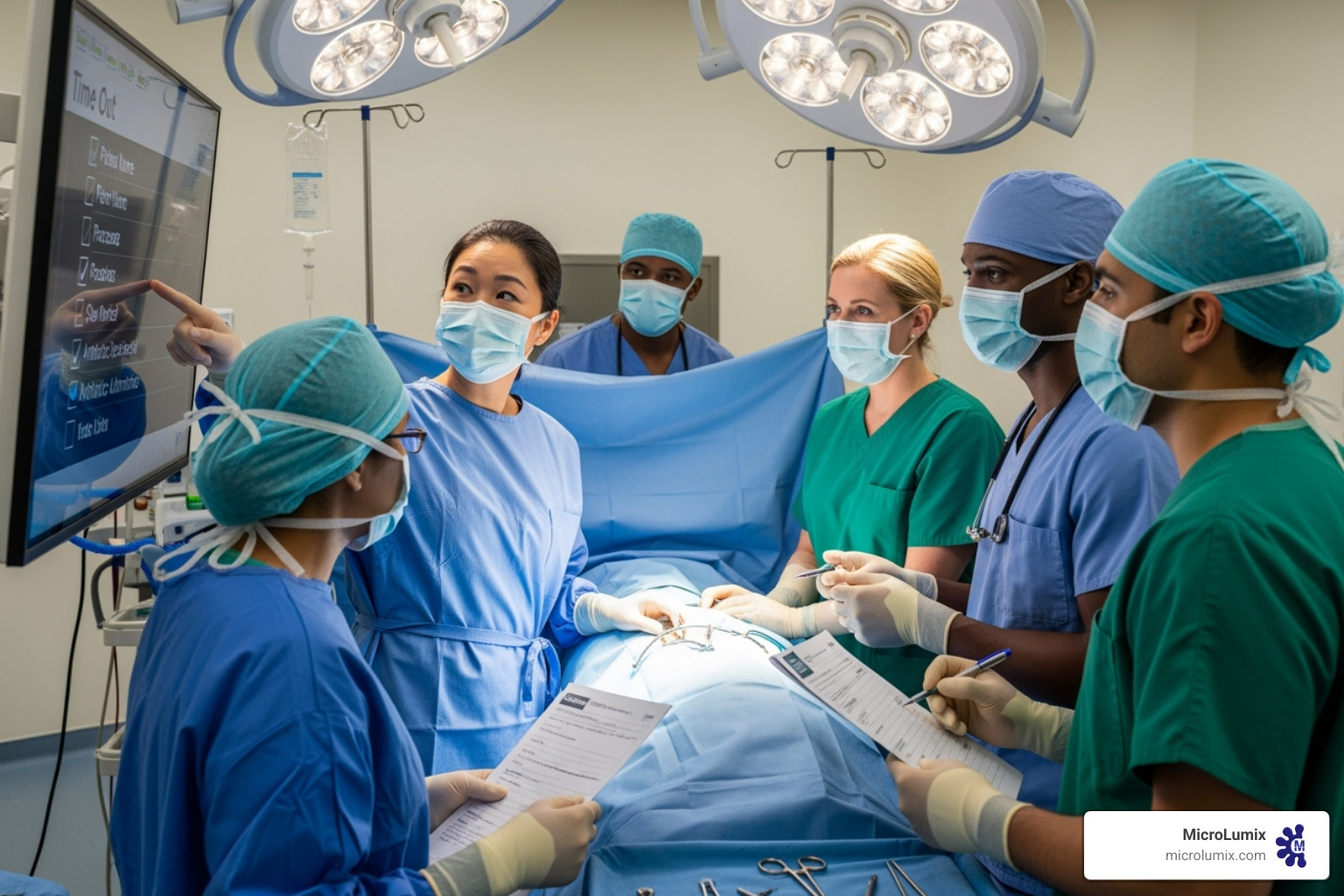
Surgical site marking prevents “never events” like wrong-site surgery. This is a key part of the WHO Surgical Safety Checklist, a tool that has revolutionized operating room safety. Its three checkpoints—Sign In, Time Out, and Sign Out—ensure the entire team is aligned, dramatically reducing complications by improving teamwork and communication.
Global Initiatives and Legislation
Patient care safety is now a global priority. The World Health Organization (WHO) has spearheaded this with resolution WHA72.6, the annual World Patient Safety Day, and the Global Patient Safety Action Plan 2021–2030. These initiatives aim to drive sustained improvements worldwide.
Countries are also enacting national legislation, such as Canada’s Vanessa’s Law, which embeds patient care safety into legal frameworks to protect citizens from unsafe drugs and medical devices. These efforts show that patient safety isn’t just a nice idea—it’s becoming a legal and operational requirement.
The Human Element: Key Players in Ensuring Safety
At its heart, healthcare is about people. Patient care safety isn’t just the responsibility of doctors or hospitals; it’s a shared commitment. It requires a team effort from providers, patients, families, and leaders, because even the best technology is only as effective as the people using it.
The Critical Role of Nurses in Patient Safety
Nurses are the heartbeat of patient care and often the unsung heroes of patient care safety. They are on the front lines, making them critical to keeping patients safe.
- Nurses are safety watchdogs. They constantly monitor patients, catching early warning signs of complications.
- They are expert error catchers. Their deep involvement in care allows them to intercept mistakes, acting as the last line of defense against errors.
- They serve as the communication hub. Nurses coordinate between doctors, specialists, and family, ensuring everyone is on the same page about a patient’s care.

- Education is vital. Research confirms that hospitals with more registered nurses, especially those with a Bachelor of Science in Nursing (BSN), have lower complication and mortality rates. Investing in nursing education directly invests in patient care safety.
The Patient’s Role in Their Own Patient Care Safety
You are a vital member of your healthcare team. Active patient engagement isn’t just a nice-to-have—it can reduce harm by up to 15%.
- Speak up. If something feels wrong or you have a question, say so. Your input helps providers deliver safer care.
- Be informed. Understand your diagnosis, medications, and treatment plan. This knowledge empowers you to spot potential issues.
- Advocate for infection prevention. Don’t hesitate to remind everyone to wash their hands. Ask daily if catheters or IV lines are still necessary to reduce infection risk.
- Manage your medications safely. Take all medications as prescribed and inform your team about everything you take, including supplements.
The CDC offers excellent tips for being a safe patient. At MicroLumix, we know that when patients understand the importance of practices like environmental disinfection, they become powerful partners in creating a safer healthcare environment for everyone.
Frequently Asked Questions about Patient Care Safety
When I talk to healthcare professionals and patients about patient care safety, the same thoughtful questions come up again and again. Here are the answers to the most common ones.
What is the difference between quality care and patient safety?
Think of patient care safety as the foundation and quality care as the entire home. You can’t have quality without safety.
Patient care safety focuses specifically on preventing harm to patients. It asks, “How do we prevent this patient from experiencing any preventable injury?”
Quality care is broader. The Institute of Medicine defines it as care that is not only safe, but also effective, patient-centered, timely, efficient, and equitable. While safety is essential, it’s just one piece of the quality puzzle.
What are ‘never events’ in healthcare?
“Never events” are medical errors so serious and preventable that they should never, ever happen. Examples include surgery on the wrong body part, operating on the wrong patient, or leaving a surgical instrument inside a patient.
These incidents represent complete breakdowns in basic safety systems. They are almost always preventable with proper protocols, serving as stark reminders of why robust safety systems—like the WHO surgical checklist—are absolutely critical.
How can I report a patient safety concern?
If you have a safety concern, speaking up helps prevent future incidents. Here’s how:
- Start with your direct care team: Talk to your nurse, doctor, or the charge nurse. They can often resolve issues immediately.
- Contact a patient advocate: Most hospitals have patient advocates or relations departments to help you steer the system.
- File a formal complaint: If direct communication doesn’t work, file a formal complaint with the facility’s administration.
- Escalate to regulatory bodies: For serious issues, you can contact external organizations. In the US, this includes The Joint Commission or your state health department. In Canada, contact your provincial health authority or patient ombudsman.
- Report to licensing boards: For concerns about a specific professional’s conduct, contact their state or provincial licensing board (e.g., the board of medicine or nursing).
Your feedback is valuable for identifying and fixing systemic problems. Speaking up is a powerful way to contribute to safer care for all.
Conclusion: The Future of Safer Healthcare
Healthcare is shifting from a reactive to a proactive model of safety. The goal is no longer just to “do no harm,” but to build systems so robust that they prevent errors from reaching patients, creating environments where healing can flourish.
This requires a commitment to continuous improvement, where every event—good or bad—is a learning opportunity. A near-miss isn’t luck; it’s a sign of a system working as intended, with empowered people supported by effective technology.
Excitingly, technology is now filling long-standing gaps in safety. For decades, we’ve relied on manual cleaning, which can be inconsistent despite best efforts. A surface can look clean but still harbor pathogens—a limitation of the method, not the person.
This is where innovation like our GermPass technology becomes a game-changer. It’s an automated disinfection system designed to fill these gaps, working 24/7 to sanitize high-touch surfaces immediately after contact. With 99.999% efficacy against pathogens, it acts as an invisible guardian protecting patients from healthcare-associated infections (HAIs).
This is especially meaningful because HAIs are one of the most preventable forms of patient harm. Eliminating them means sending more patients home healthy to their families.
The future of patient care safety hinges on this combination of advanced technology and a shared culture of responsibility. When patients trust they are protected, they can focus on healing. Preventing harm is not only cost-effective, it is the right thing to do. At MicroLumix, we are proud to be part of this journey, using innovations like GermPass to help build the safer healthcare environments everyone deserves.
Learn how automated disinfection is creating safer healthcare environments