
Why Patient Room Disinfection is Your Frontline Defense Against HAIs
Effective patient room disinfection serves as healthcare facilities’ most critical weapon against Healthcare-Associated Infections (HAIs), which affect 1.7 million patients annually in US hospitals and lead to 99,000 deaths each year.
Essential Patient Room Disinfection Steps:
- Risk Assessment – Evaluate patient status, room type, and contamination level
- PPE Protection – Don appropriate gloves, gowns, masks, and eye protection
- Systematic Cleaning – Work from high to low, clean to dirty surfaces
- High-Touch Focus – Prioritize bed rails, call bells, doorknobs, and equipment
- Proper Disinfection – Use EPA-registered hospital-grade disinfectants with correct contact time
- Terminal Cleaning – Perform thorough disinfection after patient discharge
- Quality Control – Inspect and validate cleaning effectiveness
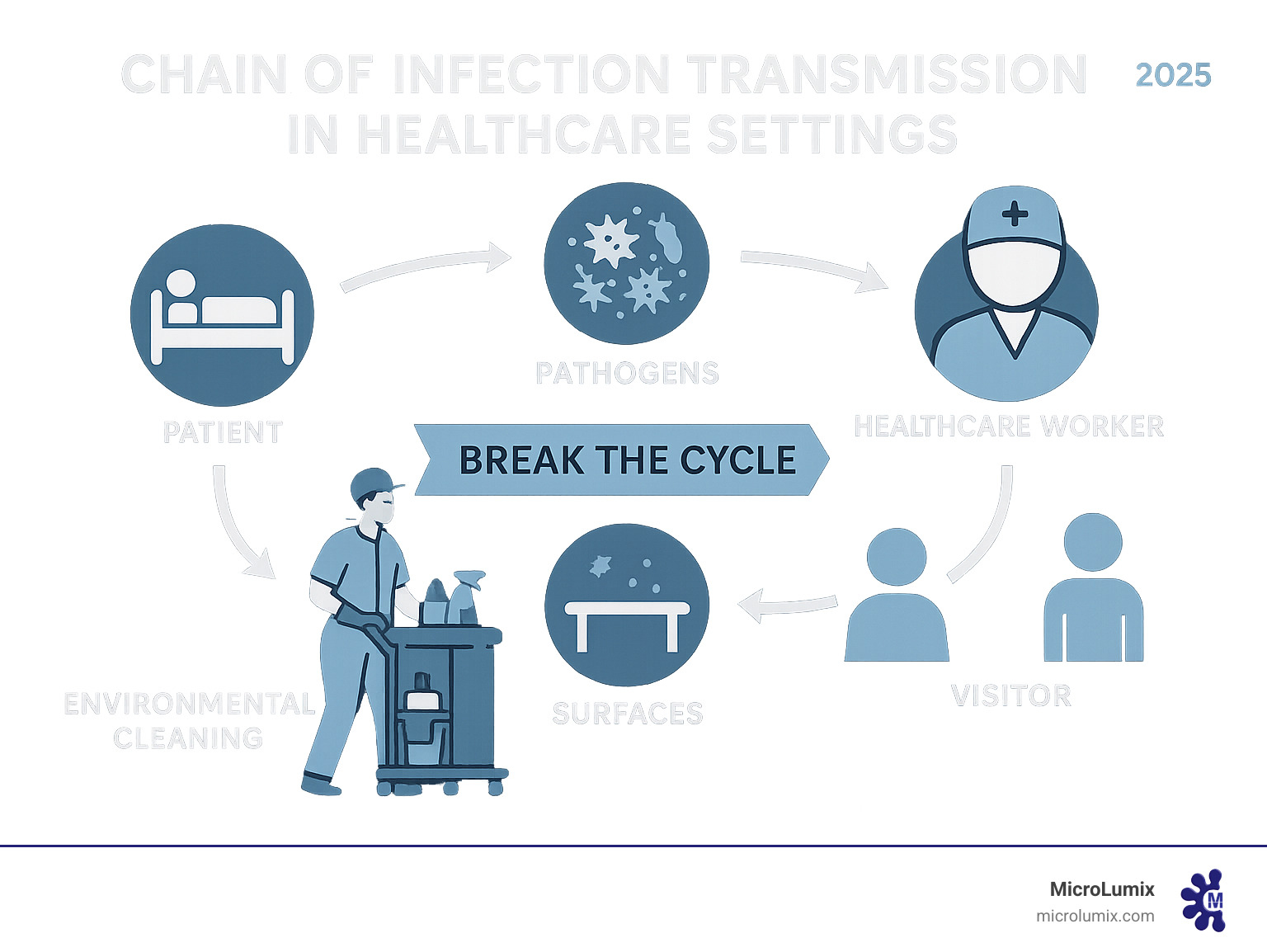
A single contaminated doorknob or tabletop can spread viruses to 40-60% of people and surfaces within just 2-4 hours. Yet bed rails – touched up to 256 times daily – typically receive disinfection only once per day, creating dangerous gaps in protection.
Environmental Services (EVS) teams serve as infection prevention’s unsung heroes. Their meticulous work directly impacts patient safety, recovery rates, and your facility’s reputation. Every surface they clean, every protocol they follow, represents a barrier between patients and potentially life-threatening infections.
About the Author: I’m Debra Vanderhoff, Founder and COO of MicroLumix Bioscience Technology, where I’ve spent years developing innovative patient room disinfection solutions for healthcare facilities. My experience spans over 20 years in biotechnology and operations, focusing specifically on automated disinfection systems that improve traditional cleaning protocols.
Preparing for Battle: Assembling Your Disinfection Toolkit
Effective patient room disinfection requires careful preparation. Success begins long before entering a patient room, starting with assembling the right tools and assessing the situation.
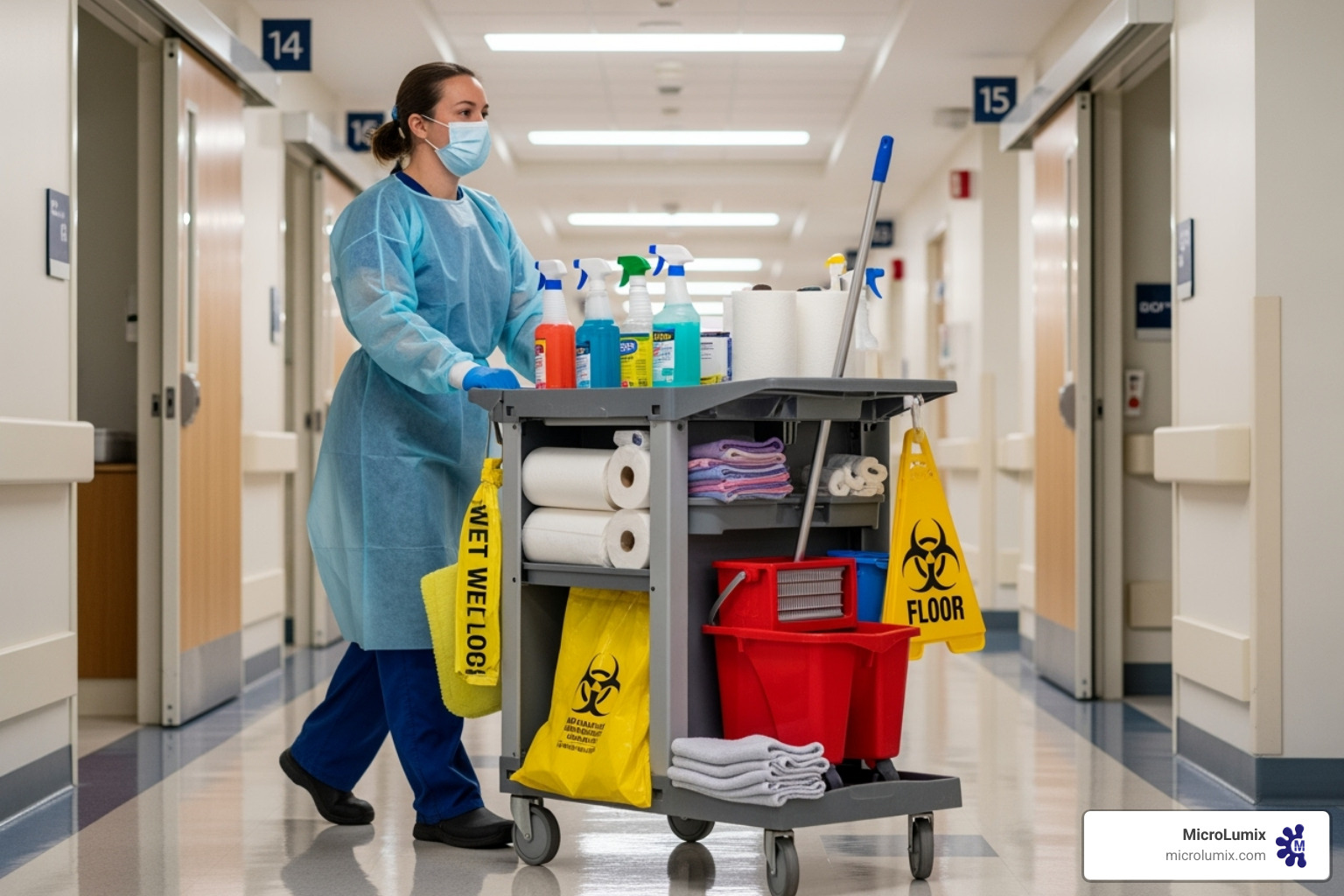
Every room is different. A routine discharge cleanup varies greatly from sanitizing after a patient with C. difficile. Risk assessment is the crucial first step, guiding the selection of PPE and the appropriate disinfectants based on the patient’s condition and contamination level.
Cleaning tools can spread contaminants if not managed properly. Microfiber cloths, mops, and cleaning carts must be disinfected daily. Using fresh solutions and supplies for each room is essential to prevent cross-contamination, which can undo all disinfection efforts.
The CDC provides excellent guidance through their guide to environmental cleaning procedures, which serves as our roadmap for maintaining these high standards.
Gearing Up: Essential Personal Protective Equipment (PPE)
Personal protective equipment (PPE) protects staff and every patient who comes after them. The appropriate gear is chosen based on a risk assessment for each situation. When in doubt, gear up.
Gloves are essential when handling contaminated items or body fluids. They must be changed frequently, such as when torn or when moving from a dirty to a clean task (e.g., from the toilet to a bedside table).
Gowns protect clothing and skin from splashes or contact with contaminated surfaces.
Masks and eye protection guard against splashes and airborne particles, especially in rooms with specific precautions or when using spray disinfectants.
Proper donning and doffing of PPE is crucial. Hand hygiene must be performed before putting on and immediately after removing gear to prevent self-contamination.
Choosing Your Weapons: Selecting Supplies and Disinfectants
Hospital-grade, EPA-registered disinfectants are non-negotiable for eliminating healthcare pathogens. Following the manufacturer’s instructions for dilution and contact time is critical for effectiveness.
Safety Data Sheets (SDS) provide essential guidance for safe and effective use, including the required contact time for the disinfectant to kill pathogens.
Microfiber cloths effectively trap dirt and germs. Use multiple clean cloths per room and never dip a used cloth back into a fresh cleaning solution to avoid cross-contamination.
Mops and buckets require similar care. Double-bucket systems prevent contamination of clean solution, and microfiber flat mops offer superior cleaning compared to string mops.
Essential cleaning cart supplies include an EPA-registered disinfectant, neutral floor cleaner, glass cleaner, trash liners, linen bags, and sharps containers. Bags and containers should be managed before they are completely full to prevent spills.
Never cut corners on contact time. The disinfectant must remain wet on a surface for the full recommended duration to be effective. This step is critical for patient safety.
The Step-by-Step Guide to Effective Patient Room Disinfection
With PPE on and tools ready, the disinfection process can begin. Whether for a daily or terminal clean, the approach to patient room disinfection follows a consistent, systematic rhythm.
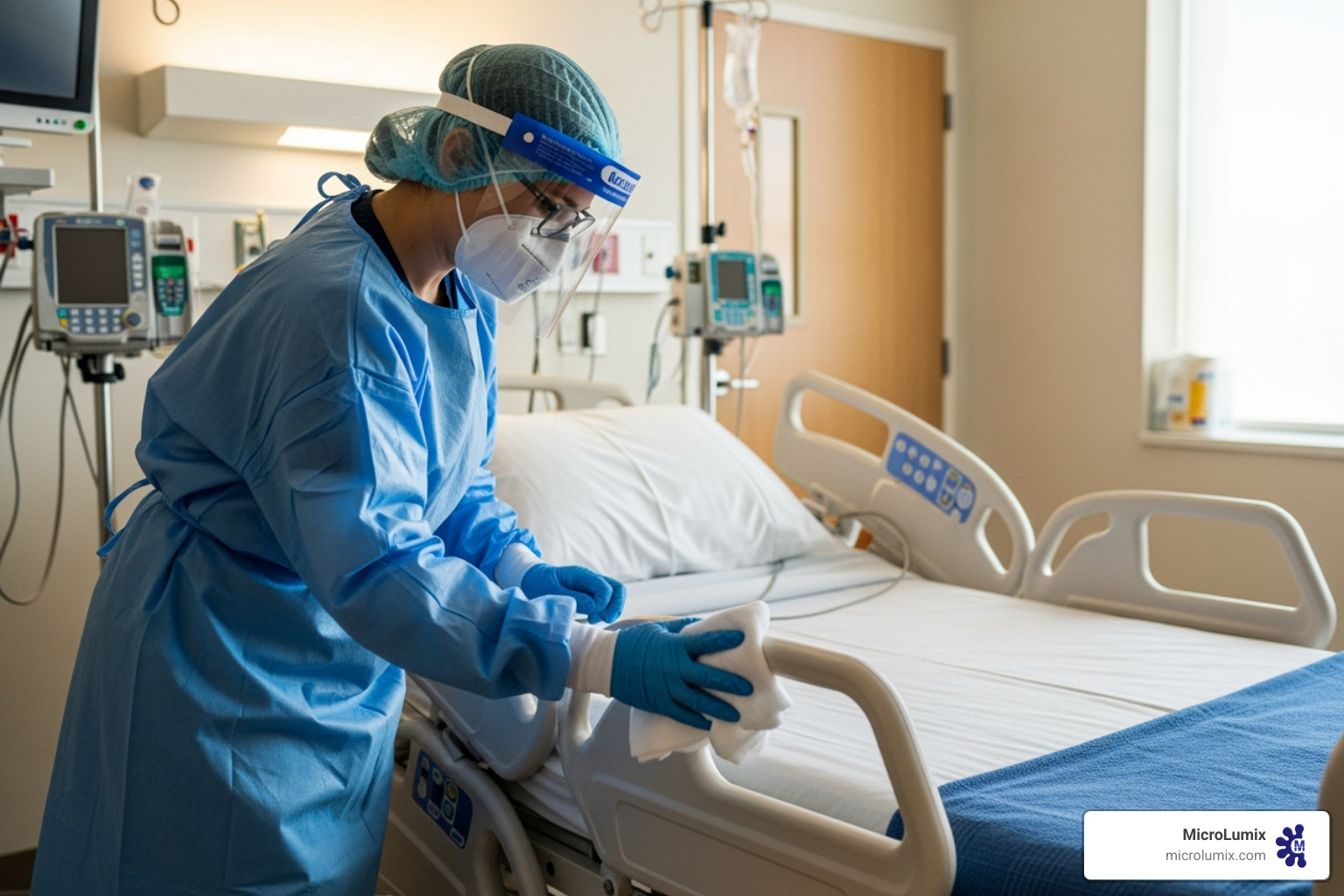
A systematic approach prevents the spread of germs. Key principles include: High-to-low cleaning (working from ceilings down to floors), the clean-to-dirty principle (cleaning the patient area before the bathroom), and following a consistent path (e.g., clockwise) to ensure no surfaces are missed.
Hand hygiene is performed at every stage: before entering, after handling soiled items, before touching clean surfaces, and before leaving the room.
The Foundational Cleaning Sequence
The following steps for patient room disinfection focus on terminal cleaning, the most thorough process. Daily cleaning follows a similar, less intensive pattern.
First, read any precaution signs on the door and gather all necessary supplies before entering to ensure an uninterrupted workflow.
Inside, perform hand hygiene and don PPE. Begin by removing waste and linens. Handle soiled linens gently without shaking to prevent airborne germs, and don’t overfill bags. Discard any left-behind personal items.
High dusting targets often-missed areas like vents, light fixtures, and ledges where dust and pathogens collect. Spot-clean walls for any visible soil, especially around the bed.
Next, wipe walls, high surfaces, and furniture. This includes doors, handles, tables, and chairs. The patient bed requires special focus, from rails to the mattress, which should be inspected for damage. Ensure the disinfectant meets its required contact time on all surfaces.
Address privacy curtains and windows. Bag soiled curtains in the room for laundry and hang fresh ones. Clean all glass surfaces.
Targeting the Hotspots: A Focus on High-Touch Surfaces
High-touch surfaces are primary vectors for infection transmission and require focused attention.
Bed rails top our most-wanted list – they’re touched up to 256 times daily! Call bells and their cords are constant companions to patients. Doorknobs and light switches see action from every person entering the room. Overbed tables hold everything from meals to medications, while IV poles get grabbed and moved throughout the day.
Patient monitoring equipment with keyboards and control panels harbor germs in all those tiny crevices. Remote controls pass from hand to hand, and nursing carts travel from room to room. Don’t forget handwashing sinks and faucets – ironically, these cleaning stations can become contaminated themselves. Toilet seats and flush handles in patient bathrooms deserve extra attention.
Use a fresh cloth for each group of high-touch surfaces to prevent cross-contamination. Despite diligent manual cleaning, these surfaces are constantly recontaminated between cleanings. For more information about innovative solutions addressing this challenge, check out GermPass touchpoint disinfection.
Final Touches: Floor Care and Restocking
Floors are cleaned last but are important, as they can harbor significant pathogens.
Dry mopping or vacuuming with a HEPA filter vacuum removes loose debris first. Quiet vacuums are preferred in healthcare settings.
Wet mopping with microfiber flat mops should proceed from the cleanest area toward the door. Use wet floor signs and a fresh mop head for each room to prevent cross-contamination.
Restock supplies like soap, hand sanitizer, and paper towels. Perform a final inspection to ensure the room is visibly clean and ready for the next patient.
Remove gloves and perform hand hygiene before leaving the room as a final protective measure.
Advanced Protocols for Specialized Situations
Sometimes patient room disinfection involves specialized situations like hazardous spills or isolation rooms, which require advanced protocols to manage heightened risks.
These scenarios test our skills, but with proper knowledge and preparation, they can be handled effectively. The key is to identify the specific hazard—transmission-based precautions, bloodborne pathogens, or spore-forming organisms like C. diff—and follow the corresponding specialized protocol.
Handling Spills and Contamination Events
Spills of blood or body fluids are biohazards requiring immediate attention. A two-step cleanup process is used to contain the threat and disinfect the area.
First is containment. After donning full PPE (gloves, gown, eye protection), use disposable absorbent materials to clean up visible matter. A 1:10 bleach solution may be used for large spills.
Second is disinfection. After removing visible soil, apply an EPA-registered disinfectant or a 1:100 bleach solution, ensuring the full required contact time is met. Rinse surfaces after using chlorine-based products to prevent damage.
All contaminated materials must be placed in biohazard bags for proper disposal according to regulations to prevent risk to patients and staff.
Adapting to Additional Precautions
Additional precaution signs (contact, droplet, airborne) indicate the presence of dangerous or highly contagious pathogens, requiring stricter protocols.
For contact precautions (e.g., MRSA, C. diff), gowns and gloves are required before entry. Equipment should be dedicated to the room or disinfected after use. C. diff requires a sporicidal agent, as standard disinfectants are ineffective. Refer to the EPA’s List K guidance for effective products.
Droplet precautions (e.g., influenza) require a mask, while airborne precautions (e.g., tuberculosis) require an N95 respirator. Entry into these rooms should be limited to essential, trained personnel.
Cleaning carts must remain outside isolation rooms; bring only necessary supplies inside. After precautions are lifted, a complete terminal clean is performed to eliminate all pathogens.
Cleaning in High-Risk Areas: ICUs and Operating Rooms
In high-risk areas like ICUs and Operating Rooms, patient room disinfection protocols are exceptionally stringent due to the vulnerability of patients and the nature of procedures.
Increased frequency is key. ICUs are cleaned multiple times daily, and Operating Rooms are disinfected between every case, with a terminal clean at the end of the day.
Using dedicated equipment for these zones prevents cross-contamination. Stricter protocols are followed without deviation, ensuring every surface is disinfected to the highest standard.
Success in these areas relies on close collaboration with clinical staff to coordinate cleaning schedules and manage equipment, creating a seamless barrier against infection for the most vulnerable patients.
The Future is Now: Innovative Technologies in Room Disinfection
While manual cleaning remains the foundation of effective patient room disinfection, we’re witnessing an exciting evolution in infection prevention technology. Think of it as adding high-tech allies to our cleaning superhero team – these innovative solutions don’t replace our dedicated EVS professionals, but they give them superpowers they never had before.
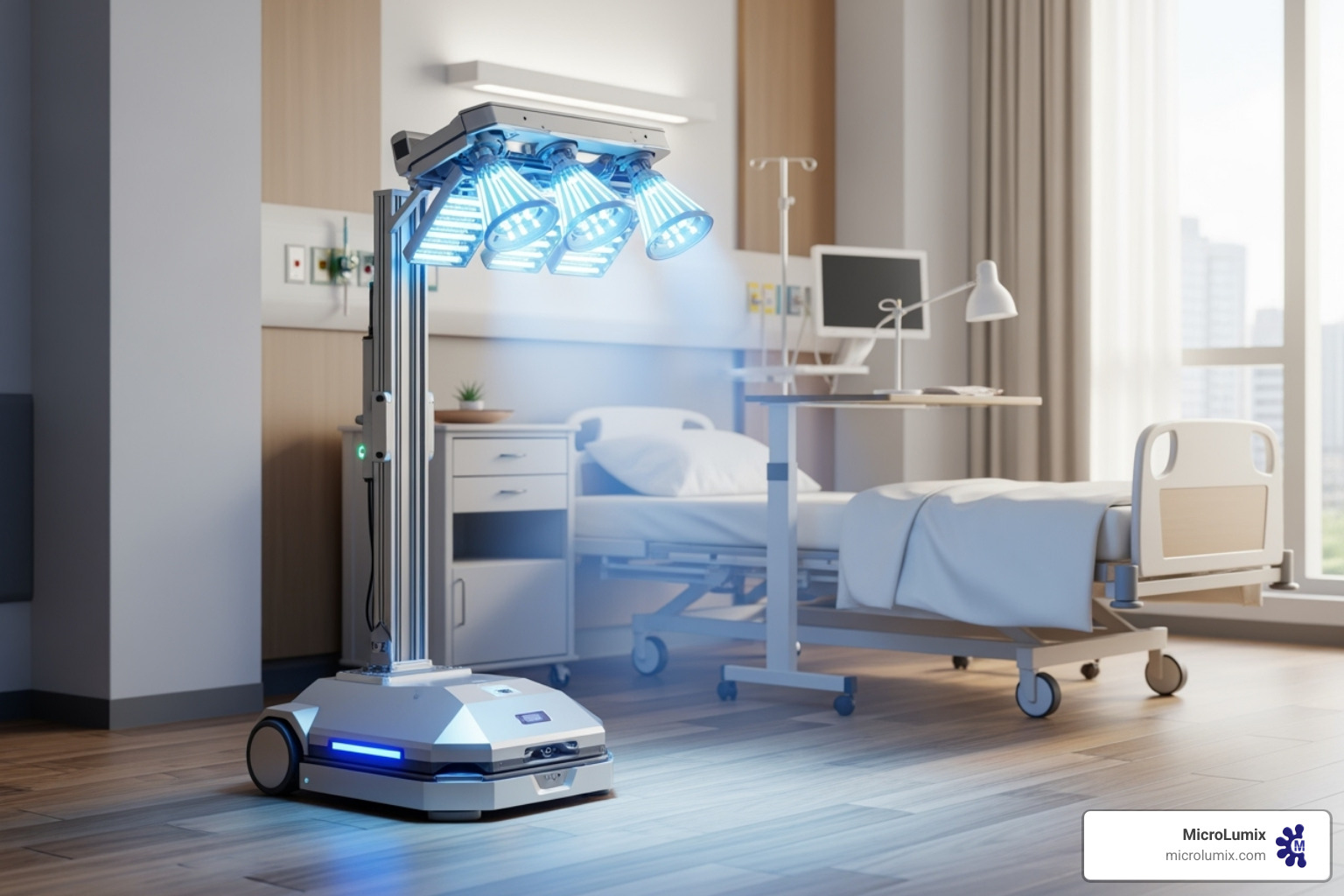
The healthcare industry is embracing “no-touch” technologies that can reach places manual cleaning might miss or provide protection around the clock. The Agency for Healthcare Research and Quality has been studying these emerging solutions, finding promising results with various automated systems. For instance, UV light systems have shown they can reduce Clostridioides difficile infections, while antimicrobial copper surfaces demonstrate lower infection rates in real-world hospital settings.
What’s particularly exciting is how these technologies fill the gaps that even the most diligent manual cleaning can’t address. Remember those bed rails that get touched 256 times a day but only cleaned once? That’s exactly where innovation steps in to save the day. You can explore comprehensive research on these advances at Evidence for advanced disinfection modalities.
The Power of Innovation: MicroLumix Automated Disinfection Systems
Here at MicroLumix, we’ve developed something pretty special – our GermPass system that tackles one of healthcare’s biggest challenges head-on. While other technologies focus on whole-room disinfection after patients leave, GermPass works differently. It provides continuous, automated disinfection of those high-volume touchpoints we’ve been talking about throughout this guide.
Picture this: every time someone touches a door handle, call button, or equipment control, GermPass immediately springs into action. Using self-sealing UVC chambers, it sanitizes these critical touchpoints right after every single touch, achieving an impressive 99.999% efficacy against pathogens. It’s like having a tireless cleaning assistant that never takes a break, never gets distracted, and never misses a spot.
This isn’t about replacing our amazing EVS teams – it’s about giving them the ultimate backup. While they’re performing their essential daily and terminal cleaning routines, GermPass is working behind the scenes, continuously eliminating germs on the surfaces that matter most. It minimizes human error and ensures consistent protection, filling that crucial gap between scheduled cleanings when touchpoints are getting contaminated over and over again.
The best part? There’s no downtime required. Patients can stay in their rooms, staff can continue their work, and life goes on normally while GermPass quietly does its job. Learn more about this game-changing technology at MicroLumix GermPass system.
Continuous and Automated Disinfection
The concept of continuous disinfection represents a fundamental shift in how we think about patient room disinfection. Instead of relying solely on scheduled cleaning sessions, we’re moving toward solutions that actively fight pathogens throughout the day and night.
This layered approach combines the thoroughness of manual cleaning with the consistency of automated protection. Manual cleaning provides broad, comprehensive coverage when done correctly, tackling everything from floors to ceiling vents. Automated touchpoint disinfection like GermPass focuses laser-sharp attention on those constantly-touched surfaces that are most likely to spread infections.
| Feature | Manual Cleaning | MicroLumix GermPass Automated Touchpoint Disinfection |
|---|---|---|
| Coverage | Broad, but dependent on human thoroughness | Targeted, continuous for specific high-touch points |
| Human Error | Susceptible to missed spots, inconsistent contact time | Minimized, automated process |
| Continuous Nature | Intermittent (daily/terminal cleans) | Continuous, 24/7 for specific touchpoints |
| Effectiveness | High when done correctly | 99.999% efficacy for targeted touchpoints |
| Downtime | Requires room to be unoccupied/patient moved | No downtime for targeted touchpoints |
Think of it like having both a thorough house cleaner who comes regularly and a security system that’s always watching. Each serves a different but complementary purpose. The future of infection prevention lies in this synergy between human expertise and technological innovation.
Antimicrobial surfaces and automated touchpoint disinfection aren’t replacing the human touch – they’re enhancing it. They’re giving our EVS heroes the tools they need to create safer environments for every patient, every day. Because when it comes to preventing infections, we want every advantage we can get.
Frequently Asked Questions about Patient Room Disinfection
Effective patient room disinfection can bring up questions. Here are answers to some of the most common ones.
What is the difference between cleaning, sanitizing, and disinfecting?
These terms represent different levels of microbial reduction:
- Cleaning is the physical removal of dirt and organic matter from surfaces. It’s a necessary first step, as disinfectants are less effective on soiled surfaces.
- Sanitizing reduces the number of bacteria to a safe level, as defined by public health standards. It’s common in food service but generally insufficient for patient care areas.
- Disinfecting uses chemicals to kill viruses and bacteria on hard surfaces. Achieving the proper contact time (how long the surface stays wet) is critical. Special sporicidal agents are needed to kill hardy spores like C. diff.
In healthcare, the standard is cleaning followed by disinfection.
How often should a standard patient room be cleaned?
Cleaning frequency depends on room occupancy and patient condition:
- Occupied rooms are cleaned at least daily, with a focus on high-touch surfaces like bed rails, call bells, and doorknobs. Low-touch surfaces are cleaned weekly or as needed.
- Terminal cleaning is a comprehensive, top-to-bottom disinfection performed after a patient is discharged to prepare the room for the next occupant.
- Spot cleaning is performed immediately whenever spills or visible contamination occurs.
Who is responsible for cleaning medical equipment in the room?
Responsibility is a team effort, defined by clear protocols:
- Environmental Services (EVS) is typically responsible for cleaning noncritical, room-based equipment like IV poles, overbed tables, and commodes.
- Nursing and clinical staff are usually responsible for cleaning portable, patient-specific medical devices like stethoscopes and glucometers that they use.
Clear communication and established protocols ensure all equipment is properly disinfected, making patient safety a shared responsibility.
Conclusion: Upholding the Highest Standard of Care
Effective patient room disinfection is more than a checklist; it’s a fundamental commitment to patient safety. Every clean surface acts as a shield, protecting vulnerable patients and aiding their recovery.
A successful program relies on a team effort between Environmental Services (EVS) and nursing staff. This collaboration combines EVS’s technical expertise with nursing’s clinical insights, ensuring a comprehensive approach to patient safety.
Quality assurance and continuous improvement are vital. This means consistent monitoring, ongoing training, and adapting protocols based on the latest research and emerging pathogens. This commitment ensures that infection prevention strategies remain effective.
The landscape of healthcare hygiene is changing rapidly, and we’re excited to be part of that change. While manual cleaning remains the cornerstone of hospital hygiene, innovative automated technologies like MicroLumix’s GermPass system are revolutionizing the way we protect high-touch surfaces, ensuring a safer environment for every patient.
By combining the dedication of EVS teams with the precision of advanced technology, we build a comprehensive defense system. This layered approach helps prevent healthcare-associated infections and promotes healthier recoveries for all patients.
For healthcare facilities ready to take their infection prevention to the next level, we’re here to help. Find advanced disinfection solutions that complement your existing protocols and provide that extra layer of protection your patients deserve.