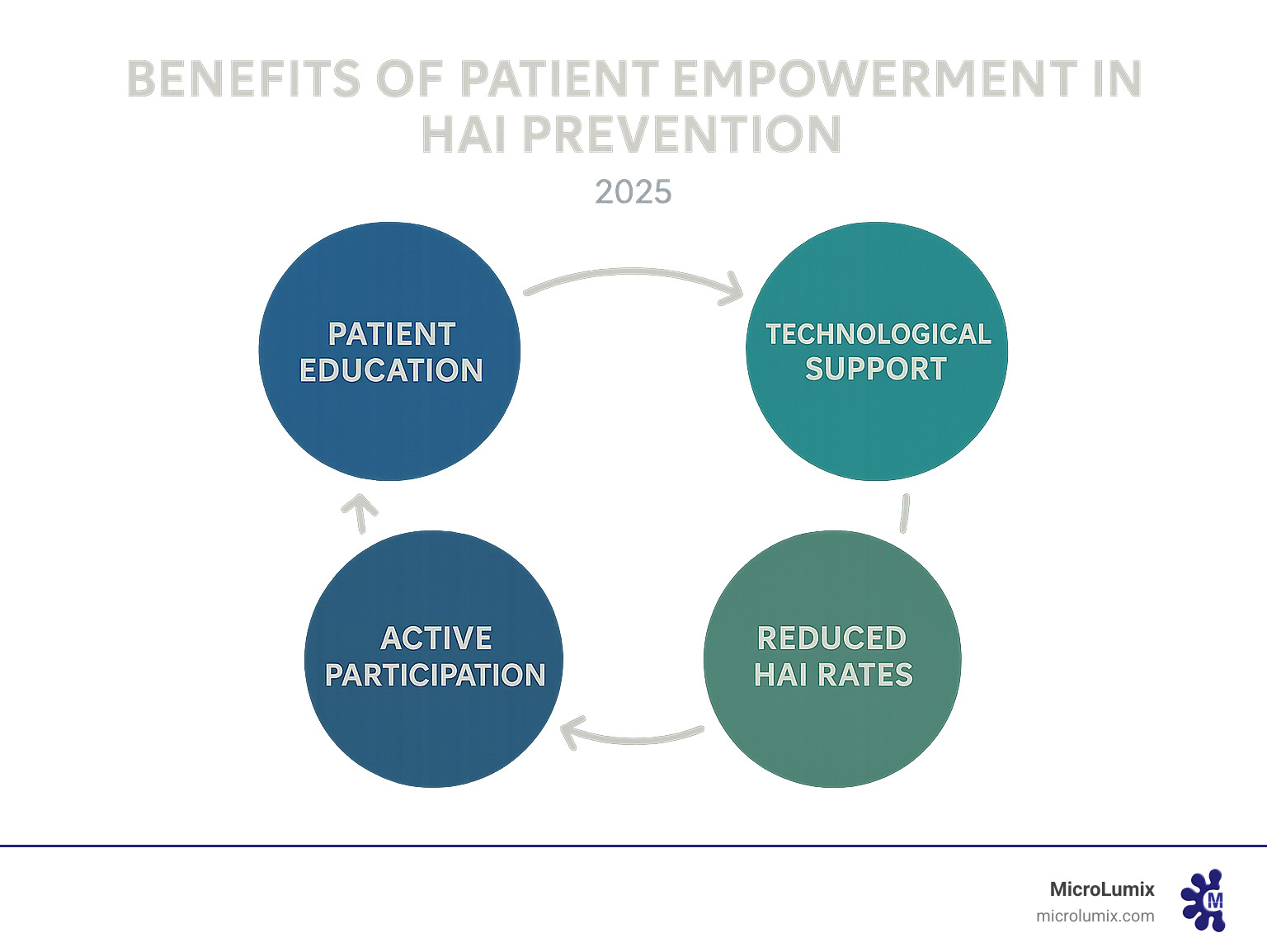
The Persistent Challenge of Healthcare-Associated Infections
Preventing hospital acquired infections evidence-based practice is more critical than ever, as facilities worldwide grapple with infections affecting millions annually. Despite traditional infection control, healthcare-associated infections (HAIs) remain a significant threat to patient safety.
Key Evidence-Based Prevention Strategies:
- Patient hand hygiene – reduces pathogen acquisition by 32% (from 34% to 2%)
- Provider hand hygiene reminders – only 3% of patients currently participate
- Daily clothing changes – reduces MRSA contamination from 90% to 50%
- Device awareness – less than half of patients know catheter infection risks
- Antimicrobial stewardship – 60% of antibiotic prescriptions may be unnecessary
The numbers are sobering: in the U.S. alone, HAIs affect 1.7 million people annually, causing up to 99,000 deaths. What’s striking is that roughly 30% of these infections are considered preventable through effective measures.
The challenge lies in implementation. Research shows that failure to follow recommended measures is common, despite staff training. This gap has led to a new approach: empowering patients to become active partners in prevention.
Studies show patients often have limited awareness of infection risks. Yet when educated and empowered to act—from practicing hand hygiene to questioning medical devices—the results can be dramatic.
I’m Debra Vanderhoff, Founder and CEO of MicroLumix. I’ve spent years developing automated disinfection solutions that complement evidence-based practices. My experience shows that combining technology with patient empowerment is the most effective defense against HAIs.
The Unseen Threat: How Pathogens Spread in Healthcare Settings
As a patient, you can become an unwitting host to dangerous bacteria. Understanding this is the first step in preventing hospital acquired infections evidence-based practice.
If you’re colonized with bacteria like methicillin-resistant Staphylococcus aureus (MRSA) or Clostridioides difficile (CDI), there’s a 50% chance it’s on your hands. If you have a CDI diagnosis, there’s a 90% chance it has spread to your skin, especially the chest, abdomen, and groin.
Your body becomes an unintentional reservoir, and from your skin and hands, these pathogens spread throughout your room.
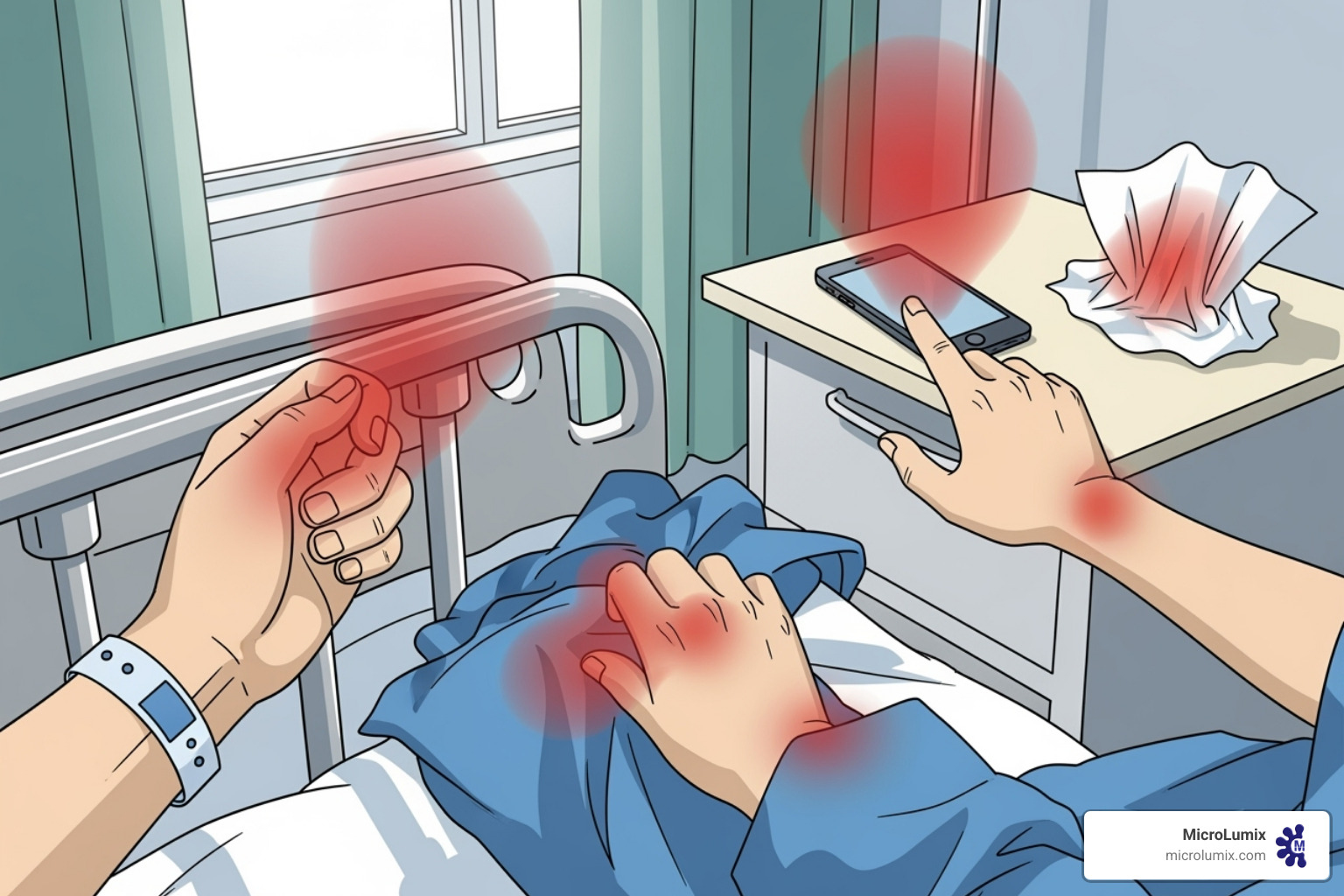
Every surface you touch—bed rails, call buttons, clothing, your phone—creates a pathway for pathogen transmission.
Skin contamination spreads to everything you contact, and hand contamination transfers to every surface. Your clothing also becomes contaminated; research shows daily changes reduce MRSA contamination rates from 90% to 50%.
Hospital floors are also heavily contaminated. Pathogens can transfer from the floor to your non-slip socks and then to your hands.
The scientific research on empowering patients to prevent HAIs reveals just how complex these transmission patterns of pathogens like MRSA and C. difficile (CDI) really are.
Why Patient-Centered Prevention is Crucial
Traditional infection control relies on healthcare providers who are often overwhelmed and rushed.
Despite training, low provider compliance with hand hygiene remains a challenge due to demanding workloads and time pressures. This is a key failure of traditional measures.
A VA hospital study found only 3% of patients reminded a provider to wash their hands—a huge missed opportunity.
As a patient, you have constant patient proximity to sources of infection. You are there 24/7, giving you a front-row seat to your own care.
This gives you power to directly impact on patient outcomes. When educated and comfortable speaking up, you become an invaluable safety partner. It’s not about being ‘infection police,’ but creating a partnership to keep you healthy.
Patient empowerment is a necessary component of modern preventing hospital acquired infections evidence-based practice. When patients understand their role and feel supported, infection rates drop significantly.
Evidence-Based Prevention: Key Areas for Patient Empowerment
For preventing hospital acquired infections evidence-based practice, partnership is the most powerful protection. My work in automated disinfection technology has shown that combining smart systems with empowered patients creates the strongest defense.
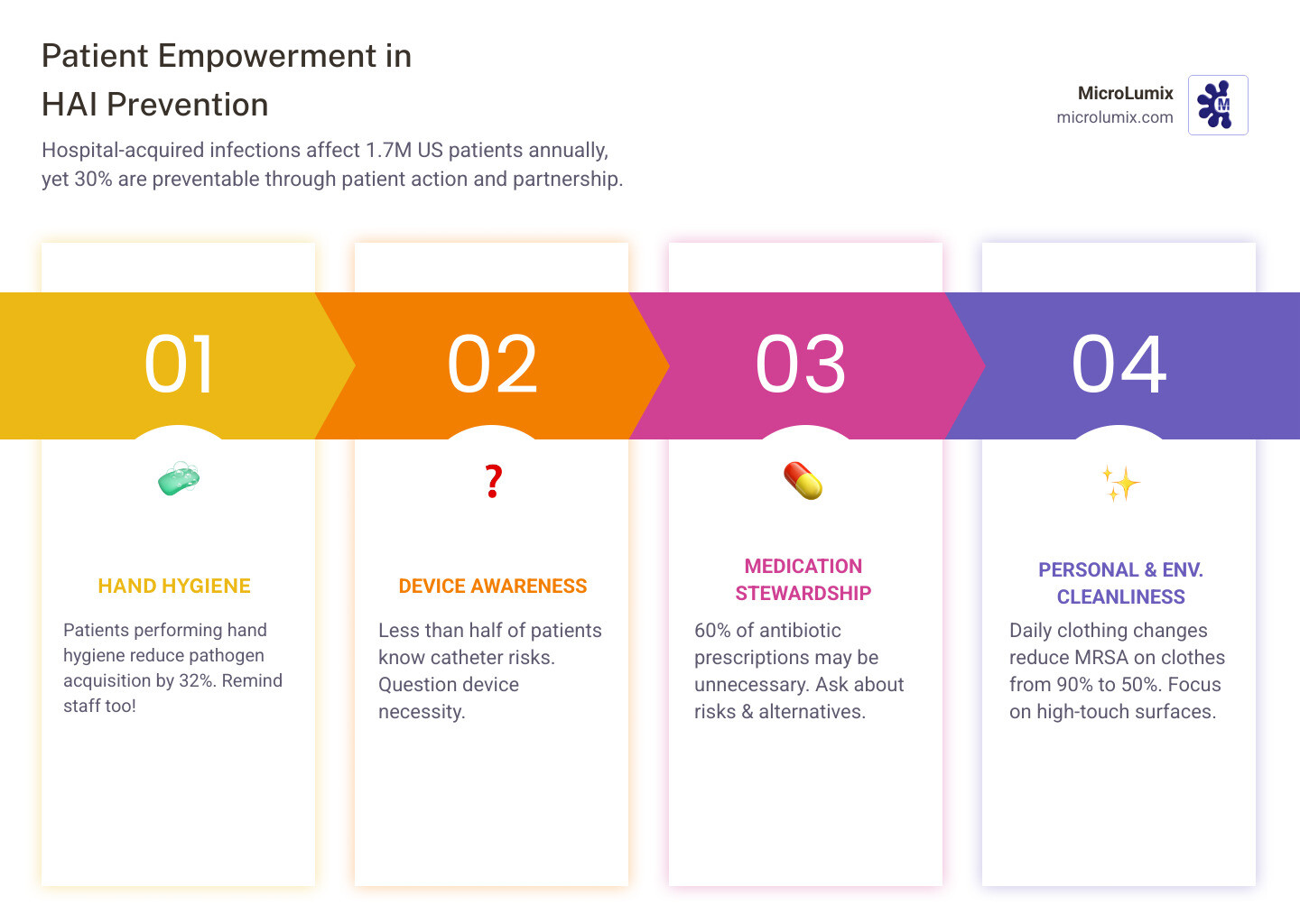
The evidence is clear: active patient participation leads to better outcomes, including a 32% reduction in pathogen acquisition from hand hygiene and a 50% drop in MRSA contamination from daily clothing changes. This isn’t about adding burden to your stay; it’s about providing simple, proven tools. Research shows patient involvement is key in hand hygiene, personal and environmental cleanliness, medical device awareness, and smart antibiotic use.
Each of these areas represents a real opportunity to protect yourself and contribute to a safer healthcare environment.

Mastering Hand Hygiene: A Patient’s First Line of Defense
Patient hand hygiene is more powerful than we imagined. A study showed patients using the “4-moments for patient hand hygiene” approach reduced their pathogen acquisition risk from 34% to just 2%—a 32-point drop.
Your key moments are different from a healthcare worker’s but just as important: before eating, after using the restroom, after touching surfaces, and whenever your hands feel contaminated.
Only 3% of patients feel comfortable reminding providers about hand hygiene. It can feel awkward, but it’s not a challenge to their competence; it’s about creating a culture of safety.
Try gentle language like “Can we make sure we both have clean hands?” Most providers appreciate the reminder during busy shifts.
Alcohol-based hand rubs work excellently against most pathogens, including MRSA. For visible dirt or after contact with C. difficile, soap and water are best. The evidence on patient hand hygiene interventions shows that making hand sanitizer accessible to patients increases compliance and reduces infections.
Personal & Environmental Hygiene: Creating a Safer Patient Zone
90% of patients with C. difficile infections have the bacteria on their skin, especially the chest, abdomen, and groin, turning their skin into a reservoir.
Daily bathing makes a real difference. Even regular soap and water can significantly reduce the bacterial load on your skin. Don’t hesitate to ask for help with bathing—it’s about safety, not just freshness.
Clean clothes daily is critical. Research shows MRSA patients who didn’t change clothes daily had 90% contamination, versus 50% for those who did. Bringing several sets of pajamas from home can help.
The floor is another hidden culprit. Pathogens can transfer from your non-slip socks to your hands and other surfaces. Keep slippers or socks clean, and avoid walking barefoot.
High-touch surfaces like your bed rails, call button, and bedside table deserve special attention. You can ask for disinfecting wipes to clean these surfaces between official cleanings.

Device Safety: Applying Preventing Hospital Acquired Infections Evidence-Based Practice
Medical devices save lives but carry infection risks many patients don’t understand. Less than half of patients with urinary catheters knew the risks, and only 11% thought they might be overused.
Urinary catheters are a major cause of HAIs. Every day a catheter remains increases your risk of a catheter-associated urinary tract infection (CAUTI). The same is true for central lines, which can be highways for bacteria into your bloodstream.
For example, one patient developed a serious bloodstream infection from a PICC line left in three weeks longer than required because no one questioned it.
You have every right to ask questions about any device. “Do I still need this catheter?” “How long will this central line stay in?” These are smart questions that show you’re engaged in your care.
The research on patient knowledge of catheter risks shows that when patients understand the risks, they become valuable partners in decisions about device necessity.
A Patient’s Guide to Antimicrobial Stewardship
Antibiotics are powerful but have risks. Up to 60% of antibiotic prescriptions may be unnecessary, increasing the risk of C. difficile infection (CDI).
Antibiotics are the biggest risk factor for C. difficile infections. I’ve seen patients develop CDI after receiving unnecessary antibiotics, such as a teenager prescribed them for wisdom tooth removal.
You can be part of the solution by asking thoughtful questions. “Is this antibiotic necessary?” “Is this a bacterial or viral infection?” “What’s my risk of developing C. difficile?” These conversations help ensure you only get antibiotics when you truly need them.
Lower-risk antibiotics do exist. If you need an antibiotic, a more targeted, narrow-spectrum option can be just as effective with fewer side effects.
The study on patient engagement in antimicrobial stewardship shows that when patients understand these concepts, they become powerful allies in fighting both individual infections and broader antibiotic resistance.
Putting Empowerment into Practice: A Framework for Preventing Hospital Acquired Infections Evidence-Based Practice
Making patient empowerment a reality in preventing hospital acquired infections evidence-based practice requires a shift in healthcare safety. We must build a culture where patients feel welcome to speak up, communication is a two-way street, and families are seen as essential team members. This means addressing barriers that keep patients silent and providing practical tools for success.
Overcoming Barriers to Patient and Family Engagement
Asking a doctor if they’ve washed their hands can feel awkward. Patients worry about seeming demanding, while providers face packed schedules and may lack training in patient partnership.
The fact that only 3% of patients reminded providers about hand hygiene shows they don’t feel empowered. Furthermore, about half of patients with C. difficile infections recalled receiving no prevention education during their hospital stay.
Here’s what works. First, hospitals must explicitly tell patients their questions are vital. When a facility says, “We want you to speak up for your safety,” it changes the dynamic. Second, we need to give patients simple ways to start these conversations. Instead of “Did you wash your hands?” a patient can say, “Can we make sure we all have clean hands?” It feels more collaborative.
Provider training also makes a huge difference. When staff learn to respond positively to patient questions and explain prevention strategies clearly, everyone wins. The key is ensuring the whole system supports this approach.
Tools for Empowerment: Education, Communication, and Bundles
Empowerment comes from having the right tools. The most effective approach combines education, clear communication, and “patient empowerment bundles.”
The teach-back method is a great communication tool. Providers ask patients to explain information in their own words, which confirms understanding and catches misunderstandings early.
Patient empowerment bundles bring together several interventions. For hand hygiene, a bundle might include bedside hand rub, education on when to clean hands, and gentle prompts for providers. For C. difficile patients, the bundle might focus on handwashing with soap and water, daily clothing changes, and antibiotic discussions.
When patients feel prepared, they ask better questions: “What are my risks for infection?” “Do I still need this catheter today?” “Why am I receiving this antibiotic?” These are partnership questions that lead to better care.
The Agency for Healthcare Research and Quality offers excellent AHRQ resources on educational bundles that provide evidence-based frameworks for these approaches.

The Role of Family in Preventing Hospital Acquired Infections Evidence-Based Practice
Family members are unsung heroes in preventing hospital acquired infections evidence-based practice. They notice when things seem off, ask questions patients might forget, and provide an extra layer of attention.
Family members at the bedside can act as caregivers and advocates. They can observe hand hygiene practices and ask questions about things like catheter duration when a patient is too tired or intimidated.
Family involvement goes beyond observation. They can actively assist with hygiene protocols like hand hygiene and ensuring clothes are changed daily. They often serve as a communication bridge between patients and healthcare teams, helping to clarify information and ensure concerns are heard.
The most important thing is including family in education from the start. When we teach patients about infection prevention, we must include their loved ones. This way, everyone has the same information and can work together. Family members who understand the risks and prevention strategies become powerful allies in keeping their loved one safe.
Frequently Asked Questions About Patient-Led HAI Prevention
Empowering patients to partner in preventing hospital acquired infections evidence-based practice can feel overwhelming. As a healthcare technology professional, I’ve heard many common concerns from patients and families, which I’ll address here.
Is it appropriate for me to remind my doctor or nurse to wash their hands?
Yes, it’s absolutely appropriate. Most providers appreciate reminders. They’re juggling many tasks, and a gentle reminder is teamwork, not criticism.
Many hospitals now actively encourage this partnership, moving toward a culture of safety where everyone plays a role. Some facilities even have signs encouraging patients to speak up.
The key is how you phrase it. Instead of “Did you wash your hands?” try “Can we make sure we all have clean hands before we start?” This collaborative approach feels less confrontational.
For example, one patient started saying, “I notice there’s hand sanitizer right there – should we both use some?” Her nurses complimented her on being a great safety partner. Your health is the priority, and good providers want you to feel comfortable speaking up.
What are the most important things I can do to prevent an infection during my hospital stay?
Based on research, here are the most impactful actions you can take:
Hand hygiene remains your strongest defense. Clean your hands frequently with soap and water or alcohol-based hand rub, especially before eating, after using the restroom, and after touching shared surfaces. This can reduce your risk of acquiring pathogens by 32%.
Ask daily questions about medical devices. If you have a urinary catheter or central line, ask your care team every day: “Do I still need this today?” The longer these devices stay in, the higher your infection risk.
Understand your antibiotic use. When prescribed antibiotics, ask why you need them. Up to 60% of antibiotic prescriptions may be unnecessary, increasing your risk of a serious C. difficile infection.
Maintain your personal cleanliness by showering when possible and requesting clean clothes or gowns daily. This significantly reduces bacterial contamination on clothing.
Pay attention to your environment. Politely request that high-touch surfaces near your bed be wiped down regularly. Wearing hospital-provided slippers also helps prevent tracking germs from the floor.
How can I learn more about the specific infection risks at my hospital?
Start conversations with your care team. Your nurse or doctor can explain your hospital’s prevention measures and any risks specific to your situation.
Request educational materials from your hospital. Most facilities have patient-friendly brochures or handouts about infection prevention.
Explore your hospital’s website for sections on patient safety, quality measures, or infection control. Some hospitals publish their infection rates and prevention strategies.
Ask about the infection preventionist. Every hospital has dedicated professionals for preventing infections. Your care team can connect you with resources they’ve developed.
The goal is to be an informed partner. Understanding the basics of infection prevention makes you a powerful ally in creating a safer healthcare environment.
Conclusion: The Future is a Partnership in Patient Safety
As we conclude this guide on preventing hospital acquired infections evidence-based practice, the message is clear: when patients become active partners in their safety, real change happens. The evidence, from improved hand hygiene to smarter antibiotic use, proves this.
This isn’t wishful thinking. Empowering patients with actionable knowledge creates ripple effects. A patient who asks about a catheter or reminds a nurse about hand hygiene is being a smart advocate for their health.
The shift toward shared responsibility is a fundamental change in patient safety. The days of passive patients are gone; today’s evidence shows that informed, engaged patients are safer patients. After all, no one is more invested in preventing an infection than the patient.
Looking ahead, research continues to explore new ways to implement patient empowerment programs. We need to better measure their long-term impact and train professionals to accept patients as true partners.
Technology is also opening incredible new possibilities. At MicroLumix, we’re pioneering automated disinfection solutions that work hand-in-hand with these human-centered approaches. Our GermPass technology represents the world’s only lab-certified, automatic touchpoint germ-killing system. It uses self-sealing UVC chambers to sanitize high-volume touchpoints immediately after every touch, achieving 99.999% efficacy against pathogens.
What excites me most is how this technology complements patient empowerment. While GermPass handles the constant disinfection of surfaces, empowered patients can focus on personal hygiene, device awareness, and communication.
The ultimate vision is simple: a healthcare environment where everyone—patient, family, providers, and technology—works together toward one goal: zero preventable infections.
We’re not there yet, but we are closer than ever. Every patient who speaks up, every family member who asks a question, and every facility that adopts automated disinfection technology brings us one step closer.
If you’re interested in learning more about how automated disinfection technology can support your facility’s infection prevention efforts, I encourage you to learn more about automated disinfection technology and see how we can work together to create safer healthcare environments for everyone.