
Why Preventing Hospital Infections Is Critical for Patient Safety
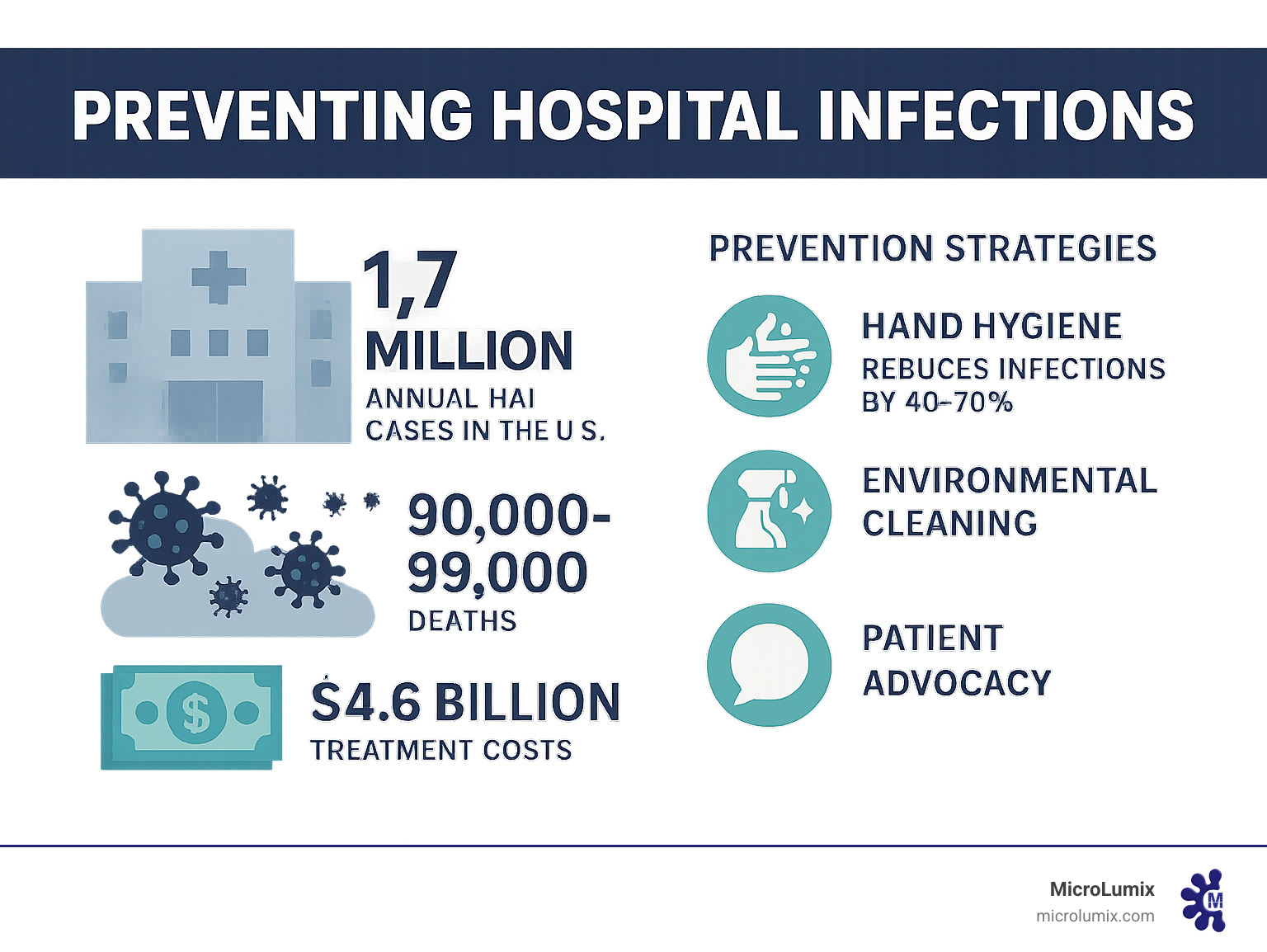
Preventing hospital infections is one of the most urgent challenges in modern healthcare. Each year, approximately 1.7 million Americans acquire healthcare-associated infections (HAIs), leading to as many as 99,000 deaths and billions in extra healthcare costs. Globally, 1 in 31 hospitalized patients will develop at least one HAI, exposing them to dangerous pathogens like MRSA and C. difficile.
Quick Prevention Strategies:
- Hand hygiene – The most effective single measure, reducing infections by 40-70%.
- Environmental cleaning – Regular disinfection of high-touch surfaces.
- Patient advocacy – Asking staff to wash their hands before contact.
- Device management – Minimizing the duration of catheters and IV lines.
- Antibiotic stewardship – Using antibiotics only when necessary.
These infections, contracted during medical care, range from surgical site infections to pneumonia. They spread through contaminated hands, equipment, and surfaces. The financial toll is immense, with the U.S. spending over $4.6 billion annually to treat just six common antimicrobial-resistant germs. Worryingly, experts believe 55% of these infections are preventable.
The good news is that prevention works. Hospitals with strong infection control programs have cut infection rates by up to 32%. The key is recognizing that infection prevention is a shared responsibility among healthcare workers, patients, and visitors.
As Debra Vanderhoff, Founder and COO of MicroLumix Bioscience Technology, I’ve dedicated my career to developing innovative solutions for preventing hospital infections. My experience confirms that combining proven protocols with advanced automated disinfection technology creates the safest possible environment for everyone.
Understanding Hospital-Acquired Infections (HAIs)
Hospital-acquired infections—also called healthcare-associated infections or HAIs—are infections you pick up during medical care that weren’t present upon arrival. They are a serious complication affecting millions of patients worldwide each year.
These infections extend hospital stays, require additional treatments, and take an emotional toll on families. A significant concern is the rise of antimicrobial resistance, where bacteria evolve to resist antibiotics, making common infections life-threatening and expensive to treat.
What Are HAIs and Why Are They a Major Concern?
HAIs can occur in any medical setting and pose a direct threat to patient safety, turning routine procedures into health crises. They are a critical indicator of healthcare quality, highlighting why preventing hospital infections is a top priority. Common types include:
- Central Line-Associated Bloodstream Infections (CLABSI): Germs enter the bloodstream through a central line catheter.
- Catheter-Associated Urinary Tract Infections (CAUTI): Bacteria travel up a urinary catheter, causing infection.
- Surgical Site Infections (SSI): Infections develop in an incision after surgery.
- Ventilator-Associated Pneumonia (VAP): Affects patients on breathing machines.
- Clostridioides difficile (C. diff): Causes severe intestinal issues, often after antibiotic use disrupts gut bacteria.
How Germs Spread: Sources and Transmission
Understanding germ transmission is key to prevention. The “chain of infection” involves a source, a method of travel, and a vulnerable person.
Germs are found on people (patients, staff), medical equipment, and environmental surfaces. They travel in several ways:
- Contact Transmission: The most common method. Direct contact involves person-to-person touch, while indirect contact occurs when someone touches a contaminated object (like a bed rail) and then a patient.
- Droplet Transmission: Germs travel in large droplets from coughs or sneezes, landing on a person’s eyes, nose, or mouth.
- Airborne Transmission: Smaller particles remain in the air for longer periods and travel greater distances.
Crucially, healthcare workers’ hands are the primary vehicle for spreading germs between patients and surfaces. This makes hand hygiene the cornerstone of infection control.
Who is Most at Risk for Hospital Infections?
While anyone can get an HAI, some patients are more vulnerable. Prevention efforts are often focused on these high-risk groups:
- Immunocompromised patients: Individuals with weakened immune systems due to illness (like cancer) or treatments (like chemotherapy).
- Elderly individuals and newborns: Their immune systems are either naturally weakened or not fully developed.
- Surgical patients: An incision creates a direct entry point for bacteria. Smokers are at even higher risk.
- Patients with chronic illnesses: Conditions like diabetes or kidney disease leave the body with fewer resources to fight infection.
- Individuals with invasive devices: Catheters, central lines, and ventilators bypass the body’s natural defenses. Over 90% of HAIs in ICUs are device-associated.
- Patients with prolonged hospital stays: Longer stays mean more exposure to potential pathogens.
The Hospital’s Role: Core Strategies for Preventing Hospital Infections
Hospitals fight a constant, behind-the-scenes battle to keep you safe. This effort is guided by an Infection Prevention and Control (IPC) program, a dynamic system designed to prevent HAIs before they happen.
Effective IPC programs are built on two pillars: Standard Precautions, which are basic safety measures like hand hygiene and safe injection practices applied to all patients, and Transmission-Based Precautions, which are extra measures (e.g., special masks or gowns) for patients with known contagious illnesses.
Success, however, depends on a strong safety culture. In the safest hospitals, everyone from surgeons to housekeepers feels empowered to speak up about risks. This culture is supported by continuous education and training to keep the entire team updated on the latest prevention methods.
The Unwavering Importance of Hand Hygiene
Simple hand washing is the single most effective way to improve hospital safety. Proper hand hygiene can reduce infections by 40-70%, a staggering impact. The World Health Organization identifies five key moments for hand hygiene, including before touching a patient, before a clean procedure, and after touching a patient’s surroundings.
For everyone in the hospital, washing with soap and water for at least 20 seconds is the gold standard. When hands are not visibly soiled, alcohol-based hand sanitizers are a convenient and effective alternative. Despite this knowledge, compliance among healthcare workers can be low, often under 40%. This highlights the need for comprehensive programs that include education, reminders, and accountability. The science is clear, as detailed in extensive scientific research on hand hygiene’s role in reducing infections.
Environmental Cleaning and Disinfection Protocols
Hospital surfaces can act as reservoirs for dangerous pathogens. High-touch surfaces like bed rails, doorknobs, call buttons, and overbed tables are critical to keep clean. It’s important to distinguish between cleaning (removing visible dirt) and disinfection (killing microorganisms with EPA-registered, hospital-grade chemicals).
After a patient is discharged, their room undergoes terminal cleaning, a methodical process to disinfect every surface for the next patient. However, manual cleaning can be inconsistent, with studies showing that up to 50% of high-touch surfaces can be missed. This human variability is why emerging disinfection technologies that offer automated, comprehensive coverage are becoming essential for preventing hospital infections.
Antibiotic Stewardship and Combating Resistance
Antibiotic resistance is a growing crisis. When bacteria evolve to survive our best medicines, they become “superbugs” like MRSA and C. diff. In the U.S., over 2.8 million antimicrobial-resistant infections occur annually, costing $4.6 billion to treat just six common types.
Antibiotic stewardship is the practice of using these precious medicines wisely. This means prescribing antibiotics only when necessary (not for viruses), choosing the right drug and dose, and using rapid diagnostic tests to identify the specific bacteria. Effective stewardship programs improve patient outcomes and preserve the effectiveness of these life-saving drugs for the future.
Surveillance and National Standards
To prevent infections, hospitals must first track them. Surveillance is the systematic monitoring of infection data, led by specialized Infection Preventionists (IPs). These medical detectives analyze infection rates, investigate outbreaks, and implement targeted prevention strategies.
Data from surveillance helps hospitals identify trends and focus their efforts. This work is supported by national standards and reporting requirements, such as the CDC’s National Healthcare Safety Network, which promotes transparency and accountability. An effective IPC program integrates surveillance, trained staff, feedback, risk assessment, and leadership commitment to create a comprehensive safety net for all patients.
Your Role as a Patient: How to Actively Prevent Infections
You have more power than you think when it comes to preventing hospital infections. As a patient, you are a vital member of your own healthcare team. When you actively participate in your care and speak up, you add a crucial layer of protection.
Even before admission, you can prepare. If you’re having surgery, stop smoking to help your immune system. If you have a chronic condition like diabetes, work to keep it well-managed. An empowered patient is a safer patient.
A Guide to Preventing Hospital Infections for Patients
- Practice good hand hygiene. Wash your hands with soap and water for 20 seconds or use an alcohol-based sanitizer, especially before eating and after using the bathroom.
- Don’t be afraid to speak up. It is your right to ask healthcare workers to clean their hands before they touch you. A simple, “Would you mind washing your hands first?” is appropriate and helps keep you safe.
- Ask questions about your care. Understand your medications and procedures. If something seems wrong, say something.
- Be a guardian for your devices. If you have an IV line or catheter, keep the area clean and dry. Report any redness or pain immediately. Ask your team daily if the device is still necessary.
- Pay attention to wound care. Ensure surgical dressings are clean and dry. Alert a nurse if a dressing becomes loose or wet.
- Manage your visitors. Ask friends and family who are sick to stay home. Cover your mouth and nose when you cough or sneeze.
Before and During Your Hospital Stay
Preparation starts at home. Discuss infection risks with your doctor. Ask about pre-surgical preparations, like bathing with antiseptic soap. Be sure to mention any recent illnesses or travel.
Once in the hospital, stay engaged. Understand your treatment plan and keep your room tidy to allow for proper cleaning. Most importantly, learn the warning signs of infection, such as fever, increased pain, redness, or swelling. Trust your instincts and report any concerns immediately. The CDC provides excellent patient safety information from the CDC to help you prepare.
Preventing hospital infections is a team effort, and you are the most important player.
Special Considerations and Common Questions
Every patient’s situation is unique. Understanding specific circumstances and knowing the answers to common questions can help you become a more effective advocate for your safety.
Preventing Hospital Infections During a Pandemic
The COVID-19 pandemic stress-tested hospital infection control, leading to stronger, more resilient systems. Key lessons learned have improved how we approach preventing hospital infections in any crisis:
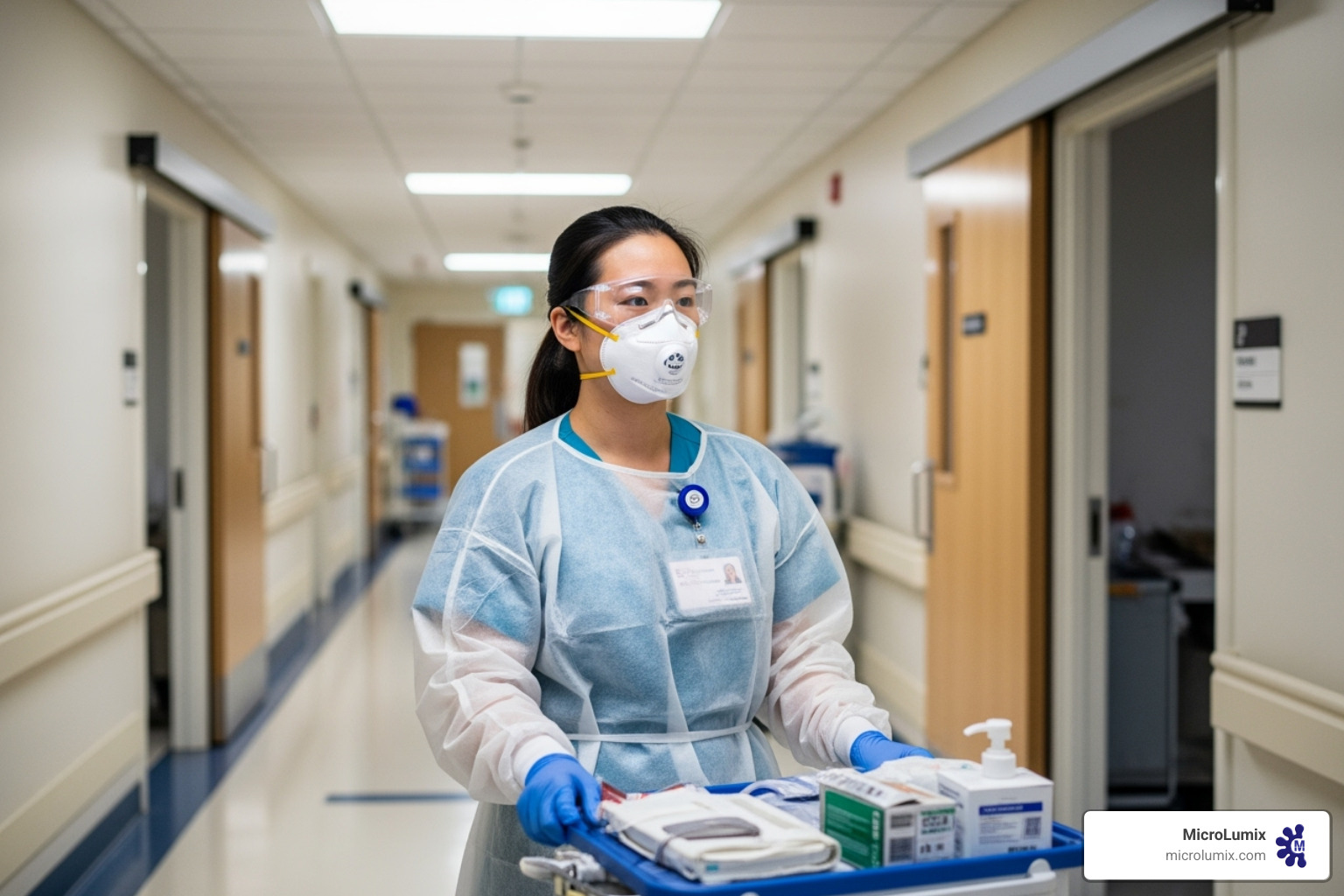
- Personal Protective Equipment (PPE): The use of N95 masks, face shields, and proper gowning procedures became more rigorous and widespread.
- Patient Screening and Isolation: Hospitals implemented rapid screening at entry points and used specialized isolation rooms with specific airflow to contain airborne pathogens.
- Visitor Restrictions: Limiting visitors proved essential in reducing the introduction of community-based infections into the hospital.
- Ventilation: The pandemic highlighted the importance of high-quality air filtration and negative pressure rooms to control the spread of airborne viruses.
These improved measures, combined with a renewed focus on hand hygiene for everyone, have made healthcare environments safer.
Can I ask my doctor or nurse to wash their hands?
Yes, absolutely! You not only can, but you should ask healthcare providers to clean their hands. It is your right as a patient and one of the most powerful actions you can take to protect yourself.
Many patients worry about seeming rude, but healthcare professionals expect and appreciate patient engagement in safety. You are not questioning their professionalism; you are partnering with them in your care.
How to ask politely:
- “Would you mind cleaning your hands before we start?”
- “I’m trying to be careful about infections. Could you please use the hand sanitizer?”
- Frame it as a partnership: “I want to do everything I can to stay safe. Thank you for cleaning your hands.”
Even if they wear gloves, hand hygiene should be performed before putting them on and after taking them off. If you feel uncomfortable asking, a family member can speak up for you. Your well-being is the top priority, and this simple request is a fundamental part of safe care.
Conclusion: A Shared Responsibility for a Safer Healthcare Future
Preventing hospital infections is about protecting people. The statistics are sobering—1.7 million HAIs and up to 99,000 preventable deaths annually in the U.S.—but behind them are individuals who trusted the healthcare system to heal them.
The encouraging truth is that we have the tools to prevent most of these infections. Comprehensive hand hygiene, consistent environmental cleaning, smart antibiotic use, and open communication form a powerful shield against dangerous germs.
This responsibility is shared. While hospitals lead the effort, patients who speak up, families who follow guidelines, and providers who adhere to protocols all contribute to a culture of safety. When everyone takes their role seriously, the results are remarkable.
The Future of Infection Control
While traditional methods remain fundamental, healthcare is on the cusp of an exciting evolution in infection control. Automated disinfection systems are a promising advance, addressing the long-standing challenge of human inconsistency in manual cleaning.
New technologies like air purification, antimicrobial surfaces, and smart monitoring are becoming powerful allies. At MicroLumix, we developed GermPass to be part of this future. Our system uses UVC light technology to automatically sanitize high-touch surfaces like door handles and bed rails immediately after every use. It achieves 99.999% efficacy against pathogens without human intervention, breaking the chain of transmission at its most critical point.
This type of automated disinfection provides a continuous cycle of protection that manual processes simply cannot match, creating a new standard of safety.
Your Next Step to Safer Care
As we conclude this guide, feel empowered in your healthcare journey. You now know that infection prevention is something you actively participate in. Your voice matters, your questions are important, and your actions protect not only you but other patients as well.
Healthcare works best when patients, families, providers, and technology partners collaborate for one goal: safe, effective care. If you’re interested in how cutting-edge technology is making hospitals safer, we encourage you to learn more about our innovative approaches.
Find how automated disinfection systems are changing healthcare environments and improving patient outcomes: More info about our automated disinfection technology.
Together, we can build a future where a hospital stay means getting better, without the risk of getting sicker.