
Why Ultraviolet UV Filter Technology is Essential for Modern Disinfection
An ultraviolet uv filter system uses UV-C light at 254 nanometers to destroy 99.99% of harmful bacteria, viruses, and parasites without chemicals. Here’s what you need to know:
Key Types of UV Filter Systems:
- Point-of-Use (POU): Under-sink or faucet-mounted for drinking water
- Point-of-Entry (POE): Whole-house systems treating all incoming water
- Commercial/Healthcare: Advanced automated systems for high-traffic areas
- Portable: UV wands and mobile units for surface disinfection
What UV Filters Remove vs. Don’t Remove:
- ✅ Destroys: Bacteria, viruses, molds, Giardia, Cryptosporidium
- ❌ Doesn’t Remove: Sediment, heavy metals, pesticides, chlorine, taste/odor
The quest for pure water and clean surfaces has led healthcare facilities to accept UV-C technology as their primary defense against pathogens. Unlike chemical disinfectants, UV light provides instant, chemical-free sanitization that leaves no harmful byproducts.
It’s important to clarify what we mean by “ultraviolet uv filter” – we’re talking about UV-C sanitizing machines for water and surface disinfection, not the camera lens filters photographers use. These medical-grade systems harness the germicidal power of UV-C light to create safer environments.
As Debra Vanderhoff, Founder and COO of MicroLumix Bioscience Technology, I’ve spent years developing automated disinfection systems that use ultraviolet uv filter technology to protect healthcare facilities from dangerous pathogens. My experience in biotechnology and operations has shown me how UV-C systems can revolutionize infection control in critical environments.

How UV-C Light Makes Water and Surfaces Safe
Picture this: invisible light waves doing the heavy lifting to keep your water and surfaces sparkling clean. That’s exactly what happens with ultraviolet uv filter technology, and it’s pretty amazing when you understand how it works.
The secret weapon here is UV-C light, specifically tuned to 254 nanometers. This isn’t the UV light that tans your skin at the beach – that’s UVA and UVB. UV-C light is completely different. It’s what scientists call germicidal irradiation, which is a fancy way of saying it kills germs really, really well.
When harmful microbes like bacteria, viruses, molds, and parasites get hit with this precise wavelength of UV-C light, something incredible happens. The light penetrates right through their cell walls and goes straight for their most vulnerable spot – their DNA and RNA. Think of it like scrambling their genetic blueprint so completely that they can’t function or make copies of themselves.
It’s like breaking the copy machine in an office – without the ability to reproduce, these pathogens become completely harmless. They can’t cause illness or spread infection anymore. The whole process happens in seconds, which is why UV systems are so effective for real-time disinfection.
The results speak for themselves. UV-C systems achieve 99.99% efficacy against a wide range of threats, including tough customers like Giardia and the particularly stubborn Cryptosporidium. This parasite is especially troublesome because it laughs in the face of chlorine – the chemical that most water treatment plants rely on. Cryptosporidium has caused some serious public health scares because traditional chemical treatments just can’t touch it.
What makes this technology so neat is its simplicity. As water flows through a UV chamber or surfaces get exposed to UV-C light, disinfection happens instantly. No waiting around for chemicals to do their work, no lingering tastes or smells, and absolutely no harmful byproducts left behind. It’s clean, fast, and incredibly effective.
The Clear Advantages: Why Choose UV Disinfection?
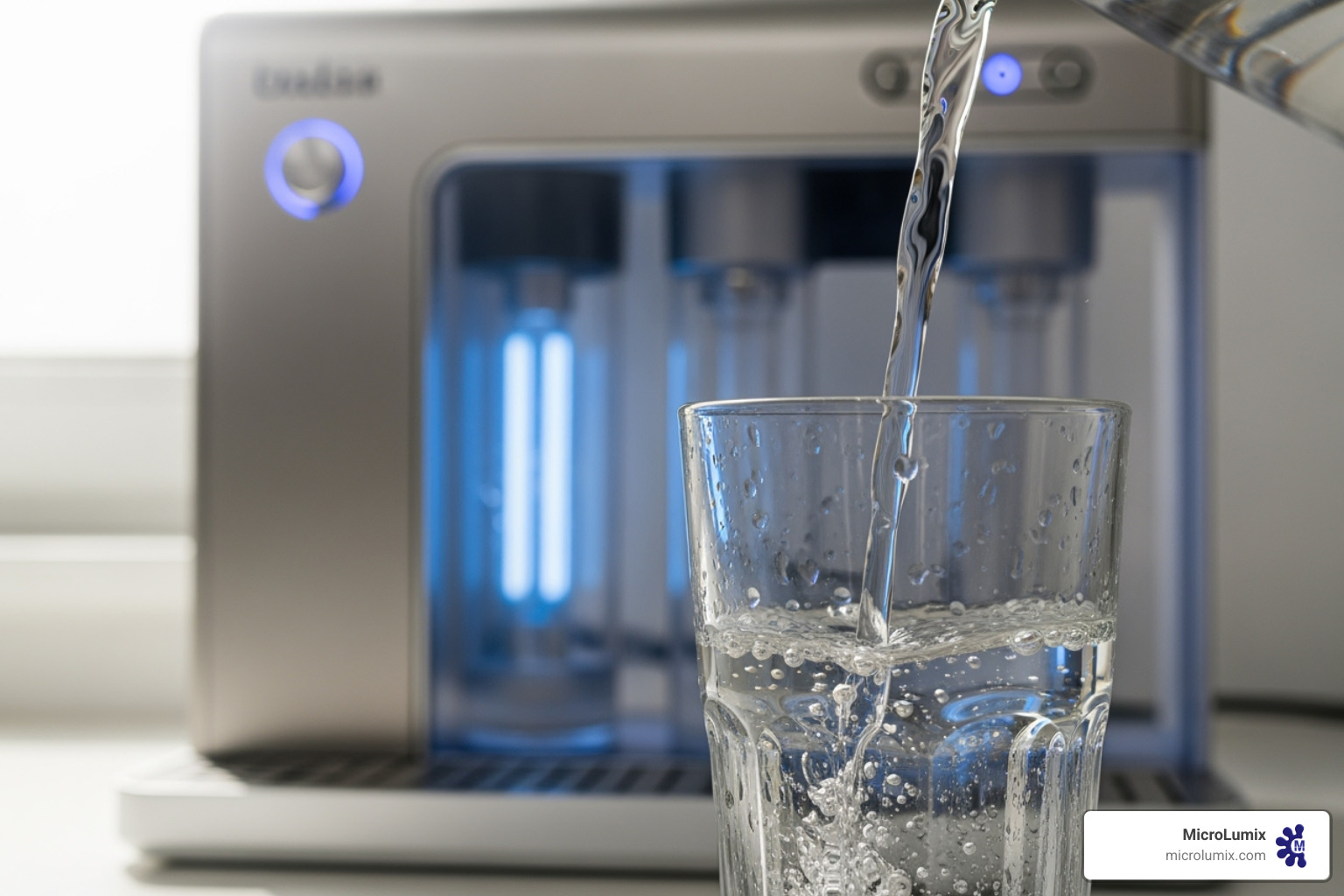
When you’re looking for the safest way to protect your family from waterborne illness, ultraviolet uv filter technology stands out like a clear winner. Think of it as nature’s own disinfectant – no harsh chemicals, no strange aftertastes, just pure protection against the germs that matter most.
Benefits Over Chemical Methods
The beauty of UV disinfection lies in what it doesn’t add to your water. While chlorine and other chemicals fight germs by introducing foreign substances, UV light works purely through energy. This chemical-free approach brings some wonderful benefits to your home.
Your water tastes exactly like water should – clean and refreshing, without that telltale chlorine bite. There’s no change to taste or odor because nothing is being added or removed, just the harmful microorganisms being neutralized.
Even better, you won’t find any harmful byproducts in your glass. Chemical disinfection sometimes creates compounds that weren’t there before, but UV treatment leaves nothing behind except peace of mind. Your plumbing system will thank you too – without corrosive chemicals flowing through your pipes, everything lasts longer and works better.
This gentler approach is also safe for plumbing and much kinder to our environment. At MicroLumix, we’ve seen how reducing chemical dependence creates cleaner, more sustainable solutions for everyone.
Limitations and Considerations
Now, let’s be honest about what UV systems can and can’t do. While they’re absolute champions at destroying germs, they’re not miracle workers when it comes to other water quality issues.
UV light does not remove contaminants like sediment, heavy metals, pesticides, or chlorine that might already be in your water. Think of UV as a highly specialized security guard – excellent at stopping biological threats, but not equipped to handle chemical or physical problems.
This is why most UV systems require pre-filtration to work their best. If your water is cloudy or full of particles, those tiny bits can create shadows that protect germs from the UV light. A simple sediment filter upstream ensures every drop gets the full germicidal treatment it needs.
Best Protection Against Specific Threats
Where UV technology truly shines is against the tough customers – the pathogens that laugh at chlorine and cause serious trouble.
Cryptosporidium, that notorious parasite we mentioned earlier, is practically immune to chlorine disinfection. The tragic 1993 Milwaukee Cryptosporidium outbreak showed us what happens when traditional treatment methods meet their match – over 400,000 people fell ill despite chlorinated water supplies. UV-C light, however, destroys these resilient organisms with ease.
When your local water authority issues boil water advisories, they’re usually worried about microbial contamination that their regular treatment can’t handle. An ultraviolet uv filter system provides that extra layer of protection, turning potentially dangerous water into something safe to drink without the hassle of boiling every drop.
For families relying on well water or other untreated sources, UV disinfection often serves as the primary defense against bacteria and viruses that naturally occur in groundwater. It’s like having a reliable guardian watching over every glass of water your family drinks.
A Roundup of UV Sanitizing Systems
Think of choosing a UV system like picking the right tool for the job. You wouldn’t use a sledgehammer to hang a picture frame, and you wouldn’t install a massive whole-house system just to purify your morning coffee water. Let’s explore the different types of ultraviolet uv filter systems available, so you can find the perfect match for your needs.

Point-of-Use (POU) Systems for an ultraviolet uv filter
Sometimes you just need clean water at one specific spot. That’s where Point-of-Use systems shine. These compact powerhouses focus on treating water right where you need it most.
Under-sink installations are the most popular POU choice. Picture opening your kitchen cabinet and seeing a sleek system quietly working away, providing crystal-clear, pathogen-free water through a dedicated faucet. These systems are perfect for apartments, condos, or homes where you primarily want safe drinking and cooking water without the expense of treating your entire water supply.
Faucet-mounted units take convenience to the next level. They attach directly to your existing tap, giving you the flexibility to switch between regular and UV-treated water with a simple flip of a lever. It’s like having a mini water treatment plant right at your fingertip.
The beauty of single tap treatment is its targeted approach. Whether you’re protecting an ice maker that supplies your family’s cold drinks, a beverage station in your office, or that one bathroom sink where you brush your teeth, POU systems deliver precise protection exactly where you need it. They’re compact, cost-effective, and ideal for households that want to dip their toes into UV water treatment.
Point-of-Entry (POE) or Whole-House Systems
Now, if you want the ultimate peace of mind, a whole-house system is your guardian angel. Installed right where water enters your home, these Point-of-Entry systems ensure that every single drop flowing through your pipes gets the UV treatment.
This means protection extends far beyond your kitchen sink. When you step into the shower, you’re not breathing in potentially harmful pathogens that might become airborne from your showerhead. Every tap in your home – from the bathroom sink where you rinse your toothbrush to the laundry room where you fill your washing machine – delivers microbiologically safe water.
Whole-house systems are particularly valuable for families with well water or those living in areas prone to boil water advisories. Instead of scrambling to boil water for every need during an emergency, your entire home remains protected automatically.
However, sizing is absolutely crucial for POE systems. Unlike a POU system that only needs to handle a single faucet’s flow, a whole-house system must manage your family’s peak water demand. Get the sizing wrong, and you might not achieve proper disinfection during those busy morning hours when everyone’s showering and making coffee simultaneously.
Advanced and Commercial Applications
Beyond home use, UV technology scales up to tackle some seriously demanding environments. In healthcare settings, UV-C systems are literal lifesavers. Hospitals and clinics rely on this technology to sterilize air, water, and surfaces where even the tiniest contamination could have serious consequences.
At MicroLumix, we’ve developed something truly in this space. Our GermPass system represents the cutting edge of automated disinfection technology. It uses self-sealing UVC chambers to sanitize high-volume touchpoints immediately after every single touch, achieving an impressive 99.999% efficacy against pathogens. It’s like having an invisible cleaning crew that never takes a break.
Food processing facilities have acceptd UV-C for ensuring food safety. From disinfecting the water used to wash fresh produce to sanitizing processing equipment and even the air in storage facilities, UV systems help keep our food supply safe from farm to table.
The future is particularly exciting in automated touchpoint disinfection. Imagine doorknobs, elevator buttons, and medical equipment that sanitize themselves after every touch. This isn’t science fiction – it’s happening now in high-traffic areas like airports, schools, and healthcare facilities, dramatically reducing pathogen transmission and creating healthier environments for everyone.
These diverse applications show just how versatile and reliable ultraviolet uv filter technology has become across virtually every aspect of our daily lives.
Your Guide to Selecting the Right Ultraviolet UV Filter System
Finding the perfect ultraviolet uv filter system doesn’t have to feel overwhelming. Think of it like choosing the right pair of shoes – you need something that fits your specific needs, budget, and lifestyle. Let me walk you through the key decisions you’ll need to make.
| Feature | Point-of-Use (POU) System | Point-of-Entry (POE) System |
|---|---|---|
| Flow Rate | Typically lower (e.g., 0.5 – 2 GPM) | Higher, designed for whole-house demand (e.g., 6 – 20+ GPM) |
| Cost | Lower (Residential: $150 – $500) | Higher (Residential: $500 – $1,500+) |
| Maintenance | Easier access, lamp/sleeve replacement for single tap | May require professional help, lamp/sleeve replacement for whole house |
| Best For | Drinking water, specific appliances, apartments | Well water, whole-house protection, multiple bathrooms |
Sizing Your System: Flow Rate and UV Dose
Getting the sizing right is absolutely crucial – it’s the difference between a system that protects your family and one that doesn’t work when you need it most.
Flow rate is your starting point. This measures how many gallons per minute (GPM) your system can handle. Picture a busy morning in your home: someone’s in the shower (about 2.5 GPM), the dishwasher is running (1.5 GPM), and you’re filling the coffee pot at the kitchen sink (2 GPM). That’s 6 GPM right there!
For most families, here’s what works: a small household might need a 10 GPM system, a medium household around 15 GPM, and a large household with multiple bathrooms should consider 20 GPM or higher. Always choose a system that can handle more than your calculated peak usage – you don’t want to be caught short during those hectic mornings.
UV dose is equally important, measured in mJ/cm². This tells you how much germicidal power the water receives as it passes through the system. City water, which has already been treated, typically needs a dose between 15-30 mJ/cm². But if you have well water – which often harbors more microorganisms – you’ll want a higher dose of around 40 mJ/cm² to ensure complete disinfection.
The Importance of Water Quality and Pre-Filtration
Here’s something many people don’t realize: UV light only works if it can actually reach the germs. Cloudy or dirty water creates shadows where bacteria and viruses can hide, making even the best ultraviolet uv filter system less effective.
That’s why pre-filtration isn’t optional – it’s essential. A good sediment filter removes dirt, rust, and particles that could block the UV light. If your water has chlorine (common in city water), a carbon filter protects the UV system’s components and improves taste. For those with hard water, a water softener prevents mineral buildup on the quartz sleeve that houses the UV lamp.
Think of it this way: you wouldn’t try to take a photo through a dirty window. Similarly, UV light needs a clear path to do its job effectively. The investment in pre-filtration pays off in better performance and longer system life.
Maintenance and Costs of an ultraviolet uv filter
One of the best things about UV systems is how simple they are to maintain. Unlike complex filtration systems with multiple components, UV maintenance is straightforward and affordable.
Annual lamp replacement is your main task. Even though the UV lamp might still glow after a year, its germicidal power weakens over time. Mark your calendar for lamp replacement every 12 months or after about 9,000 hours of use – this small step ensures continuous protection.
The quartz sleeve cleaning happens less frequently, typically every 6-12 months depending on your water quality. This clear sleeve protects the lamp from water while allowing UV light to pass through. A simple cleaning removes any mineral deposits that could reduce effectiveness.
Cost-wise, you’ll find UV systems surprisingly affordable. Most residential systems range from $150 to $500, making them accessible for most budgets. The energy consumption is minimal too – typically just 25 to 60 watts, about the same as a light bulb.
When you consider the peace of mind and protection an ultraviolet uv filter system provides, it’s one of the smartest investments you can make for your family’s health and safety.
Environmental Impact: UV-C Sanitizers vs. Chemical UV Filters
When we talk about “UV filters,” it’s easy to get confused between the technology that purifies water and the chemicals slathered on our skin at the beach. But here’s the thing – their environmental impacts are as different as night and day, and understanding this distinction is crucial for making choices that protect both our health and our planet.

Clarifying the Difference: UV-C Lamps vs. Sunscreen Chemicals
Let’s clear this up once and for all. When we discuss ultraviolet uv filter systems, we’re talking about UV-C lamps that use specific wavelengths of light to zap germs without adding anything to your water or surfaces. Think of it as a clean, invisible superhero working behind the scenes.
Sunscreen chemicals, on the other hand, are entirely different creatures. These are compounds like oxybenzone or titanium dioxide that you rub on your skin to block the sun’s rays. When you take a dip in the ocean or pool, these chemicals wash right off and enter our waterways. It’s like comparing a flashlight to paint – both might involve light protection, but they work in completely different ways.
Environmental Benefits of UV-C
Our UV-C sanitizing systems are environmental champions, and here’s why. No chemical discharge is the biggest win – unlike chlorine treatments that can create harmful byproducts and require careful disposal, UV-C leaves absolutely nothing behind. It’s disinfection that disappears the moment the light turns off.
This technology also reduces chlorine reliance in a big way. By offering a powerful, chemical-free alternative, UV-C systems can dramatically cut down on chlorine use in both municipal water treatment and home systems. That means less chlorine production, less transport of hazardous chemicals, and less potential for environmental contamination. At MicroLumix, we’ve seen how this shift toward cleaner technology creates ripple effects throughout entire healthcare systems.
Environmental Concerns of Chemical Filters
Now, let’s talk about the troublemakers – those chemical UV filters in sunscreens. They’re causing some serious headaches for our marine ecosystems, particularly our precious coral reefs. Research shows that certain sunscreen chemicals can trigger coral bleaching, even in tiny concentrations. One study revealed how sunscreens can cause coral bleaching by promoting viral infections – and we’re talking about an estimated 4,000-6,000 tons of these chemicals washing into reef areas every year.
Bioaccumulation is another major concern. These chemicals love to stick around in fatty tissues, building up in fish, shellfish, and birds as they move up the food chain. Standard wastewater treatment plants can’t effectively remove them, so they just keep circulating in our surface waters.
Even worse, when these chemicals break down under sunlight or mix with pool chlorine, they can form new toxic byproducts. Some act as endocrine disruptors, messing with wildlife’s hormonal systems. It’s a cascade of unintended consequences that our oceans really don’t need.
The contrast couldn’t be clearer – while both involve “UV” and “filters,” choosing an ultraviolet uv filter system for water and surface disinfection is like choosing a bicycle over a gas-guzzling truck. One works with nature, the other works against it.
Conclusion: Accept a Cleaner, Safer Future with UV Technology
As we reach the end of our journey through ultraviolet uv filter technology, it’s clear that we’re looking at something truly remarkable. This isn’t just another gadget or trend – it’s a fundamental shift toward cleaner, safer living that benefits both our health and our planet.
Think about what we’ve finded together. That precise 254-nanometer wavelength of UV-C light acts like a microscopic superhero, zapping harmful bacteria, viruses, and parasites by scrambling their genetic code. It’s effective against even the toughest pathogens like Cryptosporidium, which laughs in the face of chlorine. It’s safe because it adds absolutely nothing to your water – no chemicals, no byproducts, no weird tastes. It’s completely chemical-free, which means you’re not trading one concern for another.
Perhaps most importantly, it’s environmentally friendly in ways that truly matter. While chemical UV filters from sunscreens are wreaking havoc on coral reefs and marine ecosystems, our UV-C sanitizing systems are quietly doing their job without leaving any environmental footprint. No chemical discharge, no harmful residuals, just clean water and surfaces.
The versatility is what really gets me excited. Whether you need a simple under-sink system for your apartment’s drinking water, a whole-house solution for your family’s complete protection, or advanced automated systems for critical healthcare environments, there’s an ultraviolet uv filter system that fits perfectly.
At MicroLumix, we’ve seen how this technology can transform safety in healthcare settings. Our passion lies in creating automated solutions that work tirelessly behind the scenes, protecting patients and healthcare workers from dangerous pathogens. It’s this same dedication to innovation and safety that drives the entire UV disinfection industry forward.
UV technology represents more than just a key barrier against microbiological threats – it’s a bridge to a future where we can have both the safety we need and the environmental responsibility we owe to future generations. Every time you choose UV-C over chemical alternatives, you’re casting a vote for cleaner oceans, healthier ecosystems, and safer communities.
For the most advanced, automated UVC disinfection for critical environments, learn about GermPass technology. Together, we’re not just treating water and sanitizing surfaces – we’re lighting the way toward a cleaner, safer future for everyone.