
Why Understanding Ultraviolet UVC Light is Critical for Healthcare
Ultraviolet uvc light is a powerful tool in the fight against healthcare-associated infections. This technology uses the germicidal properties of UV-C radiation to inactivate microorganisms like bacteria, viruses, and fungi by disrupting their DNA and RNA structure.
Key facts about ultraviolet UVC light:
- Wavelength range: 200-280 nanometers (peak effectiveness at 254 nm)
- Mechanism: Damages genetic material, preventing pathogen reproduction
- Applications: Air purification, surface disinfection, water treatment
- Efficacy: Up to 99.9% inactivation of most bacteria and viruses
- Safety requirement: Must avoid direct human exposure to prevent skin and eye damage
The COVID-19 pandemic amplified interest in UV-C technology, especially automated disinfection systems in healthcare. However, proper application is essential. UV-C needs direct line-of-sight and a sufficient dose (intensity × time) to work. Its effectiveness also decreases rapidly with distance.
Used for over a century, recent advances in LED and far-UVC (222 nm) technology are creating new possibilities for safer, more efficient disinfection.
I’m Debra Vanderhoff, Founder and COO of MicroLumix Bioscience Technology. For the last four years, I’ve developed automated disinfection systems using ultraviolet uvc light technology. My experience with both traditional mercury lamps and modern LED systems gives me deep insight into UV-C disinfection’s power and limitations.
The Science Behind Germicidal UV-C Light
Invisible to the naked eye, ultraviolet uvc light is a powerful, natural force that can stop germs in their tracks.

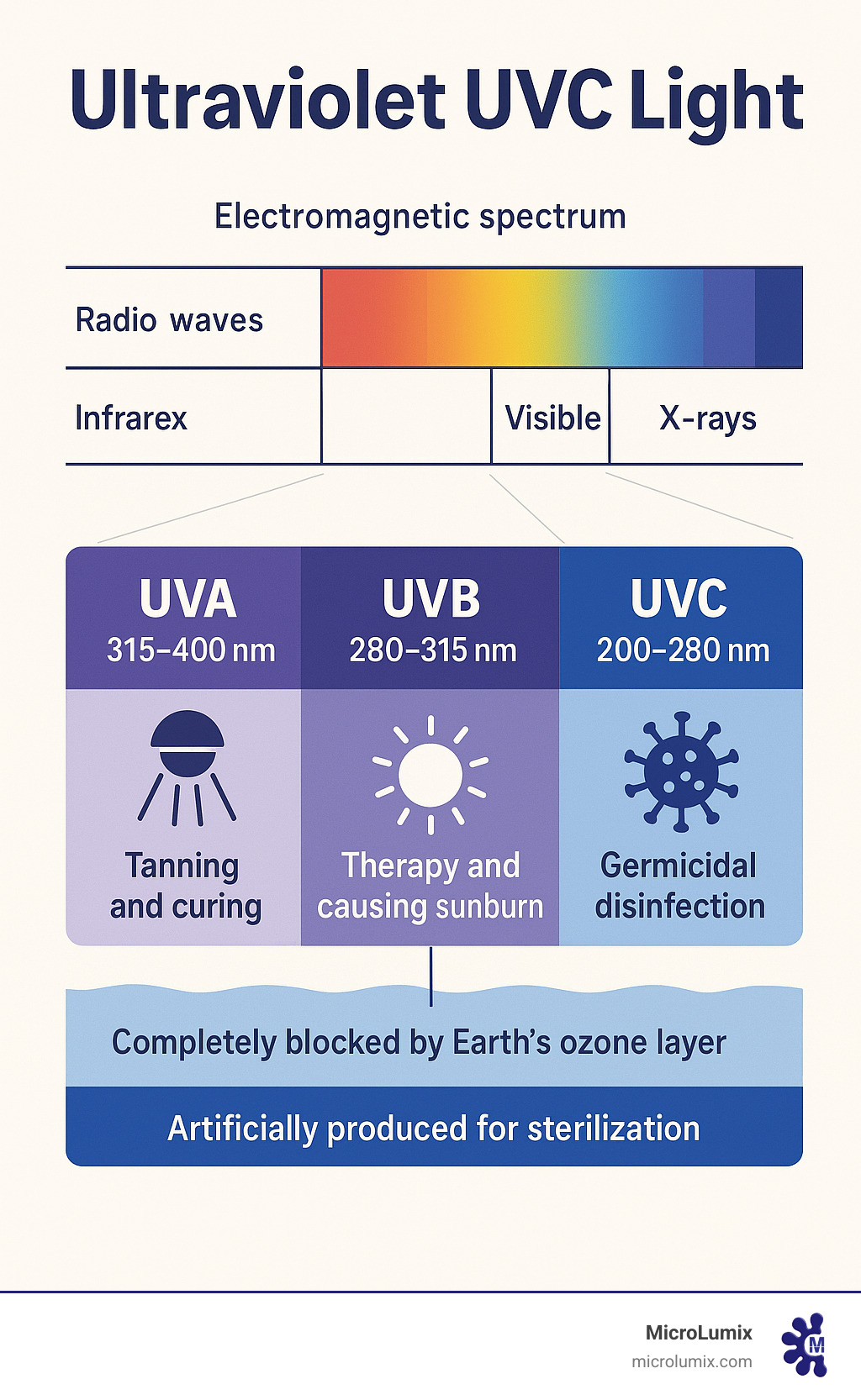
To understand how it works, we look to the electromagnetic spectrum. Ultraviolet uvc light carries energy packets called photons that are highly effective against microorganisms. Scientific research on the electromagnetic spectrum shows these invisible rays are more powerful than visible light, making them ideal for germ-killing.
Understanding the UV Spectrum: UVA, UVB, and UVC
The ultraviolet family has three main members: UVA, UVB, and UVC.
UVA (315-400 nm) makes up 95% of UV light reaching Earth. It’s responsible for tanning and is used in nail salons and for black lights.
UVB (280-315 nm) causes sunburn but also helps our bodies produce vitamin D and is used for some skin treatments. Only about 5% of UV radiation reaching Earth is UVB.
UVC (200-280 nm) is the superhero of disinfection. Earth’s ozone layer blocks nearly all natural UVC. This means microorganisms haven’t evolved defenses against it, making artificial ultraviolet uvc light a highly effective weapon. The peak germicidal wavelength is 254 nanometers, where UVC is most effective against pathogens.
How UV-C Inactivates Pathogens
At the molecular level, ultraviolet uvc light targets the genetic material of microorganisms. UVC energy creates pyrimidine dimers, which distort the DNA and RNA, making the genetic instructions unreadable. More about DNA damage explains this process in detail.
Once the genetic material is damaged, the microorganism is inactivated—it cannot reproduce or cause infection. It’s more accurate to say UVC inactivates germs rather than ‘kills’ them.
Success requires the correct UV dose (fluence), which is a combination of intensity and exposure time. Proper system design is crucial to deliver the right dose and achieve up to 99.9% pathogen inactivation, making ultraviolet uvc light a powerful tool against harmful microorganisms.
A Century of Disinfection: The History of UVGI
The history of ultraviolet uvc light disinfection began with a simple observation and has evolved into a trusted technology against infectious disease.
In 1877, Arthur Downes and Thomas Blunt finded that sunlight inhibited bacterial growth, publishing their findings on the “Influence of Light upon the Development of Bacteria.” This marked the beginning of a revolution in disinfection.
In the early 1900s, Niels Finsen won the Nobel Prize in Medicine in 1903 for using concentrated light to treat skin diseases. His work helped establish the concept of light as medicine. By 1910, Marseille, France, had the first documented UV water disinfection system. Soon after, companies like Westinghouse developed the first commercial UVC lamps.
In the 1930s, Harvard’s William F. Wells pioneered air disinfection, proving that ultraviolet uvc light could significantly reduce airborne pathogens. A 1936 study at Duke University showed UVGI systems in operating rooms reduced postoperative infections from 11.62% to just 0.24%. This led to widespread adoption in hospitals and schools in the 1940s.
Mid-20th century studies by researchers like Richard L. Riley proved upper-room UVGI systems could drastically reduce the spread of tuberculosis.
In the latter 20th century, the rise of antibiotics made UVGI seem less critical. However, the emergence of drug-resistant bacteria and global pandemics like COVID-19 have renewed interest in ultraviolet uvc light. Researchers today build on over a century of science to create more effective solutions.
For those interested in diving deeper into this fascinating history, there’s an excellent historical overview of UVGI for air disinfection that traces these developments in greater detail.
Applications and Efficacy of Ultraviolet UVC Light
Ultraviolet uvc light is incredibly versatile, used in hospitals, water treatment facilities, and more. It’s appealing because it disinfects without chemical residues.

How Effective is Ultraviolet UVC Light Against Pathogens?
When properly applied, ultraviolet uvc light can achieve up to 99.9% inactivation rates for most bacteria and viruses. The COVID-19 pandemic highlighted UVC’s effectiveness against SARS-CoV-2, with scientific studies on UVC inactivation of SARS-CoV-2 confirming its ability to rapidly inactivate the virus.
However, some microorganisms, like C. diff (Clostridioides difficile) spores, are more resistant and require longer exposure. UVC success depends on three critical factors: Dose (intensity × time), Distance (effectiveness decreases with distance due to the Inverse Square Law), and Duration. Direct line-of-sight is crucial.
Common Applications and System Types
UVC has diverse applications in air purification, water treatment, and surface disinfection.
- Upper-room UVGI systems use fixtures mounted high on walls to create a disinfection zone above occupants. This is effective for controlling airborne diseases, as detailed in CDC guidance on upper-room UVGI.
- HVAC integration involves placing UVC lamps inside heating and cooling systems to disinfect circulating air and prevent microbial growth.
- Portable room disinfection units are used for targeted treatment in unoccupied spaces like hospital rooms.
- Water treatment is an established, chemical-free UVC application that inactivates even chlorine-resistant pathogens.
- Surface disinfection includes automated systems for operating rooms and equipment for labs, offering speed and thoroughness.
Challenges and Limitations of UVGI
The biggest challenge for ultraviolet uvc light is its line-of-sight requirement. Shadows or obstructions can shield microorganisms. Other considerations include material degradation from prolonged exposure and the need for proper system design and maintenance. An undersized or poorly placed lamp is ineffective, and lamps need regular cleaning and timely replacement. Environmental factors like humidity and temperature can also impact performance. When properly designed, installed, and maintained, UVC systems overcome these challenges to provide reliable disinfection.
Safety First: Understanding UV-C Exposure Risks and Precautions
While ultraviolet uvc light is powerful against germs, it poses risks to human safety if not handled correctly.
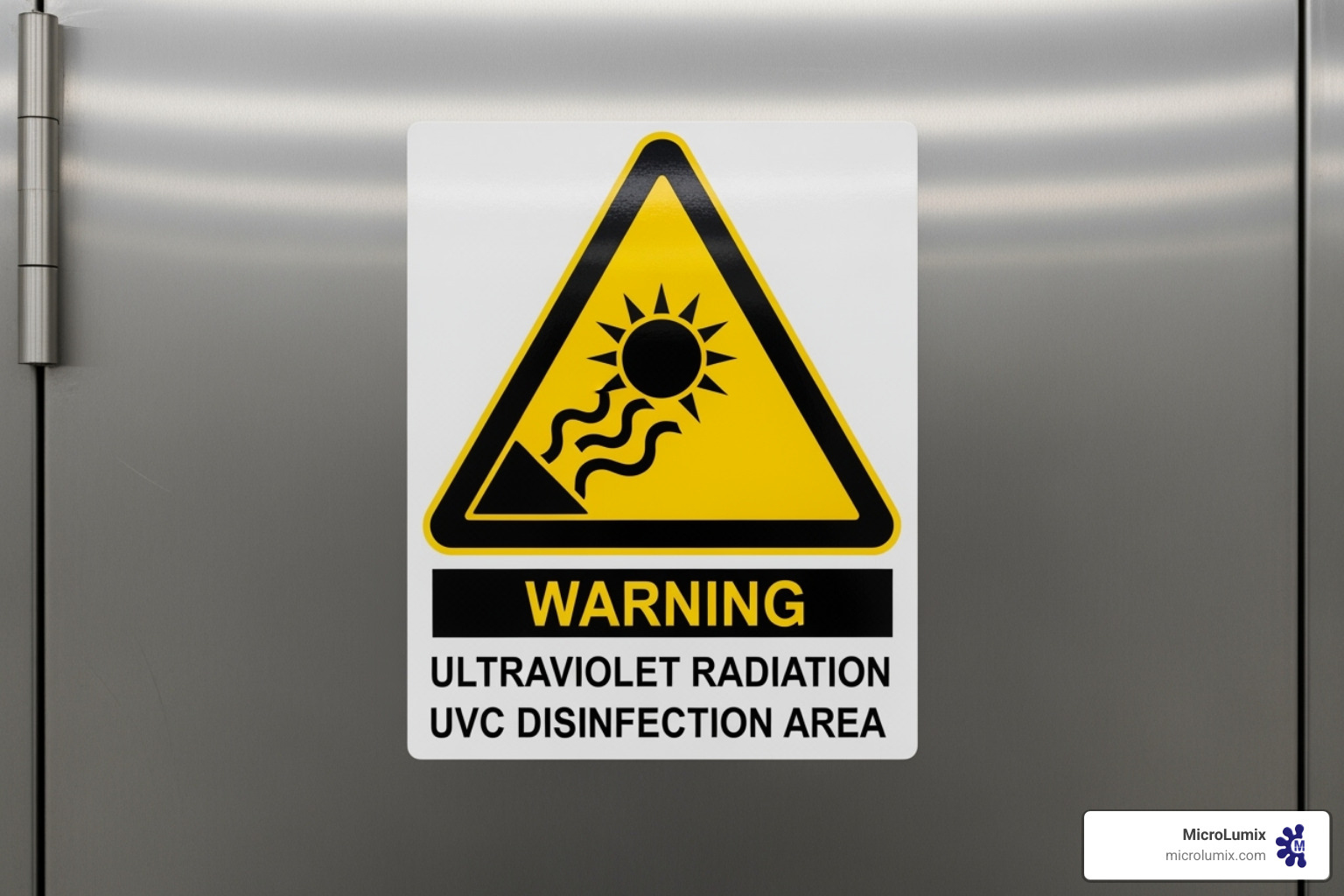
The same energy that damages microbial DNA can harm human tissue. Direct exposure to conventional ultraviolet uvc light can cause erythema (a severe sunburn) on the skin and photokeratitis (a painful sunburn of the cornea) in the eyes. While these acute effects are temporary, long-term repeated exposure increases the risk of skin cancer and cataracts. This is why many consumer-grade handheld UVC wands are dangerous, as they often lack safety features.
Regulatory Guidelines and Exposure Limits
Regulatory bodies have strict guidelines for UVC safety. The FDA has issued warnings about unsafe consumer devices, and the EPA also warns that many may be risky or ineffective. The International Commission on Non-Ionizing Radiation Protection (ICNIRP) provides detailed exposure guidelines with Threshold Limit Values (TLVs).
Professional installation is crucial. Modern UVGI systems include essential safety features like motion sensors and interlocks. Clear warning signage is mandatory, and technicians must use proper UV-blocking personal protective equipment during maintenance.
At MicroLumix, safety is our top priority. Our self-sealing UVC chambers contain the germicidal energy, protecting people. We always recommend working with qualified professionals who understand the power and responsibility of ultraviolet uvc light technology.
The Future of Disinfection: Far-UVC and Other Innovations
The field of ultraviolet uvc light technology is rapidly advancing, with breakthroughs making disinfection safer, more efficient, and more precise. For over a century, UVC use has required unoccupied rooms for safety. That may be about to change.
The Promise of Far-UVC: A Safer Ultraviolet UVC Light?
Scientists have found that far-UVC light (around 222 nanometers) behaves differently than conventional UVC. The key is its reduced penetration; it’s absorbed by the outer dead-cell layer of skin and the tear film, preventing it from reaching living tissue. This breakthrough could allow for continuous air disinfection in occupied spaces.
Columbia University research shows far-UVC can efficiently inactivate airborne pathogens in occupied spaces. You can explore the Columbia University research on Far-UVC for more details. While ongoing research is still validating its long-term safety, early results are promising.
Other advancements include UV-C LEDs. Unlike traditional mercury lamps, LEDs are compact, energy-efficient, and offer mercury-free technology. Their instant on/off capability and small size allow for integration into a wider range of devices and specialized automated systems.
Advancements in automated disinfection are also moving from room-wide treatments to precision targeting of high-touch surfaces. The future of ultraviolet uvc light is smarter, safer, and more targeted disinfection that integrates seamlessly into our daily lives.
Frequently Asked Questions about UVC Light
Here are answers to common questions about ultraviolet uvc light technology.
Can UVC light penetrate glass or plastic?
No. Ultraviolet uvc light at the germicidal 254 nm wavelength cannot penetrate most common glass or plastic. Standard window glass and most clear plastics like acrylic block UVC. This is why UVC lamps are made from special quartz glass. For safety, this is beneficial, but for disinfection, it means ultraviolet uvc light requires direct, unobstructed line-of-sight to be effective.
Does UVC light produce ozone?
It depends on the wavelength. Ozone-producing lamps use wavelengths below 240 nm to create ozone (O3), a respiratory irritant. Ozone-free lamps operate at 254 nm, the peak wavelength for germicidal action without creating ozone. Quality ultraviolet uvc light systems for indoor use use this safer wavelength.
How do I know if a UVC device is working correctly?
Since ultraviolet uvc light is invisible, you can’t rely on the faint blue glow some lamps emit.
- Professional validation is the best method. Reputable manufacturers provide documentation on UVC output and usage protocols.
- UVC dosimeters are cards that change color when exposed to UVC, providing visual confirmation that the lamp is working.
- Regular maintenance is critical. UVC lamps lose effectiveness over time (typically after 15,000-17,000 hours) and need cleaning and timely replacement.
The bottom line: Don’t rely on a visible glow. Ultraviolet uvc light requires proper measurement and professional oversight to ensure it’s working effectively.
Conclusion
Ultraviolet uvc light is a powerful tool against harmful pathogens. Its ability to disrupt microbial DNA and RNA is proven science, and the technology has evolved from early findies to today’s sophisticated automated systems.
The simplicity of ultraviolet uvc light is striking: no chemicals, no residue, just the power of light. When applied correctly, it can achieve up to 99.999% pathogen inactivation. However, proper application is crucial. UVGI requires proper dosage, understanding of the inverse square law, attention to line-of-sight, and strict safety protocols.
The future is bright, with innovations like Far-UVC (222 nm) for continuous disinfection in occupied spaces and UV-C LEDs creating more compact, efficient, and eco-friendly systems.
At MicroLumix, our GermPass technology exemplifies this innovation. It uses self-sealing UVC chambers for 99.999% efficacy on high-touch surfaces after every use. This shows how engineering can harness the power of ultraviolet uvc light while overcoming its limitations through automation and containment.
The COVID-19 pandemic accelerated the adoption of technologies like UVGI, and we are now building a new standard where cleaner, safer environments are the expectation. For healthcare administrators, facility managers, or anyone interested in this technology, ultraviolet uvc light is a proven ally for creating healthier spaces.
Explore advanced automated disinfection solutions to see how we’re changing hygiene standards for healthcare facilities nationwide.