
A New Era of Clean
UV light disinfection is a chemical-free technology that uses ultraviolet-C (UVC) light to destroy harmful microorganisms by damaging their DNA and RNA. Here’s what you need to know:
How it works:
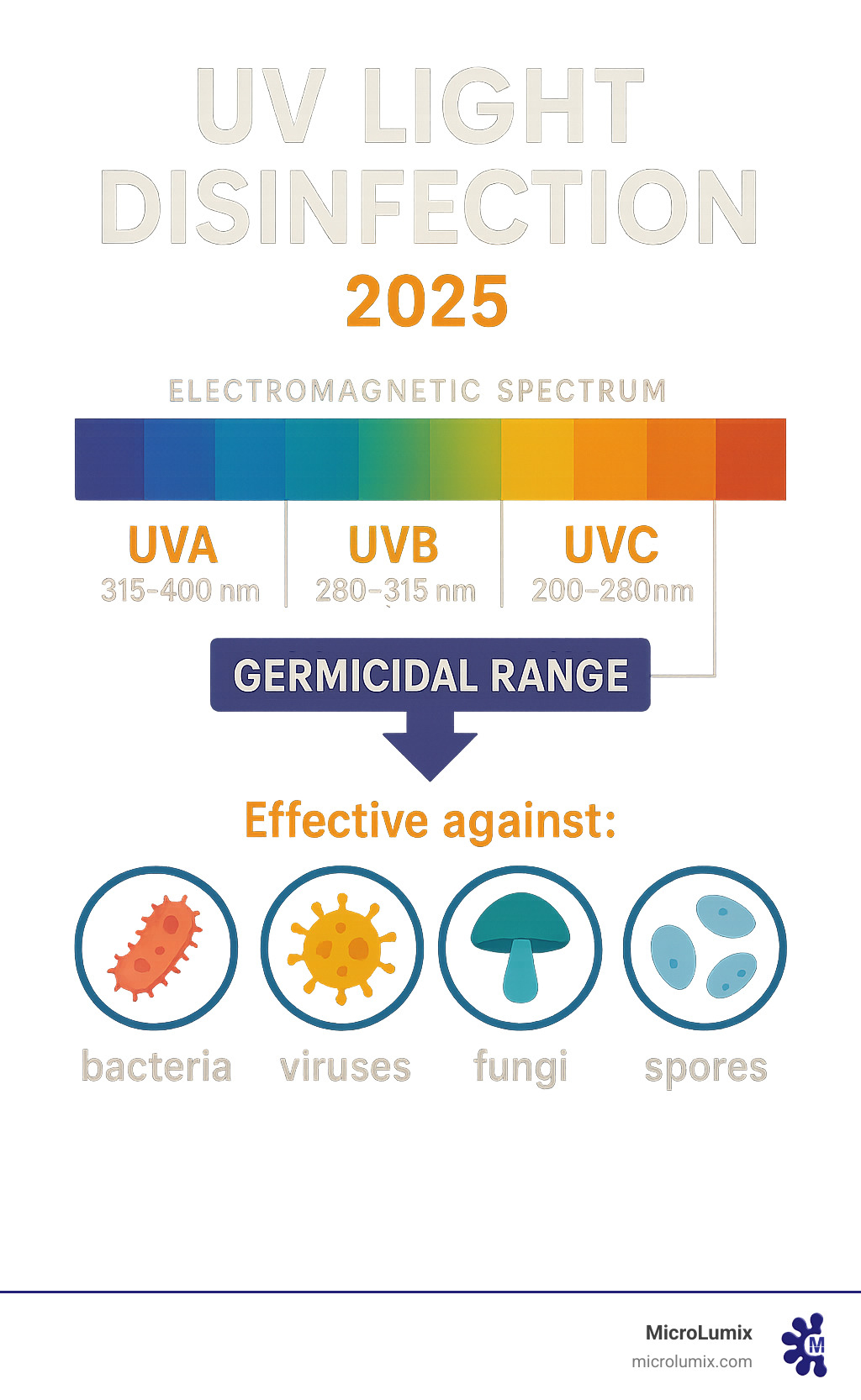
- UVC light (200-280 nm wavelength) penetrates pathogens
- Damages genetic material, preventing reproduction
- Kills bacteria, viruses, fungi, and spores within minutes
Key applications:
- Surface disinfection in hospitals and clinics
- Air purification systems in HVAC units
- Water treatment facilities
Effectiveness:
- Up to 99.99% pathogen elimination
- Proven against SARS-CoV-2, superbugs, and HAIs
- Works in 5-45 minutes depending on application
For healthcare administrators and infection control specialists, UV light disinfection represents a critical advancement in preventing Hospital Acquired Infections (HAIs). With over one million HAIs reported annually in the U.S. healthcare system and direct medical costs exceeding $28 billion, the need for effective disinfection has never been more urgent.
Traditional manual cleaning methods achieve only 40% compliance with hospital policies, leaving dangerous gaps in pathogen control. UV technology bridges these gaps by providing consistent, automated disinfection that doesn’t rely on human thoroughness or chemical application.
However, not all UV systems are created equal. While some devices eliminate nearly 99.99% of bacteria, fungi, and viruses, others fall short of EPA standards. Understanding the science, applications, and limitations of different UV technologies is essential for making informed decisions about your facility’s disinfection strategy.
As Debra Vanderhoff, Founder and COO of MicroLumix Bioscience Technology, I’ve spent over 20 years developing automated disinfection systems, with particular expertise in UV light disinfection technologies for healthcare environments. My experience spans from traditional UV-C systems to cutting-edge automated touchpoint disinfection solutions that address the critical gaps in manual cleaning protocols.
The Science Behind UV Light Disinfection: How It Works
Think of UV light disinfection as nature’s own antimicrobial weapon, refined by science. We’re working with UVC light, a specific slice of the electromagnetic spectrum that operates between 200 and 280 nanometers. This invisible powerhouse is quite different from the UVA and UVB rays that give you a suntan (or sunburn if you’re not careful!). While those longer wavelengths reach us naturally from the sun, UVC gets filtered out by our atmosphere. Lucky for us, we can create it artificially and put it to work fighting germs.
The story of UV light disinfection actually goes way back to the late 1800s. Scientists noticed that sunlight seemed to slow down microbial growth, which sparked curiosity about ultraviolet germicidal irradiation (UVGI). If you’re the type who loves diving into scientific history, there’s fascinating research on UV’s journey from those early observations to today’s sophisticated systems.
How UV-C Neutralizes Harmful Microorganisms
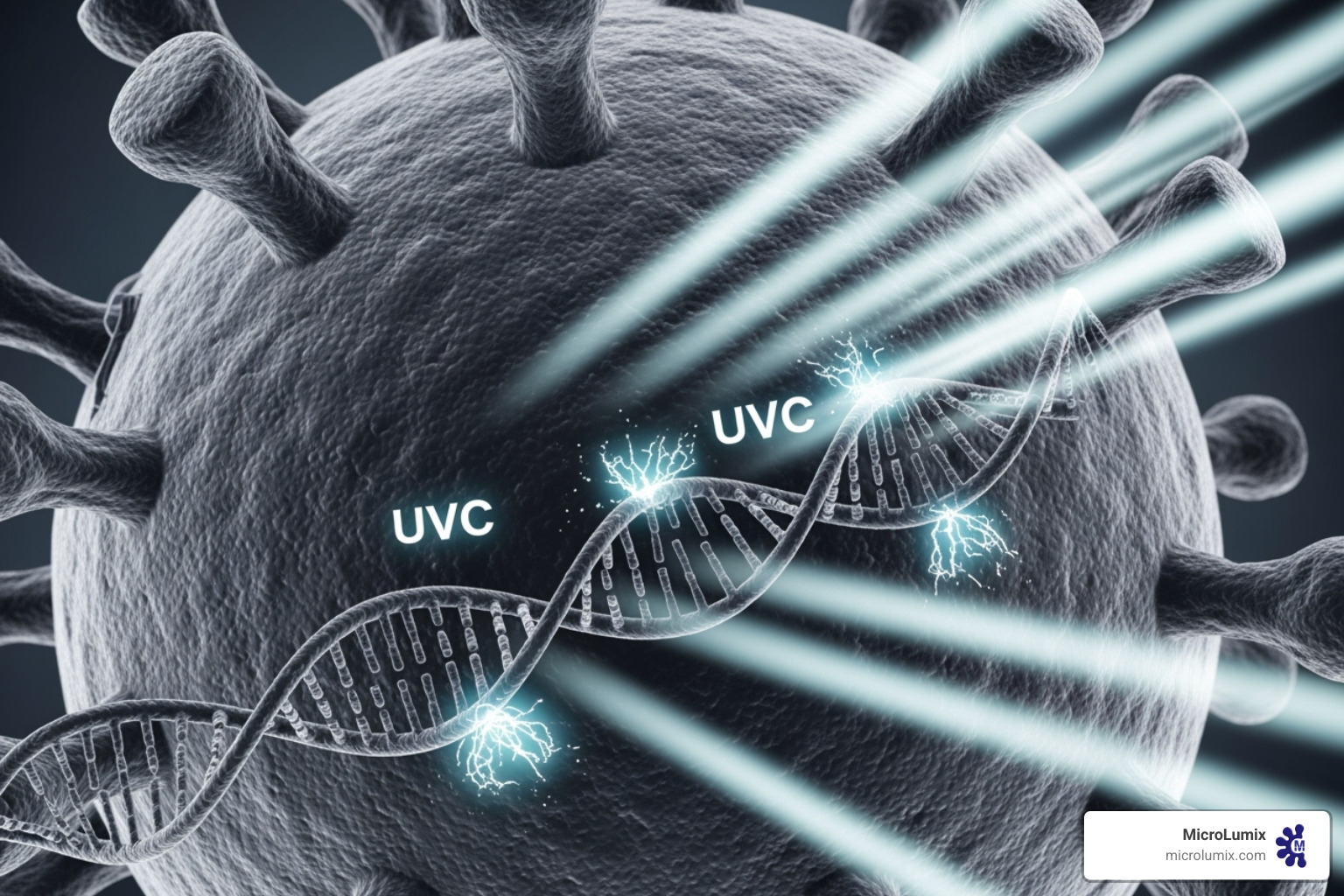
Here’s where things get really interesting. UVC light doesn’t just push pathogens around – it goes straight for their genetic core. When UVC photons hit a microorganism, they pack enough energy to actually break apart the DNA and RNA that make up the pathogen’s genetic blueprint.
Picture it like scrambling the instruction manual that tells bacteria, viruses, fungi, and spores how to reproduce. Once that genetic material gets damaged, these troublemakers can’t make copies of themselves anymore. They’re essentially knocked out of commission, unable to spread disease or cause infections.
The numbers speak for themselves: properly designed UV light disinfection systems can eliminate 99.99% of harmful microorganisms. UVC light at wavelengths around 254 nanometers has been proven particularly effective, consistently delivering this level of pathogen elimination across different types of microbes.
What makes this process so reliable is that it’s a direct physical disruption. Unlike chemical disinfectants that pathogens might eventually develop resistance to, UV light delivers the same genetic-scrambling effect every single time. There’s no building tolerance or developing immunity – just consistent, predictable results.
Key Factors Influencing Efficacy
While the science behind UV light disinfection is straightforward, getting optimal results in the real world requires understanding a few key variables. It’s not quite as simple as flipping a switch and calling it done!
Light intensity and exposure time work together like a tag team. The stronger your UV source and the longer you expose pathogens to it, the more thorough your disinfection becomes. Think of it as a dose relationship – you need enough UV energy delivered over sufficient time to ensure complete pathogen inactivation.
Distance from the source plays a huge role that surprises many people. UV light follows what’s called the Inverse Square Law, which means intensity drops off rapidly as you move away from the source. Double the distance, and you’re working with just one-quarter of the original light intensity. A surface that takes 20 minutes to disinfect at two meters might need 40 minutes at four meters. This is why proper positioning matters so much.
The line-of-sight limitation is perhaps the biggest challenge with traditional UV systems. UVC light travels in straight lines and can’t bend around corners or penetrate into crevices. Any shadows created by equipment, furniture, or even dust particles become safe havens for pathogens. This limitation has driven innovation toward more sophisticated delivery methods that can address these hidden areas.
Finally, material type affects both the disinfection process and the longevity of your equipment. While UVC effectively neutralizes pathogens on most surfaces, prolonged exposure can cause some materials – particularly certain polymers found in medical devices – to degrade over time. It’s a balancing act between achieving thorough disinfection and preserving your valuable equipment.
Understanding these factors helps explain why automated systems that can control exposure time, maintain optimal distances, and address line-of-sight challenges have become so valuable in healthcare settings. The science works beautifully when applied with precision and consistency.
Types of UV Sanitizers and Their Applications
When it comes to UV light disinfection, one size definitely doesn’t fit all. The beauty of this technology lies in its incredible versatility – from tiny devices that fit in your pocket to massive systems that can sanitize entire hospital wings. Let me walk you through the fascinating world of UV sanitizers and show you how they’re changing cleanliness across different environments.
Think about it – UV light disinfection is now working around the clock to keep us safe in ways we might not even notice. It’s disinfecting our drinking water before it reaches our taps, sanitizing pharmaceutical products in manufacturing facilities, and purifying the air we breathe in office buildings. On a more personal level, it’s helping us sanitize our phones and keys, disinfect baby bottles and toys, and even eliminate fungus from shoe soles. In healthcare settings, it’s become an essential tool for reducing hospital-acquired infections, while in the food industry, it’s ensuring the safety of what we eat and drink.
Surface Disinfection Systems
Surface sanitizers are probably what most people picture when they hear about UV light disinfection. These devices have evolved from simple concepts into sophisticated systems that can tackle everything from personal items to entire rooms.
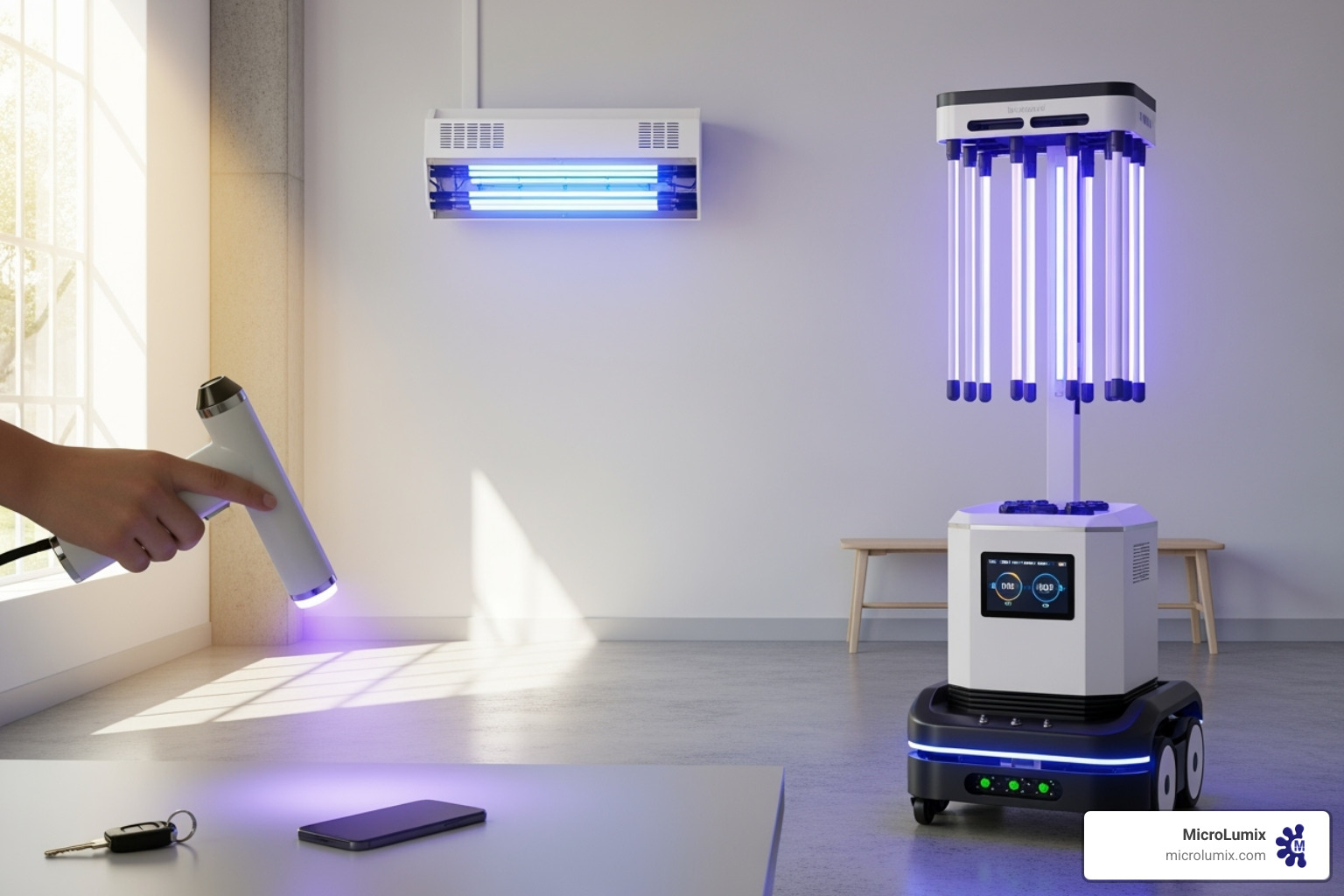
Portable wands represent the most accessible entry point into UV sanitization. These handheld devices let you sweep UVC light over surfaces like keyboards, doorknobs, or countertops. While they offer convenience and control, they require careful handling – direct exposure to UVC light can harm your skin and eyes, so following safety instructions isn’t optional, it’s essential.
Enclosed chambers take a much safer approach by containing the UV light completely. These clever devices, like sanitizing boxes for phones, create a controlled environment where UVC bulbs can work their magic without any risk to users. The results are impressive: a single 30-second cycle can reduce germs by 90.5%, while two cycles eliminate nearly 99.9% of pathogens. These chambers aren’t just for phones either – they’re perfect for sanitizing keys, beauty tools, nail implements, and even toothbrushes (which experts recommend disinfecting regularly).
For hospital applications, we enter the field of autonomous robots designed for whole-room disinfection. These impressive machines move through patient rooms and operating theaters like silent sentinels, emitting powerful UVC rays for precisely calculated time periods. Some advanced systems can eliminate 99.99% of SARS-CoV-2 within just two minutes at a one-meter distance. These robots serve as crucial backup to manual cleaning, reaching areas that human staff might miss and providing consistent, reliable disinfection.
Air Purification Systems
The fight against airborne pathogens has been going on longer than you might think. UV light disinfection for air purification first gained widespread use in the 1950s during the battle against tuberculosis, and the technology has been quietly protecting us ever since.
In-duct HVAC units represent one of the most neat solutions for air disinfection. By installing UVC lamps directly within heating and cooling systems, we can treat air as it circulates through a building. Every time air passes over these lights, airborne pathogens get neutralized before being distributed to occupied spaces. This approach keeps the UVC light safely contained within the ductwork, away from human exposure.
Upper-room UVGI fixtures take a different but equally effective approach. These systems create a disinfection zone in the upper portion of rooms, well above people’s heads. As natural air currents carry airborne pathogens into this zone, they encounter lethal doses of UVC light. This technology has been protecting people safely and effectively for over 70 years, particularly in challenging environments like hospitals and correctional facilities where airborne transmission is a serious concern.
Standalone air purifiers have brought UV technology into homes and offices worldwide. Many consumer-grade units now incorporate UVC lights as part of multi-stage filtration systems, combining physical particle capture with pathogen destruction for comprehensive air cleaning.
Water Treatment Systems
Water treatment might be the oldest and most established application of UV light disinfection. This technology has been keeping our water safe since 1910, when it was first implemented in Marseille, France.
Municipal water treatment facilities now rely heavily on UV systems to protect public health. The scale is truly remarkable – New York City’s Catskill-Delaware Water Ultraviolet Disinfection Facility treats an astounding 2.2 billion gallons every single day, ensuring safe drinking water for millions of people. UV treatment is particularly valuable because it can eliminate chlorine-resistant parasites like Cryptosporidium and Giardia that cause serious waterborne illnesses.
Point-of-use purifiers bring this same technology into homes and portable applications. Whether you’re treating tap water in your kitchen or purifying water from natural sources during camping trips, these smaller UV systems provide reliable pathogen elimination without chemicals or complex maintenance requirements.
Effectiveness and Safety of UV-C Technology
When we talk about something as powerful as UV light disinfection, it’s natural to ask: how effective is it, and is it truly safe? These are the questions I hear most often from healthcare administrators, and frankly, they’re the right questions to ask. Let me share what the science tells us.
How Effective is UV Light Disinfection Against Pathogens?
The effectiveness of UV light disinfection is honestly impressive. After two decades in this field, I still find the research compelling. We’re talking about 99.99% efficacy rates against bacteria, fungi, and viruses when UVC rays operate at wavelengths of at least 254 nanometers.
But let’s get specific about what this means for real-world pathogens. When SARS-CoV-2 emerged, researchers quickly finded that UV sanitizers could inactivate the virus within nine minutes of exposure. Even more remarkable, advanced far-UVC systems can eliminate 99.99% of SARS-CoV-2 within just two minutes at one meter from the device. This Study on Far-UVC and coronaviruses provides fascinating insights into how this technology performs against airborne viruses.
The battle against superbugs – those antibiotic-resistant bacteria that keep infection control specialists awake at night – is where UV technology really shines. Research shows UVC light can cut transmission of four major superbugs by 30% in hospital environments. That’s a significant reduction when you consider the stakes involved.
Fungi and mold don’t stand a chance either. UV sanitizers using wavelengths between 200-300 nanometers effectively eliminate fungal contamination, whether it’s on surfaces or even something as specific as athlete’s foot fungus on shoe soles.
Potential Risks and Safety Precautions for UV Light Disinfection
Now, let’s talk about the elephant in the room: safety. The same energy that makes UV light disinfection so effective against pathogens can be harmful to humans if not handled properly. Think of UVC light like a powerful medication – incredibly beneficial when used correctly, but requiring careful attention to safety protocols.
Skin and eye exposure is the primary concern. Direct UVC exposure can cause severe sunburn-like reactions and photokeratitis – that’s “welder’s flash” or “snow blindness” to the eyes. We’re talking about pain that can occur after just a few seconds of exposure. The rule is simple: never expose your eyes and skin to UVC rays. Period.
Material degradation is another consideration that often surprises people. Prolonged UVC exposure can cause rapid aging of polymer surfaces, plastics, and certain fabrics. This means we need to balance effective disinfection with protecting the integrity of medical equipment and facility materials.
Here’s something that might surprise you: ozone production. Some UV lamps, particularly those emitting wavelengths below 240 nanometers, can generate ozone. While ozone itself disinfects, it’s also a respiratory irritant. Recent NIST research on indoor air pollution revealed that even 222 nm UV light can produce enough ozone to react with airborne chemicals, creating byproducts like formaldehyde and volatile organic compounds. Proper ventilation becomes crucial.
The FDA has issued warnings about consumer UV devices, noting that some emit unsafe UVC radiation levels. This FDA warning on UV wands highlights why professional-grade systems with proper safety protocols are essential for healthcare environments.
The key takeaway? UV light disinfection is remarkably effective when implemented with appropriate safety measures and professional oversight. It’s not about avoiding the technology – it’s about respecting its power and using it wisely.
Comparing UV Disinfection to Traditional Methods
When you’re deciding between UV light disinfection and traditional chemical cleaners, it’s a bit like choosing between a high-tech sports car and a reliable pickup truck. Both will get you where you need to go, but they each have their own strengths and quirks.
Let’s be honest – we’ve all been there with chemical disinfectants. You spray, you wipe, you wait for that contact time, and then you hope you didn’t miss any spots. Meanwhile, the smell lingers, and you’re wondering if you need to ventilate the room before patients arrive. UV light disinfection offers a completely different approach that addresses many of these everyday frustrations.
Advantages of UV-C
The beauty of UV light disinfection lies in what it doesn’t require. There are no harsh chemicals to store, mix, or worry about. No lingering odors that make you wonder if you’ve used too much product. When the UV light turns off, you’re done – no wiping, no rinsing, no waiting for surfaces to air dry.
Speed is another game-changer. While chemical disinfectants often require several minutes of contact time (and let’s be real, who actually times that?), UV-C can neutralize pathogens in seconds to minutes. This rapid turnaround is especially valuable in busy healthcare environments where every minute counts.
Perhaps most importantly, UV light disinfection dramatically reduces human error. We all know that manual cleaning is only as good as the person doing it, and studies show that traditional cleaning achieves only about 40% compliance with hospital protocols. Automated UV systems don’t have bad days, don’t get tired, and don’t accidentally skip that hard-to-reach spot behind the computer monitor.
The broad-spectrum effectiveness is impressive too. UV-C doesn’t discriminate – it works against bacteria, viruses, fungi, and even those stubborn spores that some chemicals struggle with. It’s particularly effective against antibiotic-resistant superbugs, which is crucial in healthcare settings.
Disadvantages and Limitations
But let’s not sugarcoat it – UV light disinfection isn’t perfect. The biggest limitation is that line-of-sight requirement. UV light is a bit like a flashlight; it only works where it can shine directly. If there’s a shadow or an object blocking the light, those hidden areas won’t get disinfected.
Soiled surfaces present another challenge. If a surface is visibly dirty, the UV light gets absorbed by the debris instead of reaching the germs underneath. This means you still need to clean first, then disinfect – UV isn’t a replacement for basic cleaning.
Safety considerations are real and important. Direct exposure to UVC light can harm skin and eyes, so proper protocols are essential. This typically means using UV systems when rooms are unoccupied or ensuring the light is safely contained within devices.
The upfront investment can also be higher than stocking up on cleaning supplies. However, many facilities find that the reduced labor costs and elimination of ongoing chemical purchases balance this out over time.
| Feature | UV-C Disinfection | Chemical Disinfectants |
|---|---|---|
| Speed | Rapid (minutes to seconds) | Varies (contact time required) |
| Labor | Low (automated systems, less manual effort) | High (manual application, wiping) |
| Chemical Residue | None | Can leave residues, require rinsing/wiping |
| Coverage | Line-of-sight only (requires multiple positions) | Can reach complex surfaces if applied thoroughly |
| Cost | Higher initial investment, lower ongoing supply cost | Lower initial cost, higher ongoing supply cost |
| Safety | Harmful if directly exposed to skin/eyes | Can be harmful (inhalation, skin contact) |
| Effectiveness | Highly effective on clean, exposed surfaces | Highly effective, but prone to human error |
The reality is that most successful disinfection programs don’t rely on just one method. UV light disinfection works best as part of a comprehensive approach, complementing traditional cleaning rather than completely replacing it. It’s particularly valuable for high-touch surfaces that need frequent, consistent disinfection – exactly the kind of challenge that automated systems like our GermPass technology were designed to address.
The Future of Disinfection: Automation and Advanced UV Tech
The world of disinfection is racing toward an exciting future, and UV light disinfection is leading the charge. We’re witnessing incredible breakthroughs that are making disinfection not just more effective, but safer and smarter than ever before.
Think about it – we’ve come so far from those early days of manual scrubbing and hoping for the best. Today’s innovations include Far-UVC light that’s safe around people, pulsed-xenon lamps that deliver powerful bursts of germicidal energy, UV-C LEDs that are more energy-efficient and longer-lasting, and smart sensors that can detect when disinfection is needed. Add robotics to the mix, and we’re looking at truly intelligent systems that can think, move, and disinfect with minimal human intervention.
But perhaps the most game-changing development? Automated Disinfection Technology (ADT) that works seamlessly with our daily routines, protecting us without getting in our way.
Breakthroughs in Safety: Far-UVC Light
Here’s something that would have sounded like science fiction just a few years ago: UV light disinfection that’s safe to use around people. Enter Far-UVC light, particularly at the 222 nm wavelength.
What makes this so revolutionary? Traditional UV-C light at 254 nm is incredibly effective at killing germs, but it’s also harmful to human skin and eyes. Far-UVC light, on the other hand, has reduced skin penetration – it simply can’t go deep enough into our skin or eyes to cause the same damage, yet it’s still lethal to pathogens.
This breakthrough opens the door to continuous disinfection in occupied spaces. Picture a busy hospital corridor where disinfection happens quietly in the background while doctors, nurses, and patients go about their day. Or imagine a classroom where the air is being continuously sanitized even as students are learning. No more emptying rooms, no more waiting for “all clear” signals.
Of course, we’re still learning about this technology. Recent research shows that 222 nm UV light can produce ozone that reacts with chemicals in the air, potentially creating byproducts like formaldehyde. But ongoing studies are helping us understand and address these challenges, bringing us closer to truly safe, continuous disinfection.
The Rise of Automated Touchpoint Disinfection
While whole-room UV systems are impressive, they still have that pesky line-of-sight problem and require empty spaces. This is where automated touchpoint disinfection steps in to fill a critical gap in our infection prevention strategy.
Let’s face the facts: high-touch surfaces are where the real action happens in terms of germ transmission. Door handles, elevator buttons, handrails, medical equipment controls – these are the spots that hundreds of hands touch every day. Traditional cleaning methods simply can’t keep up with the constant stream of potential contamination.
The statistics are sobering. Healthcare-Associated Infections continue to plague our medical facilities, with over a million cases annually in the U.S. The COVID-19 pandemic made things even worse, with HAIs increasing by up to 60%. Manual cleaning compliance often falls below 50%, leaving dangerous gaps in our defenses.
This is exactly why we developed GermPass – the world’s only lab-certified, automatic touchpoint germ-killing system. It uses self-sealing UVC chambers to sanitize surfaces immediately after every touch, achieving 99.999% efficacy against pathogens. Think of it as having a tireless, invisible guardian that never takes breaks, never gets distracted, and never misses a spot.
What’s truly exciting is how this technology integrates into daily workflows without disruption. People go about their business normally, but every surface they touch gets disinfected the moment they move on. It’s immediate sanitization that happens in the background, dramatically reducing HAIs while requiring zero changes to established routines.
To learn more about how automated disinfection can transform your facility’s hygiene protocols, visit our website for More info about automated disinfection.