
The Science of Sanitizing with Light
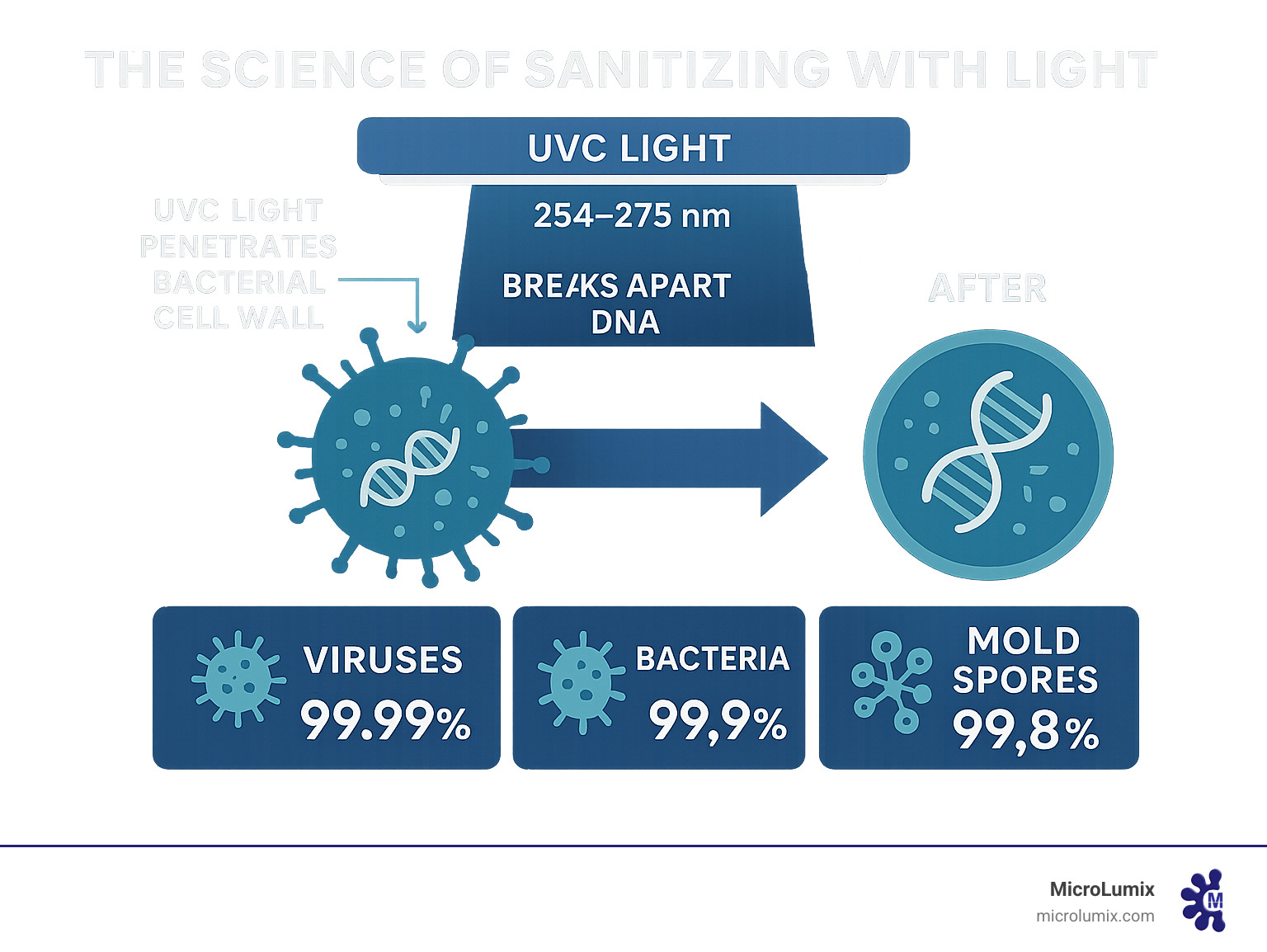
A uvc disinfection device uses ultraviolet-C light to destroy harmful microorganisms by damaging their DNA and RNA structures. Here’s what you need to know:
Key UVC Device Types:
- Portable wands – For electronics and small surfaces
- Air purifiers – Safe for occupied rooms, treat airflow
- Sterilization boxes – 360° coverage for small items
- Whole-room sanitizers – Large area disinfection in 5-10 minutes
- Automated systems – Touchpoint disinfection without human intervention
UVC light operates in the germicidal spectrum (254-275nm), making it highly effective at inactivating viruses, bacteria, and fungi. Unlike chemical disinfectants, UVC disinfection leaves no residue and works in seconds to minutes. Research shows properly designed systems can achieve 99.99% pathogen reduction on surfaces and in air.
The technology has proven particularly valuable in healthcare settings, where studies demonstrate UVC systems can reduce infection rates by up to 50% when used as part of comprehensive cleaning protocols. From portable devices that sanitize phones in 30 seconds to whole-room systems that disinfect hospital rooms between patients, UVC offers chemical-free protection across diverse applications.
I’m Debra Vanderhoff, Founder and COO of MicroLumix Bioscience Technology, where we develop automated uvc disinfection device solutions for healthcare, education, and high-traffic environments. With over 20 years of experience in biotechnology and operations, I’ve seen how the right UVC technology can create safer spaces while streamlining disinfection workflows.
Types of UVC Disinfection Devices for Home, Work, and Healthcare
As experts in advanced disinfection, we know that selecting the right uvc disinfection device is crucial for achieving optimal results and ensuring safety. This section will categorize devices by their primary use case, helping you find the perfect solution for your specific needs, whether for your home, office, or a specialized healthcare environment.
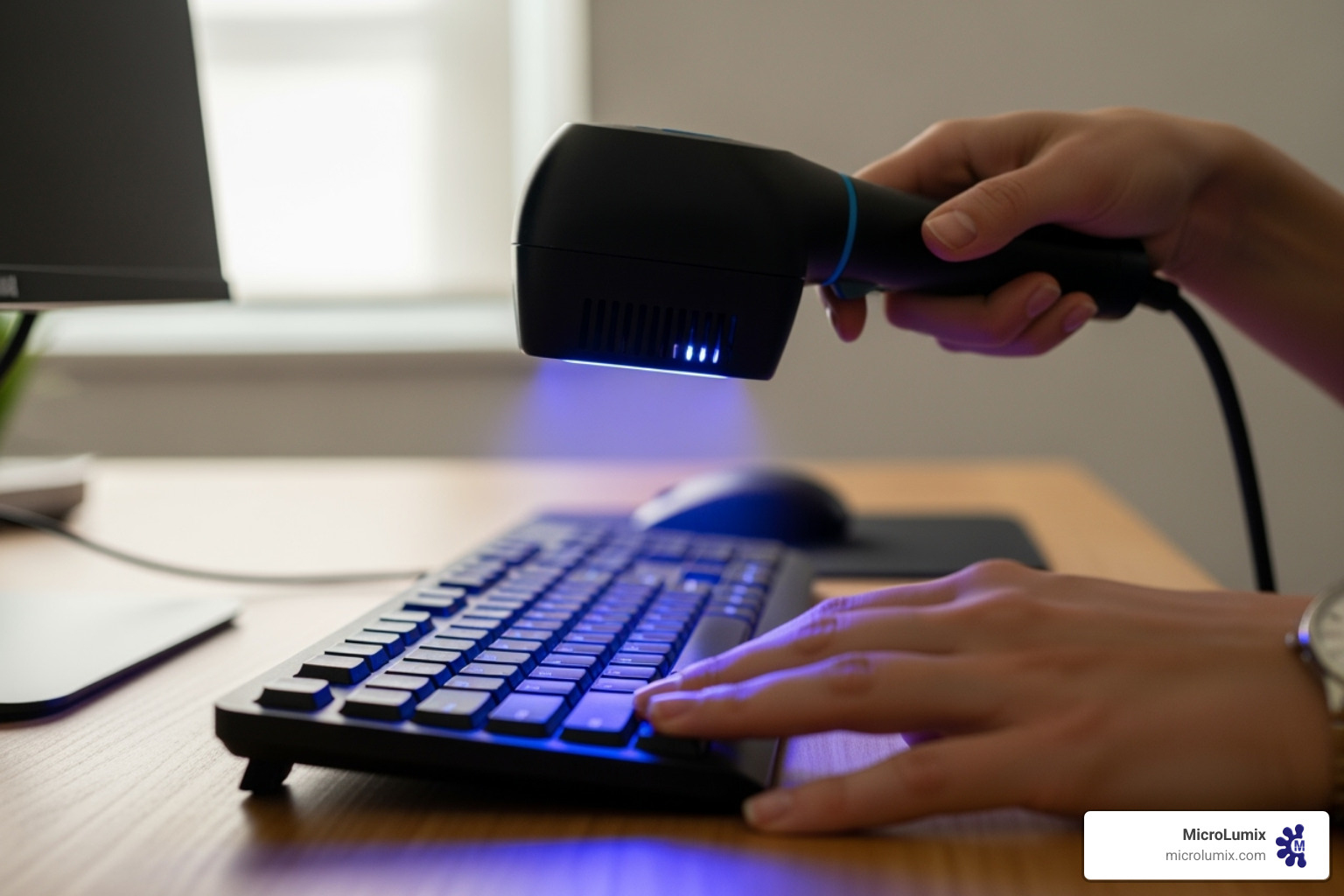
Portable and Personal UVC Wands
Imagine having the power of disinfection right in your pocket! Portable and personal UVC wands are compact, handheld devices designed for on-the-go sanitation. These handy tools are perfect for disinfecting high-touch surfaces that you encounter daily. Think of your cell phone, which can harbor more germs than a toilet seat, or your keys, which travel everywhere with you. These wands use a powerful UV-C light, often operating at wavelengths like 265nm, which is highly effective against pathogens.
Many of these devices can disinfect electronics, fabrics, and even jewelry in as little as 30 seconds, killing 99.9% of pathogens, including resilient culprits like C. difficile and MRSA. Unlike chemical wipes, they leave no harmful residue or unpleasant smells, and there’s no waiting for surfaces to dry. They can even reach into the tiny crevices of items like keys or glasses, areas that chemical wipes simply can’t effectively sanitize. The convenience of attaching a small uvc disinfection device directly to your phone means you have always-ready protection.
However, these wands rely on direct line-of-sight. If the UV-C light can’t “see” the surface, it can’t disinfect it. This means you need to carefully sweep the wand over the entire target area to ensure comprehensive coverage. Some advanced models even offer app-guided distance and time features to help you achieve the best results.
UVC Air Purifiers and HVAC Systems
While direct surface disinfection is vital, pathogens also linger in the air we breathe. UVC air purifiers and integrated HVAC systems offer a continuous solution for improving air quality and reducing airborne contaminants. These devices work by drawing air through a chamber where it’s exposed to UV-C light, neutralizing viruses, bacteria, and mold spores before the air is recirculated.
A significant advantage of these systems, especially those designed for airflow disinfection, is their safety for occupied rooms. Unlike direct UV-C surface disinfectors, the UV-C light is contained within the unit, ensuring that people and pets are not exposed to harmful radiation. Many of these systems combine UV-C technology with other air purification methods, such as HEPA filtration and activated carbon cleansing. This multi-layered approach not only kills airborne pathogens but also removes particulates, odors, and volatile organic compounds (VOCs), leading to a truly comprehensive air purification.
For example, some systems can disinfect air at impressive rates, such as 250 cubic feet per minute, and have been proven to kill 99.8% of airborne mold (including Cladosporium cladosporioides) and 99.99% of airborne bacteria (including MRSA, Streptococcus species, Enterococcus faecalis, and Pseudomonas aeruginosa). In larger spaces, such as an 800 cubic-foot room, these systems can significantly reduce airborne pathogens in as little as 15-90 minutes.
While our GermPass technology primarily focuses on automated surface disinfection, our expertise in UV-C extends to understanding the critical role of air purification in creating truly healthy environments. We believe a holistic approach to disinfection, combining both air and surface solutions, offers the best protection.
More info about MicroLumix GermPass technology
UVC Boxes and Chambers
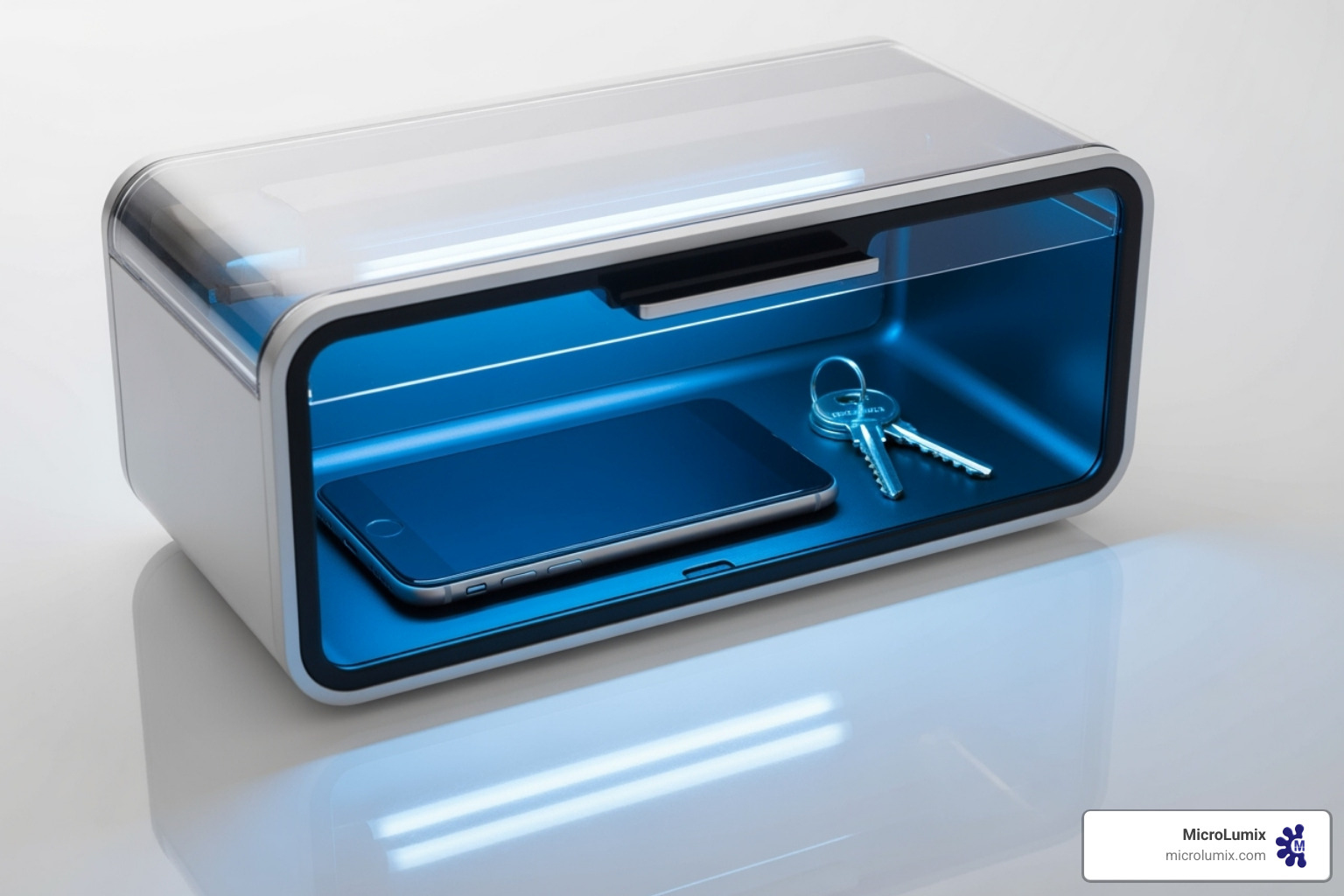
For small items that are frequently handled and can be easily contained, UVC boxes and chambers provide an excellent and highly effective disinfection solution. These devices create a controlled environment where items are exposed to UV-C light from multiple angles, ensuring comprehensive 360-degree sanitization.
Whether it’s your smartphone, car keys, earbuds, or even baby pacifiers and medical tools, simply place them inside the chamber, close the lid, and let the UV-C light do its work. Many of these units are incredibly fast, with some capable of killing 99.9% of pathogens, including C. difficile and MRSA, in as little as 30 seconds or even 7 seconds for specialized models. The UV-C LEDs within these chambers are carefully calibrated to hit every exposed square inch of your item, providing thorough sanitization.
The contained nature of these uvc disinfection device chambers also improves safety, as the UV-C light is fully enclosed during operation, preventing accidental exposure. This makes them ideal for home use, as well as in professional settings like dental clinics or salons where small tools need frequent and rapid sterilization. Our lab-certified efficacy ensures that when you use one of these devices, you’re getting powerful germ elimination you can trust.
Whole-Room UVC Sanitizers
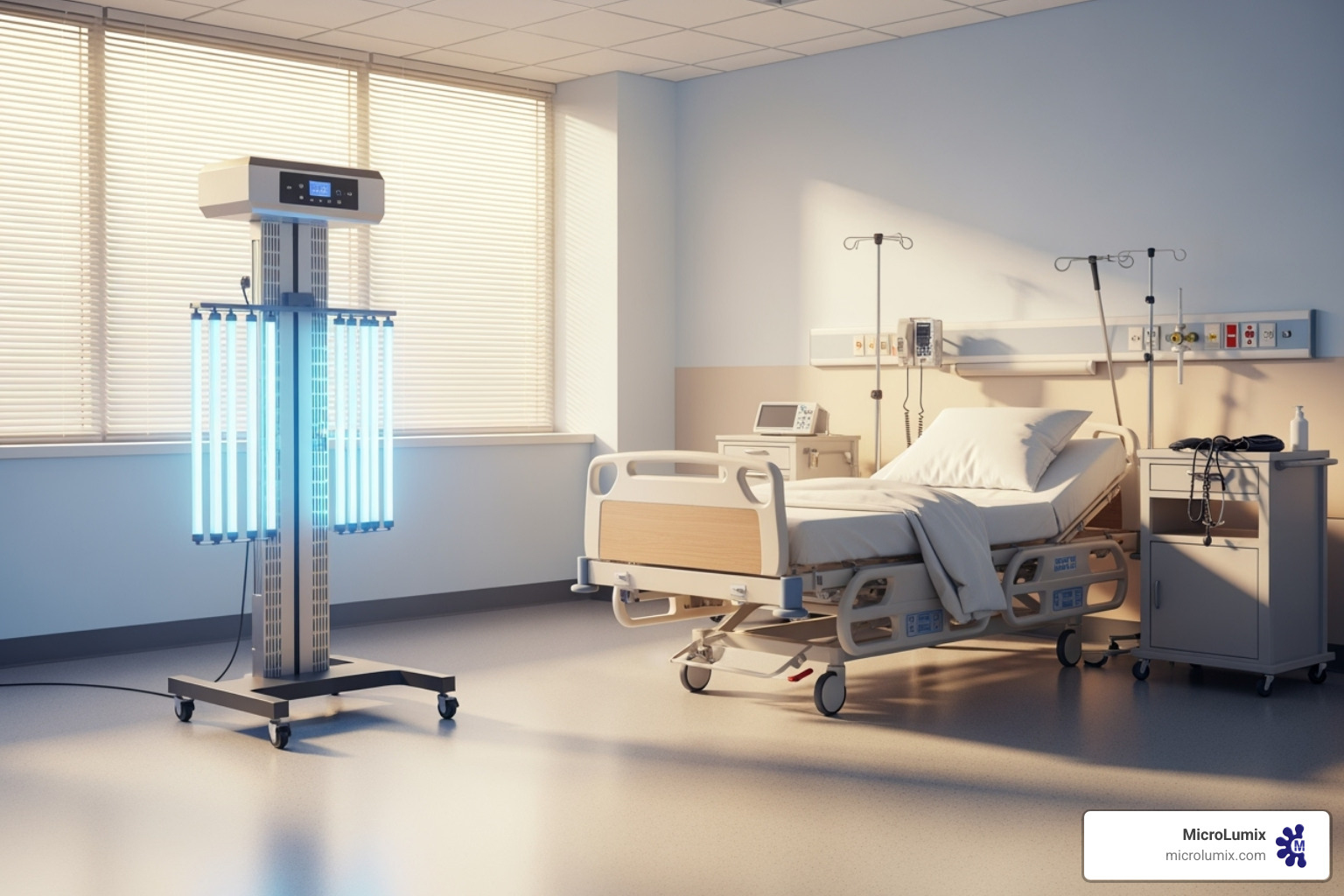
When it comes to large-scale disinfection, especially in critical environments like healthcare settings or commercial spaces, whole-room UVC sanitizers are invaluable. These mobile towers emit powerful UV-C light to disinfect entire rooms, including hard-to-reach surfaces and shadowed areas that manual cleaning might miss.
Whole-room UV disinfection systems were first introduced to US hospitals around 2007, and their popularity has surged due to their ability to sanitize practically all surfaces in a room at once, with minimal labor and without hazardous chemicals. They are proven effective in clinical and laboratory studies, achieving impressive inactivation rates, such as 99.99% inactivation of 37 microorganisms in an average-sized room in just 5 to 10 minutes. This rapid disinfection minimizes workflow disruption, which is crucial in busy environments.
These sophisticated uvc disinfection device systems often come equipped with advanced features like infrared heat-sensing motion sensors that immediately shut off the device if people enter the room, ensuring user safety. Some even have proprietary technology to confirm that a germicidal UV-C dose has reached targeted surfaces, providing peace of mind and verifiable results. A good UVC system, when integrated into a comprehensive cleaning protocol, can reduce hospital-associated infection (HAI) rates by up to 50%, significantly improving patient outcomes and safety.
Automated and Integrated Systems
As pioneers in automated disinfection, we at MicroLumix understand the transformative power of integrated UVC solutions. These cutting-edge systems move beyond manual operation, offering continuous, hands-free disinfection for high-volume touchpoints and shared spaces. They represent the future of hygiene, especially in busy environments where human intervention is impractical or insufficient.
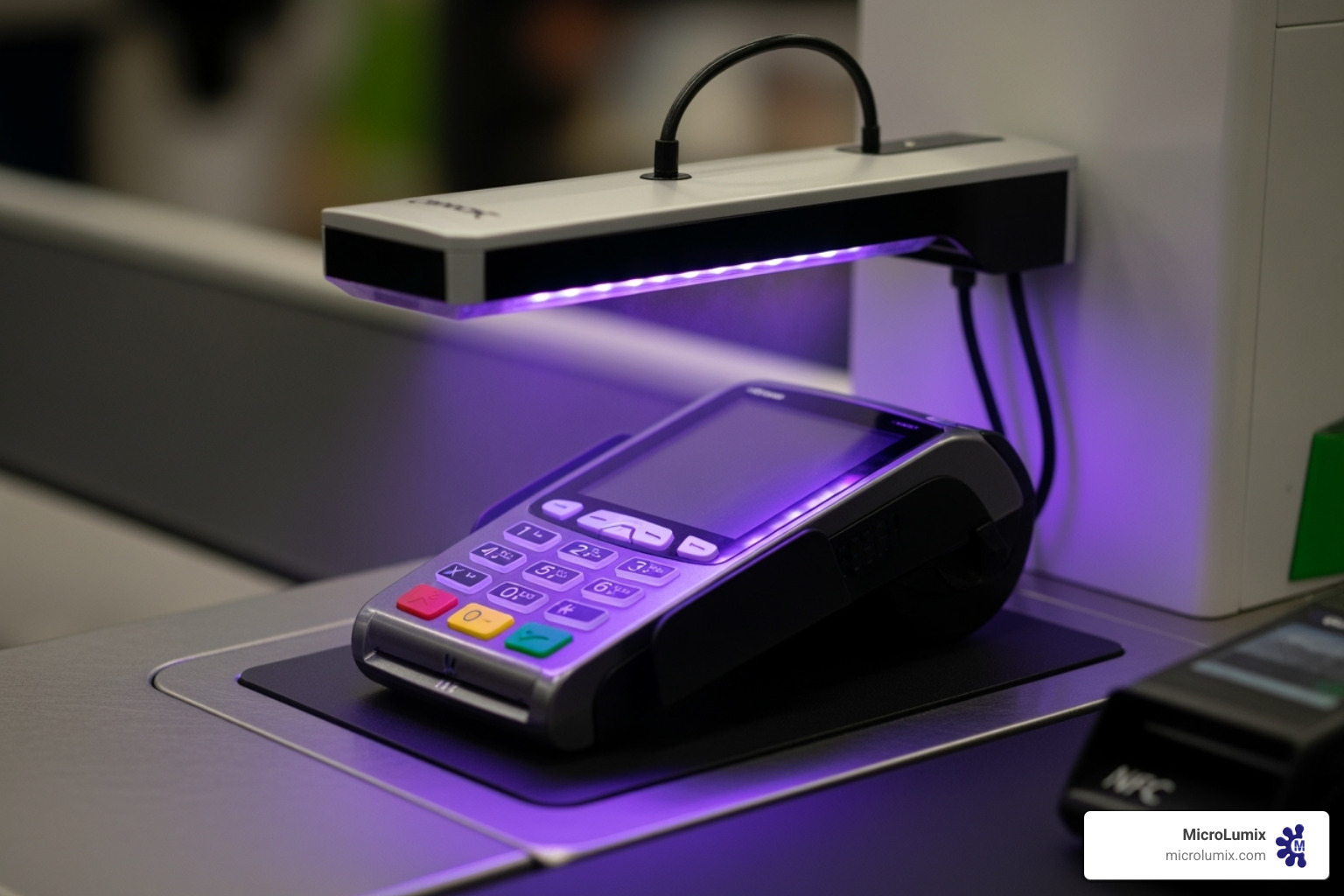
Consider keypads on payment terminals, access doors, alarm systems, ATM machines, or even gas pumps. These are hotbeds for germs, touched countless times throughout the day. An automated uvc disinfection device can destroy viruses and bacteria on these surfaces immediately after every touch, using motion-sensing technology to activate disinfection cycles. This not only improves public safety but also provides a visible commitment to hygiene, building trust with customers and users.
Our own MicroLumix GermPass is an Automated Disinfection Technology (ADT) that exemplifies this innovation. It’s the world’s only lab-certified, automatic touchpoint germ-killing system. We use self-sealing UVC chambers to sanitize high-volume touchpoints right after each interaction, achieving an unparalleled 99.999% efficacy against pathogens. This seamless integration into existing infrastructure means disinfection happens without workflow disruption, constantly protecting users. These systems are designed for user safety, often incorporating features like automatic shut-offs and protective designs to prevent UV-C exposure. They are truly set-it-and-forget-it solutions that lift cleanliness and safety to new heights.
How to Choose the Right UVC Disinfection Device
Choosing the perfect uvc disinfection device can feel overwhelming with so many options on the market. But don’t worry – understanding a few key factors will help you make a smart decision that prioritizes both safety and effectiveness. Let’s walk through what really matters when you’re shopping for UV-C protection.
Efficacy and Wavelength
The heart of any effective uvc disinfection device lies in its ability to deliver the right dose of UV-C energy at the optimal wavelength. Think of it like tuning a radio – you need to hit the exact frequency to get crystal-clear reception. For UV-C disinfection, that sweet spot is the germicidal peak between 254nm and 275nm, where the light is most effective at breaking apart the DNA and RNA of harmful microorganisms.
When you’re evaluating different devices, pay close attention to their efficacy claims and log reduction rates. You’ll often see impressive numbers like 99.99% or even 99.999% pathogen elimination. These percentages tell you how many germs survive the treatment – for instance, 99.99% effectiveness means only 1 out of every 10,000 pathogens makes it through alive. This level of precision is especially crucial when dealing with tough customers like spore-forming bacteria, certain viruses, and stubborn mold that refuse to go down without a fight.
But here’s where physics throws us a curveball – the Inverse Square Law. Just like how a campfire feels toasty when you’re close but barely warm from across the yard, UV-C light loses its punch rapidly as distance increases. This scientific principle means that surfaces farther from the UV-C source need significantly longer exposure times to achieve the same level of disinfection.
For example, eliminating resilient pathogens like C. difficile might require up to 45 minutes in each room position due to this law. This is why understanding the recommended distance and exposure time for your specific device is absolutely critical – it’s the difference between effective disinfection and a false sense of security.
Scientific research on the Inverse Square Law’s effect on UVC
Safety Features to Look For
UV-C light is incredibly powerful at destroying pathogens, but it’s equally dangerous to human skin and eyes. That’s why the safety features of your uvc disinfection device should be your top priority – no exceptions. Never compromise on safety, no matter how appealing a device’s price or promises might be.
Motion sensors are absolutely essential for whole-room or automated systems. These smart sensors detect when people or pets enter the area and immediately shut off the UV-C lamps to prevent accidental exposure. Some advanced systems even warn users if exposure levels approach unsafe limits.
Auto-shutoff mechanisms provide another crucial layer of protection. These activate when portable devices are opened, tilted, or when a disinfection cycle completes. Child locks add extra peace of mind for families, keeping curious little hands away from potentially harmful devices.
Look for protective casing around the UV-C lamps themselves. The best designs use polymer-encapsulated lamps that contain any glass fragments if breakage occurs while also protecting the delicate components from damage. Always choose ozone-free lamps – some older UV technologies produce ozone as a byproduct, which can irritate your respiratory system.
Finally, reputable manufacturers provide clear user warnings and detailed instructions covering safe usage, including recommended distances and exposure times. The EPA specifically warns users to “Be Careful With UV Lights” because they “may be risky or ineffective” when used incorrectly. We couldn’t agree more – following safety protocols isn’t optional.
Certifications and Lab Testing
How do you know if that shiny new uvc disinfection device actually works as advertised? This is where proper certifications and rigorous independent lab testing separate the real deal from expensive disappointments.
EPA registration is a good starting point, but it’s important to understand what this actually means. The EPA regulates UV devices as “pesticidal devices” and requires companies to register and maintain efficacy data on file. However, EPA registration doesn’t mean the EPA has personally tested or certified the device’s effectiveness – it’s more like a business license than a seal of approval.
What really matters is independent lab testing by GLP-compliant laboratories. These Good Laboratory Practice facilities follow strict protocols and undergo EPA inspections to ensure their results are accurate and reliable. When evaluating devices, ask manufacturers for complete lab reports detailing which microorganisms were tested, initial microbial populations, contact times, and exactly how efficacy was calculated.
Look for additional certifications like CE Certified, FCC compliance, and RoHS standards. These indicate the device meets various safety and performance requirements. But remember – impressive claims of 99.9% or 99.99% germ elimination should always be backed by transparent, verifiable data from third-party sources.
At MicroLumix, we believe complete transparency is non-negotiable. That’s why our GermPass system undergoes rigorous lab certification to demonstrate its unparalleled 99.999% efficacy. When you’re investing in protection for your family, employees, or patients, you deserve nothing less than proven results.
The EPA’s warning on unverified devices
UVC vs. Traditional Disinfection: A Quick Comparison
When you’re deciding how to keep your spaces clean and safe, it’s worth comparing different disinfection methods. Each approach has its own strengths and challenges, and understanding these differences can help you make the best choice for your specific needs.
Let’s be honest – most of us have been doing disinfection wrong for years! Take chemical wipes, for instance. They’re convenient and feel like they’re doing the job, but here’s the catch: those surfaces need to stay wet for at least 4 minutes to actually kill germs. How many of us actually wait that long? Most people give a quick wipe and call it done, which means the pathogens are still there, just moved around a bit.
Chemical wipes also leave behind residues that can be harmful, especially in spaces where children play or food is prepared. Plus, they create a lot of waste – all those single-use wipes add up quickly in our landfills.
HEPA filters are fantastic for what they do – trapping tiny particles from the air. But here’s what they can’t do: kill germs or clean surfaces. They’re like a really good net that catches stuff, but the pathogens stay alive, just trapped. It’s helpful for air quality, but it’s only part of the solution.
Now, here’s where a uvc disinfection device shines. These systems work incredibly fast – we’re talking seconds to minutes, not hours. They achieve 99.9% to 99.999% germ elimination without any chemicals at all. No waiting for surfaces to dry, no toxic residues, and no waste from disposable wipes.
| Feature | UVC Disinfection Device | Chemical Wipes | HEPA Filters |
|---|---|---|---|
| Speed | Very Fast (seconds to minutes) | Slow (4+ minutes wet time for disinfection) | Continuous (air filtration) |
| Effectiveness | High (99.9% to 99.999% germ elimination on surfaces & air) | Moderate (if used correctly, often misused) | Air (filters particulates, doesn’t kill) |
| Reusability | High (device is reusable, lamps need replacement eventually) | Low (single-use wipes) | High (filters need replacement periodically) |
| Chemical Residue | None (chemical-free) | Yes (can leave harmful or smelly residue) | None (air filtration) |
| Coverage | Line-of-sight dependent, but excellent for air and contained spaces | Surface-dependent (misses crevices, inconsistent application) | Air (cannot disinfect surfaces) |
The beauty of UVC technology is its environmental friendliness. You’re not throwing away hundreds of wipes or dealing with harsh chemicals. The device itself is reusable for years, and when the UV lamps eventually need replacing, that’s minimal waste compared to daily chemical products.
Of course, UVC does have limitations. It works on a line-of-sight basis, meaning it can only disinfect what it can “see.” But innovative solutions like automated systems and contained chambers solve this problem by ensuring complete coverage.
The real game-changer comes with systems that work continuously without human intervention. While manual methods require time, labor, and often don’t achieve complete disinfection, automated UVC systems can provide consistent, reliable protection around the clock.
Frequently Asked Questions about UVC Disinfection
As someone who’s spent years developing uvc disinfection device technology, I understand that using powerful light to kill germs can raise important questions. Let me address the most common concerns I hear from people considering UVC technology.
Is a UVC disinfection device safe to use around people and pets?
This is absolutely the most important question to ask, and I’m glad you’re thinking about safety first. The honest answer is that direct exposure to UV-C light is harmful to both people and pets. Think of it like looking directly at an extremely intense light that can damage your eyes or cause skin burns similar to a severe sunburn.
Any uvc disinfection device that emits direct UV-C light must never be used when people or pets are in the room. This is why whole-room sanitizers come equipped with motion sensors that immediately shut off the device if someone enters. For handheld wands, you need to be extremely careful to point the light away from yourself and others, and always make sure safety features like auto-shutoff are working properly.
However, there’s good news for occupied spaces. Airflow disinfection systems like UVC air purifiers are specifically designed to be safe around people. These systems contain the UV-C light completely within the unit, so you’re never exposed to the harmful rays. The air gets disinfected as it passes through, but you stay perfectly safe.
The key is understanding which type of system you’re using and following manufacturer instructions religiously. When in doubt, assume direct exposure is dangerous and take appropriate precautions.
Can UVC light damage surfaces or materials?
Yes, UV-C light can damage certain materials over time, just like how prolonged sun exposure fades your favorite shirt or makes plastic lawn chairs brittle. Polymer surfaces and certain plastics are particularly vulnerable to degradation from extended UV-C exposure.
You might notice discoloration, brittleness, or even structural changes in sensitive materials if they’re exposed to intense UV-C light repeatedly over long periods. This is why choosing the right uvc disinfection device for your specific application matters so much.
For quick disinfection tasks, like sanitizing your phone with a UVC wand for 30 seconds, material damage isn’t a concern. But continuous, high-intensity exposure on the same surfaces day after day requires more careful consideration.
This is exactly why we designed our GermPass system with self-sealing chambers and precisely calibrated doses. We wanted to achieve powerful disinfection without compromising the longevity of the surfaces and items being treated. It’s all about finding that sweet spot between effective germ killing and material preservation.
How do I know if my UVC disinfection device is actually working?
I love this question because it shows you’re thinking critically about invisible technology killing invisible germs. It’s perfectly reasonable to want proof that your investment is actually working.
The most reliable evidence comes from independent lab testing by GLP-compliant laboratories. These aren’t just any labs – they follow strict protocols and are inspected by the EPA. When you see comprehensive reports detailing efficacy against specific pathogens, you know the testing was thorough and legitimate.
Reputable brands invest heavily in research and development, prioritize transparent testing, and have proven track records. They’re not just making claims – they’re backing them up with solid science.
For day-to-day verification, dosimeters and UV-C test cards can be incredibly helpful. These visual indicators change color when exposed to specific doses of UV-C light. While they don’t directly measure germ kill, they confirm that your device is emitting effective levels of UV-C and that your target surfaces are receiving proper exposure.
Pay attention to validated lamp life specifications too. UV-C lamps don’t last forever, and responsible manufacturers will tell you exactly when to replace them to maintain effectiveness. Some lamps are rated for 4,000 hours of operation, and knowing this timeline helps ensure continued performance.
For professional-grade systems, look for clinical outcome studies that demonstrate real-world infection reduction. These studies represent the gold standard because they show actual results in actual healthcare settings, not just laboratory conditions.
Peace of mind comes from knowing your uvc disinfection device is backed by rigorous science and transparent testing – exactly what we’ve built our reputation on at MicroLumix.
Conclusion: Illuminating a Cleaner, Safer Future
As we’ve explored throughout this guide, uvc disinfection device technology represents a remarkable shift in how we think about cleanliness and safety. We’re no longer limited to harsh chemicals that leave residues or time-consuming manual processes that miss hidden germs. Instead, we have the power of light itself working to protect us.
The science is clear: UVC light destroys pathogens at the most fundamental level, breaking apart their DNA and RNA so they can’t survive or reproduce. Whether you need a portable wand for your daily essentials, an air purifier for continuous protection, or a whole-room system for comprehensive sanitization, there’s a uvc disinfection device designed to meet your specific needs.
What excites me most about this technology is how it’s becoming smarter and more integrated into our daily lives. We’re moving beyond manual operation toward automated systems that work silently in the background, providing continuous protection without disrupting our routines. This is the future of disinfection – and it’s happening now.
At MicroLumix, we’re proud to be pioneers in this automated revolution. Our GermPass Automated Disinfection Technology represents everything we believe the future should hold: lab-certified efficacy, seamless integration, and user safety all rolled into one innovative solution. When you can achieve 99.999% pathogen elimination automatically, right after every touch, you’re not just cleaning – you’re creating truly safer spaces.
The rise of smart UVC technology means we can finally move beyond the limitations of traditional disinfection methods. No more wondering if surfaces were properly wiped down or if chemicals had enough contact time. No more choosing between speed and effectiveness. With the right UVC system, you get both.
But here’s what matters most: making informed choices. As this technology becomes more accessible, it’s crucial to prioritize devices with proven safety features, independent lab testing, and transparent efficacy data. The stakes are too high for anything less than the best.
The future we’re building is one where clean, safe environments are the norm, not the exception. Where technology works tirelessly to protect us, and where the invisible threat of harmful pathogens becomes manageable through the power of light.