
Why UVC LED Disinfection Systems Are Revolutionizing Healthcare Safety
UVC LED disinfection systems represent a breakthrough in pathogen control technology, offering chemical-free sanitization that destroys 99.9% of viruses, bacteria, and fungi using targeted ultraviolet light. These systems provide continuous, automated disinfection for water, air, and surfaces – addressing critical gaps in manual cleaning protocols.
Key benefits of UVC LED disinfection systems:
- Instant activation – No warm-up time required, unlike traditional UV lamps
- Long lifespan – Up to 30,000 hours of operation vs. 2,000 hours for mercury lamps
- Energy efficient – Uses fraction of power compared to conventional UV systems
- Mercury-free – Eliminates hazardous material risks and disposal concerns
- Compact design – Fits into spaces impossible with traditional UV bulbs
- Temperature independent – Maintains consistent output regardless of water temperature
The technology works by emitting UV-C light at wavelengths between 254-280nm, which penetrates pathogen cell walls and disrupts DNA/RNA structures. This prevents microorganisms from reproducing, effectively neutralizing threats including SARS-CoV-2, MRSA, E.coli, and Legionella.
Unlike chemical disinfectants, UVC LED disinfection systems produce no harmful byproducts and require no storage or handling of dangerous substances. They operate continuously in occupied spaces when properly designed with safety features like occupancy sensors and containment shields.
I’m Debra Vanderhoff, Founder and COO of MicroLumix Bioscience Technology, where we develop automated UVC LED disinfection systems for healthcare, education, and high-traffic environments. With over 20 years of experience in biotechnology and operations, I’ve witnessed how this technology transforms infection control protocols by providing consistent, reliable pathogen elimination.
The Science Behind UVC LED Disinfection

Understanding how UVC LED disinfection systems work is surprisingly straightforward once you know what’s happening at the microscopic level. It all comes down to light – but not just any light. We’re talking about a very specific slice of the electromagnetic spectrum called the germicidal spectrum.
The magic happens within wavelengths of 254-280nm, with modern LED systems often targeting 265nm for optimal pathogen destruction. This isn’t visible light that you’d see with your eyes – it’s ultraviolet-C light that packs a powerful punch against harmful microorganisms.
When UV-C photons from UVC LED disinfection systems hit bacteria, viruses, or fungi, they penetrate the cell walls and get absorbed directly by the DNA and RNA inside. This absorption triggers a photobiological reaction that literally breaks the molecular bonds holding the genetic material together. Think of it like scrambling the instruction manual that tells the pathogen how to function and reproduce.
Once this genetic damage occurs, the microorganism becomes completely harmless. It can’t reproduce, can’t cause infection, and essentially becomes inactive. The beauty of this process is that it produces no chemical byproducts whatsoever – it’s purely a physical reaction using light energy.
How UVC Light Neutralizes Pathogens
The neutralization process is neatly simple yet devastatingly effective. When UV-C photons strike a microorganism, they cause immediate cellular damage by disrupting the nucleic acids that form the backbone of genetic material. This disruption prevents reproduction – and without the ability to multiply, pathogens can’t establish infections.
This mechanism works across an impressive range of threats. Viruses like SARS-CoV-2, influenza, and norovirus are quickly inactivated. Bacteria including MRSA, E. coli, Salmonella, and Legionella are neutralized with remarkable efficiency. Even tough customers like fungi and spores – including mold spores and bacterial spores that resist other treatments – succumb to properly dosed UV-C light.
What makes this particularly valuable is the effectiveness against chlorine-resistant organisms like Cryptosporidium and Giardia, which often slip through traditional chemical disinfection methods. Many UVC LED disinfection systems achieve up to 99.999% reduction in pathogens, representing what scientists call a “5-log reduction” – essentially eliminating virtually all viable microorganisms.
Why LEDs are a Technological Leap
For decades, UV disinfection meant bulky mercury vapor lamps that required warm-up time, had short lifespans, and posed environmental hazards. The shift to LED technology represents a fundamental breakthrough in how we approach germicidal treatment.
UVC LED disinfection systems use semiconductors that emit deep-UV light when direct electrical current flows through them. This solid-state approach eliminates the fragile glass tubes and toxic mercury of traditional systems. Instead of heating gas to produce UV light, LEDs generate photons directly through electronic processes.
The precision is remarkable – engineers can tune LEDs to emit very specific targeted wavelengths like 265nm, which happens to be incredibly effective for pathogen inactivation. This solid-state lighting technology means the devices are far more durable, resistant to vibration and shock, and can be manufactured in compact form factors that fit into spaces impossible with traditional UV bulbs.
Perhaps most importantly, LED systems are completely mercury-free, eliminating hazardous material concerns for both operation and disposal. There’s no risk of toxic spills, no special handling requirements, and no complex disposal protocols – making UV disinfection safer and more accessible than ever before.
UVC LED: The Next Generation of Disinfection

When I first started working with UV disinfection technology two decades ago, we were limited by bulky mercury lamps that took forever to warm up and burned out way too quickly. Today’s UVC LED disinfection systems have completely changed the game.
The change is remarkable. These systems flip on instantly – no more waiting around for warm-up periods. They sip power instead of guzzling it, they’re built to last for years instead of months, and they’re so compact you can fit them almost anywhere. Most importantly, they’re environmentally safe – no mercury, no toxic waste, no hazardous disposal headaches.
What really excites me is their durability. I’ve seen traditional UV lamps fail at the worst possible moments, leaving facilities scrambling for replacements. With UVC LEDs, that stress is largely eliminated. They’re solid-state devices that can handle the bumps and vibrations of real-world use without missing a beat.
Key Advantages of UVC LED Technology
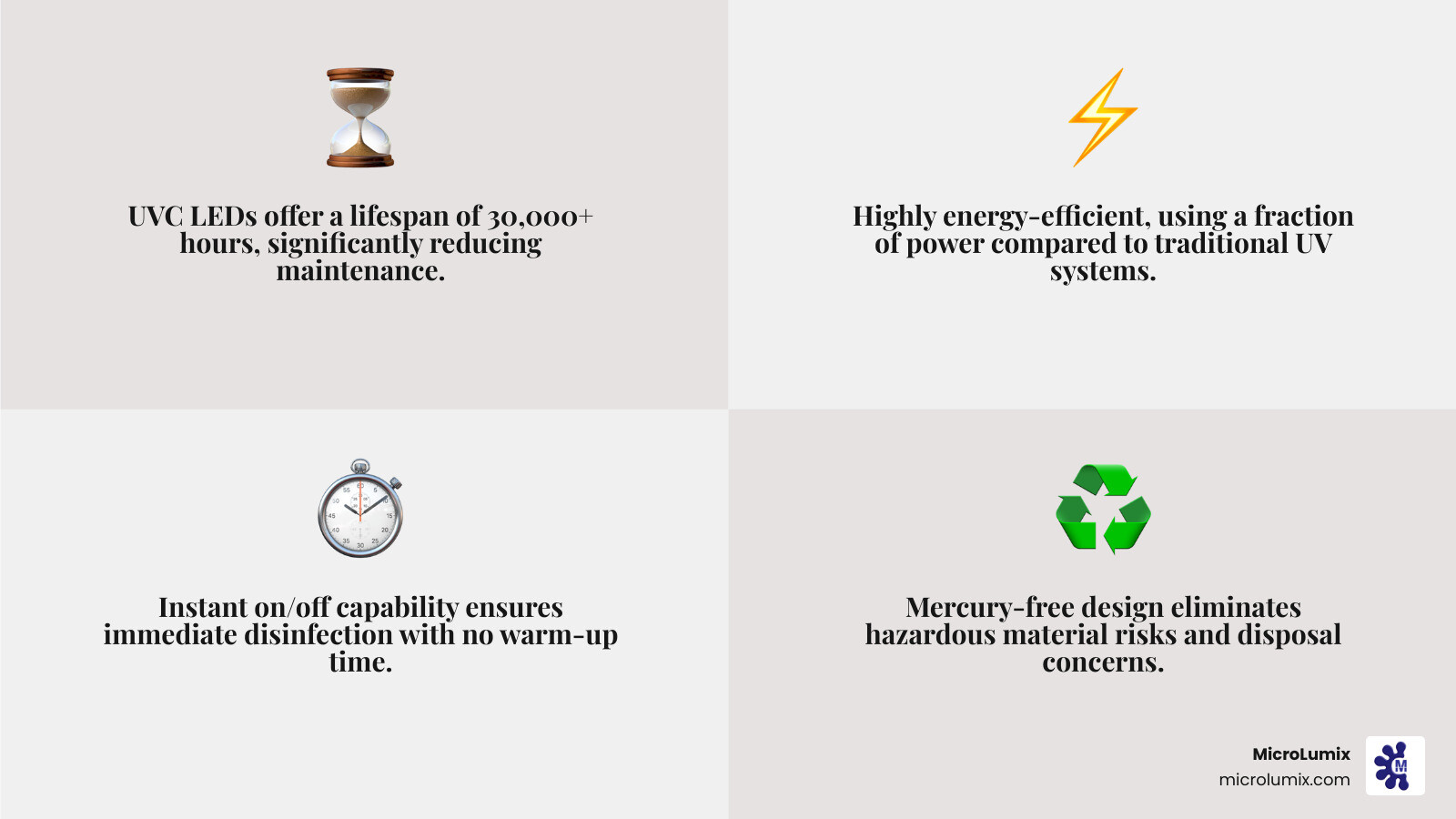
The numbers tell an impressive story. UVC LED disinfection systems deliver a lifespan of 30,000+ hours – that’s up to five times longer than traditional mercury lamps that typically burn out around 2,000 to 9,000 hours. This means dramatically reduced maintenance costs and far fewer middle-of-the-night emergency replacements.
Energy efficiency is where these systems really shine. Unlike mercury lamps that draw constant power and need warm-up time, UVC LEDs provide instant on/off capability. They can activate only when needed – when water flows through a pipe or when motion sensors detect someone approaching a touchpoint. This on-demand disinfection approach can cut energy consumption significantly.
The environmental safety aspect cannot be overstated. Traditional UV systems contain mercury, which creates disposal nightmares and safety risks. UVC LEDs are completely mercury-free, eliminating hazardous material concerns entirely. No special handling, no toxic waste permits, no environmental liability.
Design flexibility opens up possibilities we never had before. The compact design of UVC LEDs allows integration into spaces that were impossible with bulky mercury lamps. We can now build disinfection directly into water faucets, air handling units, and even payment terminals.
Perhaps most practically, UVC LEDs maintain temperature independence. Traditional lamps can heat up water or air as they operate, which affects their efficiency and can cause fouling issues. UVC LEDs produce minimal heat transfer, ensuring consistent performance regardless of the temperature of what they’re disinfecting.
| Feature | Traditional UV Lamps | UVC LED Disinfection Systems |
|---|---|---|
| Lifespan | 2,000-9,000 hours | 30,000+ hours |
| Energy Use | Constant power draw | On-demand, instant activation |
| Safety | Contains mercury | Mercury-free operation |
| Warm-up Time | Several minutes | Instant full intensity |
| Environmental Impact | Hazardous disposal | No hazardous materials |
These advantages make UVC LED disinfection systems not just a better choice, but often the only practical choice for modern disinfection needs. They represent a true technological leap that’s making safer, cleaner environments possible in ways we could only dream about just a few years ago.
Key Applications for UVC LED Disinfection Systems

When you think about where germs hide and multiply, three places come to mind: water, air, and surfaces. The beauty of UVC LED disinfection systems lies in their remarkable versatility – they tackle pathogens wherever they lurk. From the water we drink to the air we breathe to the surfaces we touch hundreds of times a day, these systems provide broad-spectrum efficacy that’s changing how we keep our environments truly clean.
Advancing Water Purification
Water purification might be where UVC LED disinfection systems truly shine. There’s something neat about using light to make water safe – no chemicals, no taste changes, no weird smells. Just pure, clean water.
Point-of-Use systems integrate directly into your water lines, activating only when water flows through them. Think of them as silent guardians that spring into action the moment you turn on the tap. These smart systems often feature LED status indicators and flow switches, so they’re not wasting energy when nobody’s using water.
For those always on the go, portable water solutions have become game-changers. UV-C LED water bottles can purify their contents with a simple 90-second cleaning cycle. Whether you’re hiking in the mountains or traveling abroad, safe drinking water is literally in your hands.
The numbers speak for themselves: these systems destroy 99.9% of microorganisms in water, with some achieving an impressive 99.9999% elimination rate. They’re particularly effective against stubborn waterborne nasties like E.coli and coliform bacteria, plus chlorine-resistant troublemakers like Cryptosporidium and Giardia that laugh at traditional chemical treatments.
Enhancing Air Quality in Any Environment
Air purification with UVC LED disinfection systems is where science meets everyday comfort. These systems work quietly behind the scenes, creating healthier indoor environments while actually saving you money on energy costs.
HVAC coil disinfection addresses a problem many people don’t even know they have. Those coils in your heating and cooling system can become breeding grounds for mold, mildew, bacteria, and viruses. When biological growth takes hold, you get that awful “dirty sock smell” and clogged drain lines. UVC LED systems prevent this growth, keeping coils clean and efficient. Clean evaporator coils can slash your energy bills by 10-15% while reducing manual cleanings by up to 50%.
In-duct systems take a different approach, disinfecting the air as it flows through your HVAC system. Every breath of air gets treated before it circulates throughout the building, inactivating viruses, bacteria, molds, and spores along the way.
For spaces that need continuous protection, standalone air purifiers provide 24/7 disinfection of large air volumes. Some systems can inactivate up to 99.9% of airborne pathogens, making them invaluable in hospitals, schools, and offices where people gather.
Upper-room disinfection systems work in larger spaces with higher ceilings, continuously treating the air column above occupied areas. It’s a proven approach that’s both safe and effective for maintaining air quality in bigger rooms.
Automating Surface Sanitization
Here’s where things get really interesting. High-touch surfaces are germ highways – think about how many people touch a payment terminal or door handle in a single day. UVC LED disinfection systems are revolutionizing surface sanitization by making it automatic and immediate.
Motion-sensing technology creates systems that respond instantly to human touch. The moment someone uses a keypad on a payment terminal, access door, or ATM machine, UVC LEDs spring into action, destroying over 99% of viruses and bacteria left behind. It’s like having an invisible cleaning crew that never takes a break.
In healthcare facilities, rapid UV disinfection can sterilize surfaces to clinical standards in as little as 60 seconds to 10 minutes per cycle. This speed helps prevent virus outbreaks and ensures spaces are safe between patients or meetings.
Hospitality and retail environments benefit enormously from this automated approach. Payment terminals, in particular, see constant use throughout the day. Automated UVC LED systems ensure these high-volume touchpoints get sanitized immediately after every interaction, providing 99.999% efficacy against pathogens without any human intervention required.
This automation eliminates the human error factor that comes with manual cleaning while reducing dependence on chemical disinfectants. It’s continuous protection that works around the clock, giving everyone peace of mind in our increasingly health-conscious world.
Safety, Compliance, and the Future of UVC
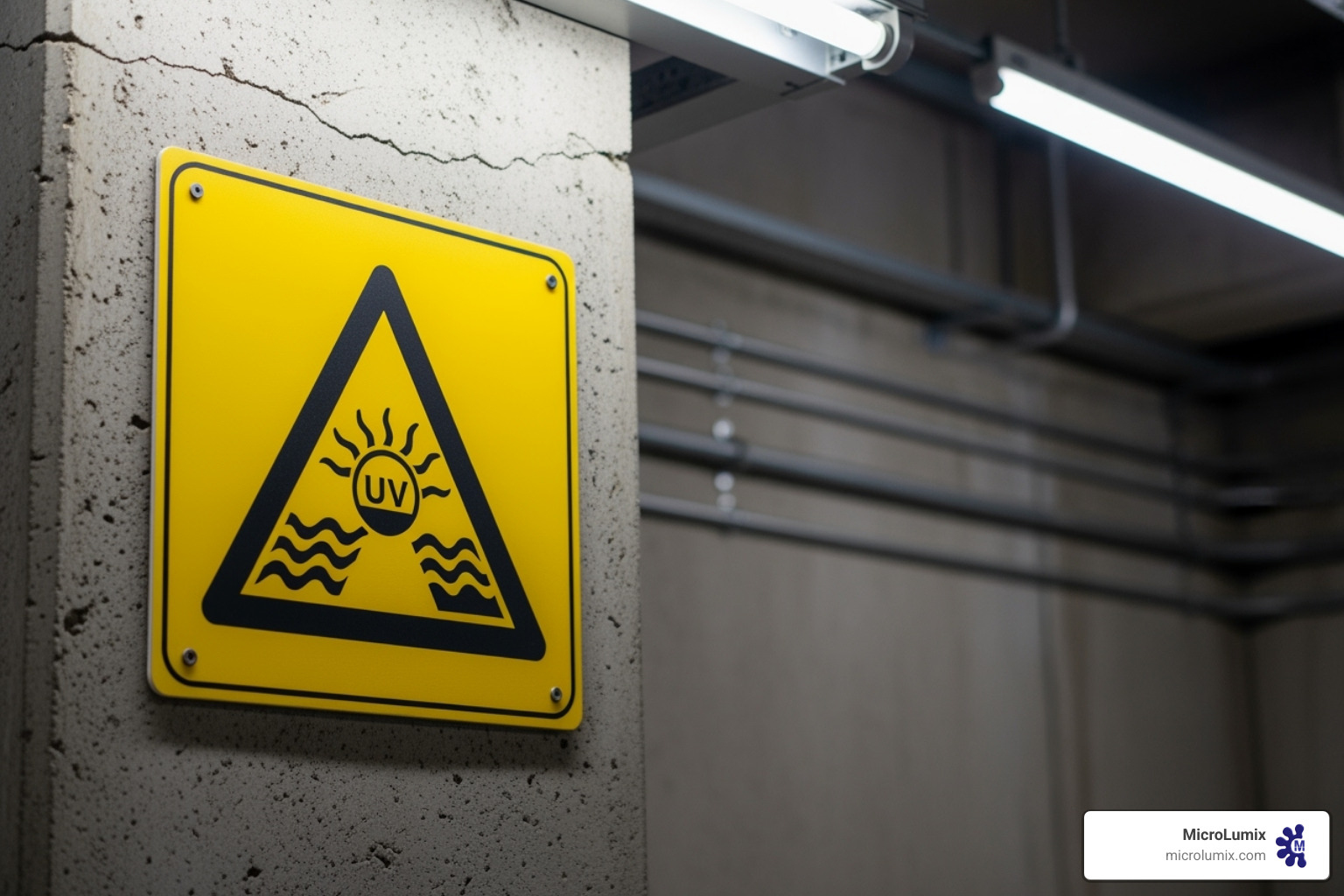
Let’s be honest – UVC LED disinfection systems pack serious power when it comes to destroying pathogens. But with great power comes great responsibility, and that’s why safety protocols and regulatory standards are absolutely crucial. The good news? These systems are designed with multiple layers of protection to keep everyone safe while delivering exceptional disinfection performance.
Safety and Certifications for UVC LED Disinfection Systems
Here’s something important to understand: direct exposure to UV-C light can harm your skin and eyes. It’s not something to mess around with. That’s exactly why reputable manufacturers build safety right into the DNA of their systems.
Most modern systems come equipped with occupancy sensors that act like digital guardians. These sensors use PIR (passive infrared) and ultrasonic technology to detect when someone enters the area. The moment they sense human presence, they trigger an automatic shut-off that instantly stops the UV-C LEDs. It’s like having a bouncer that never takes a coffee break.
Proper installation isn’t just a suggestion – it’s essential. These systems should always be installed by qualified technicians who understand the relevant building codes and safety requirements. Think of it as getting your electrical work done by a licensed electrician rather than your neighbor who “knows a thing or two about wires.”
One of the biggest advantages of UVC LED disinfection systems is their ability to earn UL 2998 certification. This certification validates that the system produces zero ozone emissions. Unlike some older UV technologies that can create harmful ozone as a byproduct, quality LED systems keep the air clean while they disinfect.
For water treatment applications, look for NSF standards compliance. NSF/ANSI-61 certification ensures material safety, while NSF/ANSI-372 confirms lead-free compliance. These aren’t just fancy letters and numbers – they’re your assurance that the system meets rigorous safety standards.
Many manufacturers also maintain EPA establishment registration, with their claims verified by independent laboratories. For instance, testing performed by certified labs like ATAL provides the scientific backing that proves these systems work as advertised. You can View testing laboratory credentials to see the rigorous testing standards these systems undergo.
The bottom line? Reputable manufacturers don’t just build powerful disinfection systems – they build safe ones. Safety gear, warning signs, and clear operating instructions are standard features, not afterthoughts.
Future Trends and Innovations
The world of UVC LED disinfection systems is moving fast, and the innovations on the horizon are genuinely exciting. We’re not just talking about incremental improvements – we’re looking at technologies that could fundamentally change how we think about hygiene and safety.
Far-UVC light at 222nm represents one of the most promising developments. Early research suggests this specific wavelength might be able to inactivate pathogens without harming human skin or eyes. Imagine continuous disinfection in occupied spaces – that could be a complete game-changer for public health.
Smart controls and IoT integration are already changing how these systems operate. Modern systems can connect to building management systems, allowing for remote monitoring, scheduling, and performance optimization. Some systems now feature WiFi-enabled controls and cloud-based reporting software that lets facility managers track disinfection cycles and system performance from anywhere.
Miniaturization continues to push boundaries as LED technology becomes more powerful and compact. We’re seeing integration into smaller and more diverse products, opening up applications we couldn’t have imagined just a few years ago.
The emerging applications are particularly fascinating. Beyond traditional water, air, and surface disinfection, UV-C LED technology is finding specialized uses in medical facilities, food processing, and even space exploration. The versatility of these systems means we’re probably only scratching the surface of their potential.
Looking ahead, we envision advanced environments where UVC LED disinfection systems become seamlessly integrated into our daily lives. Smart buildings that automatically adjust disinfection protocols based on occupancy and risk levels. Transportation systems that continuously sanitize surfaces. Healthcare facilities where pathogen control is proactive rather than reactive.
The future isn’t just about better technology – it’s about smarter, more integrated solutions that work behind the scenes to keep us all safer and healthier.
Frequently Asked Questions about UVC LED Technology
You probably have some burning questions about UVC LED disinfection systems – and honestly, that’s smart! This technology is pretty amazing, but it’s also important to understand how it works and what to expect. Let me walk you through the most common questions we hear.
How long do UVC LEDs last?
Here’s where UVC LED disinfection systems really shine – literally and figuratively. These little powerhouses are built to last, with most systems rated for 30,000 hours or more of operation. To put that in perspective, that’s about 3.4 years of continuous use!
Compare that to traditional mercury-based UV lamps, which typically burn out after just 2,000 to 9,000 hours. We’re talking about up to 5 times longer lifespan here. That means fewer replacements, less maintenance headaches, and significant cost savings over time.
Think about it this way – you could install a UVC LED disinfection system today and not worry about changing the UV source for years. That’s pretty remarkable when you consider how hard these systems work to keep your environment safe.
Is UVC light safe for humans?
This is probably the most important question, and I’m glad you asked. Direct exposure to UVC light can be harmful to skin and eyes – it’s powerful stuff that’s designed to destroy pathogens, after all.
But here’s the thing: UVC LED disinfection systems are engineered with safety as the top priority. They come packed with smart safety features like containment shields, occupancy sensors, and automatic shut-offs. These systems are designed to operate only when humans aren’t present in the exposure area.
For example, mobile disinfection units typically include built-in motion detectors and warning alarms. If someone walks into the room, the system immediately shuts down. It’s like having a vigilant safety guard watching 24/7.
The key is following manufacturer instructions and using the systems as directed. When properly installed and operated, these systems provide powerful disinfection while keeping people completely safe.
Do UVC LED systems produce ozone?
Great news here – high-quality UVC LED systems don’t produce ozone. This is actually one of their biggest advantages over some older UV technologies.
UVC LED disinfection systems are designed to emit light at specific wavelengths (typically 254-280nm) that effectively destroy pathogens without creating ozone as a byproduct. Many reputable products even seek UL 2998 certification, which validates they’re zero-ozone-emission devices.
This means you get all the disinfection power without introducing any harmful airborne chemicals. It’s clean, safe, and environmentally friendly – exactly what you want in a modern disinfection solution.
The absence of ozone also means no strong chemical smells or respiratory irritation that some people associate with certain types of UV systems. Just pure, effective disinfection.
Conclusion
As we wrap up our journey through UVC LED disinfection systems, it’s clear we’re witnessing something truly revolutionary. These aren’t just incremental improvements over older technologies – they represent a fundamental shift in how we approach cleanliness and safety.
The efficiency gains alone are remarkable. With lifespans reaching 30,000+ hours and instant on/off capabilities, these systems work harder while using less energy. No more waiting for warm-up times or dealing with frequent bulb replacements. They’re ready when you need them, operating only when necessary.
From a sustainability standpoint, the mercury-free design eliminates hazardous waste concerns while dramatically reducing environmental impact. Lower power consumption means smaller carbon footprints, and the extended lifespan means fewer replacements heading to landfills.
But perhaps most impressive is their versatility. Whether you need to purify drinking water, clean the air in your HVAC system, or sanitize high-touch surfaces, UVC LED disinfection systems adapt to meet the challenge. They’re equally at home in a hospital setting, a restaurant kitchen, or your own home.
This technology truly represents the future of hygiene – one where protection is proactive, continuous, and seamlessly integrated into our daily lives. Instead of reactive cleaning after contamination occurs, we now have systems that prevent problems before they start.
Here at MicroLumix, we’ve acceptd this vision wholeheartedly. Our automated touchpoint disinfection system, GermPass, exemplifies what’s possible when cutting-edge UVC LED technology meets smart engineering. Developed right here in Jacksonville, Florida, it’s the world’s only lab-certified system that automatically sanitizes high-volume touchpoints immediately after every touch. With self-sealing UVC chambers achieving 99.999% efficacy against pathogens, it’s not just advanced – it’s revolutionary.
The future is bright (pun intended!) for UVC LED technology, and we’re excited to be part of building healthier, safer environments for everyone. Ready to explore what automated disinfection can do for your facility? Find advanced automated disinfection solutions.