
Why UVC Surface Disinfection is Revolutionizing Infection Control
UVC surface disinfection uses ultraviolet-C light (200-280 nm wavelength) to inactivate pathogens by damaging their DNA and RNA, preventing reproduction and causing cell death. This chemical-free technology offers healthcare facilities a powerful tool to combat Hospital Acquired Infections (HAIs) that traditional cleaning methods often miss.
Key Benefits of UVC Surface Disinfection:
- 99.9% pathogen reduction including MRSA, C. difficile, and VRE
- Chemical-free process with no harmful residues
- Rapid disinfection cycles ranging from 2-45 minutes depending on pathogen and distance
- Broad-spectrum efficacy against viruses, bacteria, and fungi
- Reduced labor costs when used as adjunct to manual cleaning
The stakes couldn’t be higher. Research shows that 1 in 31 patients in hospital facilities develop an HAI, resulting in over one million infections annually and nearly 100,000 deaths. When someone coughs or exhales, droplets fall on nearby surfaces like desks, tables, and keyboards – and viruses can survive on surfaces like wood and metal for 4-5 days.
UVC technology addresses this critical gap. Studies demonstrate that UV-C irradiation had positive results when used as an adjunct for existing cleaning protocols, with the dose necessary to inactivate 90% of SARS-CoV-2 being approximately 3.6-10 mJ/cm².
However, UVC isn’t a magic solution. The technology requires line-of-sight exposure, and efficacy decreases with distance and the presence of organic matter. Understanding these limitations is crucial for successful implementation.
I’m Debra Vanderhoff, Founder and COO of MicroLumix Bioscience Technology, where we’ve spent over four years developing automated UVC surface disinfection systems for healthcare and high-traffic environments. My experience building chemical-free disinfection solutions has shown me both the immense potential and critical implementation requirements of this technology.
The Science Behind UVC Disinfection
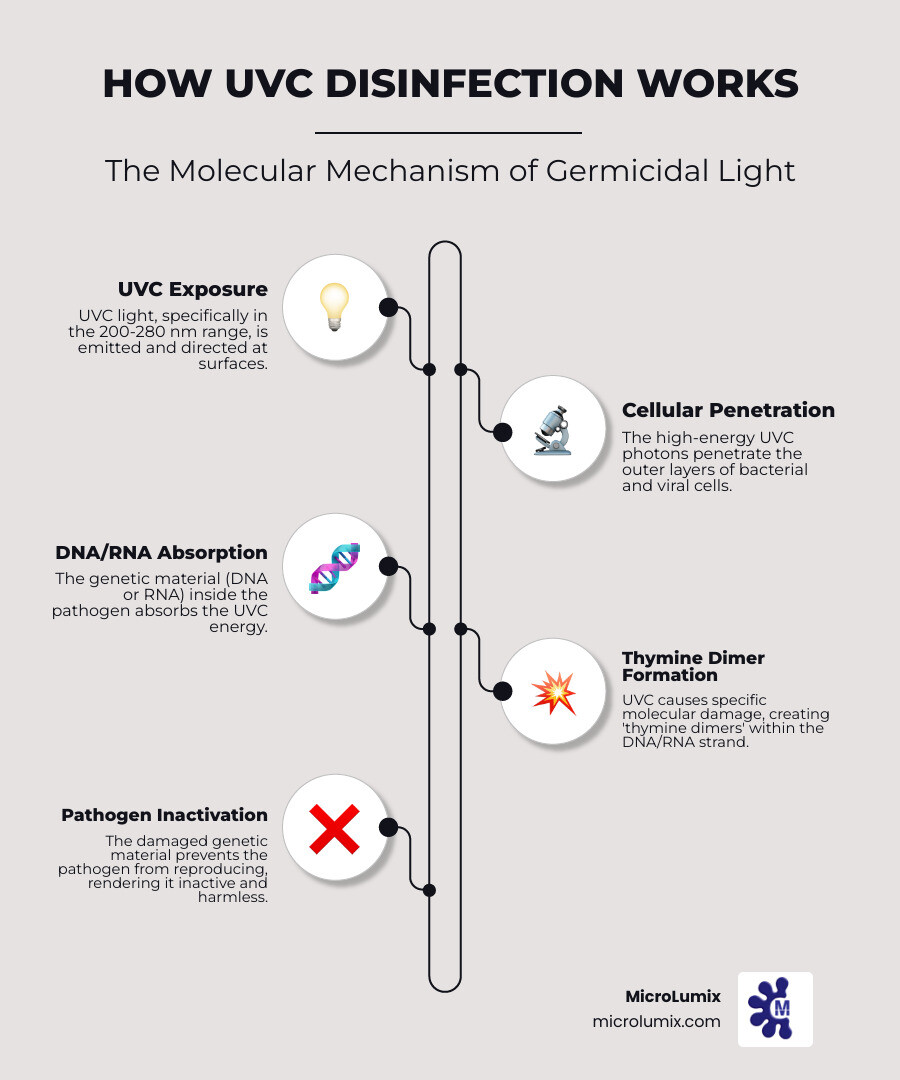
UVC surface disinfection works by delivering a controlled, artificial dose of ultraviolet-C light to give germs a molecular-level injury they can’t recover from.
While most people are familiar with UV-A and UV-B light from the sun, it’s the UV-C spectrum—specifically in the 200-280 nanometer range—that has powerful germicidal properties. Earth’s ozone layer blocks most natural UV-C, but we have learned to create it artificially for disinfection.
The germicidal properties of sunlight were first observed in 1878. By the late 1920s, research pinpointed the most effective wavelengths for disinfection to be around 265 nanometers.
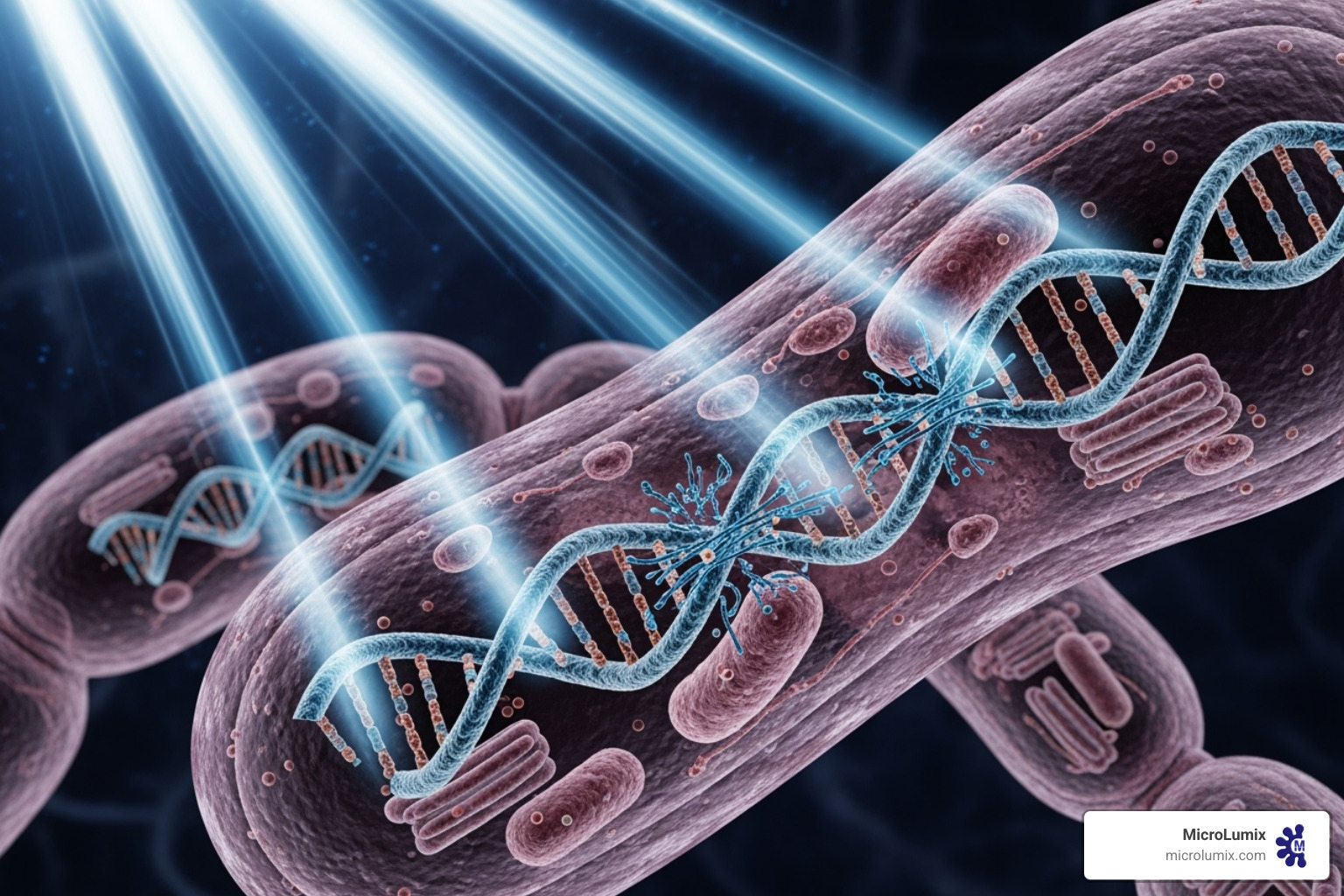
Viruses, bacteria, and fungi depend on their DNA and RNA to survive and multiply. When UV-C light hits these genetic materials, its energy is absorbed and creates thymine dimers—essentially tying the genetic code into knots. This damage prevents the microorganism from reproducing or functioning, effectively neutralizing it. In some cases, additional damage like DNA strand breaks occurs, causing the pathogen to die.
This process has broad-spectrum efficacy, working against tough hospital superbugs like MRSA, C. difficile, and VRE, as well as common viruses like influenza and SARS-CoV-2. Research confirms that UV-C irradiation effectively reduces these endemic strains that cause significant problems in healthcare settings.
How to Ensure Effective UVC Surface Disinfection
Achieving effective UVC surface disinfection requires the right conditions. The key metric is dosage (or fluence), measured in millijoules per square centimeter (mJ/cm²). This measures how much UV energy a surface receives. Different pathogens require different doses for inactivation.
For example, research shows a dose of approximately 3.6 to 10 mJ/cm² is needed to inactivate 90% of the SARS-CoV-2 virus. Achieving 99.9% effectiveness requires a higher dose.
Dosage is a function of intensity (light strength) and time (exposure duration). However, two real-world factors complicate this:
- Distance: UV light follows the inverse square law. Doubling the distance from the light source reduces the intensity to just one-quarter. This means longer exposure times are needed for surfaces farther away.
- Line-of-Sight: UVC can only disinfect what it can directly “see.” Shadowing from objects creates safe spots for pathogens. Furthermore, organic matter like dirt or debris can shield germs from the light, which is why pre-cleaning is essential.
For detailed scientific research on UVC’s effectiveness against SARS-CoV-2, studies like this research provide compelling evidence of how dosage and exposure conditions impact results.
Key Wavelengths and Emerging Technologies
For decades, the industry standard has been 254 nanometer wavelength light from low-pressure mercury lamps. These are reliable and proven to be effective. However, 254 nm UV-C is hazardous to humans, causing painful eye and skin damage (photokeratitis and erythema) with direct exposure. Consequently, these systems can only be used in unoccupied spaces with strict safety protocols.
A major innovation is Far-UVC light at 222 nanometers. This wavelength appears to have similar germicidal power but with a much better human safety profile. Because 222 nm light has very limited penetration, it can damage the DNA of tiny microbes but cannot get through the protective outer layer of human skin or the tear film of the eye.
Studies show that chronic exposure to 222-nm UVC light does not cause the DNA damage or skin lesions associated with 254 nm light. This breakthrough could enable continuous disinfection in occupied spaces like waiting rooms, classrooms, and public transit.
The emerging research on Far-UVC technology suggests a revolution in UVC surface disinfection is on the horizon, promising a future of spaces that are constantly and safely being disinfected.
Common Applications and Types of UVC Devices
The versatility of UVC surface disinfection stems from its chemical-free process, which eliminates concerns about residues, odors, and extensive ventilation. This simplifies operational procedures and makes it safer for people and sensitive materials. Automated UVC systems can also significantly reduce labor costs, helping to improve overall safety standards, particularly in healthcare.
Sectors Leveraging UVC Technology
UVC surface disinfection is being deployed in a growing number of sectors:
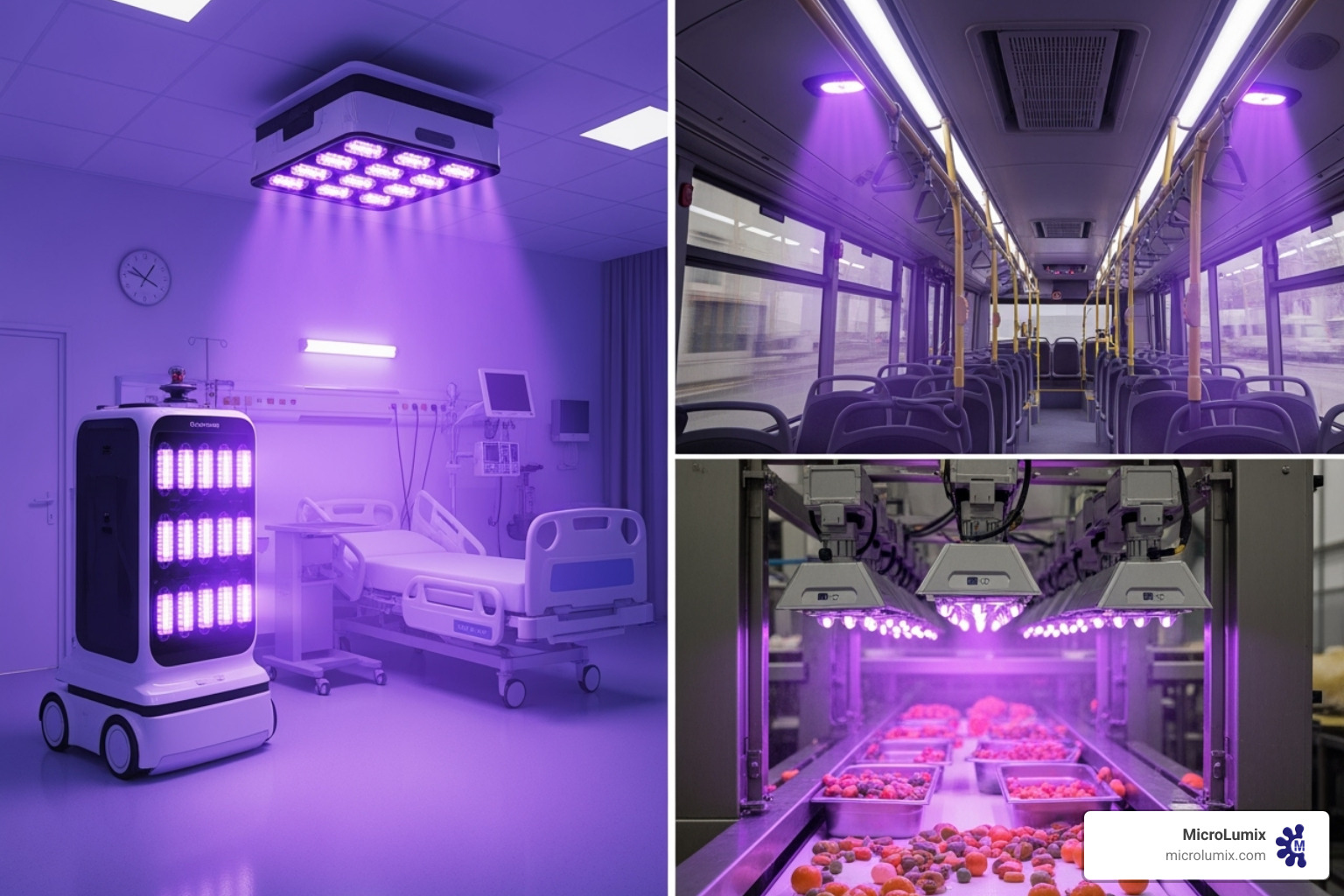
- Healthcare: UVC is a critical tool for reducing Hospital-Acquired Infections (HAIs). It serves as an adjunct to manual cleaning in patient rooms, operating theaters, and other high-risk areas. UV-C is highly effective as part of terminal cleaning protocols in hospitals.
- Transportation: UVC is increasingly used to sanitize interior surfaces on buses, trains, and planes between rides, enhancing passenger safety.
- Hospitality: Hotels and cruise ships use UVC to sanitize guest rooms and common areas, boosting guest confidence.
- Food and Beverage Industry: UVC disinfects surfaces, transport belts, and packaging materials. It can also treat food directly to extend shelf life and reduce the need for pesticides.
- Education: UVC provides deep disinfection for desks, chairs, and common areas in schools and universities to protect students and staff.
- Commercial Offices: UVC offers an efficient way to disinfect high-touch points like keyboards, phones, and shared meeting spaces.
- Households: Smaller UVC devices are used in products like baby bottle sterilizers and dish dryers for an extra layer of disinfection.
A Guide to UVC Surface Disinfection Equipment
Different environments require different types of UVC surface disinfection equipment:
- Fixed Overhead Luminaires: These ceiling-mounted fixtures are ideal for disinfecting entire rooms when unoccupied, such as operating rooms. They are typically controlled by timers and motion sensors for safety.
- Mobile UVC Robots: These autonomous units steer large, complex environments like hospital wards or airports, using sensors to ensure comprehensive coverage and safety.
- UVC Disinfection Trolleys: These are manually operated wheeled units moved between rooms. Timers and remote controls allow operators to run cycles from a safe distance.
- UVC Disinfection Cabinets: These enclosed units are used to disinfect smaller items like phones, keys, or medical instruments safely and effectively.
- Handheld UVC Wands: These portable devices are used for quick spot-disinfection of small surfaces. However, they pose a high risk of direct eye and skin exposure and should only be used with proper training and protective gear.
- Automated Touchpoint Disinfection Systems: These systems provide continuous disinfection of frequently touched surfaces. Our MicroLumix GermPass system is an example, using self-sealing UVC chambers to sanitize high-volume touchpoints immediately after every use, achieving 99.999% efficacy.
How to Implement UVC Disinfection Safely and Effectively
Implementing UVC surface disinfection requires integrating it properly with existing cleaning protocols. It is a powerful high-tech teammate for your cleaning crew, not a replacement.
Research clearly shows that UV-C irradiation had positive results when used as an adjunct for existing cleaning protocols. UVC cannot work effectively on its own because of organic matter. Dust, dirt, and grime shield pathogens from the UVC light, reducing its efficacy. Manual cleaning removes these physical barriers, while UVC eliminates the microscopic threats that might be missed. This two-step approach is especially critical for terminal cleaning in hospitals.
Here’s how UVC surface disinfection compares to traditional chemical cleaning:
| Feature | UVC Disinfection | Traditional Chemical Cleaning |
|---|---|---|
| Efficacy | High (99.9%+) against broad spectrum of pathogens | Varies based on chemical, dwell time, and human thoroughness |
| Speed | Rapid cycles (minutes) | Requires specific dwell times, manual application can be slow |
| Labor | Reduced, especially with automated systems; adjunct role | High, requires significant manual effort and training |
| Safety | Chemical-free, no residues; requires safety protocols | Chemical exposure risks (skin, respiratory); strong odors |
| Limitations | Requires line-of-sight; affected by organic matter | Can leave residues; misses areas due to human error; microbial resistance |
Integrating UVC into Your Hygiene Protocol
Follow this roadmap for successful UVC surface disinfection integration:
Step 1: Manual Pre-Cleaning is the essential first step. Surfaces must be cleared of all visible dirt, dust, and grime using standard cleaning methods before UVC exposure.
Step 2: Room Preparation involves securing the area. Close doors, draw curtains, and ensure the space will be completely unoccupied during the disinfection cycle.
Step 3: Device Positioning is critical due to the inverse square law and line-of-sight limitations. For complex rooms, the device may need to be repositioned and run for multiple cycles to ensure all surfaces receive adequate exposure. Industry best practices emphasize that the effectiveness of a UV-C solution starts with the right application design.
Step 4: Cycle Time Calculation depends on the device’s intensity, distance to surfaces, and target pathogens. Many modern devices have pre-programmed cycles. Resilient pathogens like C. diff may require UVC exposure of up to 45 minutes in each room position.
Step 5: Validation with Dosimeters provides visual confirmation of success. These indicators change color upon receiving a specific UVC dose, offering tangible proof that surfaces were properly disinfected.
Critical Safety Protocols for UVC Use
UVC surface disinfection is powerful and demands respect. Direct exposure to traditional 254 nm UVC light can cause painful eye damage (photokeratitis) and skin reddening (erythema). Long-term exposure can also pose health risks.
Therefore, strict safety protocols are non-negotiable:
- Unoccupied Spaces: The golden rule for 254 nm UVC systems is that no people, pets, or plants are present during operation.
- Motion Sensors and Timers: These are essential safety features that automatically shut down the system if motion is detected and ensure cycles run for the correct duration.
- Interlocks: UVC cabinets should have interlocks that prevent operation unless the doors are securely closed.
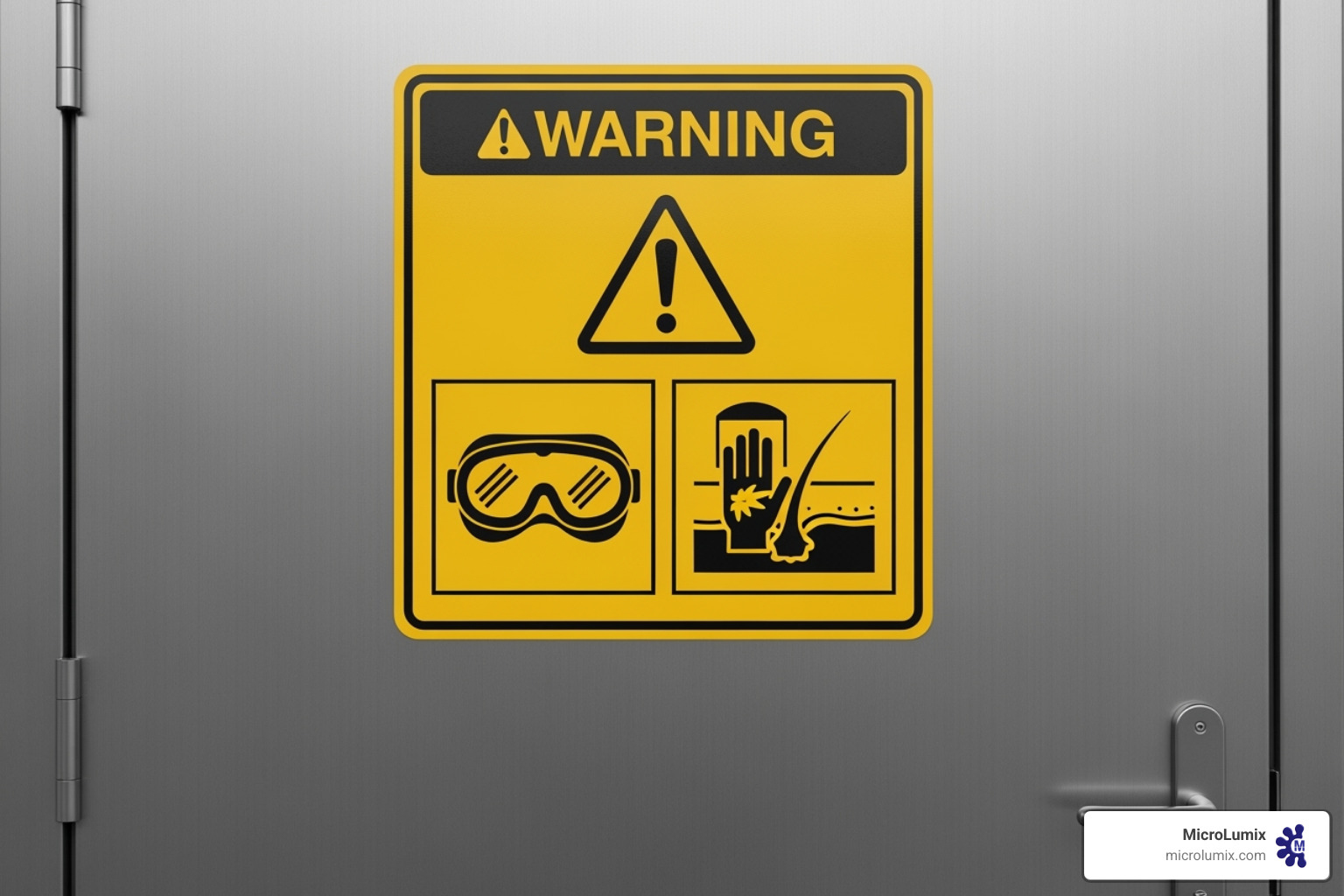
- Warning Signs: Clear and prominent signs must be posted to prevent accidental entry and exposure.
- Personal Protective Equipment (PPE): When setup or maintenance is required, specialized UVC-blocking eyewear and skin protection must be worn.
- Material Degradation: Be aware that prolonged UVC exposure can degrade some polymer surfaces common in equipment, causing them to become brittle or discolored over time.
For comprehensive safety guidelines, always consult official sources like the CDC guidelines for UVGI safety. Safety is the foundation that makes the benefits of UVC surface disinfection possible.
Frequently Asked Questions about UVC Disinfection
When considering UVC surface disinfection, several key questions often arise. Based on our experience developing automated UVC systems at MicroLumix, here are answers to the most common inquiries.
Can UVC light disinfect areas that are in shadow?
No, UVC light cannot disinfect shadowed areas. This is a critical limitation of the technology. UVC is a “line-of-sight” technology, meaning it only inactivates pathogens on surfaces it can directly illuminate.
This makes device placement absolutely critical for effective disinfection. To achieve comprehensive coverage in a room with furniture or equipment, you may need to use multiple device positions. This involves running a cycle, moving the UVC device to a new position to target previously shadowed areas, and running another cycle. While some have experimented with reflective surfaces to bounce light into hard-to-reach spots, this requires careful calculation to ensure an adequate dose is delivered. If you can’t see a surface from the UVC device’s position, it is not being disinfected.
Does UVC disinfection create ozone or leave behind residue?
One of the biggest advantages of UVC surface disinfection is that it is completely residue-free and ozone-free with the right equipment.
Unlike chemical disinfectants, UVC is a physical process, not a chemical one. It leaves behind no films, odors, or harmful residues. The pathogen is simply inactivated.
Regarding ozone, while some UV lamps can produce it, the vast majority of modern germicidal UVC lamps are designed to be “ozone-free.” They use special glass that filters out the 185 nm wavelength that creates ozone, while allowing the germicidal 254 nm wavelength to pass through. This means that after a UVC cycle, a room is immediately ready for use with no harmful byproducts left behind.
How do I choose the right UVC system for my space?
Choosing the right UVC surface disinfection system requires matching the technology to your specific needs. There is no single “best” system, but there is a best system for you.
Consider these factors:
- Space Size and Layout: A small office has different needs than a large hospital wing. Complex layouts with lots of equipment will create more shadows and require a more robust strategy.
- Occupancy Patterns: Determine when you can run disinfection cycles. If you need disinfection in occupied areas, you should explore emerging Far-UVC technology. For traditional UVC, you need guaranteed empty time slots.
- High-Touch Surfaces: Identify priority targets like door handles, bed rails, and keyboards where pathogens are most likely to spread.
- Target Pathogens: Some microbes, like C. difficile spores, are more resilient and require higher UVC doses. Ensure your system can deliver the necessary output.
- Safety Features: Prioritize systems with robust safety measures like motion sensors, automatic shutoffs, and clear warning systems.
- Third-Party Validation: Look for independent laboratory testing and clinical studies to verify a manufacturer’s claims. At MicroLumix, our GermPass system is the world’s only lab-certified, automatic touchpoint germ-killing system—this level of independent validation should be your standard.
The right system will integrate seamlessly into your protocols and provide confident protection for the people in your space.
Conclusion
What an incredible journey we’ve taken together through UVC surface disinfection! From understanding how UV-C light literally breaks apart pathogen DNA at the molecular level to seeing its real-world applications in hospitals, schools, and even on public buses, we’ve finded just how powerful this invisible ally can be in our fight against harmful germs.
The science speaks for itself. UVC light destroys pathogens by inactivating its DNA, delivering impressive results against some of the most stubborn bacteria and viruses we face today – including MRSA, C. difficile, and SARS-CoV-2. When used properly as an addition to regular cleaning routines, research consistently shows positive results in dramatically reducing the microbial load on surfaces, especially those high-touch areas where germs love to hang out.
But here’s what I hope you’ll remember most: UVC surface disinfection isn’t magic. It’s science, and like all good science, it requires understanding and respect. Those shadows we talked about? They’re real limitations. The safety protocols? They’re absolutely essential. The need for proper pre-cleaning? It makes all the difference between success and disappointment.
What excites me most about the future is how automated systems are changing the game entirely. We’re moving beyond the days of manual processes and human error toward continuous protection that works around the clock. These smart systems don’t get tired, don’t forget steps, and don’t take shortcuts. They just quietly, reliably keep doing their job of protecting us.
This is exactly why we developed our GermPass system at MicroLumix. We saw a gap – those critical touchpoints that get used hundreds of times a day but might only get cleaned once or twice. Our automated approach means every single touch gets followed by immediate disinfection, achieving 99.999% efficacy against pathogens. It’s like having a dedicated germ-fighting guardian that never sleeps.
The future of hygiene isn’t just bright – it’s intelligent, automated, and incredibly promising. As we continue to learn and grow in this field, one thing remains clear: the combination of solid science, smart technology, and genuine care for human health will keep pushing us toward cleaner, safer environments for everyone.
Ready to see what automated disinfection systems can do for your space? We’d love to show you how continuous protection can become part of your daily routine.
Find advanced automated disinfection systems