
The Unseen Battle Against Hospital-Acquired Infections
UVC surface sterilization is a powerful disinfection method that uses ultraviolet-C light (wavelengths 200-280 nm) to kill bacteria, viruses, and other pathogens by damaging their DNA and RNA. This chemical-free technology achieves 99.9% to 99.99% pathogen reduction and serves as an effective supplement to manual cleaning in healthcare facilities.
Quick Guide to UVC Surface Sterilization:
- How it works: UV-C light disrupts pathogen DNA/RNA, preventing replication
- Effectiveness: Kills 99.9-99.99% of bacteria, viruses, and fungi including MRSA, C. diff, and SARS-CoV-2
- Applications: Terminal room cleaning, operating rooms, patient rooms, high-touch surfaces
- Key requirement: Line-of-sight contact between UV light and surfaces
- Safety: Must operate in unoccupied spaces due to skin and eye hazards
Hospital-acquired infections affect 1 in 31 patients and result in nearly 100,000 deaths annually in the United States alone. These infections cost hospitals over $28 billion each year while devastating patient outcomes and family lives.
Traditional manual cleaning falls short of hospital standards. Studies show that only 40% of near-patient surfaces are properly cleaned according to hospital policies. Even with dedicated environmental services teams, human error, time constraints, and hard-to-reach areas leave dangerous gaps in disinfection coverage.
This is where UVC surface sterilization becomes a game-changer. Unlike chemical disinfectants that require contact time and can leave residues, UV-C light provides immediate, dry disinfection that reaches surfaces manual cleaning might miss. The technology works by emitting germicidal light that breaks apart the molecular bonds in pathogen DNA, rendering them unable to reproduce or cause infection.
I’m Debra Vanderhoff, Founder and CEO of MicroLumix Bioscience Technology, where we’ve spent years developing automated disinfection systems that harness UVC surface sterilization for healthcare environments. My experience building chemical-free decontamination technology has shown me how this innovation transforms hospital cleanliness and patient safety.

The Science of Germicidal Light: How UVC Works
Imagine having a microscopic weapon that can destroy dangerous pathogens without using a single drop of chemicals. That’s exactly what UVC surface sterilization offers us—and the science behind it is both neat and powerful.
When UVC light hits bacteria, viruses, and fungi, something remarkable happens at the molecular level. These microorganisms absorb the light energy, particularly at wavelengths around 254 nanometers. This isn’t just any ordinary light absorption—it’s specifically targeting the DNA and RNA that serve as the genetic blueprints for these tiny invaders.
Think of DNA as a twisted ladder with rungs made of chemical pairs. When UVC light strikes these nucleic acids, it creates what scientists call thymine dimers—essentially breaking the rungs of that genetic ladder. It’s like jamming a wrench into the gears of a clock. The pathogen can no longer read its own instructions, which means it cannot replicate or cause infection. The microorganism becomes completely harmless.
This process is called germicidal irradiation, and it’s been protecting people for over a century. The beauty lies in its simplicity—no complex chemical reactions, no toxic residues, just pure light energy disrupting the very core of what makes pathogens dangerous.
The effectiveness depends on something called UV dose, which combines two key elements: the intensity of the light and how long surfaces are exposed to it. Higher intensity or longer exposure time means a greater dose, leading to more thorough pathogen inactivation. However, there’s one critical rule that governs everything: the line-of-sight principle. UVC light can only disinfect what it directly illuminates—if a surface is hidden in shadow, the light simply can’t reach it.
Understanding the basics of UVC surface sterilization
UVC surface sterilization works as a completely dry disinfection method. No moisture, no heat, no chemicals—just pure germicidal energy doing its work. This makes it perfect for healthcare environments where chemical residues could pose risks to patients or sensitive equipment.
The magic happens at the peak germicidal wavelength of 254nm. This specific wavelength aligns perfectly with how microbial DNA absorbs light energy, making it incredibly efficient at destroying pathogens. It’s like having a key that fits perfectly into the lock of every dangerous microorganism.
Different pathogens show varying levels of microbial vulnerability to UVC light. Most bacteria and viruses are highly susceptible and can be eliminated quickly. However, some tougher customers like Clostridium difficile spores or certain mold fungi require higher doses or longer exposure times. The good news? Even these resistant pathogens can’t withstand properly applied UVC treatment.
This chemical-free process eliminates concerns about toxic residues, respiratory irritation, or environmental impact that often come with traditional disinfectants. Healthcare workers don’t need to worry about ventilation requirements or waiting for surfaces to dry—once the UVC cycle is complete, the room is immediately ready for use.
Key factors for effective disinfection
Getting UVC surface sterilization right requires understanding several important factors that influence its effectiveness. Think of it like baking a perfect cake—you need the right ingredients in the right proportions.
UVC dosage serves as the foundation of effective disinfection. Different pathogens need different minimum doses to be completely inactivated. For example, coronaviruses typically require doses ranging from 7 to 241 J/m², with an average of 67 J/m² for 90% reduction. Getting this dose calculation right makes the difference between partial and complete disinfection.
Exposure time works hand-in-hand with intensity to deliver the proper dose. Simple disinfection might take just seconds, while eliminating resistant organisms like C. difficile could require up to 45 minutes per room position. The key is ensuring every surface receives adequate exposure.
Distance from surface dramatically affects UVC effectiveness due to the inverse square law. Just like a flashlight gets dimmer the farther away you hold it, UVC intensity drops rapidly with distance. A surface two meters from the UVC source might need 20 minutes of treatment, but doubling that distance to four meters could require 40 minutes or more.
Lamp intensity determines how quickly effective doses can be delivered. More powerful UVC sources can treat larger areas faster or achieve higher log reductions in the same timeframe. The quality and type of UVC technology directly impacts treatment efficiency.
Surface material properties can either help or hinder disinfection. Reflective surfaces can help distribute UVC light more evenly, while rough or porous materials might create tiny shadows that reduce effectiveness. It’s worth noting that prolonged UVC exposure can degrade certain polymer materials commonly found in medical equipment.
The shadowing effect presents the biggest challenge for UVC disinfection. Any object blocking the direct path of UVC light creates areas where pathogens can survive. Furniture, equipment, or even simple room fixtures can create shadows that require careful device positioning to overcome.
Humidity and temperature have minimal impact on UVC effectiveness compared to other factors, but extreme conditions can subtly influence performance. Fortunately, most healthcare environments maintain conditions that are ideal for UVC operation.
Understanding these factors allows healthcare facilities to implement UVC surface sterilization systems that deliver consistent, reliable results. When properly applied, this technology transforms how we think about environmental disinfection—turning light itself into our most powerful ally against dangerous pathogens.
A Practical Guide to Implementing UVC in Healthcare
![IMAGE of a healthcare worker setting up a MicroLumix UVC unit outside a patient room]
Picture this: It’s 2 PM on a busy Tuesday, and your environmental services team has just finished cleaning a patient room after discharge. The surfaces look spotless, but what about the invisible threats lurking on that bed rail or call button? This is where UVC surface sterilization steps in as your invisible superhero.
Think of UVC technology as the ultimate backup singer to your cleaning team’s lead vocals. It’s not here to steal the spotlight from manual cleaning – it’s here to make sure every performance is flawless. After your staff completes their thorough manual cleaning (and yes, this step is absolutely essential), UVC swoops in to tackle any microscopic troublemakers that might have been missed.
The magic happens during what we call terminal room cleaning. Once a patient room, operating theater, or ICU bay is manually cleaned and cleared, UVC devices can deliver that final knockout punch to pathogens. This approach is particularly brilliant for those notorious high-touch surfaces – you know, the bed rails that get grabbed a hundred times a day, the call buttons that see more action than a TV remote, and those light switches that everyone touches but no one thinks about.
Choosing the right UVC technology
Walking into UVC technology can feel a bit like entering a candy store – there are so many options, and they all promise to solve your problems. Let me break down the main players in simple terms.
Mobile UVC towers are the workhorses of the UVC world. These wheeled units roll into a room like a cleaning cart with superpowers. They’re versatile and can tackle different spaces, though you’ll need to move them around the room to ensure complete coverage – remember, UVC light travels in straight lines and can’t bend around corners like some kind of sci-fi ray.
Ceiling-mounted UVC units are the “set it and forget it” option. Once installed, they can run on schedules or provide continuous upper-room disinfection. They’re particularly useful in areas with consistent layouts and predictable traffic patterns.
For targeted cleaning jobs, handheld UVC devices offer precision control. Think of them as the surgical scalpels of the UVC world – perfect for specific items or small surfaces, but requiring careful training to use safely.
Enclosed UVC chambers are the safe havens for disinfecting smaller items. Medical instruments, personal devices, or tools can be placed inside these cabinets where UVC light works its magic without any risk to nearby staff.
The most exciting development is automated disinfection systems – and this is where our expertise at MicroLumix really shines. These systems represent the future of UVC surface sterilization, integrating seamlessly into healthcare workflows to provide continuous, intelligent disinfection.
Best practices for UVC surface sterilization
Getting UVC right isn’t just about plugging in a device and hoping for the best. Success lies in the details, and frankly, some of these details can make or break your entire disinfection program.
Pre-cleaning surfaces isn’t just recommended – it’s absolutely critical. UVC light is powerful, but it’s not magic. It can’t see through dirt, dust, or that mysterious sticky spot on the bedside table. Think of organic matter as a tiny umbrella protecting germs from the UVC light. Remove that umbrella first, and then let the light do its work.
Proper room placement requires thinking like the UVC light itself. Where would you shine if you were a beam of germicidal light? You’d want clear sight lines to all those high-touch surfaces. The distance from surfaces matters enormously – remember, UVC intensity follows the inverse square law, so doubling the distance can quadruple the time needed for effective disinfection.
Using multiple device positions might seem tedious, but it’s often necessary. Mobile units typically need to be repositioned within a room to eliminate shadows and ensure comprehensive coverage. Yes, it takes extra time, but think of it as insurance against invisible threats.
Dosage verification with indicators takes the guesswork out of the equation. These clever little tools change color or provide readings when surfaces have received adequate UVC doses. It’s like having a report card for your disinfection process – and who doesn’t love getting good grades?
Staff training cannot be overlooked. Your environmental services team needs to understand not just how to operate the equipment, but why each step matters. When people understand the science behind UVC surface sterilization, they become champions of the process rather than just button-pushers.
The evidence supporting UVC as an effective adjunct to traditional cleaning continues to grow. Research, including findings from this Systematic review on UVC efficacy and safety in hospitals, consistently demonstrates the value of UVC technology when properly implemented alongside existing cleaning protocols.
At MicroLumix, we’ve seen how the right UVC implementation can transform a facility’s approach to infection control. It’s not about replacing good cleaning practices – it’s about making them even better.
The Efficacy and Advantages of UVC Disinfection
When we talk about UVC surface sterilization results, the numbers speak for themselves. This isn’t just about making things a little cleaner – we’re talking about dramatic reductions in harmful pathogens that can literally save lives.
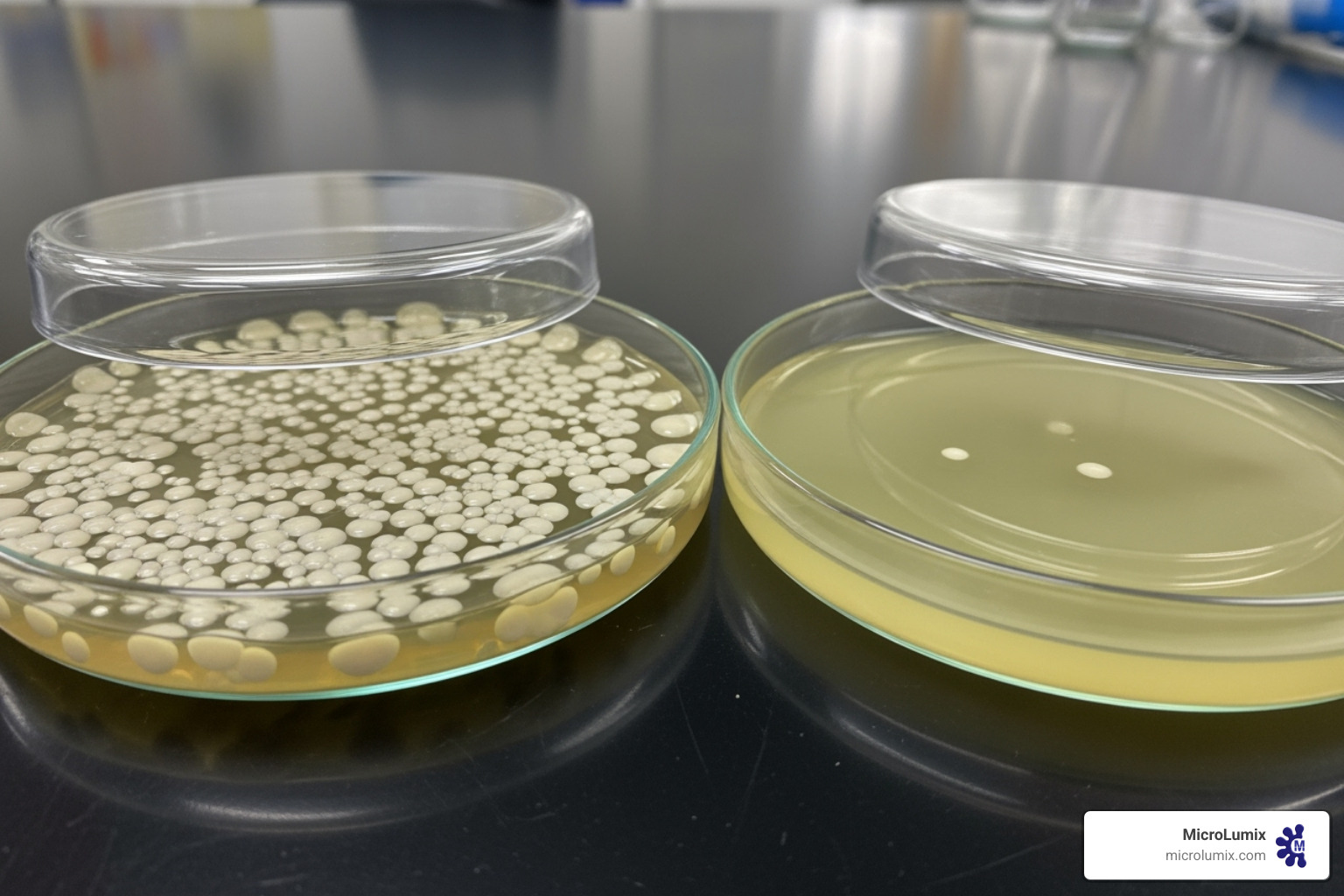
The proven efficacy of UVC light is truly remarkable. We regularly see log reduction rates of 99.9% to 99.99% across a broad spectrum of dangerous pathogens. With advanced systems like our GermPass technology, we can achieve even higher levels – up to 99.999% efficacy against harmful microorganisms.
But what does this mean in practical terms? Picture a surface contaminated with 100,000 bacteria. After proper UVC treatment, fewer than 10 would survive. That’s the kind of dramatic reduction that makes a real difference in preventing hospital-acquired infections.
The advantages of this level of disinfection extend far beyond just the numbers. Speed of disinfection is one of the most compelling benefits. Once pathogens are exposed to sufficient UVC energy, they’re inactivated almost instantly. The actual kill time happens in seconds, though complete room cycles may take longer due to positioning requirements.
Healthcare facilities also see reduced labor costs with automated UVC systems. Staff can focus on other critical tasks while the technology handles the heavy lifting of disinfection. Unlike chemical disinfectants that can leave residues on sensitive equipment or create concerns for patient comfort, UVC provides a chemical-free process with no lingering traces.
Perhaps most importantly, UVC light can reach difficult areas that manual cleaning might miss. While the line-of-sight limitation requires careful planning, properly positioned UVC devices can disinfect intricate surfaces and hard-to-reach spots that even the most dedicated cleaning staff might struggle with.
Proven effectiveness against dangerous pathogens
The germicidal power of UVC surface sterilization shines brightest when facing healthcare’s most dangerous threats. MRSA (Methicillin-resistant Staphylococcus aureus) – one of the most feared superbugs in hospitals – is highly susceptible to UVC treatment. This common pathogen, which resists many antibiotics, can be effectively eliminated from surfaces, dramatically reducing transmission risks.
C. difficile (Clostridium difficile) presents a particular challenge because it forms spores that are notoriously difficult to kill with chemical disinfectants. UVC can inactivate these tough spores, though it requires adequate exposure time – sometimes up to 45 minutes per device position. The results are worth the investment in time.
VRE (Vancomycin-resistant Enterococcus faecium) represents another antibiotic-resistant threat that UVC handles effectively. Similarly, ESBL-producing E. coli, multidrug-resistant Pseudomonas, and carbapenemase-resistant Klebsiella pneumoniae (KPC) all fall to properly administered UVC treatment.
The SARS-CoV-2 virus that causes COVID-19 has taught us valuable lessons about surface transmission. This virus can survive on surfaces for 6 hours to 9 days, depending on conditions. UVC rapidly inactivates the virus by damaging its RNA structure, preventing replication. Studies show the virus is susceptible to an average of just 27 J/m² of UVC radiation – a relatively low dose that makes treatment both effective and efficient.
Fungi also respond well to UVC treatment, though some mold species may require higher doses or combination approaches for complete elimination.
How UVC outperforms traditional methods
While manual cleaning and chemical disinfectants remain important foundations of infection control, UVC surface sterilization offers distinct advantages that lift disinfection standards to new heights.
Superbug elimination represents one of UVC’s greatest strengths. These drug-resistant bacteria that keep infectious disease specialists awake at night – MRSA, VRE, C. difficile spores – are effectively neutralized by UVC treatment. Traditional cleaning methods often struggle with these resilient pathogens.
Inactivating novel viruses has become increasingly important in our interconnected world. As we learned during the COVID-19 pandemic, UVC provides a powerful defense against emerging viral threats. Cold and flu viruses can remain infectious on surfaces for hours or days, but UVC offers rapid and effective elimination. The Research on Coronavirus ultraviolet susceptibility provides fascinating insights into exactly how this process works.
Consistency and reliability set UVC apart from human-dependent cleaning methods. Unlike manual cleaning, which varies based on individual technique, time constraints, and fatigue levels, UVC devices deliver the same quantifiable dose of germicidal energy every single time. The American Journal of Infection Control reported that UV light disinfection eliminates 97.7 percent of pathogens in operating rooms – a testament to its reliable performance.
Reducing human error through automation minimizes the impact of factors like rushing, fatigue, or simply missing spots during manual cleaning. This leads to more consistently disinfected environments and better patient outcomes.
UVC technology provides a level of assurance and efficacy that’s difficult to achieve with traditional methods alone, making it an indispensable tool in modern healthcare infection control strategies.
Critical Safety Protocols and Current Challenges
While UVC surface sterilization is a powerful ally in the fight against pathogens, it’s crucial to acknowledge and manage its inherent safety considerations. UVC radiation, while deadly to microorganisms, can also be harmful to humans and certain materials.
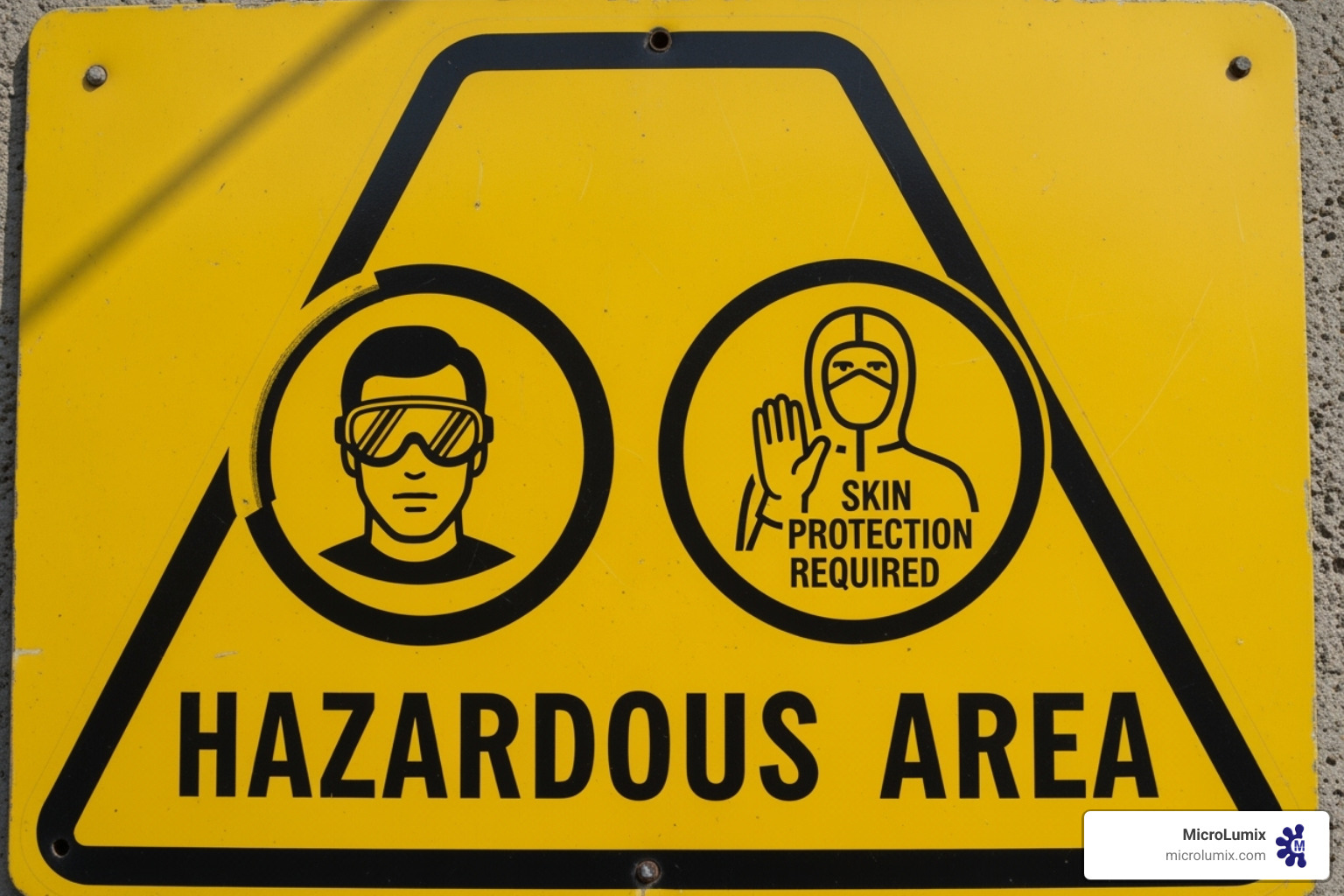
Think of UVC light as incredibly effective medicine that requires careful handling. Just as we wouldn’t leave strong medications lying around, we can’t treat UVC exposure casually. The same energy that destroys harmful pathogens can cause serious problems for people who get too close.
The most immediate concern is photokeratitis, which is essentially a sunburn of the eye. This painful inflammation of the cornea can happen surprisingly quickly – even brief exposure can leave someone with burning, watery eyes that feel like they’re full of sand. It’s not permanent, but it’s definitely not pleasant.
Erythema, or skin redness, is another risk. UVC exposure causes skin irritation similar to a severe sunburn. While short exposures might just cause redness, repeated or prolonged contact can lead to more serious skin damage and potentially increase cancer risk over time.
There’s also material degradation to consider. Many plastics and polymers commonly found in medical equipment don’t appreciate long UVC baths. They can become discolored, brittle, or structurally compromised. This means we need to be thoughtful about what gets exposed and for how long.
Ensuring safety during UVC surface sterilization
The good news is that these risks are entirely manageable with proper protocols. Safety during UVC surface sterilization isn’t complicated – it just requires discipline and the right systems.
Operating in unoccupied rooms is the golden rule. UVC devices should only run when spaces are completely empty of people. No exceptions, no shortcuts. This single protocol eliminates the vast majority of safety risks.
Modern UVC systems come equipped with motion sensors that act like electronic sentries. If someone accidentally enters a room during a disinfection cycle, these sensors immediately shut off the UVC lamps. It’s like having a safety guard that never gets tired or distracted.
Automatic shut-offs ensure that UVC exposure is limited to exactly what’s needed. These programmed timers prevent the “oops, did we leave that running?” scenarios that could lead to unnecessary material degradation or safety risks.
When staff need to enter recently treated areas or handle UVC equipment, proper PPE becomes essential. This includes UVC-blocking eyewear and appropriate skin coverings. Think of it as specialized gear for a specialized job.
Clear signage and protocols complete the safety picture. Prominent “UVC Disinfection in Progress” signs aren’t just suggestions – they’re critical safety barriers that prevent accidental exposure. Combined with well-trained staff who understand the protocols, these signs create a culture of safety around UVC technology.
Overcoming the limitations of UVC
Despite its tremendous benefits, UVC surface sterilization isn’t perfect. Understanding these limitations helps us use the technology more effectively and points toward exciting innovations on the horizon.
The biggest challenge is the line-of-sight dependency. UVC light travels in perfectly straight lines, creating shadows behind every object. If a pathogen is hiding behind a bedside table leg or in the crevice of medical equipment, it’s essentially invisible to the UVC light. This shadowing effect means rooms often require multiple device positions and careful planning to achieve comprehensive coverage.
Dose measurement challenges add another layer of complexity. While we know UVC works, accurately measuring exactly how much germicidal energy reaches every surface point is tricky. Lamp aging, dust on bulbs, and varying surface reflectivity all affect the actual dose delivered. It’s like trying to ensure every corner of a room gets exactly the right amount of sunlight – possible, but requiring careful attention.
Surface topography matters more than you might expect. A smooth countertop presents a perfect target for UVC light, while a textured fabric chair creates countless microscopic hiding spots for pathogens. These tiny shadows and crevices can shelter microorganisms from the germicidal effects.
The initial investment cost can be significant, though many facilities find the long-term savings through reduced infections and chemical use make it worthwhile. It’s similar to buying quality safety equipment – the upfront cost pays dividends in protection and peace of mind.
These limitations aren’t roadblocks – they’re engineering challenges that drive innovation. At MicroLumix, we’ve developed solutions like our GermPass technology that address many of these concerns by creating controlled UVC environments for high-touch surfaces, eliminating shadowing issues while maintaining complete safety.
The Future of Automated Disinfection Technology
The world of UVC surface sterilization is evolving at lightning speed, and frankly, it’s pretty exciting to witness. We’re not just talking about incremental improvements – we’re looking at breakthrough technologies that could completely transform how we keep our spaces clean and safe.
One development that has us particularly excited is Far-UVC light at 222 nm. Here’s what makes it special: unlike traditional germicidal UVC at 254 nm, Far-UVC appears to be much safer for human exposure. Early research suggests it can effectively kill bacteria and viruses without penetrating the outer layer of human skin or the tear film in our eyes.
Think about what this could mean. Instead of clearing rooms and posting warning signs, we might soon have UVC light working quietly in the background while people go about their daily activities. Picture hospital waiting rooms, nursing stations, or even school cafeterooms with continuous disinfection happening around the clock – no downtime, no disruption, just constant protection against pathogens.
UVC-LED technology is another game-changer on the horizon. These aren’t your grandfather’s bulky mercury lamps. UVC LEDs are compact, durable, and incredibly energy-efficient. They’re also remarkably precise, allowing us to target specific wavelengths for different types of pathogens. Plus, they turn on instantly – no warm-up time needed.
The real magic happens when we combine these advances with smart UVC systems. We’re talking about devices that don’t just blast UV light and hope for the best. These systems use sensors to monitor their own performance, log every disinfection cycle, and provide detailed reports on what they’ve accomplished. It’s like having a data scientist built right into your disinfection equipment.
Innovations in automated touchpoint sterilization
Here’s where things get really interesting, and where we at MicroLumix are pushing the boundaries of what’s possible. The biggest challenge in healthcare isn’t just cleaning rooms once or twice a day – it’s dealing with those high-volume touchpoints that get contaminated over and over again throughout the day.
You know the ones I’m talking about: door handles, call buttons, bed rails, computer keyboards. These surfaces are touched dozens, sometimes hundreds of times between cleaning cycles. By the time housekeeping makes their rounds, these touchpoints have already become little highways for pathogen transmission.
Our solution is continuous disinfection – not just periodic room treatments, but immediate sanitization after every single use. That’s exactly what our MicroLumix GermPass technology delivers. Instead of waiting for the next cleaning cycle, GermPass uses self-sealing UVC chambers that spring into action the moment someone finishes touching a surface.
The beauty of this approach is in its simplicity and effectiveness. When someone uses a touchpoint equipped with GermPass, the system automatically seals and floods the area with germicidal UVC light. Within seconds, we achieve 99.999% efficacy against pathogens – that’s a 5-log reduction, which is pretty remarkable in the disinfection world.
This isn’t just theoretical. GermPass is the world’s only lab-certified, automatic touchpoint germ-killing system. We’ve put in the research, done the testing, and proven that UVC surface sterilization can work in real-time, right at the point of contact. It’s like having a tiny, incredibly efficient cleaning crew that never takes a break and never misses a spot.
The future of automated disinfection isn’t just about bigger, more powerful UV lights. It’s about smarter, more targeted solutions that work seamlessly within the flow of daily life, protecting people without disrupting their routines.
Frequently Asked Questions about UVC Sterilization
I get these questions all the time from healthcare facilities considering UVC surface sterilization. Let me share the answers that matter most when you’re thinking about implementing this technology.
Can UVC light penetrate surfaces or fabrics?
Here’s something that surprises many people: UVC light doesn’t actually penetrate materials at all. It’s purely a surface-level disinfectant, which means it only works on what it can directly “see” and touch with its light rays.
Think of UVC like sunlight trying to shine through a thick curtain – it simply can’t get through. Whether we’re talking about fabric, plastic, metal, or any other solid material, the UVC light stops right at the surface. This is actually both a limitation and a safety feature.
This surface-only action is exactly why the line-of-sight principle is so critical for effective UVC surface sterilization. If there’s a shadow behind a piece of equipment or under a bed rail, those hidden areas won’t get disinfected. That’s why proper positioning and sometimes multiple device placements are essential for thorough room disinfection.
How long does a UVC disinfection cycle take?
The honest answer? It depends on what you’re trying to achieve and the specific conditions in your facility. UVC disinfection cycles typically range from 5 to 45 minutes per position, but several factors influence the exact timing.
Room size plays a big role – a small patient bathroom will take much less time than a large operating room. The power of your UVC device matters too. More powerful units can deliver the necessary germicidal dose faster, while lower-powered devices need more time to achieve the same results.
The target pathogen also influences timing. Some bacteria and viruses are eliminated quickly, while tougher organisms like C. difficile spores might require those longer 45-minute cycles to ensure complete inactivation.
Distance is another key factor. Remember the Inverse Square Law we discussed earlier? Surfaces closer to the UVC source get disinfected faster, while those farther away need more exposure time to receive an adequate germicidal dose.
Is UVC effective against COVID-19?
Absolutely yes, and the science behind this is really compelling. UVC surface sterilization has proven highly effective against SARS-CoV-2, the virus that causes COVID-19.
The virus is particularly vulnerable to UVC light because it damages the virus’s RNA – essentially its genetic instruction manual. Once that RNA is damaged, the virus can’t replicate or cause infection. It’s rendered completely harmless.
Multiple studies have confirmed this effectiveness, showing that UVC can rapidly inactivate SARS-CoV-2 on surfaces. This is especially important because we know the virus can survive on various surfaces for hours or even days, depending on the material and environmental conditions.
What makes this particularly valuable is that UVC surface sterilization works against COVID-19 without leaving any chemical residues, and it’s effective immediately upon adequate exposure. This makes it an invaluable tool not just for COVID-19, but for combating future respiratory viruses that might emerge.
The technology gives healthcare facilities confidence that they’re addressing viral contamination on surfaces in a thorough, scientifically-proven way.
Conclusion: A Brighter, Cleaner Future for Healthcare
We’ve taken quite a journey together through UVC surface sterilization. From understanding how this invisible light disrupts pathogen DNA to implementing practical solutions in busy hospital environments, we’ve seen how this technology is reshaping healthcare cleanliness standards.
The benefits we’ve explored are compelling: 99.9% to 99.99% pathogen reduction, chemical-free disinfection that reaches places manual cleaning might miss, and the speed to tackle everything from stubborn C. difficile spores to emerging viruses like SARS-CoV-2. These aren’t just impressive numbers – they represent real protection for patients, healthcare workers, and families.
UVC surface sterilization serves as a powerful adjunct to traditional cleaning protocols, filling the gaps that inevitably exist in manual processes. It’s not about replacing the dedicated work of environmental services teams, but rather giving them a technological ally that works tirelessly alongside them. When we consider that hospital-acquired infections affect 1 in 31 patients and cost the healthcare system over $28 billion annually, this technology becomes more than just an innovation – it becomes a necessity.
The future looks even brighter with advances in Far-UVC technology, smart systems with data logging capabilities, and automated solutions that provide continuous protection. At MicroLumix, we’re particularly excited about how our GermPass technology represents this next generation of disinfection – moving from periodic room treatments to immediate, touchpoint-specific sanitization that happens automatically after every single contact.
Embracing innovative technology like UVC surface sterilization isn’t just about staying current with the latest trends. It’s about fundamentally improving patient outcomes, reducing the heartbreak of preventable infections, and creating safer environments where healing can truly happen. Every pathogen eliminated, every infection prevented, every patient who goes home healthy – that’s the real measure of success.
Find how Automated Disinfection Technology can transform your facility’s cleanliness and contribute to a healthier environment for your patients and staff. The technology exists, the science is proven, and the benefits are clear. The question isn’t whether healthcare facilities can afford to implement these solutions – it’s whether they can afford not to.